

The first time I tried making udang rambutan in my tiny Singapore kitchen, I must have called my mother in Indonesia at least four times. She laughed at my panic over the spring roll strips not sticking properly, reminding me that patience is key – just like when she used to make these crispy prawn balls for Chinese New Year celebrations back home. The smell of frying prawns and the satisfying crunch of those golden strips always transported me back to our family kitchen in Jakarta, where udang rambutan was the star of every festive gathering.
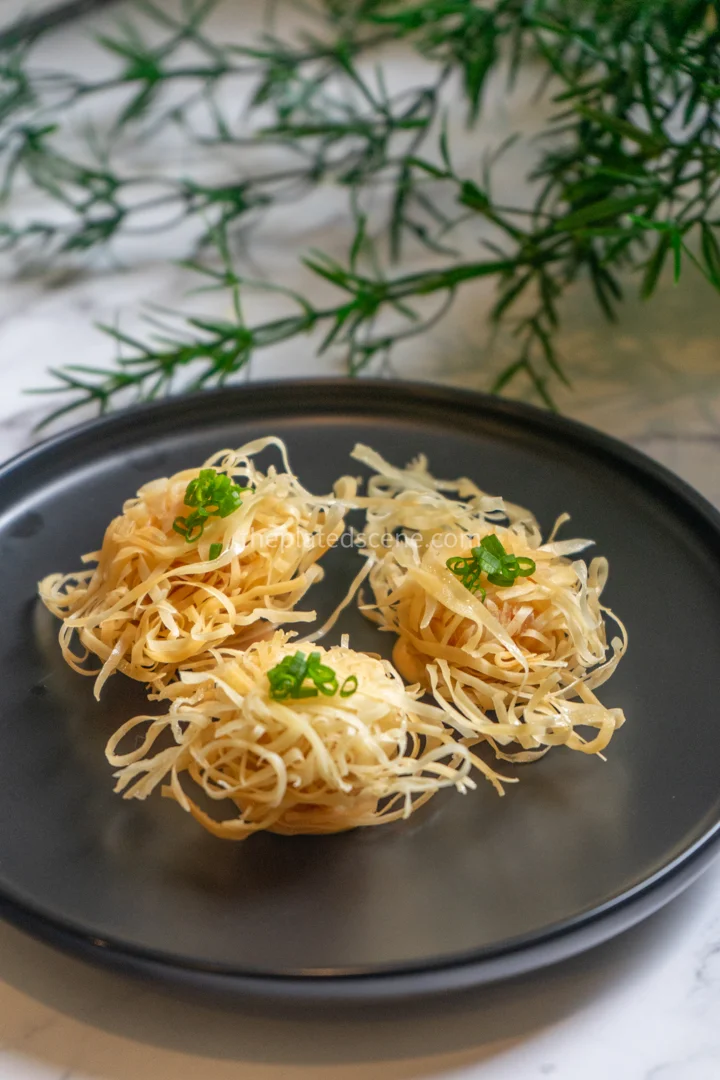
Living here in Singapore, I find myself craving the authentic flavors of Indonesian street food more often than I’d like to admit. While I can find decent versions at some Indonesian restaurants, nothing quite compares to the way my mother makes udang rambutan – with that perfect balance of sweet prawn flavor and impossibly crispy coating. It’s comfort food that speaks to my soul, especially after long work weeks when I need something that reminds me of home and family traditions.
Today I’m sharing my mother’s time-tested recipe, which I’ve perfected through countless video calls and her patient guidance. This version of udang rambutan stays true to the traditional Indonesian method while being completely achievable in any home kitchen. The secret lies in the baking powder treatment for the prawns and getting those spring roll strips as thin as possible – techniques my mother learned from her own mother decades ago.
Table of Contents
The Story Behind Udang Rambutan
Udang rambutan has been a beloved part of Indonesian cuisine for generations, particularly popular in Chinese-Indonesian communities where it’s often served during celebrations and family gatherings. The dish gets its playful name from its resemblance to the spiky rambutan fruit – those thin spring roll strips fan out during frying, creating a dramatic spiky appearance that’s both beautiful and deliciously crunchy. Traditional cooks have been perfecting this technique for decades, passing down the art of creating the perfect udang rambutan from mother to daughter.
Culturally, udang rambutan represents the beautiful fusion that defines much of Indonesian cuisine, blending Chinese cooking techniques with local Indonesian flavors and ingredients. It’s traditionally served as an appetizer during Chinese New Year, family reunions, and special celebrations, where the golden color symbolizes prosperity and good fortune. The dish requires skill and patience to execute properly, making it a point of pride for home cooks who master the technique.
Today, udang rambutan has evolved from a special occasion dish to popular street food and restaurant appetizer throughout Indonesia. Modern versions might include different seasonings or dipping sauces, but the essence remains the same – fresh prawns wrapped in impossibly thin, crispy coating that creates that signature spiky appearance. Whether enjoyed at a family gathering or discovered at a street food stall, udang rambutan continues to delight with its perfect combination of texture and flavor.
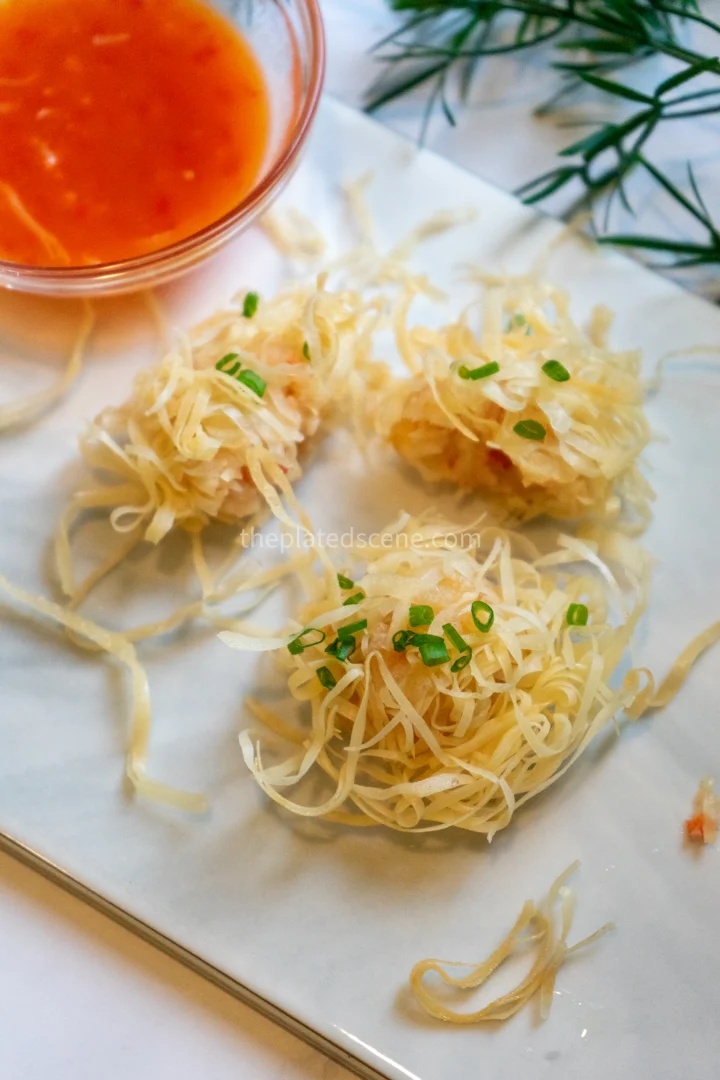
What to Expect: Flavors and Textures
The first bite of properly made udang rambutan is pure magic – your teeth crunch through those incredibly crispy spring roll strips, creating an almost musical sound, before reaching the tender, sweet prawn interior. The prawns themselves are seasoned with a delicate balance of oyster sauce, sesame oil, and white pepper, creating a savory-sweet flavor that’s distinctly Southeast Asian. The coating provides textural contrast without overwhelming the natural sweetness of fresh prawns, while the sesame oil adds a subtle nutty aroma that makes your kitchen smell absolutely incredible during cooking.
Common Mistakes to Avoid
Don’t worry if your first batch doesn’t look perfect – even experienced cooks sometimes struggle with getting those spring roll strips to behave! The most common mistake is not drying the prawns thoroughly after the baking powder treatment, which prevents proper seasoning adhesion. Another pitfall is cutting the spring roll strips too thick, which results in a less dramatic “rambutan” effect and can make the coating tough rather than crispy. Finally, resist the urge to overcrowd your wok during frying, as this drops the oil temperature and leads to soggy, greasy results instead of that perfect golden crunch we’re after.
Let’s Talk About the Key Ingredients for Udang Rambutan
The beauty of udang rambutan lies in its simplicity – just a handful of carefully chosen ingredients that work together to create something truly special. Each component plays a crucial role in achieving that perfect balance of flavor and texture that makes this dish so addictive. Fresh, quality ingredients make all the difference here, especially when it comes to the prawns and spring roll wrappers that form the foundation of this beloved Indonesian appetizer.
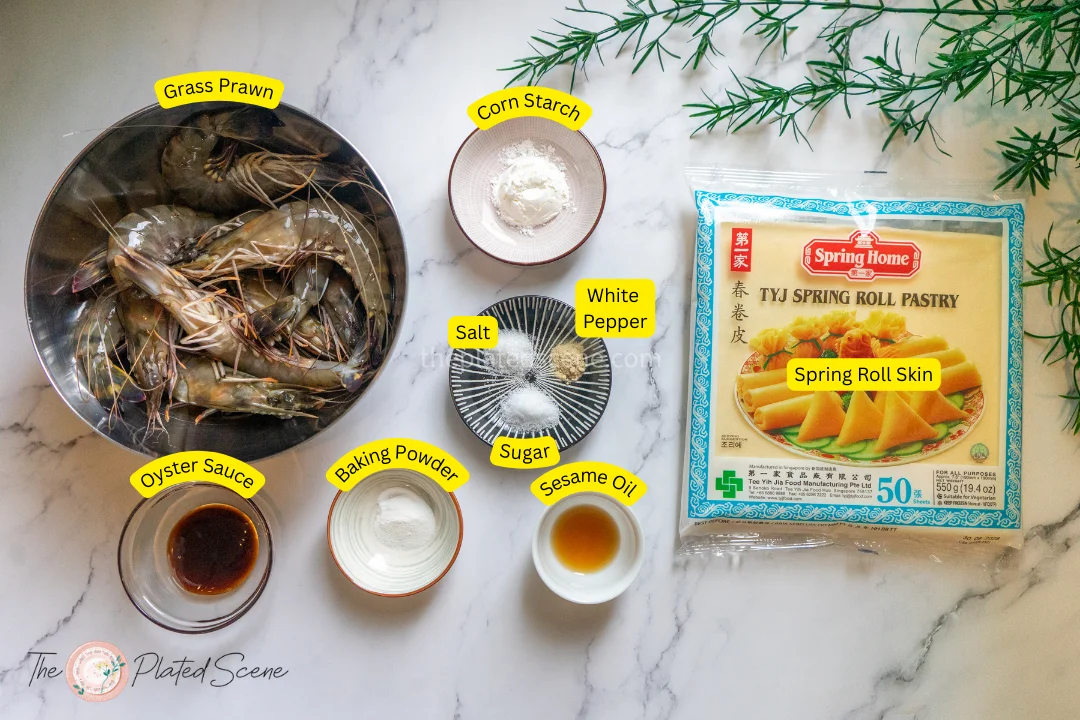
- Grass prawns – These medium-sized prawns are perfect for udang rambutan because they’re sweet, firm, and hold their shape well during frying. Look for prawns that smell fresh and oceanic, with clear flesh and no black spots. Fresh prawns will always give better results than frozen, though if using frozen, thaw completely and pat extra dry.
- Salt – Essential for enhancing the natural sweetness of the prawns and balancing all the other flavors. I prefer fine sea salt as it dissolves more evenly into the mixture.
- White pepper – Provides a gentle heat and aromatic spice without overwhelming the delicate prawn flavor. White pepper is preferred over black for its cleaner taste and because it won’t create dark specks in the mixture.
- Sugar – Just a touch helps to enhance the natural sweetness of the prawns and creates better browning during frying. Regular granulated sugar works perfectly here.
- Oyster sauce – Adds umami depth and a subtle sweetness that complements the prawns beautifully. Choose a good quality oyster sauce for the best flavor – it should be thick and rich, not watery.
- Corn starch – Acts as a binding agent to help hold the prawn mixture together and creates a slightly bouncy texture in the finished balls. Don’t substitute with other starches as they behave differently.
- Baking powder – The secret ingredient that creates that signature springy, crunchy texture in the prawns. It works by creating tiny air bubbles that give the prawns a lighter, more tender bite.
- Sesame oil – Provides a distinctive nutty aroma and flavor that’s essential to the authentic taste. A little goes a long way – too much can be overwhelming.
- Spring roll skin – These thin, delicate wrappers create the signature “spiky” coating when shredded into strips. Look for fresh spring roll wrappers in the refrigerated section – they should be pliable and not dried out or cracked.
How to Make Udang Rambutan
Don’t let the technique intimidate you – while udang rambutan looks impressive, it’s actually quite straightforward once you understand the process. The key is taking your time with each step, especially the preparation of the prawns and spring roll strips. Trust me, the extra attention to detail will reward you with restaurant-quality results that will impress everyone at your table.
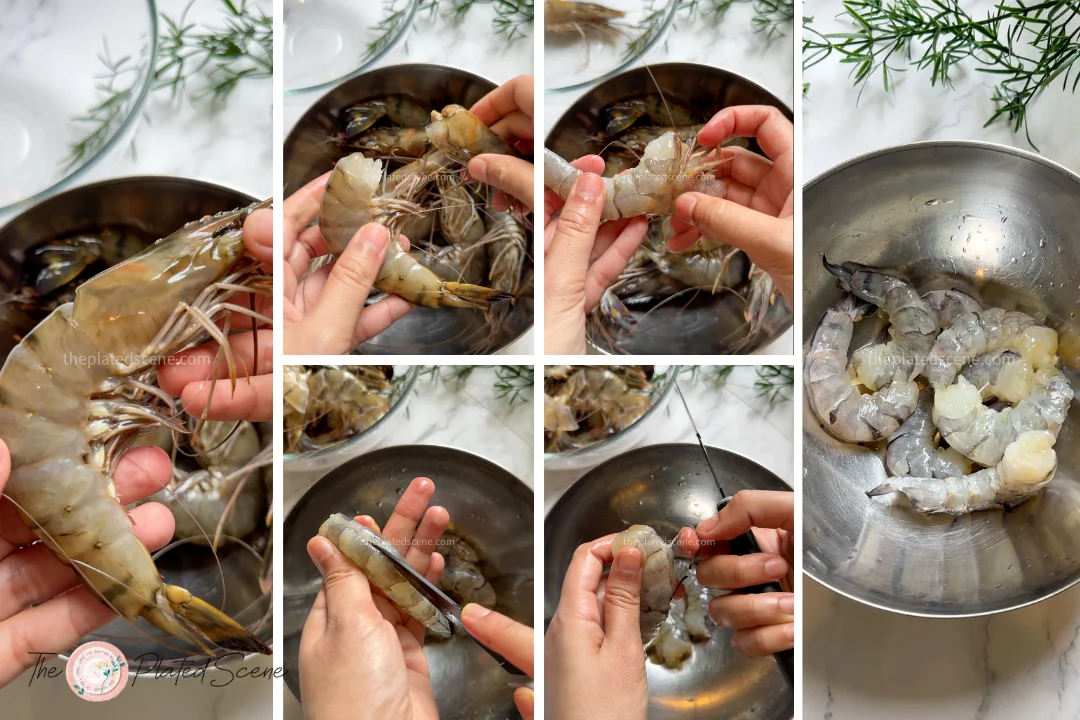
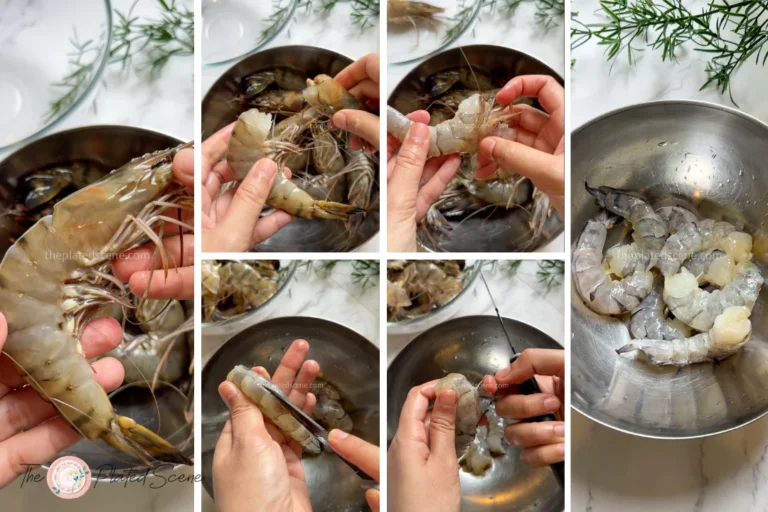
1. Clean, peel and devein the prawns. Start by removing all the shells and legs from your prawns, then make a shallow cut along the back of each prawn to expose and remove that dark vein. This step is crucial for both texture and appearance – any shell fragments or veins will affect the final texture of your udang rambutan. Rinse the cleaned prawns under cold running water, then pat them completely dry with paper towels. I can’t stress enough how important this drying step is, as any excess moisture will prevent the seasonings from adhering properly later.
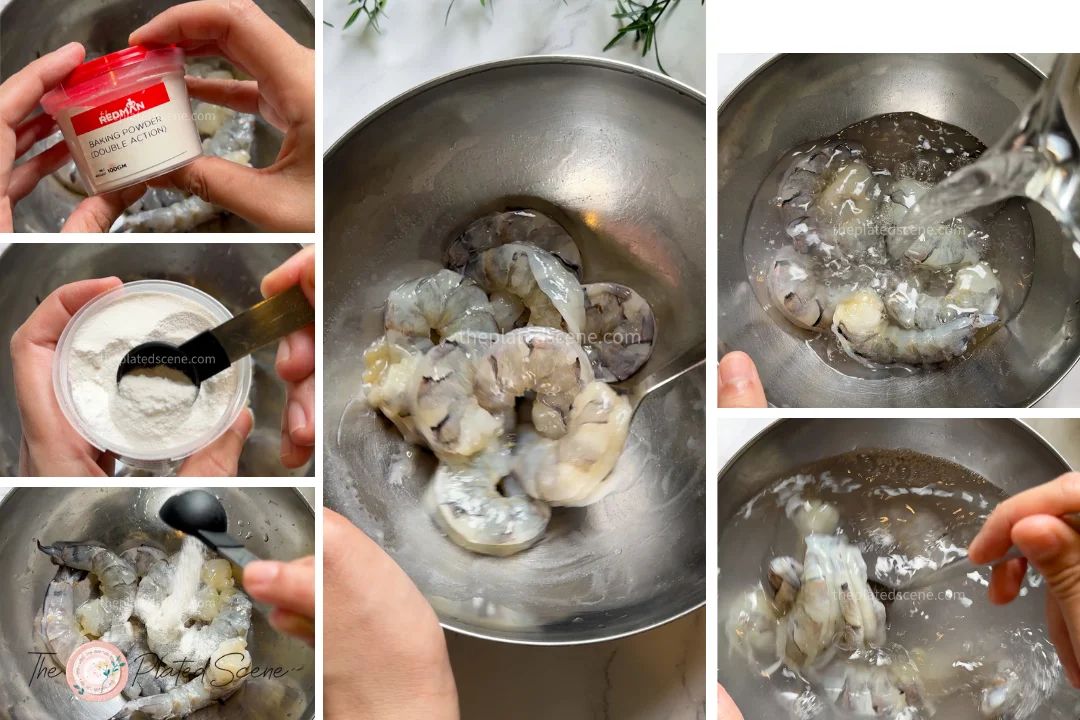
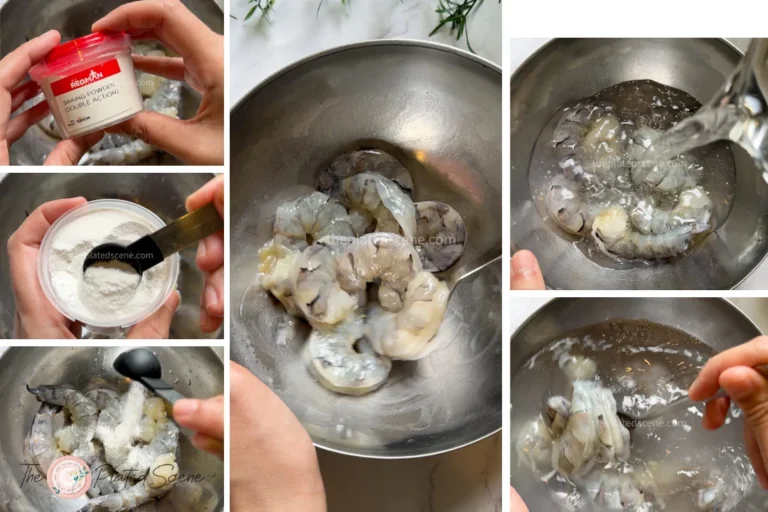
2. Soak prawns with baking powder. In a bowl, toss the cleaned prawns with the baking powder until every piece is evenly coated – this magical step is what creates that signature bouncy, springy texture that makes udang rambutan so special. Let them sit at room temperature for exactly 10 minutes – don’t rush this process as the baking powder needs time to work its magic on the prawn proteins. After the 10 minutes, rinse the prawns briefly under cold water to remove the baking powder, then pat them dry again thoroughly. You’ll notice the prawns feel slightly different now, almost firmer to the touch.
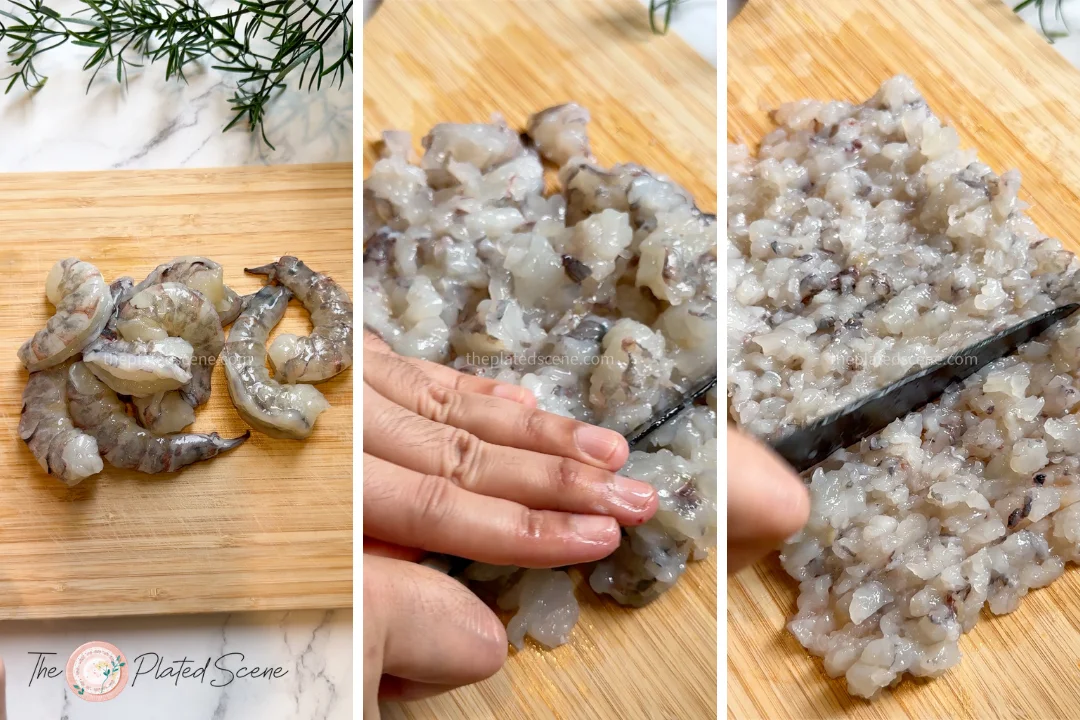
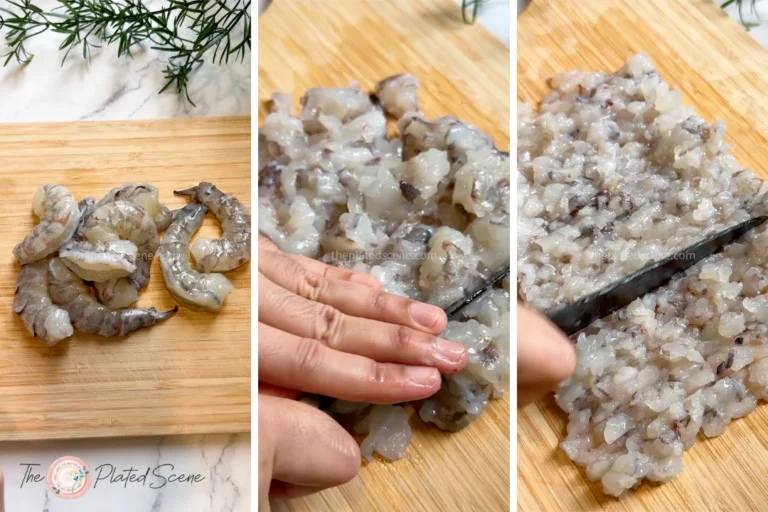
3. Chop the prawns. Using a sharp knife, cut the prawns into small chunks about the size of your thumbnail, but resist the urge to mince them too finely – you want to maintain distinct pieces that will give your udang rambutan a lovely chunky texture when you bite into them. The pieces should be small enough to bind together well but large enough that you can still identify them as prawn pieces. This balance is what separates homemade udang rambutan from the overly processed versions you might find in some restaurants.
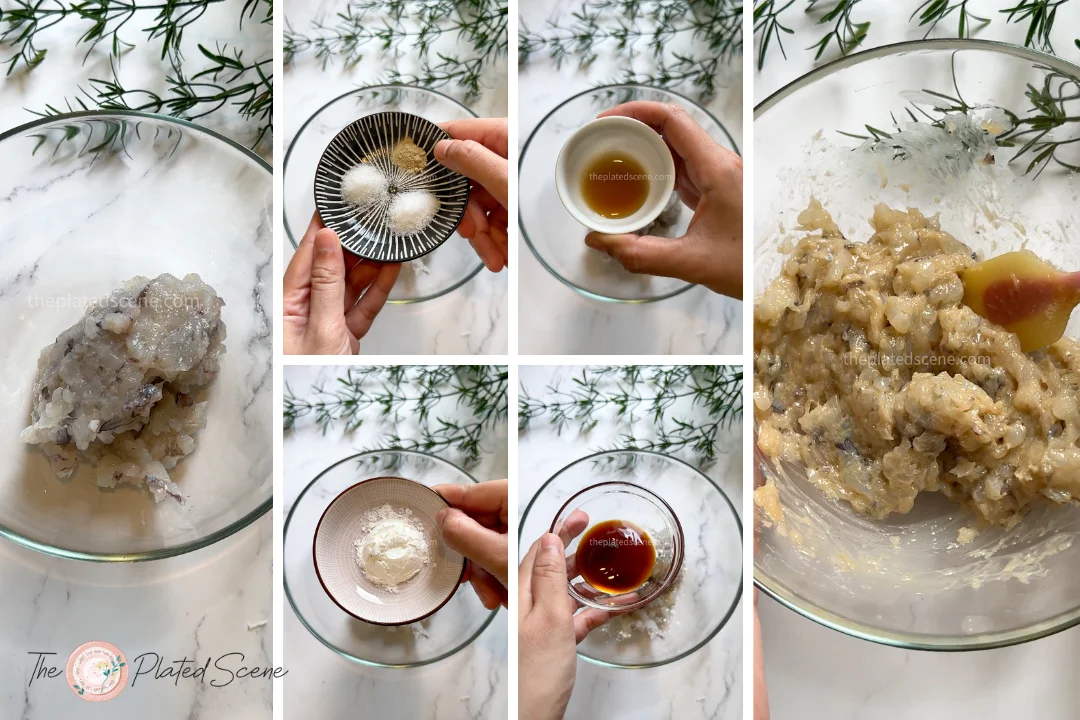
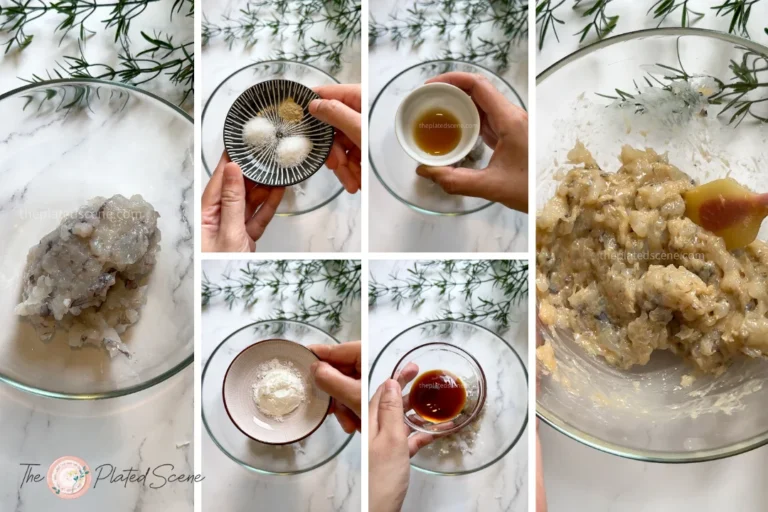
4. Season the prawns. In a clean bowl, combine your chopped prawns with salt, white pepper, sugar, oyster sauce, corn starch, and sesame oil. Mix everything together gently but thoroughly using clean hands or a spoon, making sure every piece of prawn is coated with the seasoning mixture. The mixture should feel slightly sticky and hold together when pressed – if it seems too wet, add a pinch more cornstarch; if too dry, add a few drops of sesame oil. Taste a small piece (it’s safe to eat) and adjust seasoning if needed.
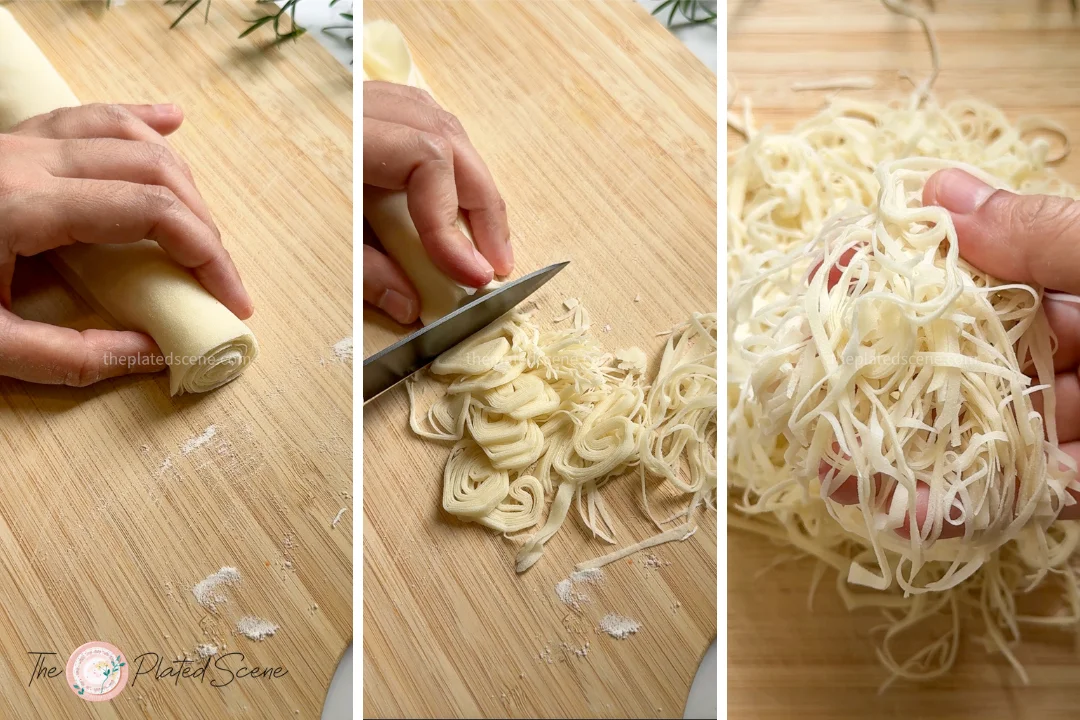
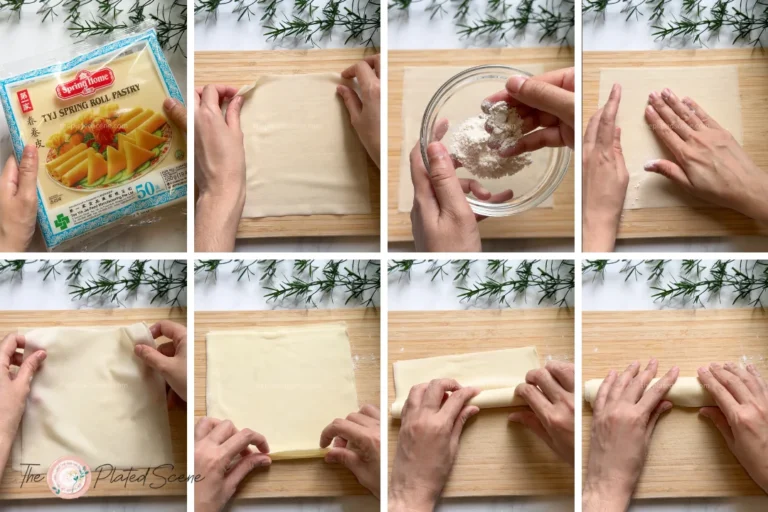
5. Stack the spring roll skins. This is where patience really pays off – stack your spring roll wrappers on a clean cutting board, dusting each layer very lightly with all-purpose flour to prevent them from sticking together. The flour trick is something my mother taught me, and it makes separating the strips so much easier later. Roll the entire stack into a tight log shape, keeping it as even as possible. If your wrappers are a bit stiff, let them come to room temperature first to make rolling easier.
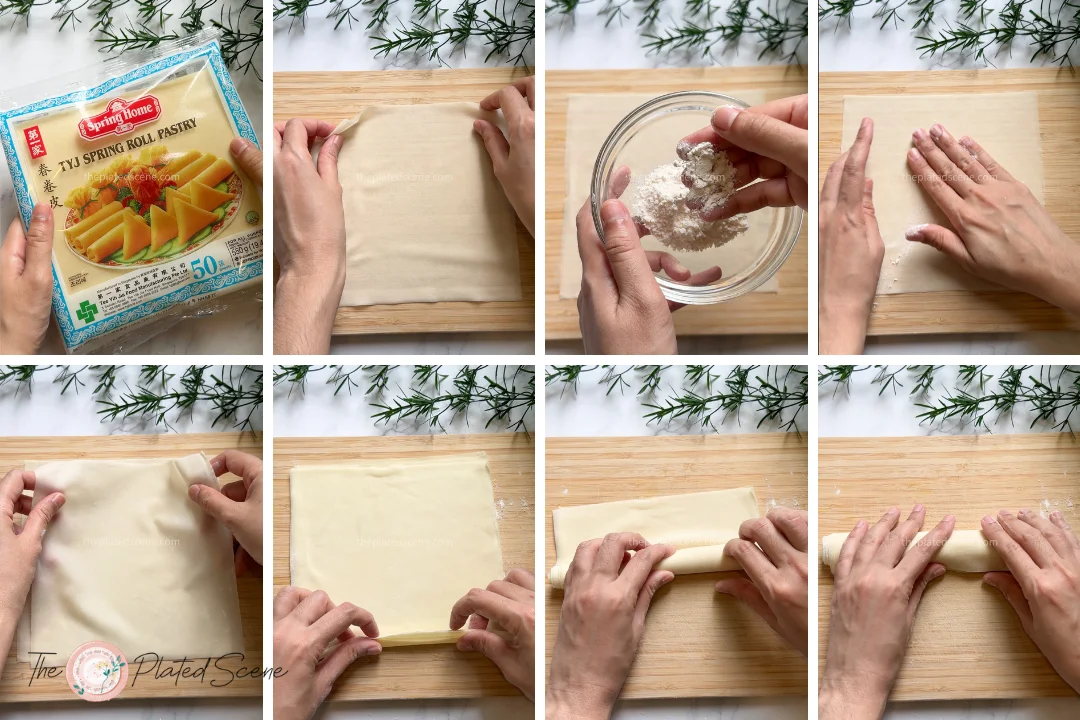
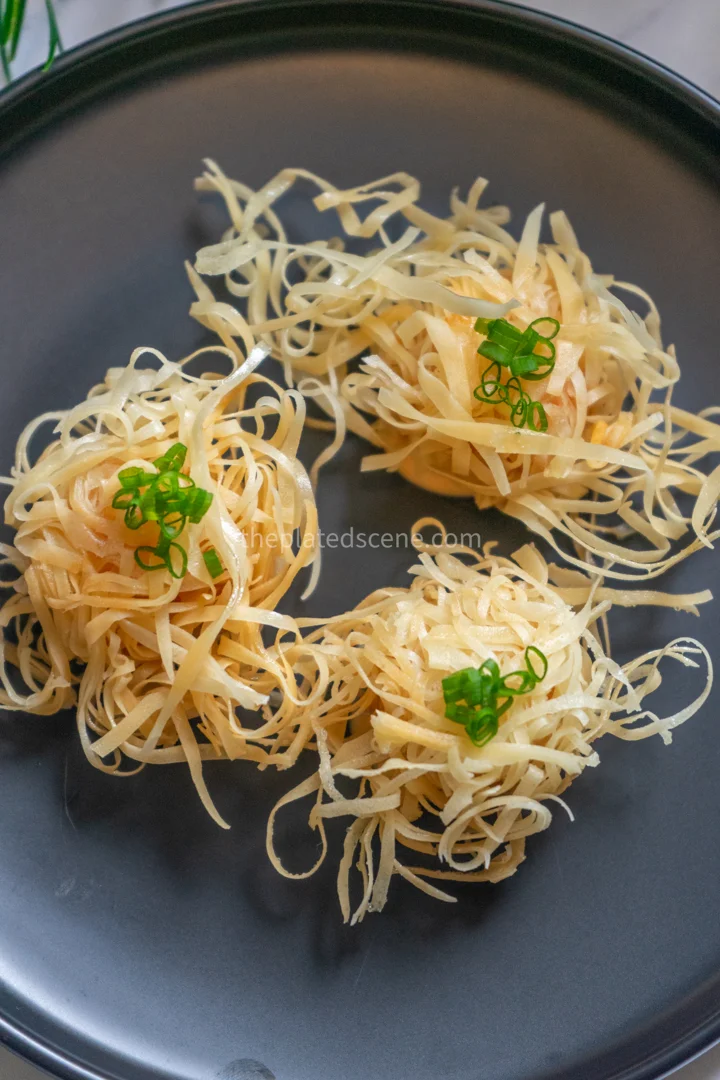
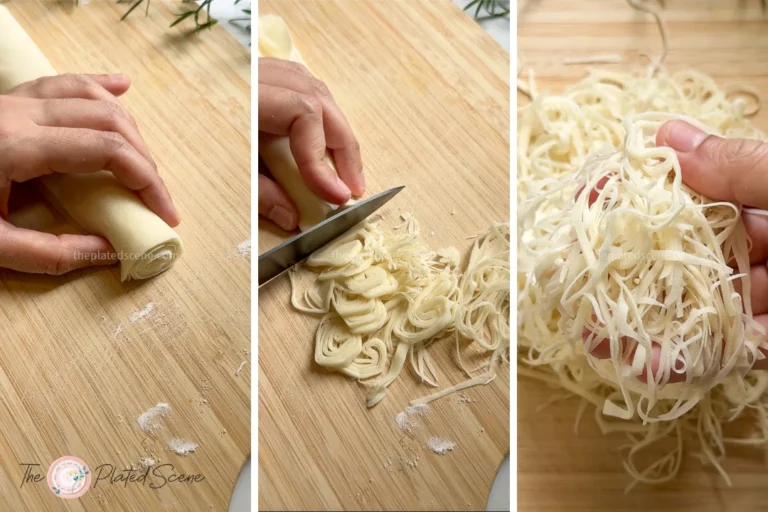
6. Cut into strips. Using your sharpest knife, cut the rolled spring roll stack into the thinnest possible strips – aim for about 2-3mm wide, almost like thin noodles. The thinner you can make these strips, the more dramatic and authentic your udang rambutan will look. Take your time with this step and use a sawing motion rather than pressing down hard, which might compress the stack. Separate the strips gently and spread them out on a plate so they don’t stick back together.
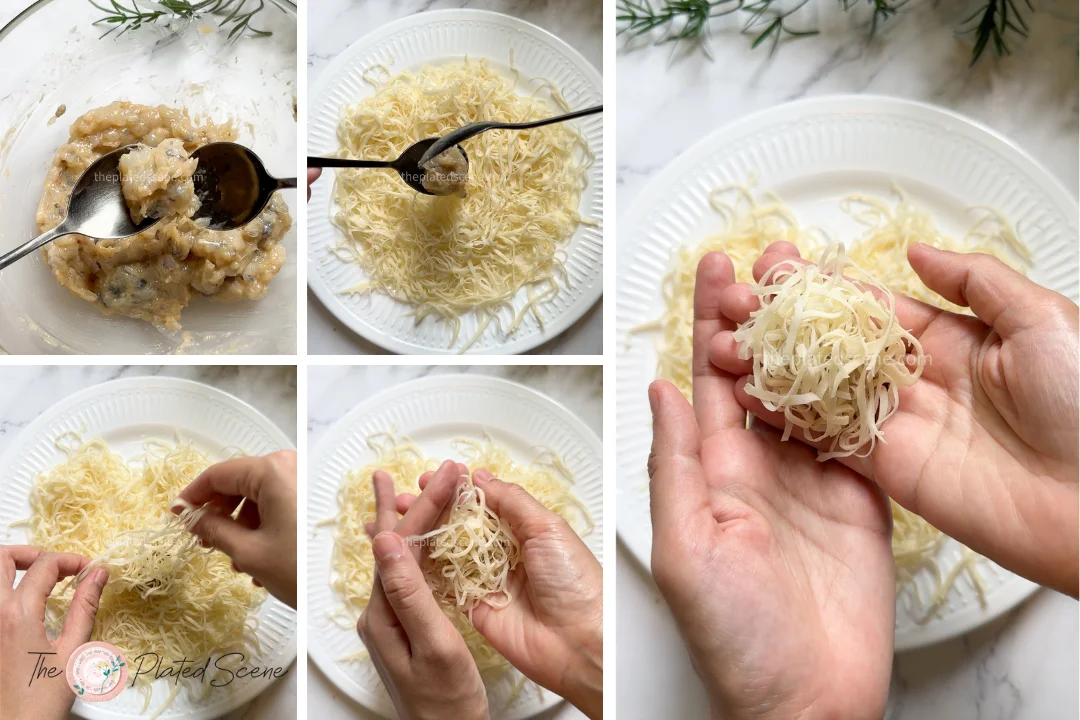
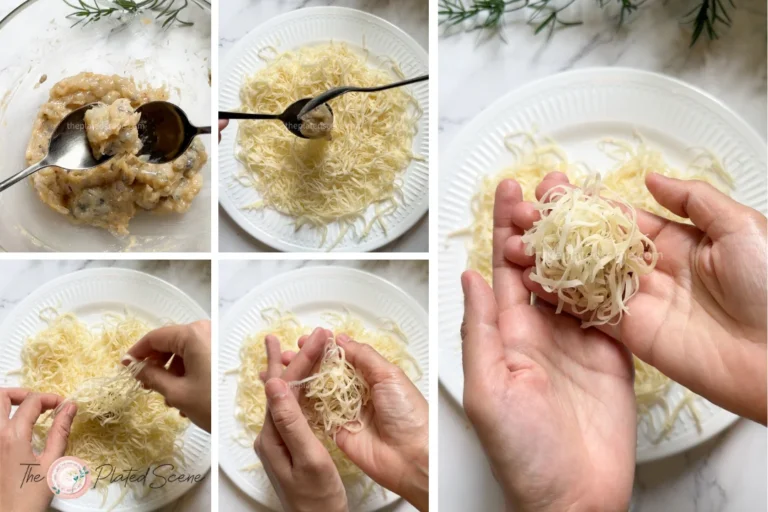
7. Shape the prawn balls. This technique takes a bit of practice, so don’t worry if your first few aren’t perfect spheres. Using two spoons, scoop up about a tablespoon of the seasoned prawn mixture and pass it back and forth between the spoons, turning and shaping until you have a roughly round ball. The mixture should hold together well thanks to the cornstarch binding. Once shaped, immediately roll each ball in the shredded spring roll strips, pressing gently so they stick to the surface. The strips should stick out in all directions like little spikes, creating that signature rambutan appearance.
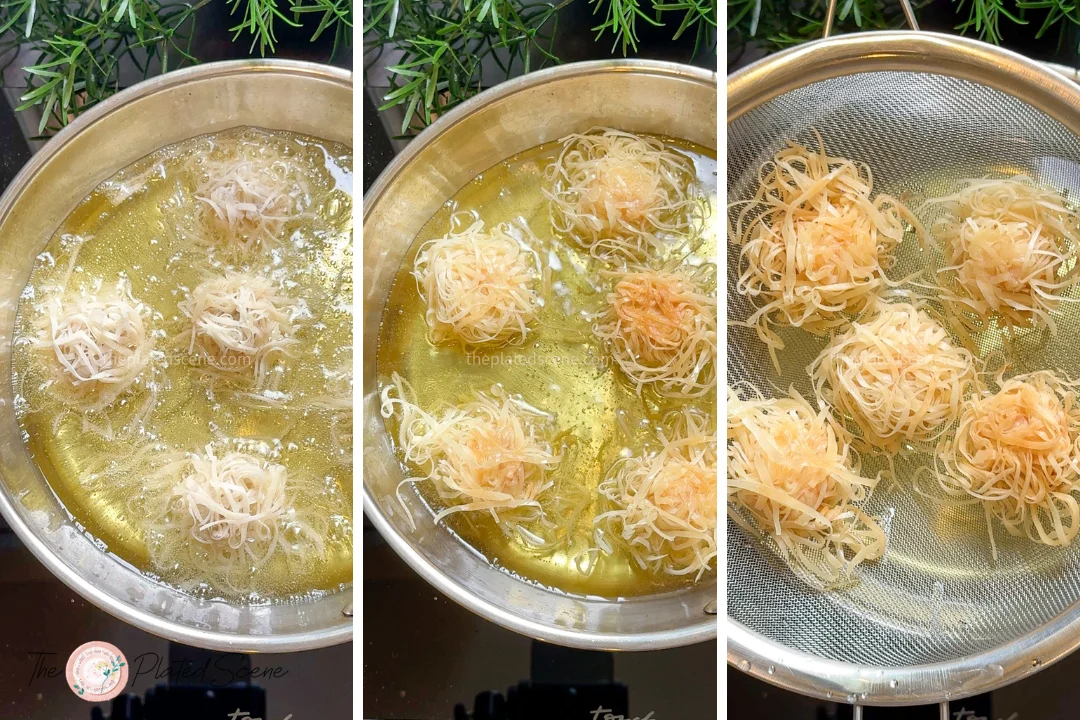
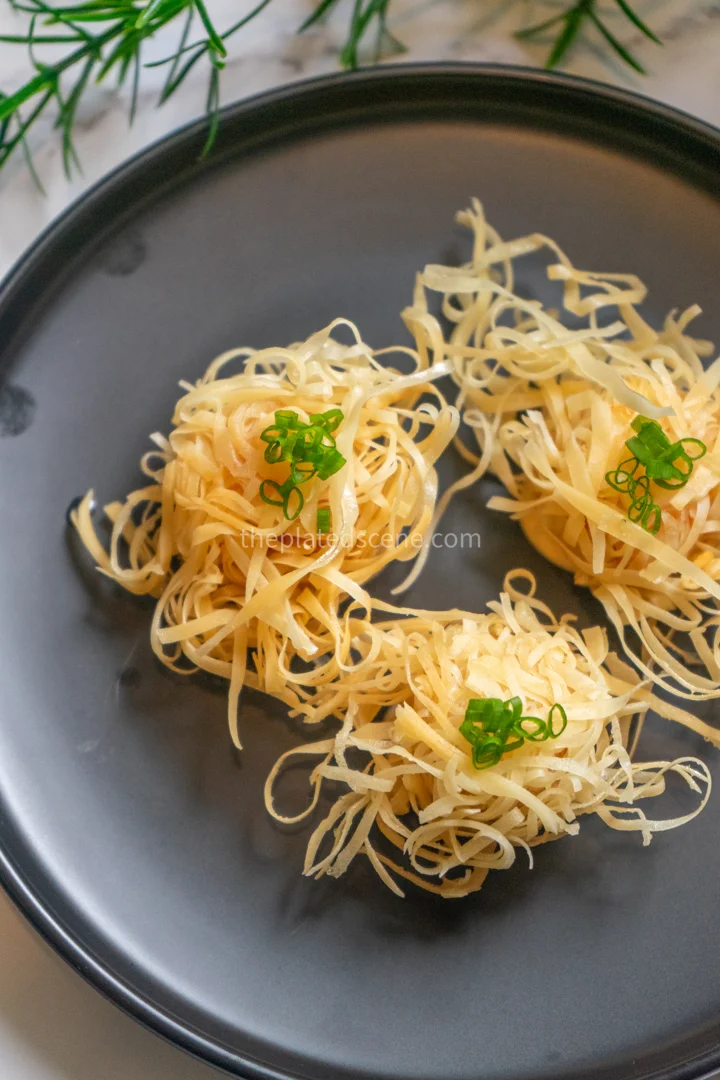
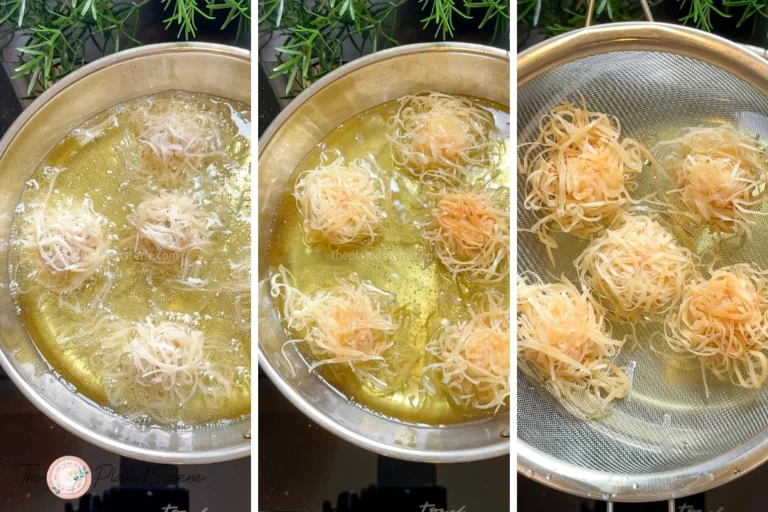
8. Heat the oil and fry the prawn balls. Heat your oil in a wok or deep pot to 160-170°C – this moderate temperature is crucial for cooking the prawns through while achieving that perfect golden crispiness. Test the temperature by dropping in a spring roll strip; it should sizzle gently and float without browning immediately. Carefully lower 4-5 udang rambutan into the oil, being careful not to overcrowd the pot. Fry for exactly 5 minutes, turning occasionally with a slotted spoon, until the coating is crispy and golden brown and the prawns are completely cooked through. The strips will fan out beautifully during frying, creating that spectacular spiky appearance.
What to Serve With Udang Rambutan
Udang rambutan shines brightest as an appetizer, but it pairs beautifully with other Indonesian dishes for a complete feast. I love serving it alongside our Indonesian Capcay for a lovely contrast of textures and flavors. The crispy prawns complement the fresh, crunchy vegetables perfectly. For dipping sauces, sweet chili sauce is traditional and delicious, but I also enjoy it with a spicy Indonesian sambal for those who like extra heat. A cold Indonesian iced tea or fresh coconut water makes the perfect beverage pairing, helping to cleanse the palate between these rich, crispy bites.
Troubleshooting Tips
If your udang rambutan turns out greasy, the oil temperature was likely too low – next time, make sure it’s properly heated to 160-170°C before adding the balls. If the coating isn’t staying crispy, it usually means the prawns weren’t dried thoroughly enough before seasoning, or there was too much moisture in your mixture. Don’t worry if the spring roll strips don’t stick perfectly on your first try – this technique improves with practice, and even imperfect ones taste absolutely delicious. If your balls are falling apart during frying, add a bit more cornstarch to the mixture for better binding.
Frequently Asked Questions
Can I make udang rambutan ahead of time?
You can prepare the prawn balls and coat them with strips up to 4 hours ahead, then store them covered in the refrigerator. Fry them just before serving for the best texture. The coating may lose some crispiness if stored after frying, so it’s best to serve immediately.
How do I store leftover udang rambutan?
Store any leftovers in the refrigerator for up to 2 days in an airtight container. To restore crispiness, reheat them in a 180°C oven for 5-7 minutes, or air fry for 3-4 minutes. Avoid microwaving as it will make the coating soggy.
Can I freeze uncooked udang rambutan?
Yes! You can freeze the shaped but uncoated prawn balls for up to 1 month. Thaw them in the refrigerator, then coat with spring roll strips and fry as usual. You can also freeze them already coated, but add 1-2 extra minutes to the frying time.
What’s the best oil temperature for frying udang rambutan?
Maintain the oil at 160-170°C throughout frying. Too hot and the outside burns before the prawns cook through; too cool and they become greasy. A kitchen thermometer is your best friend for consistent results.
Can I use other types of prawns?
While grass prawns work best for udang rambutan, you can substitute with other medium-sized prawns. Avoid very large prawns as they’re harder to chop and shape, and very small ones can get lost in the coating.
I hope this recipe brings as much joy to your kitchen as it has to mine! Making udang rambutan is truly a labor of love, but the results are so worth every minute spent carefully shredding those spring roll strips and shaping each ball. There’s something deeply satisfying about creating these golden, spiky treasures that look as beautiful as they taste. Please try this recipe and let me know how your udang rambutan turns out – I’d love to see photos of your creations and hear about any family variations you discover along the way!
Udang Rambutan: Indonesian Crispy Prawn Balls
4
servings30
minutes40
minutes300
kcal1
hour10
minutesKeep the screen of your device on
Ingredients
- For the filling
8.82 oz 250 g grass prawns, peeled and deveined
0.5 tsp 0.5 tsp salt
0.25 tsp 0.25 tsp white pepper
0.5 tsp 0.5 tsp sugar
1 tsp 1 tsp oyster sauce
1 tbsp 1 tbsp corn starch
0.5 tsp 1/2 tsp baking powder (for crunchy, springy texture)
0.5 tsp 0.5 tsp sesame oil
- For the coating
5 5 –6 sheets of spring roll skin, shredded into thin strips
Oil for deep-frying
Directions
- Clean, peel and devein the prawns.
Start by removing all the shells and legs from your prawns, then make a shallow cut along the back of each prawn to expose and remove that dark vein. This step is crucial for both texture and appearance – any shell fragments or veins will affect the final texture of your udang rambutan. Rinse the cleaned prawns under cold running water, then pat them completely dry with paper towels. I can’t stress enough how important this drying step is, as any excess moisture will prevent the seasonings from adhering properly later.
- Soak prawns with baking powder.
In a bowl, toss the cleaned prawns with the baking powder until every piece is evenly coated – this magical step is what creates that signature bouncy, springy texture that makes udang rambutan so special. Let them sit at room temperature for exactly 10 minutes – don’t rush this process as the baking powder needs time to work its magic on the prawn proteins. After the 10 minutes, rinse the prawns briefly under cold water to remove the baking powder, then pat them dry again thoroughly. You’ll notice the prawns feel slightly different now, almost firmer to the touch. - Chop the prawns.
Using a sharp knife, cut the prawns into small chunks about the size of your thumbnail, but resist the urge to mince them too finely – you want to maintain distinct pieces that will give your udang rambutan a lovely chunky texture when you bite into them. The pieces should be small enough to bind together well but large enough that you can still identify them as prawn pieces. This balance is what separates homemade udang rambutan from the overly processed versions you might find in some restaurants. - Season the prawns.
In a clean bowl, combine your chopped prawns with salt, white pepper, sugar, oyster sauce, corn starch, and sesame oil. Mix everything together gently but thoroughly using clean hands or a spoon, making sure every piece of prawn is coated with the seasoning mixture. The mixture should feel slightly sticky and hold together when pressed – if it seems too wet, add a pinch more cornstarch; if too dry, add a few drops of sesame oil. Taste a small piece (it’s safe to eat) and adjust seasoning if needed. - Stack the spring roll skins.
This is where patience really pays off – stack your spring roll wrappers on a clean cutting board, dusting each layer very lightly with all-purpose flour to prevent them from sticking together. The flour trick is something my mother taught me, and it makes separating the strips so much easier later. Roll the entire stack into a tight log shape, keeping it as even as possible. If your wrappers are a bit stiff, let them come to room temperature first to make rolling easier. - Cut into strips.
Using your sharpest knife, cut the rolled spring roll stack into the thinnest possible strips – aim for about 2-3mm wide, almost like thin noodles. The thinner you can make these strips, the more dramatic and authentic your udang rambutan will look. Take your time with this step and use a sawing motion rather than pressing down hard, which might compress the stack. Separate the strips gently and spread them out on a plate so they don’t stick back together. - Shape the prawn balls.
This technique takes a bit of practice, so don’t worry if your first few aren’t perfect spheres. Using two spoons, scoop up about a tablespoon of the seasoned prawn mixture and pass it back and forth between the spoons, turning and shaping until you have a roughly round ball. The mixture should hold together well thanks to the cornstarch binding. Once shaped, immediately roll each ball in the shredded spring roll strips, pressing gently so they stick to the surface. The strips should stick out in all directions like little spikes, creating that signature rambutan appearance. - Heat the oil and fry the prawn balls.
Heat your oil in a wok or deep pot to 160-170°C – this moderate temperature is crucial for cooking the prawns through while achieving that perfect golden crispiness. Test the temperature by dropping in a spring roll strip; it should sizzle gently and float without browning immediately. Carefully lower 4-5 udang rambutan into the oil, being careful not to overcrowd the pot. Fry for exactly 5 minutes, turning occasionally with a slotted spoon, until the coating is crispy and golden brown and the prawns are completely cooked through. The strips will fan out beautifully during frying, creating that spectacular spiky appearance.
Notes
- Serve immediately while hot and crispy for best texture. Can be frozen before coating for up to 1 month – fry directly from frozen.

