

Tape goreng has always been one of the most comforting afternoon snacks in my life. When I used to work from home in Indonesia, my mother would often make a warm plate of these fried fermented cassava balls for me. She never announced it. I would simply hear the soft sizzling from the kitchen and know that something delicious was coming. The sweet aroma of tape goreng slowly filled the house, and it always made my long workday feel a little lighter and a lot more loved.
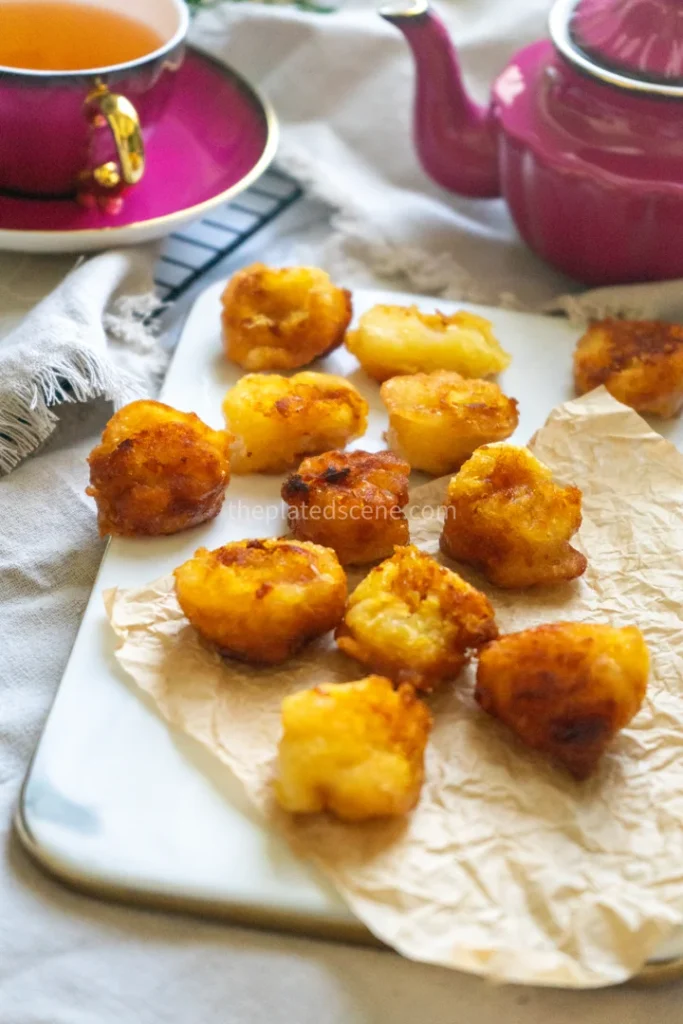
Now that I live in Singapore, tape goreng is not something I can easily find. I miss those simple afternoons when my mother would bring a small plate to my desk and remind me to take a break. Because it is so rare here, I get genuinely excited whenever I spot tape at an Indonesian grocery store. It instantly brings back memories of home. The moment I see it on the shelf, I already imagine the crispy outside, the soft and slightly tangy inside, and the comfort it brings. Making these fried fermented cassava balls in my Singapore kitchen feels like a small way to stay connected to my roots and to recreate the warmth my mother used to bring into my day.
Table of Contents
What Is Tape
Tape is a traditional Indonesian food made from fermented cassava. It is soft, slightly sticky, naturally sweet, and has a gentle tanginess from the fermentation process. The fermentation is created by mixing cooked cassava with a special starter culture called ragi, then letting it rest for a couple of days until the texture becomes tender and fragrant.
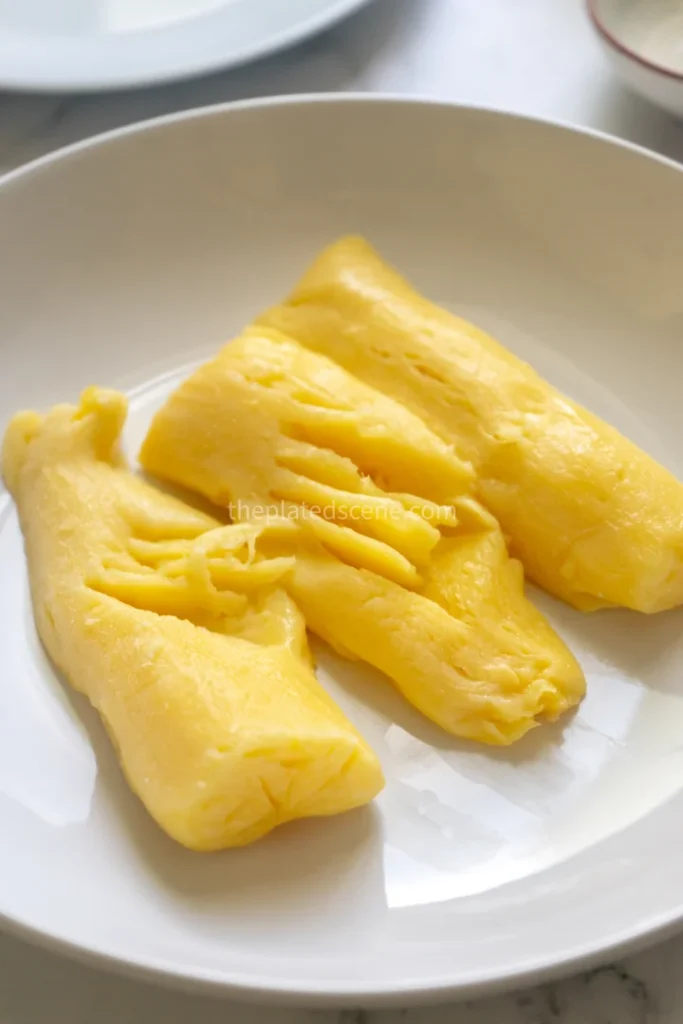
Tape is commonly enjoyed as a snack on its own, but it is also used in many classic Indonesian desserts and fried treats such as tape goreng. The sweetness and light acidity make it perfect for cooking because it caramelizes beautifully when heated. For many Indonesians, tape is a nostalgic ingredient that brings back memories of home, traditional markets, and homemade snacks prepared by mothers and grandmothers.
What Is Tape Goreng Rondo Royal
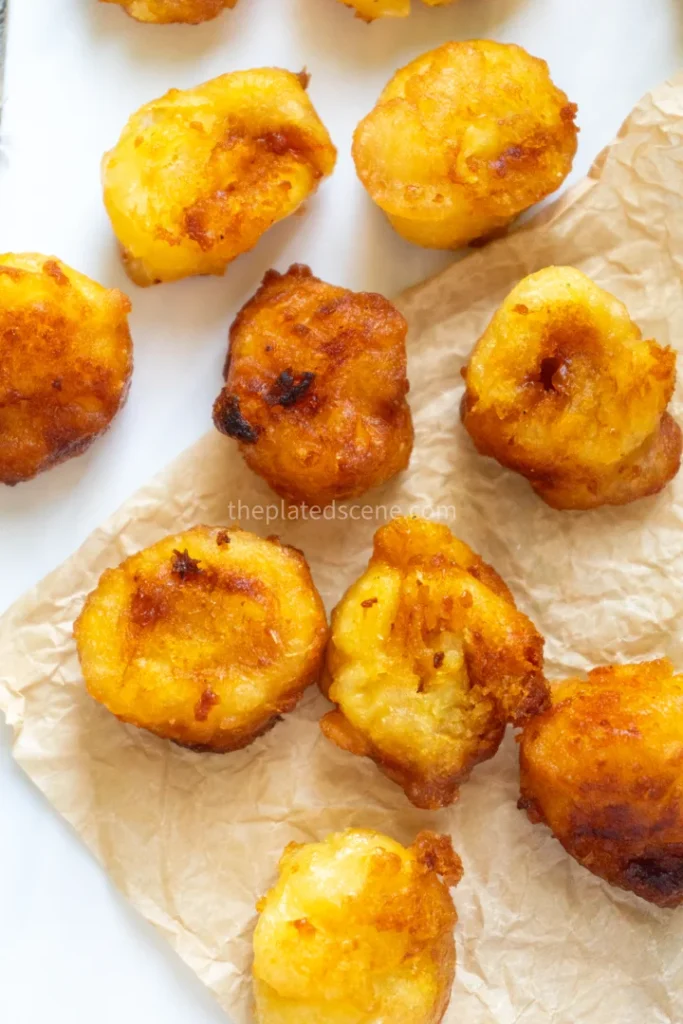
Tape goreng rondo royal is a traditional Javanese snack made from tape, which is fermented cassava that becomes soft, sweet, and slightly tangy through the fermentation process. The name has a playful meaning in Javanese culture. “Rondo” means widow and “royal” means expensive or luxurious. The story goes that this snack was often made by widows who used leftover tape at home, turning simple ingredients into something special and delicious. Over time, the name became a charming part of its identity rather than a literal description.
To make tape goreng rondo royal, the tape is gently mashed, shaped, dipped in a light batter, and fried until it becomes golden, crisp on the outside, and soft on the inside. The heat brings out its natural sweetness and creates a beautiful contrast between the crunchy exterior and the warm, custard-like center. In English, this snack is often described as Indonesian Fried Fermented Cassava Balls, a simple name that captures its texture and flavor. Tape goreng rondo royal is a humble treat that carries both comfort and tradition in every bite.
Taste and Texture Expectations
If you have never tried tape goreng before, imagine a snack that is crispy on the outside yet soft and custardy on the inside. These fried fermented cassava balls have a gentle sweetness that comes naturally from the tape itself. The fermentation gives the cassava a light tanginess that balances the flavor, making each bite feel warm and comforting without being overly sweet.
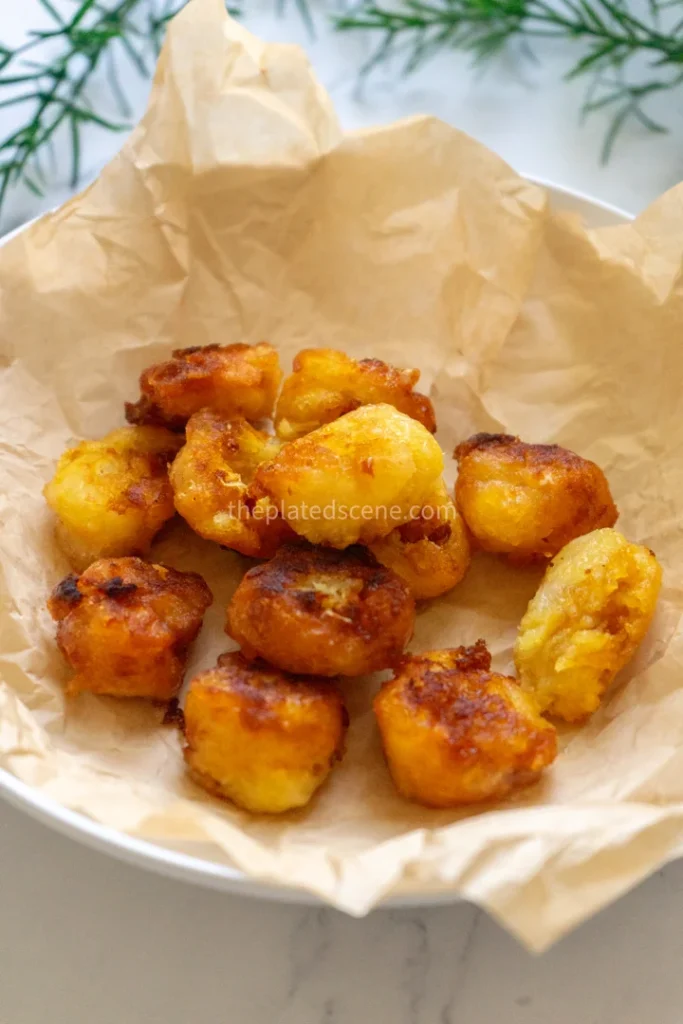
When the tape is fried, the batter forms a thin, golden crust that crackles softly when you bite into it. Inside, the texture is almost pudding-like, tender, and slightly sticky in the best way. The heat brings out a caramel-like aroma, and the natural sugars in the tape soften into a melt-in-your-mouth filling. Tape goreng is the kind of snack that feels both nostalgic and indulgent, perfect for an afternoon treat with a cup of tea or coffee.
Ingredients for Tape Goreng Rondo Royal
Tape goreng rondo royal uses very simple everyday ingredients, which is why it is such a beloved home-style snack. You only need soft tape singkong for the base, a light mixture of flour and cornstarch to help shape it, and a small pinch of salt to balance the sweetness. For the filling, palm sugar melts into a soft caramel center that makes every bite extra special.
The frying batter is just as simple. A mix of all purpose flour, cornstarch, a touch of sugar, and water creates a light coating that turns crisp and golden when fried. Even with these humble ingredients, the result tastes nostalgic and comforting.
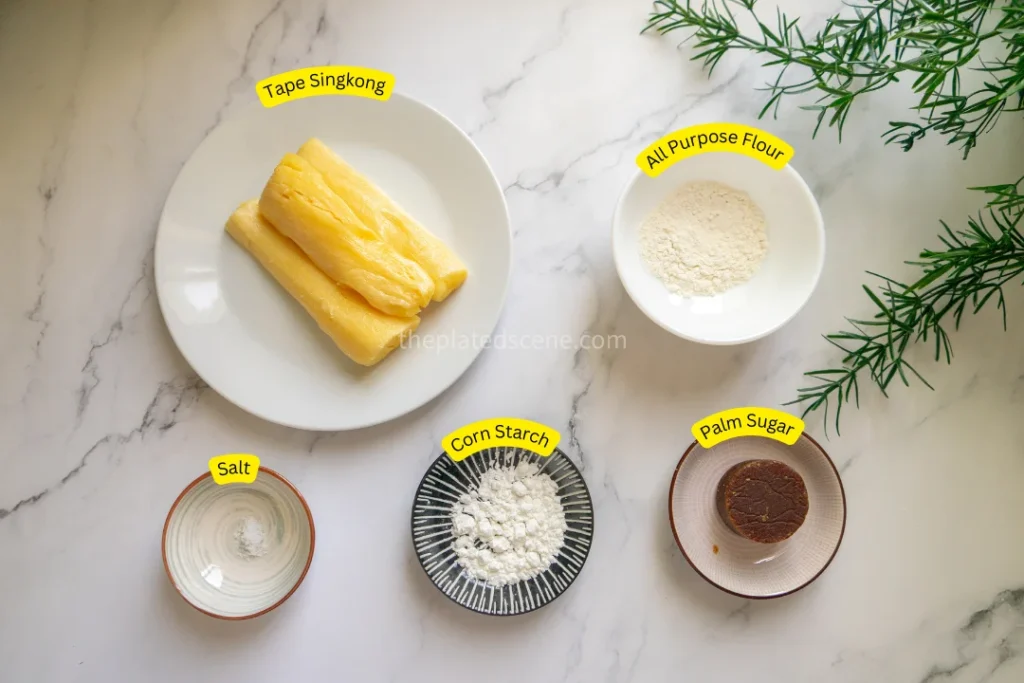
Tape Singkong
Tape singkong is the heart of tape goreng. It is fermented cassava that becomes soft, sweet, and slightly tangy after fermentation. The natural sugars give the snack its caramel-like flavor when fried. You want tape that is moist, tender, and fragrant.
Substitution: If tape singkong is not available, you can use frozen fermented cassava from Indonesian or Thai grocery stores. Fresh cassava cannot replace tape since it lacks fermentation, but you can recreate a similar feel with mashed ripe bananas for a completely different yet delicious twist.
All Purpose Flour (for the tape mixture)
A small amount of flour helps bind the tape together so you can shape it easily. It gives the mixture structure without altering the flavor.
Substitution: You can use cake flour for a softer texture or rice flour for a slightly chewier finish.
Cornstarch (for the tape mixture)
Cornstarch lightens the mixture and creates a smoother interior after frying. It also helps hold the tape together without making it dense.
Substitution: Potato starch works well and even gives a silkier texture. Tapioca starch can also be used if you want a more elastic, Indonesian-style texture.
Salt
A pinch of salt is essential to balance the sweetness of the tape and palm sugar. It makes the overall flavor rounder and deeper.
Substitution: You can use sea salt or Himalayan salt. Avoid skipping it because the snack may taste too sweet or flat.
Filling Ingredients
Palm Sugar
Palm sugar melts into a soft, caramel-like center that makes the snack irresistible. It adds depth, smokiness, and a richer sweetness compared to regular sugar.
Substitution: Coconut sugar is the closest alternative. Brown sugar also works, but it will be sweeter and less complex in flavor.
Frying Batter Ingredients
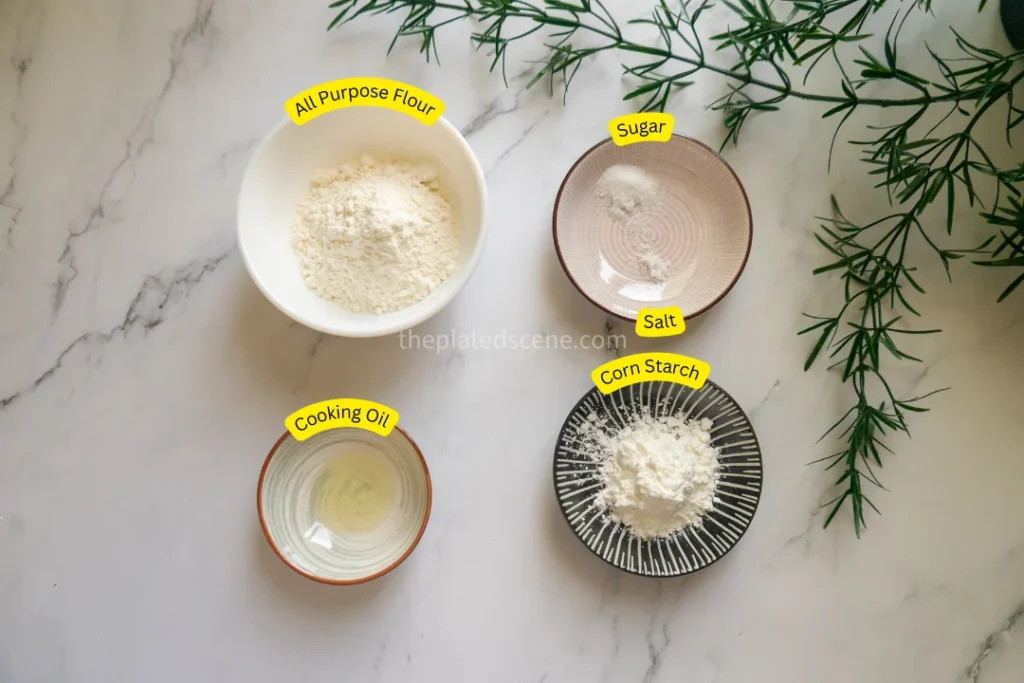
All Purpose Flour
The main base for the batter. It creates a crisp, golden outer shell that protects the soft tape inside.
Substitution: Cake flour will create a thinner, lighter crust. Rice flour will give a crispier and slightly crackly texture.
Cornstarch
Cornstarch helps the batter fry more lightly and crisply. It keeps the coating delicate instead of heavy.
Substitution: Potato starch or tapioca starch both work and often produce an even crunchier finish.
Salt
A pinch of salt seasons the batter, so the outer layer tastes good on its own and does not rely only on sweetness.
Substitution: Any fine salt works. Avoid coarse salt because it may not dissolve in the batter.
Sugar
A touch of sugar helps the batter brown beautifully and complements the natural sweetness of the tape.
Substitution: Any fine-grain sugar works. Coconut sugar will give a darker color and deeper flavor.
Water
Water thins the batter into the right consistency so it coats the tape lightly. You want a thin batter for an airy crunch.
Substitution: Cold sparkling water or ice water can make the batter extra crispy. Coconut milk can be used if you want a richer flavor, but the coating will be slightly thicker.
Step-by-Step Instructions
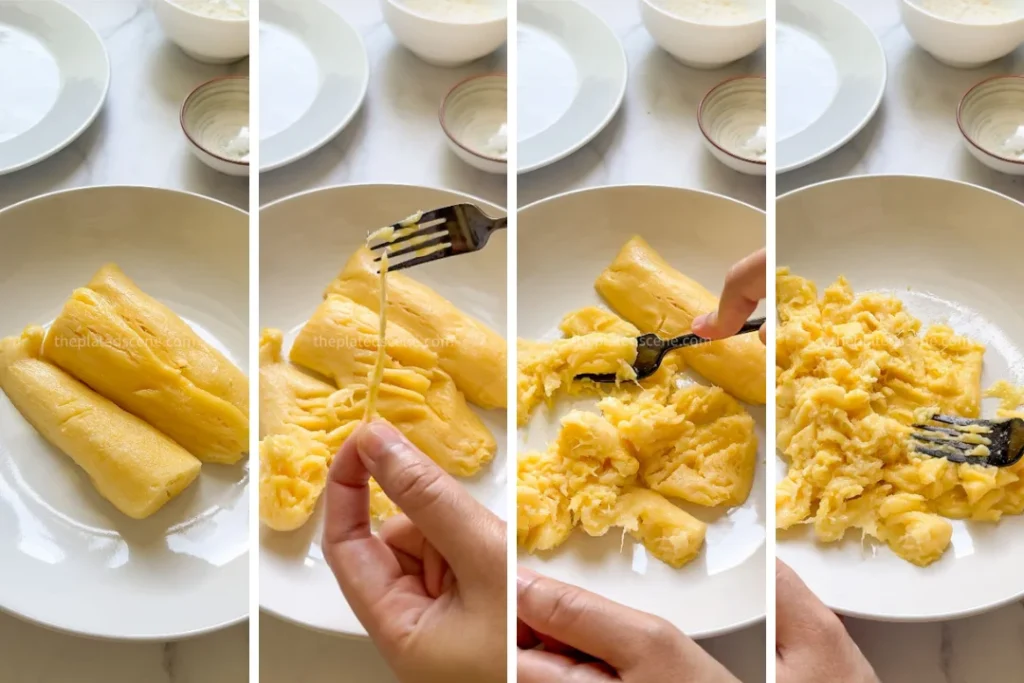
Step 1: Prepare the tape
Remove any hard or fibrous parts from the tape singkong and place it in a mixing bowl. Gently mash the tape with a fork or your hand until it is soft and mostly smooth. It is okay if there are a few small chunks left. These will give your tape goreng a nice texture.
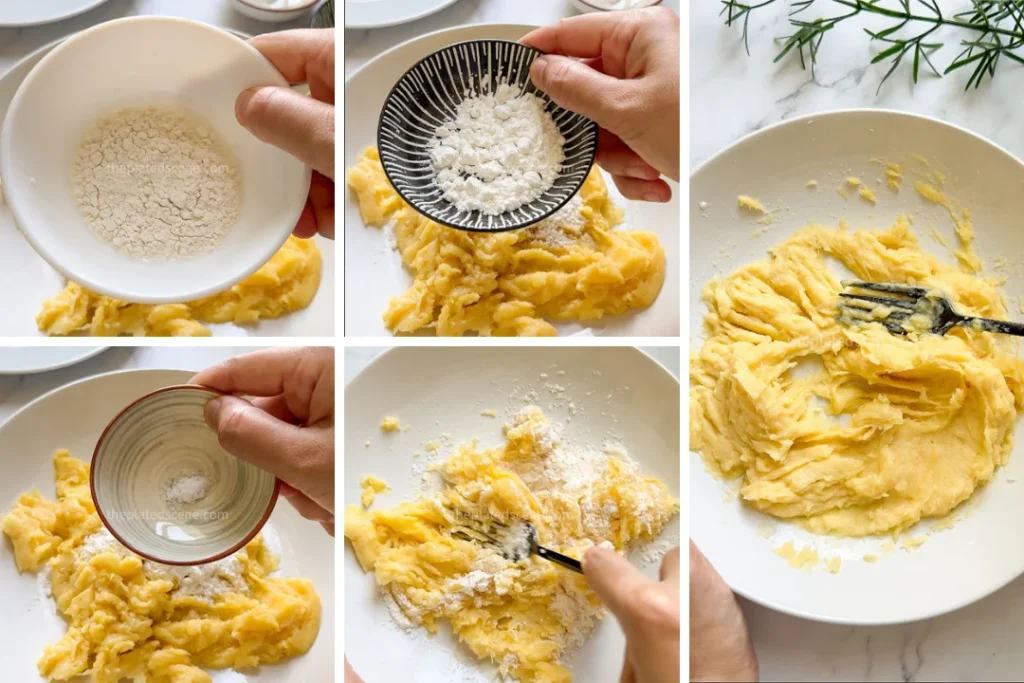
Step 2: Mix the tape base
Add the all-purpose flour, cornstarch, and a pinch of salt into the bowl with the mashed tape. Use a spoon or your hand to mix everything together until the flour and cornstarch are fully blended into the tape. You should get a soft dough that is easy to shape and not too sticky. If it feels very wet, you can dust your hands lightly with flour when shaping.
Step 3: Prepare the palm sugar filling
Chop the palm sugar into small pieces so it will melt more easily inside the fried fermented cassava balls. Set the chopped palm sugar aside in a small bowl. Try to keep the pieces small so they fit nicely in the center of each ball.
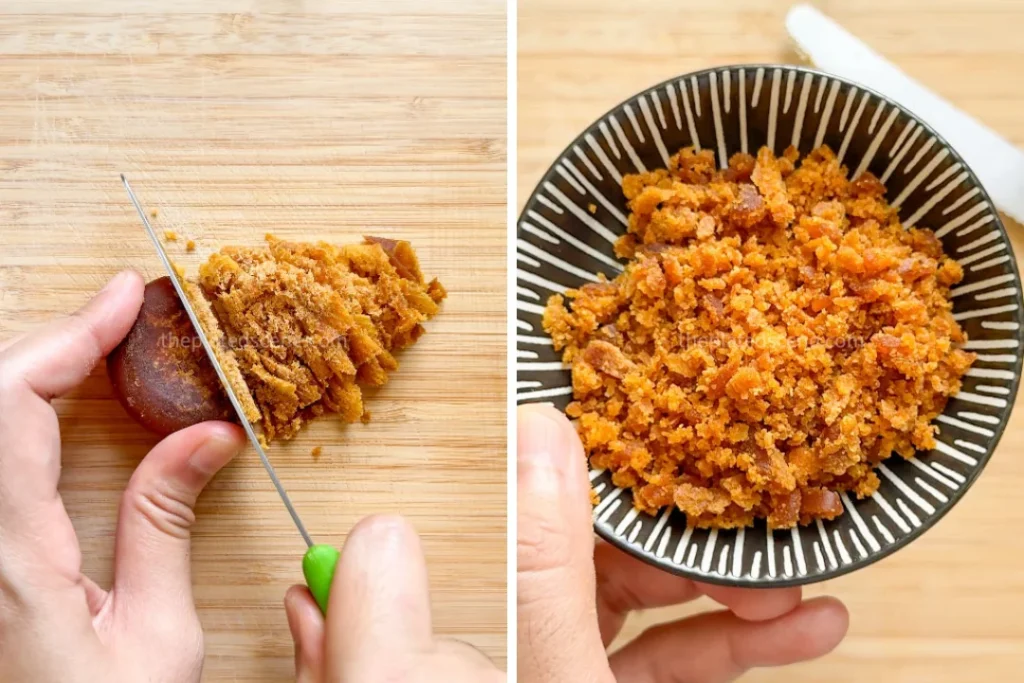
Step 4: Shape the tape balls
Take a small amount of the tape mixture in your hand and flatten it into a round disc, about the size of a large coin or a small cookie. Place a few small pieces of palm sugar in the center. Carefully fold the edges over the filling and roll it gently between your palms to form a smooth ball. Make sure the palm sugar is fully covered so it does not leak out during frying. Repeat until all the tape mixture is used up. Place the shaped balls on a plate or tray.
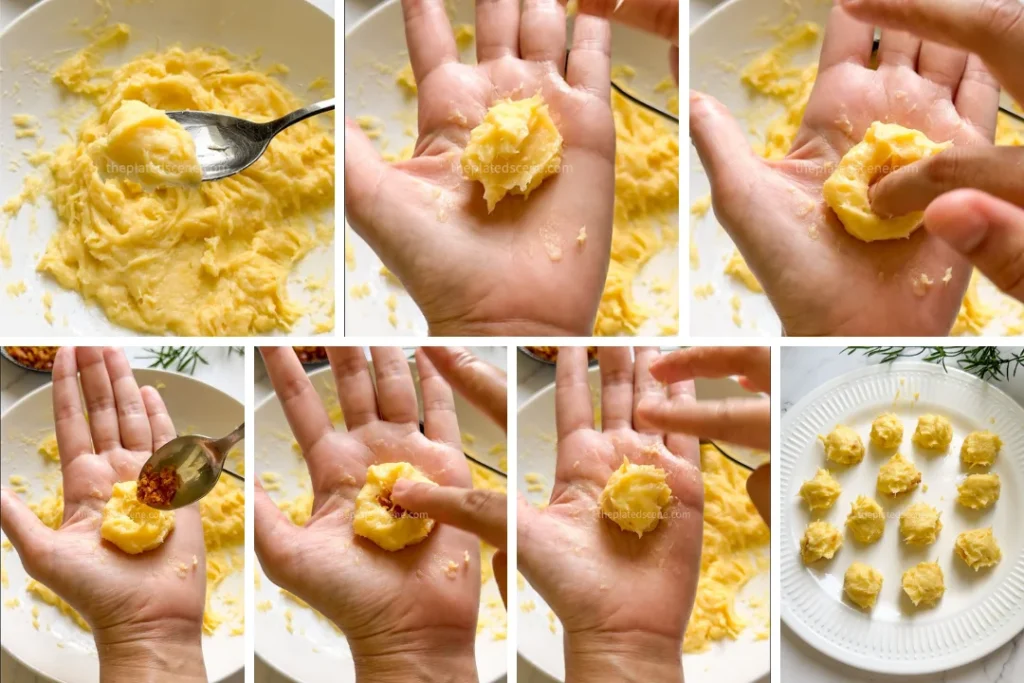
Step 5: Chill the shaped balls (optional but helpful)
If you have time, place the tray of tape balls in the fridge for about 10 to 15 minutes. This helps them firm up slightly, making them easier to coat in batter and fry without breaking.
Step 6: Prepare the frying batter
In a clean bowl, add the all purpose flour, cornstarch, a pinch of salt, and sugar. Pour in the water gradually while stirring with a whisk or fork. Mix until you get a smooth, lump free batter. The consistency should be slightly thicker than crepe batter but still runny enough to coat the tape balls in a thin layer. If it is too thick, add a little more water. If it is too thin, sprinkle in a bit more flour.
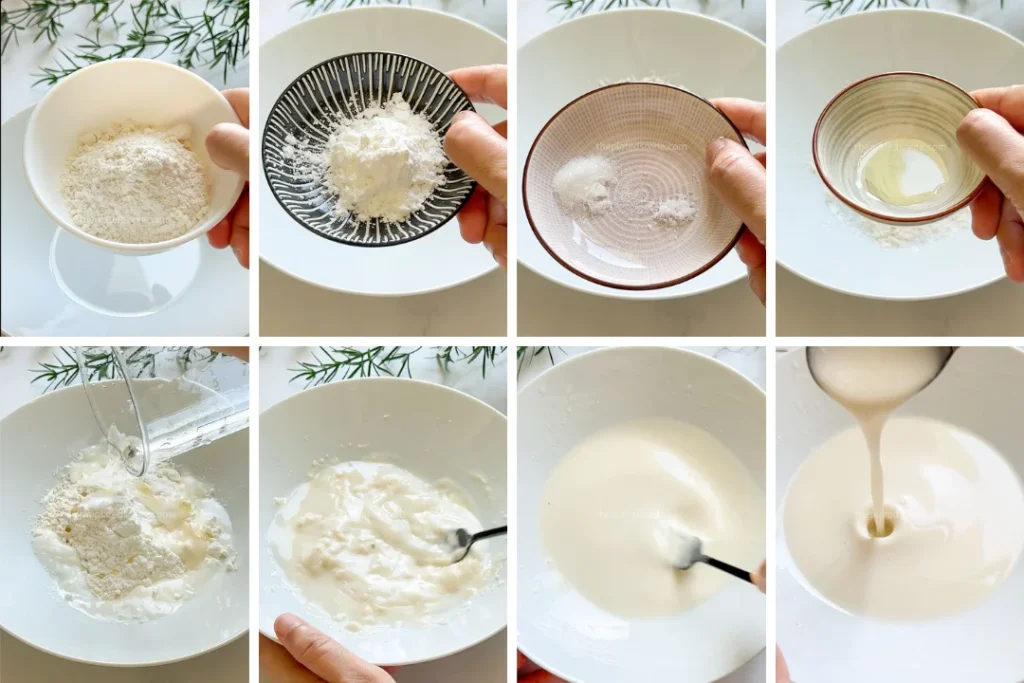
Step 7: Heat the oil
Pour enough oil into a deep pan or small pot so the tape goreng can float while frying. Heat the oil over medium heat. To test if the oil is ready, dip the tip of a wooden chopstick or spoon into the oil. If you see gentle bubbles forming around it, the oil is hot enough. The oil should not be smoking.
Step 8: Coat the tape balls in batter
Once the oil is hot, take a few of the shaped tape balls. Dip each ball into the frying batter and turn it so it is evenly coated. Let any excess batter drip back into the bowl so the coating stays light and thin.
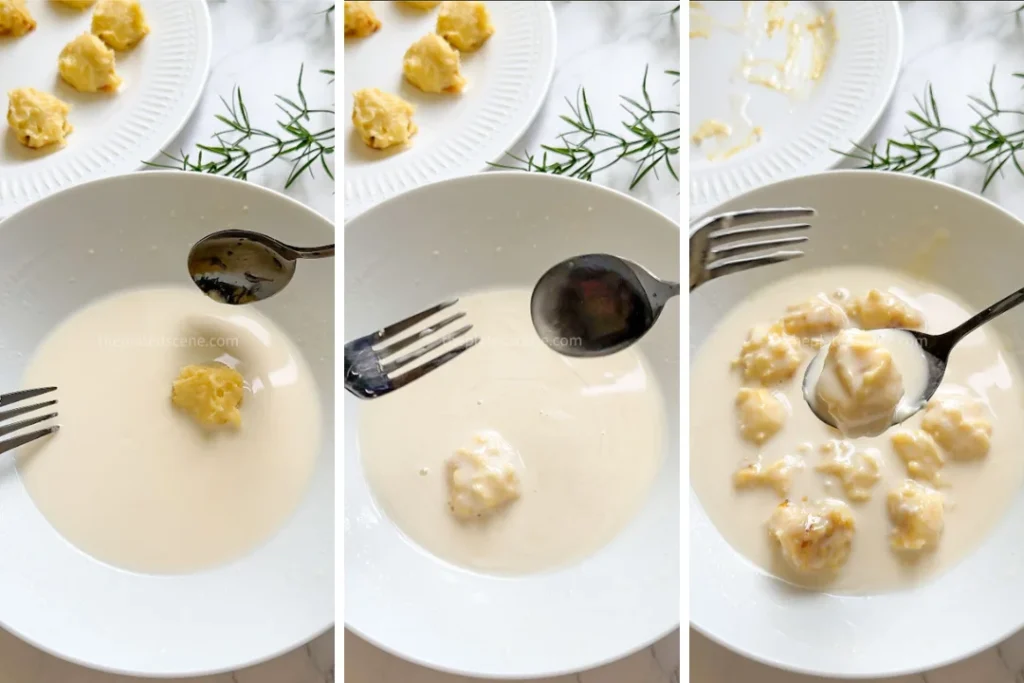
Step 9: Fry the tape goreng
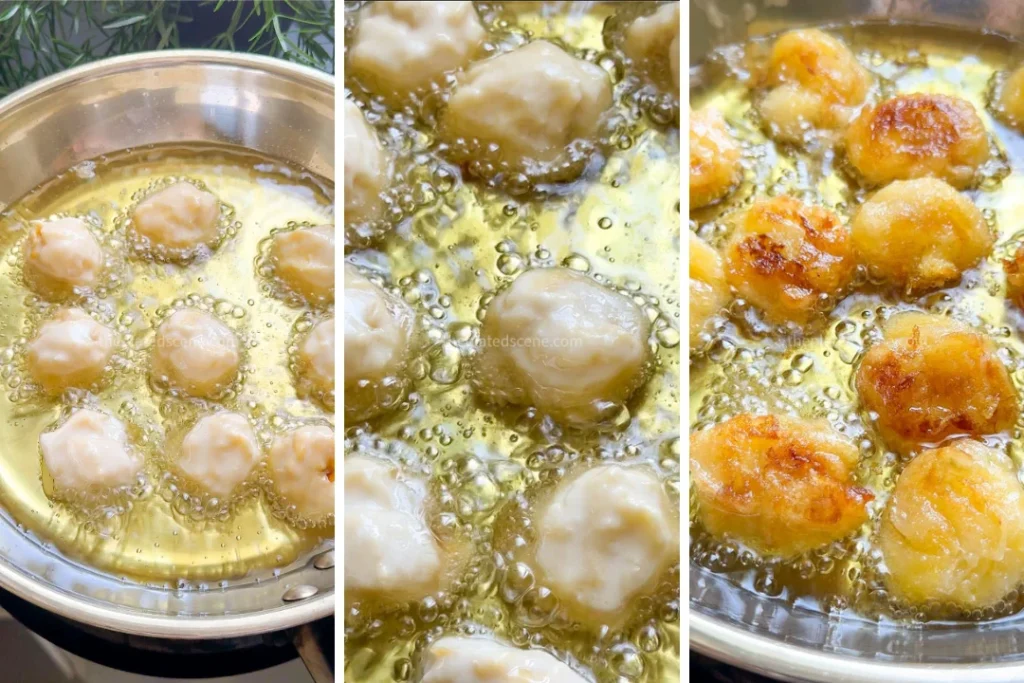
Carefully place the coated tape balls into the hot oil. Do not overcrowd the pan. Fry in small batches. Let them cook, turning occasionally with a slotted spoon, until they are golden brown and crisp on all sides. Keep the heat on medium so the outside does not burn before the inside warms up and the palm sugar melts.
Step 10: Drain and cool slightly
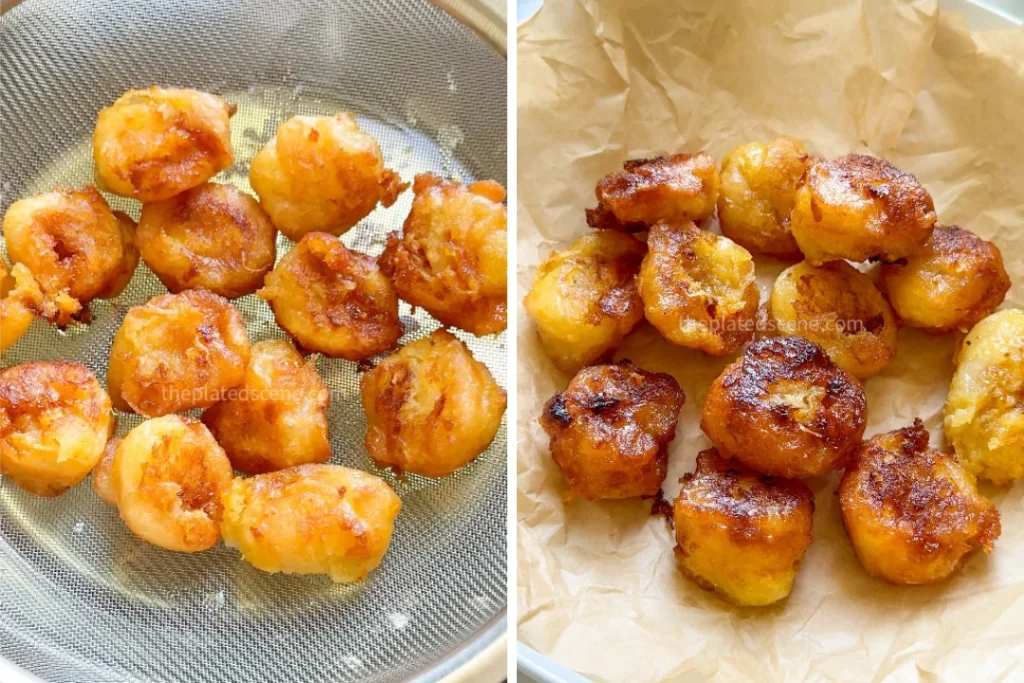
When the tape goreng are golden and crisp, lift them out of the oil with a slotted spoon. Place them on a plate lined with paper towel or a wire rack to drain excess oil. Let them cool for a few minutes. The palm sugar inside will be very hot right after frying.
Step 11: Serve
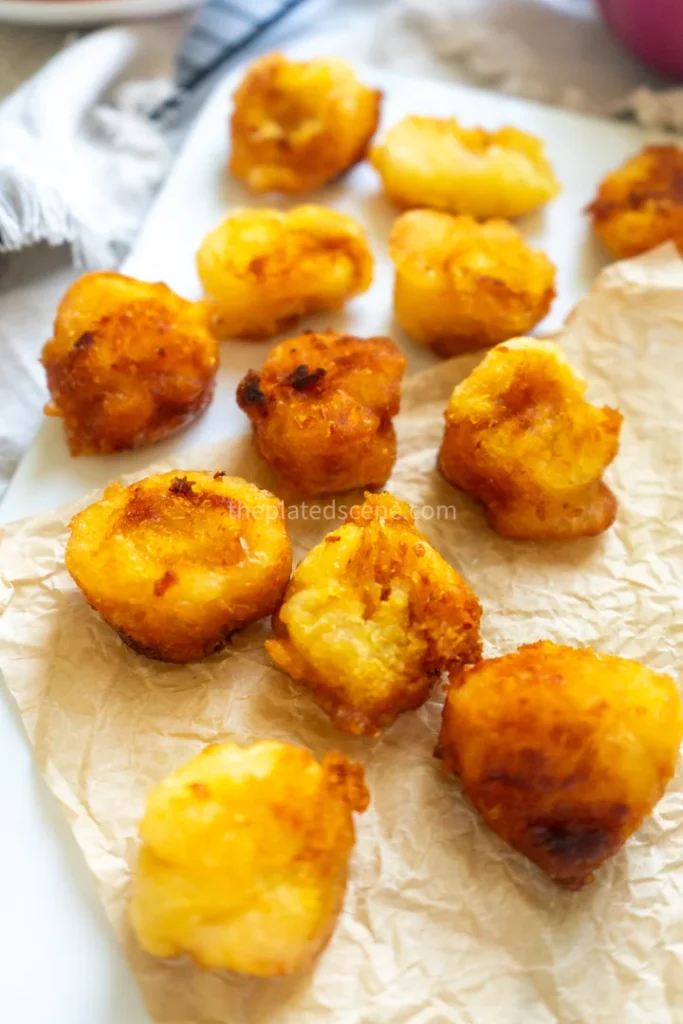
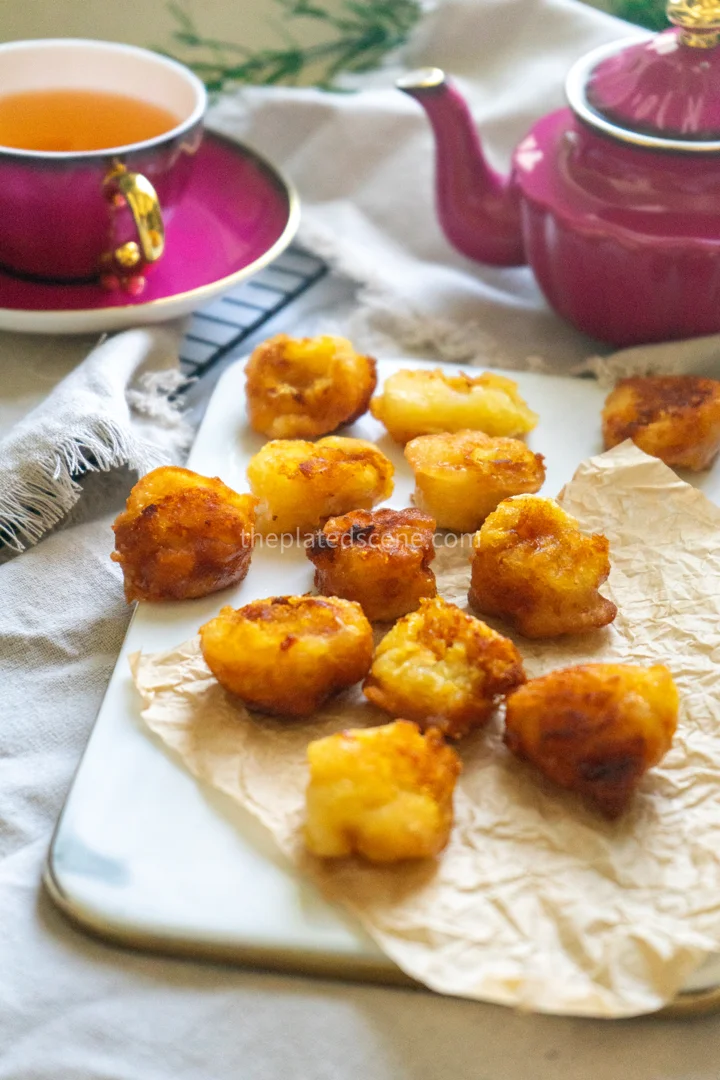
Serve the tape goreng while still warm. The outside should be crispy and the inside soft and slightly gooey from the melted palm sugar. Enjoy them as an afternoon snack with tea or coffee and let your guests know they are tasting a little piece of Indonesian comfort in the form of fried fermented cassava balls.
Other Indonesian Sweets You May Like
If you enjoy the comforting flavor of tape goreng, you will probably love these traditional Indonesian sweets that have the same cozy, homemade feel.
- Wajik Ketan is a chewy and fragrant sticky rice dessert cooked slowly with coconut milk and palm sugar.
- Bubur Pacar Cina is a colorful tapioca pearl dessert served with creamy coconut sauce. It is simple, sweet, and very nostalgic.
- Bubur Kacang Ijo is a warm mung bean porridge simmered in coconut milk and palm sugar. It is one of the most beloved Indonesian comfort desserts.
Tape Goreng Rondo Royal (Indonesian Fried Fermented Cassava Balls)
3
servings15
minutes10
minutes25
minutesA sweet and crispy Indonesian snack made from tape goreng. These fried fermented cassava balls have a soft, custardy center with melted palm sugar and a light golden crust. Perfect for an easy and nostalgic afternoon treat.
Keep the screen of your device on
Ingredients
- Tape Mixture
3.5 oz 100 g tape singkong
1 tsp 2 g all purpose flour
0.5 tsp 1 g cornstarch
1 pinch 1 pinch salt
- Filling
1 oz 30 g palm sugar
- Frying Batter
3 tbsp 40 g all purpose flour
1 tbsp 10 g cornstarch
1 pinch 1 pinch salt
0.5 tsp 1/2 tsp sugar
3 tbsp 50 ml water
Directions
- Prepare the tape
Remove any hard or fibrous parts from the tape singkong and place it in a mixing bowl. Gently mash the tape with a fork or your hand until it is soft and mostly smooth. It is okay if there are a few small chunks left. These will give your tape goreng a nice texture. - Mix the tape base
Add the all-purpose flour, cornstarch, and a pinch of salt into the bowl with the mashed tape. Use a spoon or your hand to mix everything together until the flour and cornstarch are fully blended into the tape. You should get a soft dough that is easy to shape and not too sticky. If it feels very wet, you can dust your hands lightly with flour when shaping. - Prepare the palm sugar filling
Chop the palm sugar into small pieces so it will melt more easily inside the fried fermented cassava balls. Set the chopped palm sugar aside in a small bowl. Try to keep the pieces small so they fit nicely in the center of each ball. - Shape the tape balls
Take a small amount of the tape mixture in your hand and flatten it into a round disc, about the size of a large coin or a small cookie. Place a few small pieces of palm sugar in the center. Carefully fold the edges over the filling and roll it gently between your palms to form a smooth ball. Make sure the palm sugar is fully covered so it does not leak out during frying. Repeat until all the tape mixture is used up. Place the shaped balls on a plate or tray. - Chill the shaped balls (optional but helpful)
If you have time, place the tray of tape balls in the fridge for about 10 to 15 minutes. This helps them firm up slightly, making them easier to coat in batter and fry without breaking. - Prepare the frying batter
In a clean bowl, add the all purpose flour, cornstarch, a pinch of salt, and sugar. Pour in the water gradually while stirring with a whisk or fork. Mix until you get a smooth, lump free batter. The consistency should be slightly thicker than crepe batter but still runny enough to coat the tape balls in a thin layer. If it is too thick, add a little more water. If it is too thin, sprinkle in a bit more flour. - Heat the oil
Pour enough oil into a deep pan or small pot so the tape goreng can float while frying. Heat the oil over medium heat. To test if the oil is ready, dip the tip of a wooden chopstick or spoon into the oil. If you see gentle bubbles forming around it, the oil is hot enough. The oil should not be smoking. - Coat the tape balls in batter
Once the oil is hot, take a few of the shaped tape balls. Dip each ball into the frying batter and turn it so it is evenly coated. Let any excess batter drip back into the bowl so the coating stays light and thin. - Fry the tape goreng
Carefully place the coated tape balls into the hot oil. Do not overcrowd the pan. Fry in small batches. Let them cook, turning occasionally with a slotted spoon, until they are golden brown and crisp on all sides. Keep the heat on medium so the outside does not burn before the inside warms up and the palm sugar melts. - Drain and cool slightly
When the tape goreng are golden and crisp, lift them out of the oil with a slotted spoon. Place them on a plate lined with paper towel or a wire rack to drain excess oil. Let them cool for a few minutes. The palm sugar inside will be very hot right after frying. - Serve
Serve the tape goreng while still warm. The outside should be crispy and the inside soft and slightly gooey from the melted palm sugar. Enjoy them as an afternoon snack with tea or coffee and let your guests know they are tasting a little piece of Indonesian comfort in the form of fried fermented cassava balls.

)