

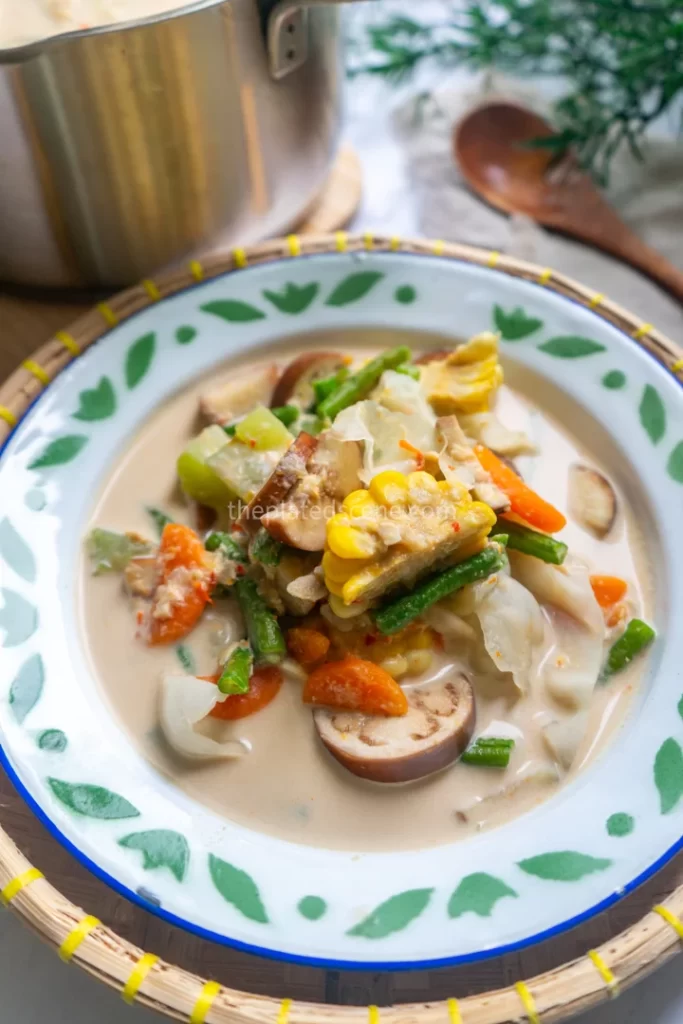
There are certain dishes that immediately transport me back to my childhood kitchen, and sayur lodeh is one of them. This Indonesian white vegetable curry is something my mother often prepared at home, and it holds a special place in my memory. Whenever I think about comfort food from my hometown, sayur lodeh comes to mind, bubbling away in a big pot and filling the house with its creamy coconut fragrance.

Now that I live in Singapore, I often try to chase those familiar flavors, but it has been surprisingly difficult. Here, when you order sayur lodeh at a hawker center or even in Indonesian restaurants, you usually get the yellow version, tinted with turmeric. While it is delicious in its own way and tastes somewhat similar to curry, it is not quite the same. The white version that I grew up with has a milder, more soothing flavor, and it feels lighter on the tongue even though it is enriched with coconut milk. I find myself missing it more often than I expected, and every attempt to recreate it in my own kitchen feels like an act of preserving home.
Cooking sayur lodeh in my current kitchen is not just about feeding myself. It is about remembering the taste of my mother’s food, the way she would casually throw in seasonal vegetables, the way the broth seemed to taste even better the next day, and the way the dish would be shared among everyone at the table.
Table of Contents
What Is Sayur Lodeh? Comparing It With Opor, Gulai, Curry, and Terik
If you have never had sayur lodeh, you might wonder where it fits in the big family of Indonesian coconut milk–based dishes. After all, Indonesia has so many dishes that involve simmering ingredients in a fragrant coconut milk broth.
Sayur lodeh is essentially a vegetable curry, but not the same as Indian or Thai curries. It is lighter in spices and gentler in taste. The base is coconut milk, garlic, shallots, galangal, and sometimes lemongrass, but unlike gulai or curry, it does not lean heavily on chili or turmeric. The result is a broth that is creamy and savory without being overwhelming.
Compared to opor, which is often made with chicken or tofu in a white coconut milk broth, sayur lodeh feels more rustic and everyday. Opor is something often associated with festive occasions like Eid, while sayur lodeh is more of a daily meal that uses whatever vegetables are available.
Compared to gulai, which is bold, spicy, and almost fiery, sayur lodeh is much more soothing. Gulai can sometimes feel heavy after just a few bites, while sayur lodeh is the kind of dish you can keep spooning over rice without getting tired of it.
Compared to terik, which usually has a sweeter flavor due to the addition of palm sugar and is often used for proteins like tempeh or tofu, sayur lodeh keeps itself in the savory and lightly spiced realm. It does not seek to be indulgent in sweetness but rather to comfort in subtlety.
This makes sayur lodeh unique. It is an Indonesian white vegetable curry that stands on its own, not as dramatic as gulai or as ceremonial as opor, but deeply nourishing in its simplicity.
The History of Sayur Lodeh
Tracing the origins of sayur lodeh can be tricky because like many Indonesian dishes, it has been passed down orally and shaped by local traditions. Sayur lodeh is strongly associated with Javanese cuisine, particularly Central Java and Yogyakarta. These regions have a tradition of coconut milk–based soups and stews, and sayur lodeh fits right into that cultural heritage.
Historically, sayur lodeh was a practical dish. It allowed households to cook a large pot of food that could feed many people at once, using vegetables from the backyard or local markets. Eggplant, chayote, long beans, and young jackfruit were common choices, combined with tofu or tempeh to make the meal more filling. Coconut milk gave richness and nutrition, while mild spices added aroma.
Interestingly, sayur lodeh also has a place in local beliefs. In some Javanese traditions, cooking sayur lodeh was tied to rituals of warding off bad luck or preparing for transitional moments, such as during certain calendar shifts or community gatherings. It was seen as a dish that could bring balance, a symbol of harmony from the mix of different vegetables simmered together.
Today, sayur lodeh continues to be part of daily meals and festive tables alike. Its adaptability and comforting nature keep it alive in modern kitchens, even far from its Javanese roots.
The Secret Ingredient: Tempe Semangit
Every family has its own trick to make sayur lodeh taste just right. In my family, my mother’s secret was tempe semangit. For those unfamiliar, tempe semangit refers to tempeh that has been allowed to ferment a bit longer, giving it a stronger aroma and deeper flavor. It might not sound appealing at first if you are only used to fresh tempeh, but in Javanese cooking, this extra fermentation brings a wonderful umami taste.


Adding tempe semangit to sayur lodeh enriches the broth in a way that is hard to replicate. It adds depth, making the coconut milk soup taste fuller and more complex, almost like the difference between fresh cheese and aged cheese. My mother always insisted that a small piece of tempe semangit was enough to transform the pot of vegetables into something extraordinary.
Of course, outside Indonesia, it is not easy to find tempe semangit. Most markets only sell fresh tempeh. But if you ever have the chance to try it, you will understand why people call it the secret ingredient that makes sayur lodeh unforgettable.
How Sayur Lodeh Tastes: Even Better the Next Day
One of the best things about sayur lodeh is that it tastes even better the next day. When you first cook it, the coconut milk and spices blend into a fragrant broth that already tastes comforting. But if you let the dish rest overnight and reheat it the next day, something magical happens.
The vegetables absorb more of the broth, becoming richer in flavor. The coconut milk develops a deeper taste as it melds with the spices. The broth itself thickens slightly, turning creamier and more concentrated. When you ladle it over warm rice the next day, it feels like the dish has matured, like it has settled into itself.
This quality makes sayur lodeh perfect for meal prep. You can cook a large pot and enjoy it over several meals, knowing that it will not lose its charm but rather grow more delicious with time.
Variations of Sayur Lodeh: Yellow vs White
As I mentioned earlier, when I moved to Singapore, I discovered that sayur lodeh here almost always comes in yellow. The yellow version includes turmeric, which gives the broth a golden hue and a flavor closer to curry. It is still good, but it is different from the white sayur lodeh that I grew up eating.
The white version, also known as Indonesian white vegetable curry, leaves out turmeric. It focuses on coconut milk and mild spices, creating a clean, soothing soup. For me, this version is more comforting and nostalgic. It reminds me of home and feels lighter, something I can eat even on a hot day.

Different regions and families have their preferences. Some swear by the yellow version, saying it has more character. Others, like me, lean toward the white version for its subtle elegance. Both are valid, and both show the adaptability of this dish.
Pairing Suggestions
Sayur lodeh is not meant to stand alone. It is almost always eaten with rice, which balances the richness of the coconut milk and provides a satisfying base. A plate of warm steamed rice topped with ladles of sayur lodeh is already a complete meal.
But in many Indonesian households, sayur lodeh is part of a bigger spread. It pairs beautifully with fried tempeh or tofu, which add texture and protein. A side of sambal chili paste can bring a fiery kick to contrast the mild broth. Kerupuk, or Indonesian crackers, add crunch and fun to the meal.
If you want to elevate it further, serve sayur lodeh alongside dishes like ayam goreng (fried chicken), perkedel (potato patties), or rendang for special occasions. The lightness of the vegetable curry helps balance richer, heavier dishes, making it a versatile companion on the table.
Things to Watch Out For
Cooking sayur lodeh may seem simple, but there are a few things to keep in mind if you want the best results.
First, be careful not to let the coconut milk boil too vigorously. Coconut milk can split if cooked at high heat, leaving you with an oily broth instead of a creamy soup. Keep the heat gentle and stir occasionally to maintain a smooth consistency.
Second, balance the vegetables. Sayur lodeh is all about harmony. If you add too many starchy vegetables, the broth may turn heavy. If you use only watery vegetables, it may become too thin. Aim for a mix of textures, such as firm chayote, soft eggplant, and crunchy long beans.
Third, season carefully. Salt brings out the creaminess of the coconut milk, but a touch of sugar can also round out the flavors. If you skip sugar entirely, the broth may taste flat. On the other hand, too much sugar will make it taste like terik instead of sayur lodeh.
Finally, remember that sayur lodeh tastes better the next day, so plan ahead. Cook enough to enjoy leftovers, and you will see why it is a favorite in so many households.
Ingredients for Sayur Lodeh (Indonesian White Vegetable Curry)
The ingredients for sayur lodeh are simple and comforting, reflecting its roots as a home-cooked dish that uses everyday vegetables and pantry staples. Each element plays a role in creating that creamy coconut broth and mild, savory flavor that defines this Indonesian white vegetable curry.
Blended Ingredients
The blended spices form the aromatic base of sayur lodeh. Traditionally, these ingredients are ground together into a smooth paste using a mortar and pestle, but a blender works just as well if you prefer convenience.
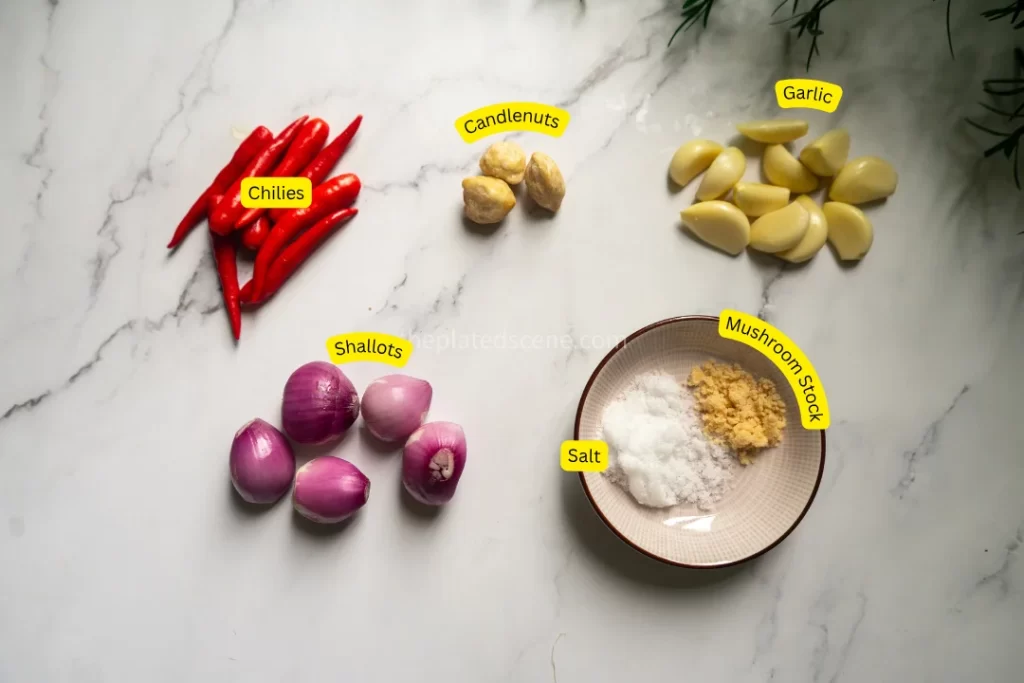
- Shallots bring natural sweetness and depth. You can use small red onions if shallots are unavailable, though the flavor will be slightly sharper.
- Garlic adds fragrance and a savory edge that balances the richness of the coconut milk.
- Chili provides gentle heat. For a milder version, reduce the amount or use large red chilies, which are less spicy. You can also omit chili entirely if you prefer a non-spicy sayur lodeh.
- Candlenuts give body and a nutty undertone to the spice paste. If you cannot find them, substitute with macadamia nuts, which offer a similar creamy texture.
Vegetables
The beauty of sayur lodeh lies in its flexibility. The vegetables can be adjusted based on what you have on hand, as long as you maintain a balance of textures.
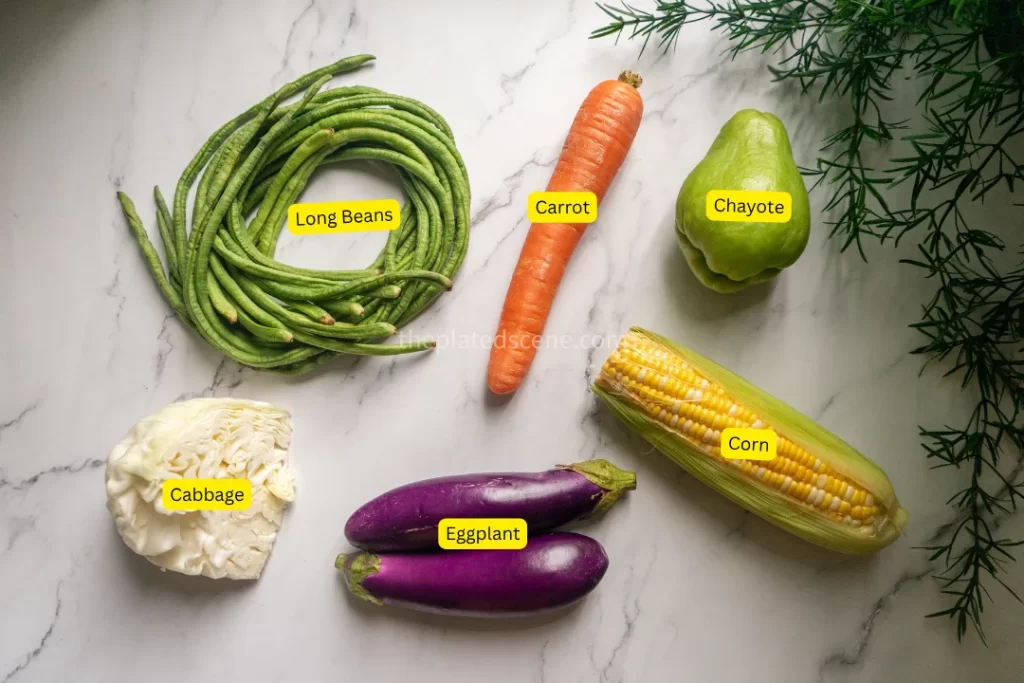
- Chayote adds a firm bite and mild sweetness. Zucchini can be used as a substitute if chayote is not available.
- Carrot brings color and a touch of natural sweetness that contrasts the savory broth.
- Corn adds texture and a pleasant crunch. You can use baby corn or cut corn kernels if you prefer easier serving.
- Eggplant soaks up the coconut broth beautifully, making each bite flavorful. Asian or Thai eggplants work best, but regular globe eggplants can be used too.
- Long beans give a crisp texture and a fresh green note. Green beans are a suitable alternative if long beans are unavailable.
- Cabbage rounds out the dish with softness and volume. Napa cabbage or even bok choy can be used if you want a lighter taste.
Other Ingredients
These are the essentials that bring the dish together and turn a pot of vegetables into a flavorful Indonesian white vegetable curry.
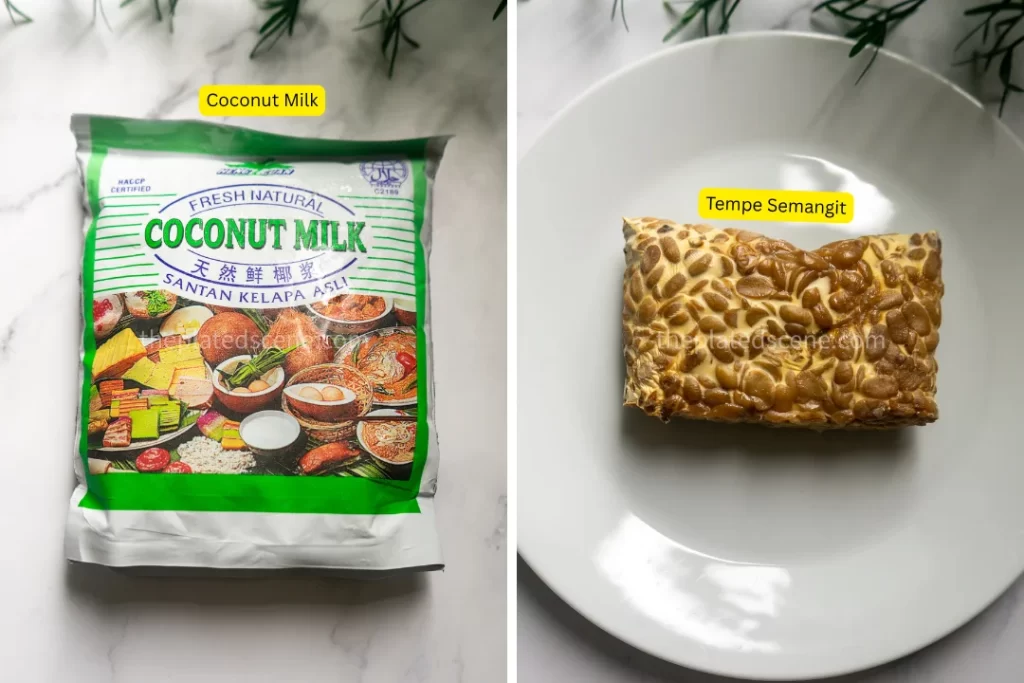
- Water helps simmer the vegetables and extract their natural flavors before the coconut milk is added.
- Coconut milk creates the creamy base that defines sayur lodeh. Freshly squeezed coconut milk gives the best flavor, but canned or carton coconut milk works perfectly fine. For a lighter version, you can use thin coconut milk or mix coconut cream with water.
- Salt seasons the broth and enhances the sweetness of the vegetables.
- Mushroom stock adds umami depth, a vegetarian-friendly way to replace shrimp paste or anchovy stock traditionally used in some regional variations. You can also use vegetable stock or chicken stock if preferred.
- Tempe semangit, or slightly over-fermented tempeh, adds a distinctive umami aroma that deepens the flavor of the broth. It is a cherished secret in traditional Javanese cooking. If you cannot find tempe semangit, you can use regular tempeh that has been left at room temperature for a few hours to develop a mild fermented note. The taste will not be identical, but it still adds a wonderful nutty depth to the sayur lodeh.
Nutritional Value of Sayur Lodeh (Indonesian White Vegetable Curry)
One of the reasons I love cooking sayur lodeh is that it is wholesome and nourishing while still tasting indulgent. The combination of fresh vegetables, coconut milk, and mild spices makes it both satisfying and balanced. A typical serving of this Indonesian white vegetable curry provides a good mix of carbohydrates, healthy fats, and fiber, making it a complete meal when paired with rice or tempeh.
On average, one serving of sayur lodeh (about one cup or 250 grams) provides approximately:
- Calories: 200–250 kcal
- Carbohydrates: 15–20 grams
- Protein: 4–6 grams
- Fat: 16–18 grams
- Fiber: 3–5 grams
- Sodium: 400–500 mg
The main source of calories comes from coconut milk, which provides medium-chain triglycerides (MCTs), a type of healthy fat that the body uses efficiently for energy. The vegetables contribute important micronutrients such as potassium, vitamin A, vitamin C, and folate, while long beans and cabbage add dietary fiber that supports digestion.
Sayur lodeh is naturally gluten-free and can easily be made vegan when using mushroom stock or vegetable stock instead of anchovy-based broth. If you wish to reduce calories or fat, you can use light coconut milk or mix half coconut milk with half water. This will make the soup thinner but still retain its signature flavor.
Because the dish is not spicy or heavy, it is suitable for all ages, from children to the elderly. It is also gentle on the stomach and makes a great option for a light lunch or dinner. Pairing sayur lodeh with steamed rice and tempeh or tofu turns it into a complete and balanced meal.
If you are tracking your nutrition more closely, you can adjust the portion of coconut milk or add more vegetables to make it lighter. Either way, sayur lodeh remains one of those rare dishes that manage to feel comforting, homey, and healthy all at once.
Storing Sayur Lodeh (Indonesian White Vegetable Curry) the Traditional Way
In many Indonesian households, sayur lodeh is cooked in the morning and enjoyed throughout the day. The dish is often left on the kitchen counter, covered with a lid, ready to be reheated for lunch or dinner. Back home, refrigeration was not always common, so people relied on a simple but time-tested method to keep food fresh: reheating.
Traditionally, sayur lodeh is reheated until boiling at night and again the next morning. The important rule is not to stir or touch the dish with a ladle or spoon once the heat is turned off. This helps prevent bacteria from getting into the food and spoiling the coconut milk. Each time the dish is brought to a boil, the heat naturally preserves it, while also making the broth thicker and richer in flavor. When done properly, this method allows you to keep and enjoy sayur lodeh safely for up to three days.
In modern kitchens, especially in warm or humid weather, storing the dish in the refrigerator is still the safest choice. Let the sayur lodeh cool completely, then transfer it into an airtight container. It will stay fresh for two to three days. When reheating from the fridge, warm it gently over low to medium heat until it starts to simmer, and stir occasionally to keep the coconut milk smooth. If the soup becomes too thick, you can add a little warm water or thin coconut milk to bring it back to its original texture.
While freezing is possible, it is not the traditional way. Freezing can alter the smooth texture of the coconut milk. If you want to freeze it, store only the cooked vegetables and spice paste, then add fresh coconut milk when reheating.
This traditional reheating method is more than just a way to preserve food. It is a reflection of Indonesian home cooking — patient, practical, and full of care. The aroma of sayur lodeh simmering twice a day brings a sense of comfort and reminds us that good food, when treated with attention, can last and grow more flavorful with time.

Sayur Lodeh (Indonesian White Vegetable Curry)
6
servings20
minutes35
minutes55
minutesSayur lodeh, or Indonesian white vegetable curry, is a comforting coconut milk–based stew filled with tender vegetables and subtle spices. This Javanese classic is creamy yet light, gently flavored with garlic, shallots, and the deep umami of tempe semangit. Perfect with a bowl of warm rice, it’s the kind of homely dish that tastes even better the next day.
Keep the screen of your device on
Ingredients
- Blended Ingredients
1.75 oz 50 g shallots
1.25 oz 35 g garlic
8 8 chilies
3 3 candlenuts
- Vegetables
9 oz 250 g chayote
5 oz 150 g carrot
0.5 ear 0.5 corn
5 oz 150 g eggplant
7 oz 200 g long beans
7 oz 200 g cabbage
- Other Ingredients
4 cups 1 l water
2 cups 500 g coconut milk
5.25 oz 150 g tempe semangit
3 tsp 3 tsp salt
1 tsp 1 tsp mushroom stock
Directions
- Prepare the Vegetables
Start by preparing all your vegetables.
– Cut the long beans into pieces about 3 cm or 1.25 inches long.
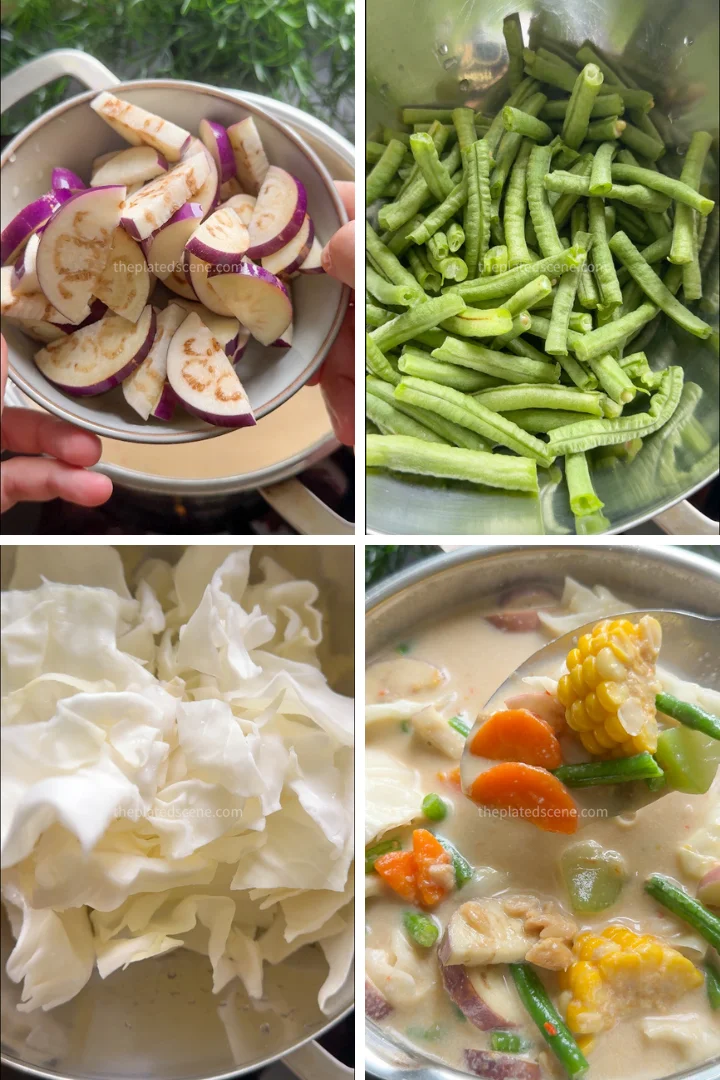
– Slice the eggplant in half lengthwise, then cut it into thin pieces about 0.5 cm or 0.2 inches thick.
– Do the same with the carrots, slicing them lengthwise before cutting into thin half-rounds.
– Cut the chayote into small cubes about 1 cm each, and
– Slice the corn into rounds about 1 to 1.5 cm or roughly half an inch thick.
Preparing everything before cooking makes the process smooth and ensures that the vegetables cook evenly.
- Make the Spice Paste
In a blender, combine shallots, garlic, chili, and candlenuts. Add about 50 milliliters of water to help the blending process. Blend until you get a smooth paste. This mixture forms the aromatic base of the broth that gives sayur lodeh its characteristic depth and fragrance.
- Prepare the Tempe Semangit
Mash the tempe semangit using a fork or the back of a spoon until it becomes a coarse paste. This will allow it to mix well into the broth. Tempe semangit gives a unique savory note and enhances the umami richness of the coconut milk. If you are using regular tempeh, you can lightly toast or steam it first to bring out more aroma before mashing. - Build the Broth and Add Seasoning
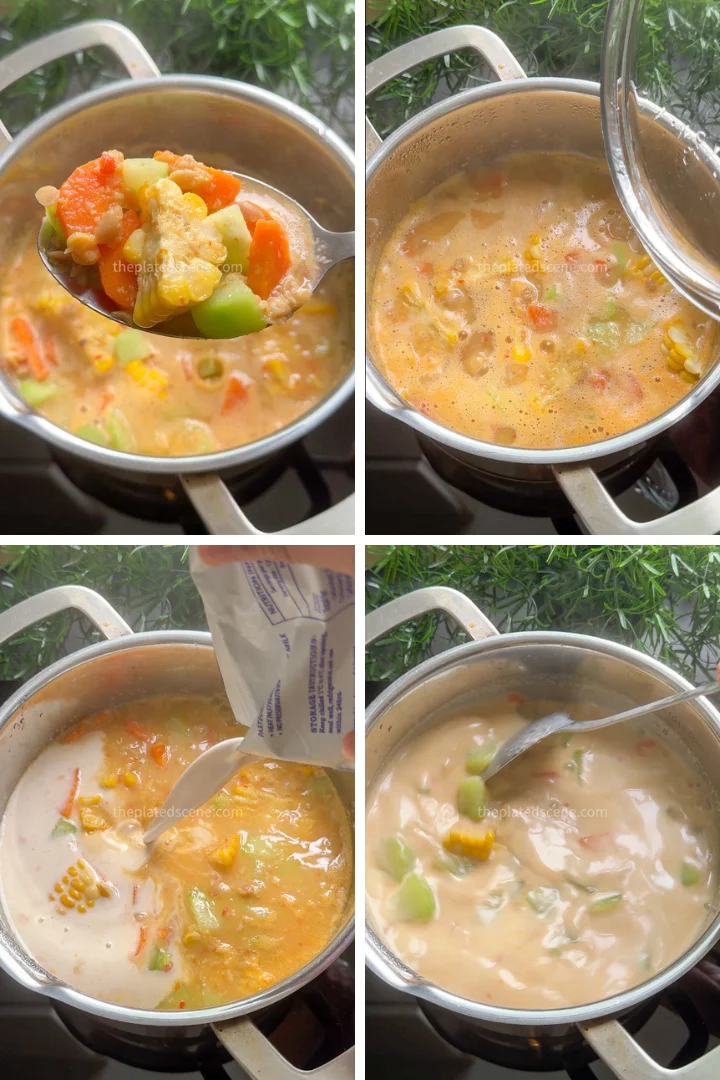
In a large pot, combine the blended spice paste, mashed tempe semangit, and 500 ml (2 cups) of water. Add the salt and mushroom stock so the seasoning infuses evenly into the broth. Cover the pot and bring it to a boil. Let it cook until the aroma of the spices fills your kitchen and the broth turns fragrant. - Add the Hard Vegetables and Remaining Water
Once the broth starts boiling, add the chayote, carrot, and corn, along with the remaining 500 ml (2 cups) of water. Cover the pot again and continue boiling until the vegetables begin to soften. This step helps extract the natural sweetness of the vegetables, building a richer broth. - Add Coconut Milk
Lower the heat and pour in the coconut milk. Stir gently and continuously while simmering over low heat to keep the coconut milk from splitting. Continue stirring until the broth turns creamy and starts to shimmer. - Add the Remaining Vegetables
Add the eggplant, long beans, and cabbage. This time, do not cover the pot. Continue simmering until all the vegetables are tender and the broth tastes balanced. Let the mixture cook slowly so the coconut milk stays smooth and the vegetables keep their texture. - Serve and Enjoy
Turn off the heat and let the sayur lodeh rest for a few minutes before serving. This helps the flavors settle. Serve it warm with steamed rice, fried tempeh, or tofu on the side. You can also enjoy it with a small spoon of sambal for an extra kick.






)