

There is something very comforting about sambal soto. It is not flashy. It is not complicated. It quietly sits next to a bowl of steaming soto, waiting for you to decide how brave you feel that day.
Growing up, sambal soto was always served in a small bowl, usually already stained red from countless spoons dipped in before mine. No one explained how much to add. You learned by experience. One spoon if you wanted warmth. Two spoons if you wanted sweat on your forehead. More than that if you wanted your nose to run while you kept eating anyway.
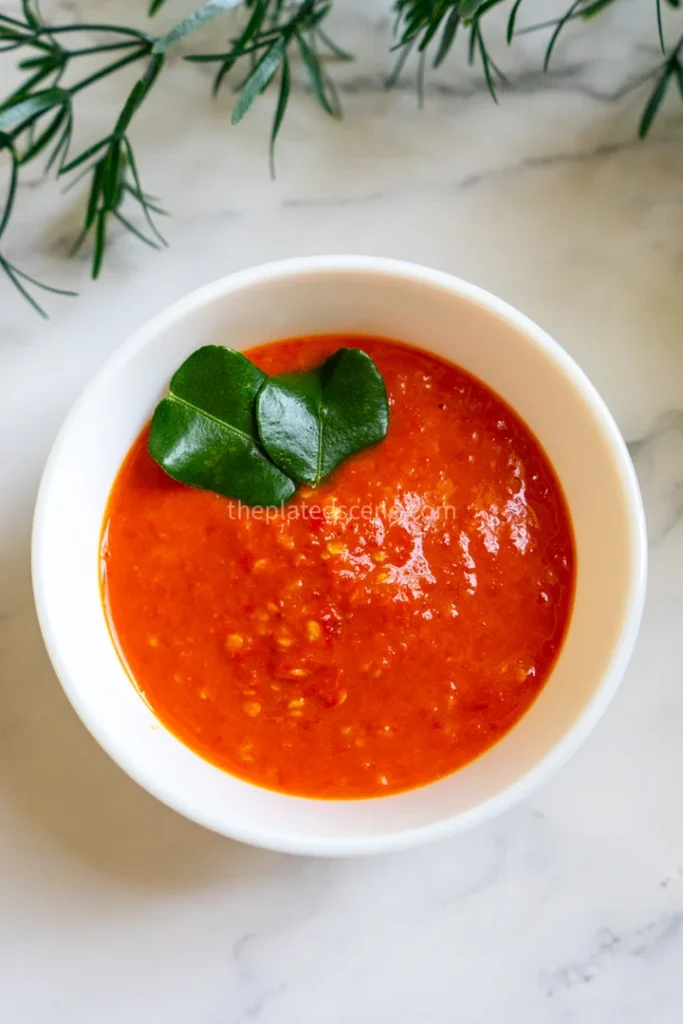
This sambal is not meant to stand on its own. It exists for the soup. Light, watery, and spicy, it blends into the broth almost instantly, changing the entire bowl without changing its soul.
Table of Contents
What Makes Sambal Soto Different
What makes sambal soto different from most Indonesian sambals is its restraint. In a cuisine known for bold spices and complex layers of flavor, sambal soto deliberately holds back.
There is no frying involved. No garlic sizzling in oil. No shallots turning golden. No shrimp paste announcing its presence. Instead, sambal soto relies on boiled chilies and a ladle of hot soto broth. That is it.
This simplicity exists for a reason. Soto itself is already rich and aromatic, built from turmeric, lemongrass, galangal, and long simmered chicken bones. Adding a heavy or oily sambal would compete with the soup rather than complement it. Sambal soto steps aside and lets the broth stay in the spotlight.
The texture also tells you its purpose. Sambal soto is thinner and more fluid than most sambals. It is meant to disappear into the soup, not sit on top of it. When you stir it in, the red color spreads gently through the broth, warming it visually and in flavor without changing its structure.
Another defining feature is how it is served. Sambal soto is never mixed in for you. It is always placed on the side, giving the eater full control. This is part of the soto experience. Everyone’s tolerance for heat is different, and sambal soto respects that. One spoon or three spoons can turn the same bowl of soup into entirely different meals.
Why Sambal Soto Is Left Almost Unseasoned
The first time you notice it, it feels a little strange. The sambal sitting next to your bowl of soto looks almost bare. Just red chilies, a little liquid, and nothing else you can clearly identify. No fragrance of garlic, no hint of sweetness, no sharp squeeze of lime.
At a soto stall, no one explains this to you. You are simply given the sambal as it is, already accepted as the right way.
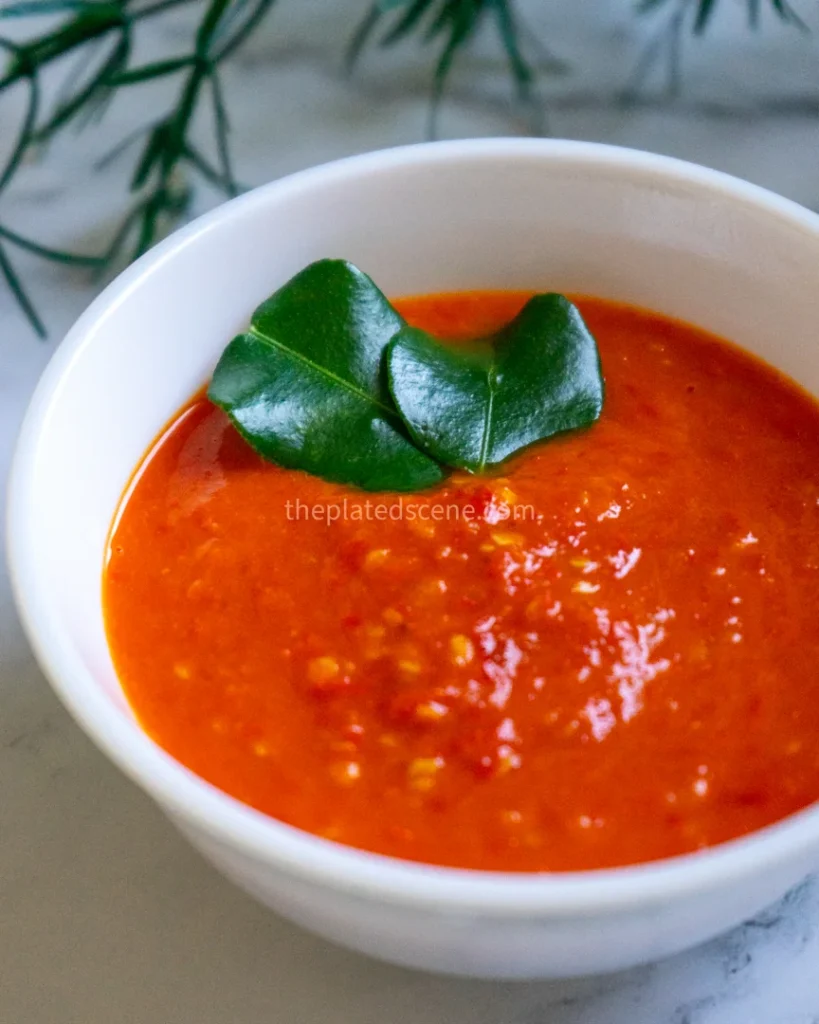
I remember watching the abang at a soto ayam stall scoop sambal into a small bowl without measuring anything. He never tasted it on its own. It went straight onto the table, next to bowls of hot soup that had been simmering since morning. The assumption was simple. The soup would take care of the rest.
Sambal soto is made without extra seasoning because it is never meant to carry flavor by itself. Its job is to bring heat, not identity. Once it hits the broth, it immediately absorbs everything already there. The saltiness of the soup, the warmth of turmeric, the aroma of lemongrass and chicken all rush in to meet it.
Adding more seasoning would only get in the way. Sugar would round off the heat too early. Garlic would announce itself loudly, fighting with spices that had already been carefully built into the broth. Even acidity, which works beautifully in other sambals, would pull attention away from the soup rather than support it.
Leaving the sambal plain also makes it forgiving. Soto is never exactly the same from one place to another. Some broths are light and clean, others deep and rich. A minimally seasoned sambal adapts quietly to every bowl it meets.
This is why sambal soto often tastes a little harsh if you try it on its own. That sharpness is not a mistake. It is waiting for hot broth to soften it, spread it, and turn it into something comforting.
In the end, sambal soto trusts the soup. The broth has already done the hard work. The sambal simply follows.
How to Store Sambal Soto
Sambal soto is best made fresh, ideally on the same day you plan to serve the soup. Its clean, sharp flavor and bright color come from its simplicity, and those qualities fade quickly once stored.
If you do need to store it, let the sambal cool completely before transferring it to a clean, airtight container. Keep it refrigerated and use it within one to two days. Over time, the heat softens and the flavor becomes flatter, especially if it has been diluted with broth.
For best results, store the blended chilies without too much added liquid, then loosen the sambal with hot soto broth just before serving. This helps preserve its intensity and prevents it from tasting tired or overly diluted.
Sambal soto does not freeze well. Freezing dulls the heat and alters the texture, turning it watery once thawed. This sambal is meant to be quick, fresh, and fleeting, made in small batches and enjoyed while the soup is still steaming.
Other Sambal You Might Like
If you are curious to explore other Indonesian sambals beyond sambal soto, these two offer very different expressions of heat, each shaped by how it is used at the table.
- Sambal Pecel
Thick, nutty, and gently spiced, sambal pecel is built on ground peanuts and seasoning. It is commonly served with blanched vegetables, rice cakes, and fried tofu or tempeh. Compared to sambal soto, sambal pecel is rich and grounding, designed to coat and cling rather than dissolve into a dish. - Sambal Goreng
Sambal goreng is cooked and savory, made from chilies, shallots, tomatoes, and simple seasoning. The ingredients are sautéed until soft and cohesive, creating a sambal that is deeper and rounder in flavor than sambal soto. This sambal is meant to be part of the dish itself rather than added at the table, bringing warmth and color to whatever it is cooked with.
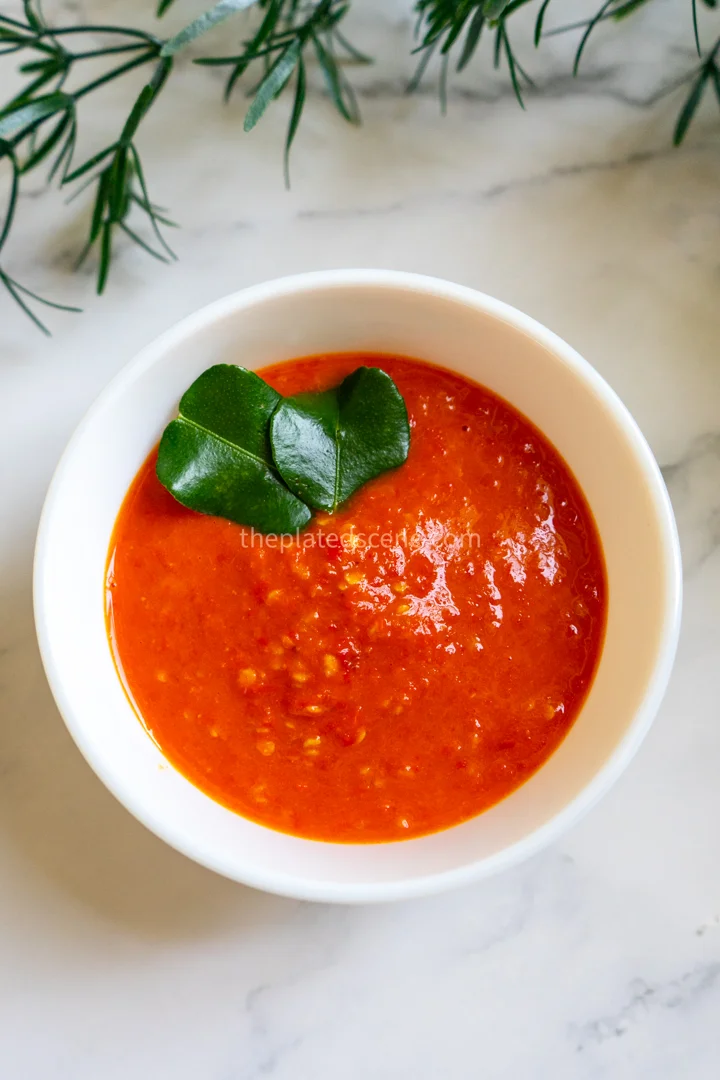
Sambal Soto: The Simple Indonesian Chili Sauce That Perfects Soto Soup (3 Ingredients)
6
servings5
minutes5
minutes10
minutesKeep the screen of your device on
Ingredients
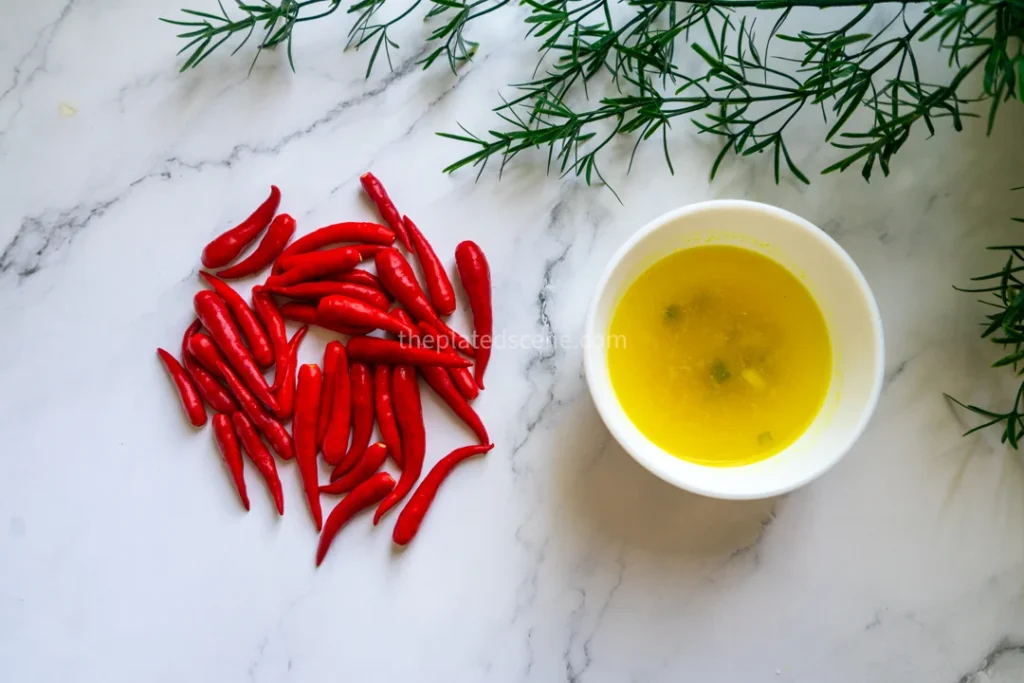
1.5 ounces 45 g bird’s eye chilies
0.5 cup 120 ml soto broth (You may replace the soto broth with hot water if needed, but broth blends more seamlessly into the soup)
Directions
- Boil the chilies
Bring a small pot of water to a full boil over medium-high heat. Once the water is boiling steadily, add the bird’s eye chilies. Let them cook for about 4 to 5 minutes, stirring once or twice so they soften evenly.
You will know the chilies are ready when their skins look slightly wrinkled and the bright red color deepens. Boiling the chilies removes their raw edge and makes them much easier to blend into a smooth sambal. - Drain the chilies
Carefully remove the chilies from the pot and place them in a colander. Let them drain thoroughly, then discard the boiling water. This step is important because the cooking water can taste harsh or bitter and does not belong in the final sambal.
At this stage, the chilies should feel soft when pressed and no longer stiff or crisp. - Blend the sambal
Transfer the drained chilies into a blender or small food processor. Add the soto broth. Using the broth helps the sambal blend smoothly and keeps the flavor cohesive when it is added to the soup later.
Blend until the mixture becomes smooth or slightly coarse, depending on your preference. Sambal soto does not need to be perfectly silky. A little texture is traditional and gives the sambal character.
If the sambal looks too thick, add more broth gradually, blending briefly after each addition. The final texture should be thin and pourable, not paste-like. - Taste and adjust
Taste the sambal carefully. On its own, it should taste very spicy and quite sharp. This is exactly how it should be. Remember that it is meant to be mixed into a seasoned bowl of hot soto, where the heat will soften and spread evenly through the broth.
Add the salt only if necessary, keeping it minimal so the sambal remains clean and flexible.

)