

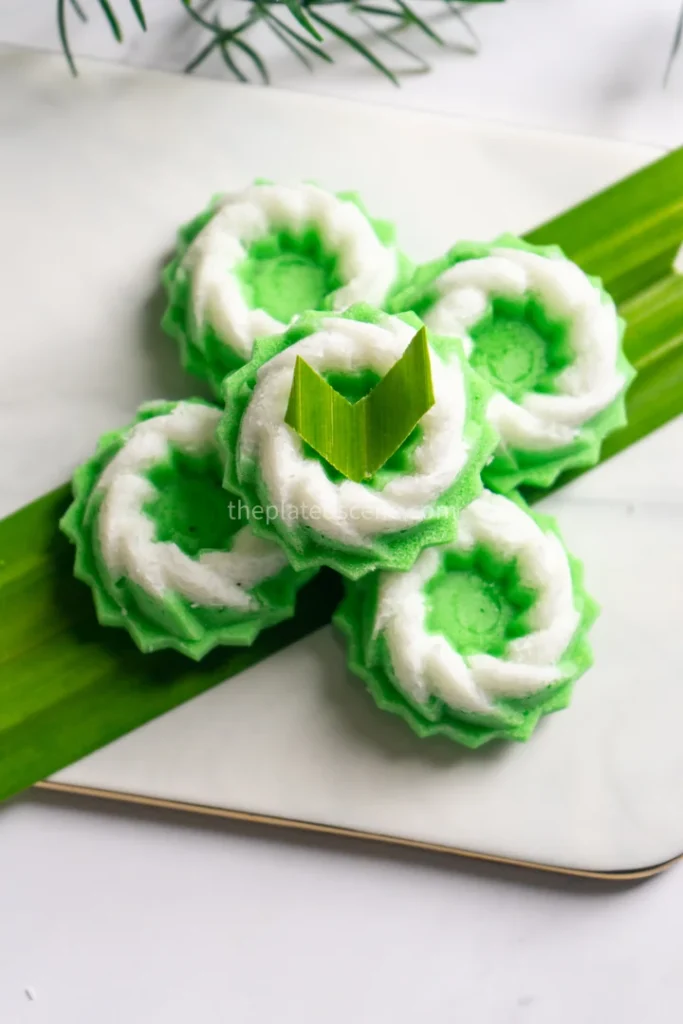
There is something so comforting about making Pandan Coconut Blossom Cakes at home. Known in Indonesia as putu ayu, these soft steamed cakes are a nostalgic treat that many of us grew up eating. The tender pandan sponge and the lightly salted coconut topping create a beautiful balance of sweetness and freshness. The flower-shaped mold gives each mini cake its adorable blossom look, making it a standout dessert for both everyday snacking and special occasions.
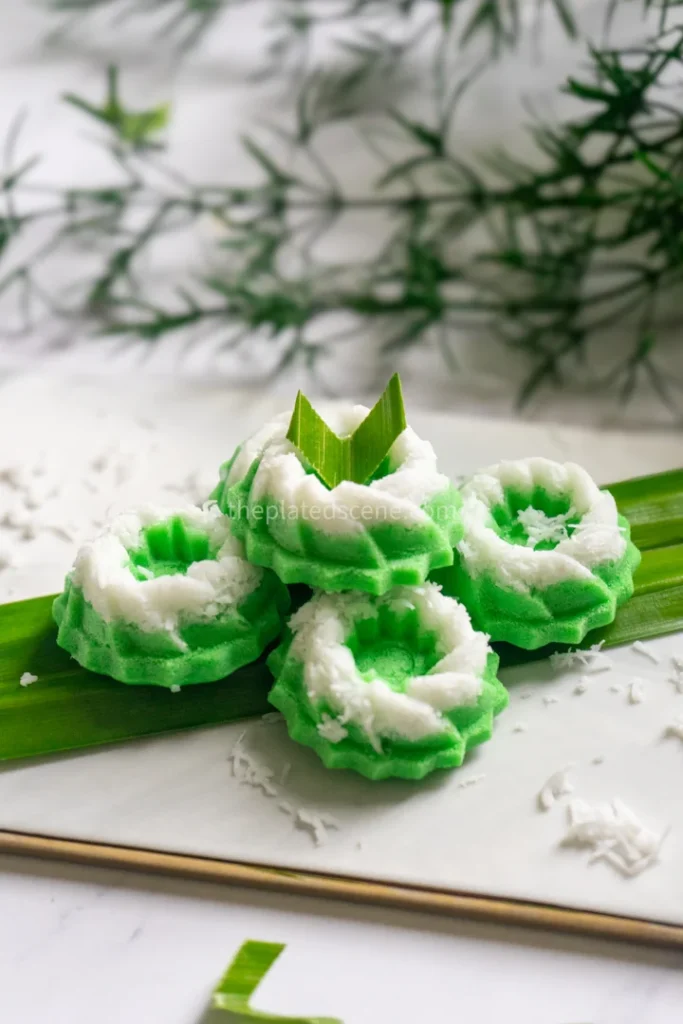
Learning how to make Pandan Coconut Blossom Cakes is simple and very satisfying. With just a few basic ingredients and a steamer, you can recreate the classic flavor and texture of traditional Indonesian kue at home. Whether you are craving something light and sweet or want to introduce your loved ones to Indonesian desserts, this recipe is a delicious place to start.
Table of Contents
The History of Putu Ayu
Putu ayu has been part of Indonesia’s culinary heritage for generations. This little steamed cake traces its roots back to the traditional kue basah culture, a collection of moist, bite-sized treats commonly sold by street vendors and found in local markets across the archipelago. The word putu itself appears in several Indonesian snacks, often referring to steamed cakes made with rice flour or coconut. The addition of the word ayu, which means beautiful or charming, reflects the cake’s cute appearance, especially when made in flower-shaped molds.
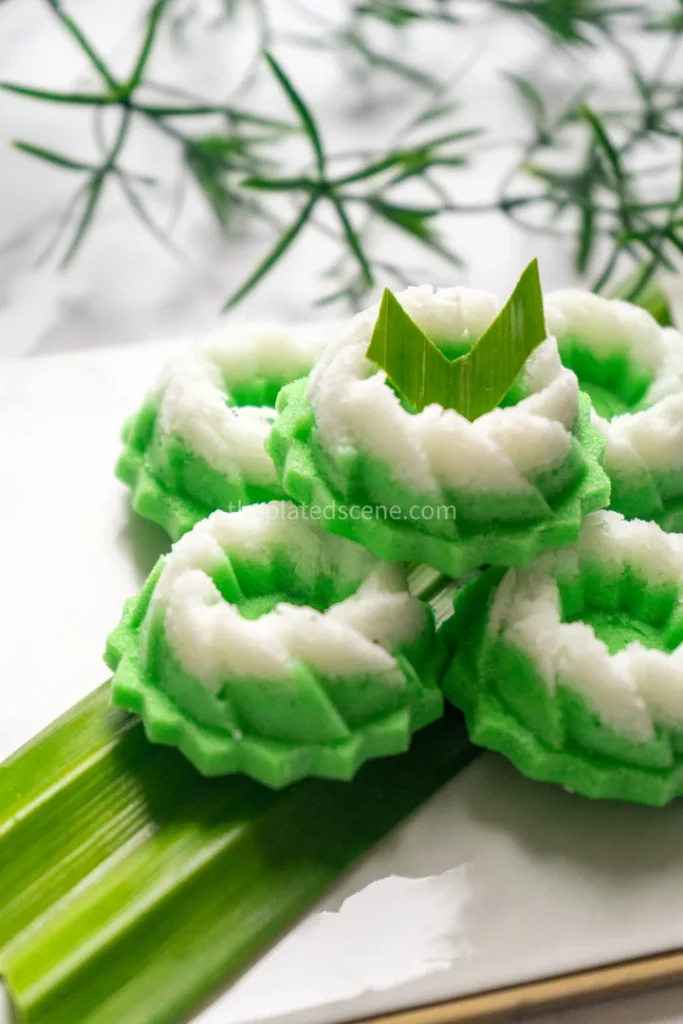
Historically, putu ayu developed from simple household ingredients that were widely available in Indonesian kitchens. Freshly grated coconut, pandan leaves from the garden, and basic flour mixtures were easy to find, making it a favorite homemade snack for families. Over time, the cake became a staple at gatherings, celebrations, and tea-time moments, loved for its soft texture and subtle pandan aroma.
Even though there are many variations of putu across Indonesia, putu ayu stands out because of its iconic two-layer look. The white coconut topping represents freshness and purity, while the green pandan layer symbolizes natural fragrance and the use of plant-based ingredients. Today, this cake remains a symbol of comfort, tradition, and the beauty of Indonesian simplicity.
Putu Ayu Compared to Other Kue Basah
Indonesia has a beautiful variety of kue basah, and each one tells a different story about the country’s culinary traditions. Putu ayu belongs to this family of moist, soft-textured snacks, but it has a few signature traits that make it stand out.
Compared to klepon, which are chewy glutinous rice balls filled with palm sugar, putu ayu is much lighter and fluffier. Instead of being chewy and gooey in the center, putu ayu offers an airy pandan sponge topped with freshly grated coconut.
When placed beside kue lapis, the colorful layered cake made from rice flour and coconut milk, putu ayu is simpler in structure. Kue lapis focuses on its playful rainbow layers, while putu ayu highlights the fragrance of pandan and the contrast between the white coconut and green sponge.
In the case of dadar gulung, the pandan crepe filled with sweet coconut, the comparison is all about texture. Dadar gulung has a soft, rolled exterior with a caramel-like coconut filling, whereas putu ayu remains a compact steamed cake with a clean two-layer look and a more subtle sweetness.
Even next to kue putu, the steamed rice flour log filled with molten palm sugar, putu ayu offers a lighter, more modern feel. Kue putu has a rustic charm with its bamboo mold and smoky aroma from the steaming process. Putu ayu, on the other hand, presents a more refined and delicate appearance with its flower-shaped mold and fresh coconut topping.
Tips for Choosing the Right Mold
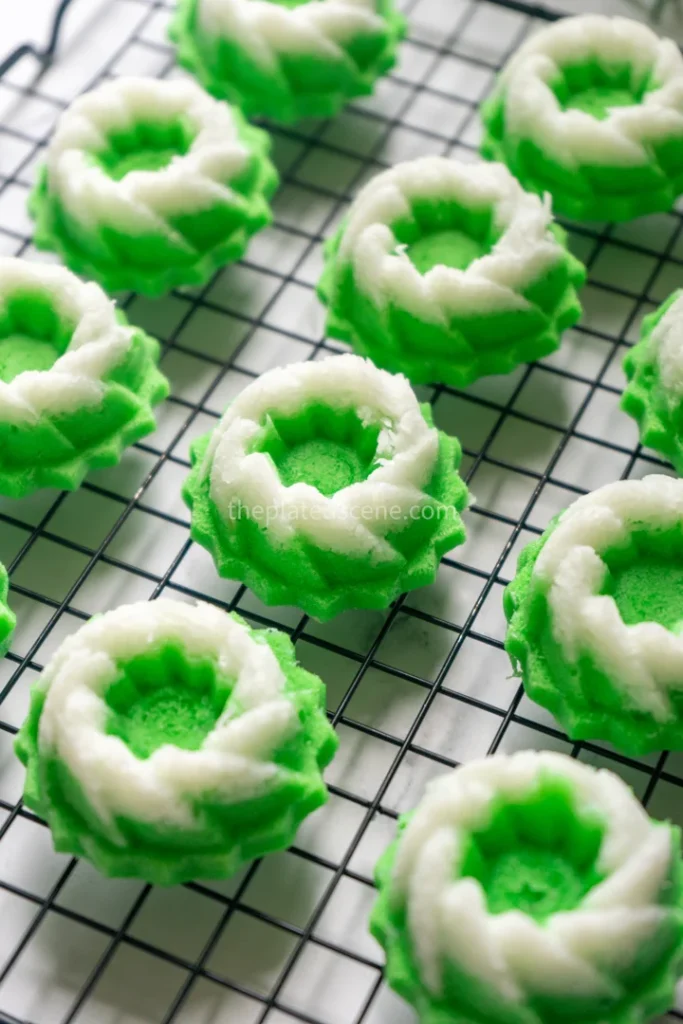
The mold you choose plays a big role in how your Pandan Coconut Blossom Cakes turn out. Putu ayu is known for its pretty flower shape, and using the right mold ensures that the coconut layer stays intact while the pandan sponge rises beautifully. If you are using plastic molds, here are some practical tips to help you get the best results.
- Choose Food-Grade Plastic Only
Make sure the molds are specifically labeled as food-safe and heat-resistant. Not all plastic is suitable for steaming, and using the wrong type may cause warping or off-flavors in your cakes. - Pick Molds With Clear Floral Grooves
Putu ayu gets its charm from the detailed flower pattern. Look for molds with well-defined ridges so the final cake has a crisp, blossom-like top. Smooth molds create cakes that are less visually striking. - Go for Flexible but Firm Plastic
The best molds are slightly flexible, making it easier to release the cakes once they are steamed. If the plastic is too rigid, the cake may break during unmolding. If it is too soft, it may bend during steaming. - Check the Size of Each Cavity
Most putu ayu molds come in small individual cups. A slightly deeper mold gives you a fluffier cake, while a shallow mold creates a lighter bite. Choose based on your preferred texture and serving style. - Ensure Even Thickness Across the Mold
A mold with uneven thickness may heat at different speeds, which can lead to inconsistent results. Even, uniform plastic helps the entire batch steam at the same rate. - Avoid Old or Scratched Plastic Molds
Scratches hold onto oil and batter, making unmolding harder and affecting the cake’s appearance. If your mold looks worn out, it may be time to replace it. - Test One Cake First if You Are Using a New Mold
Before steaming a full batch, make a single test cake. This helps you adjust the amount of coconut you pack, the batter level, and the unmolding technique before committing to all the batter.
Fresh Pandan vs Pandan Extract
Pandan is the heart of Pandan Coconut Blossom Cakes, giving the sponge its signature aroma and natural green color. There are two common ways to add pandan flavor: using fresh pandan leaves or bottled pandan extract. Both work beautifully, but each one brings a different result to your cake. Since I use pandan extract for this recipe, here is what you need to know when choosing between the two.
Fresh Pandan Leaves
Fresh pandan leaves offer a clean, earthy fragrance that is naturally subtle. To use them, you normally blend the leaves with water, strain the juice, and mix it into your batter. Fresh pandan gives a soft green tint that looks natural and gentle. The downside is that you need access to Asian markets or grow them at home, and the flavor can vary depending on the leaf quality.
Pandan Extract
Pandan extract is the most convenient option, especially if you live outside Southeast Asia. It gives a stronger and more consistent aroma every time. The color is more vibrant, which helps your putu ayu achieve that bright green look many readers love. Since extract is concentrated, you only need a small amount to achieve great flavor. It is also very beginner friendly because it removes the extra steps of blending and straining.
Which One Should You Use
If you want convenience, a brighter color, and consistent results, pandan extract is the perfect choice. This is why I use extract for this recipe. If you prefer a more natural green and a softer aroma, fresh pandan juice is a beautiful traditional option.
Flavor Tip
If your extract is very strong, start with a small amount and adjust slowly. Too much extract can create an artificial taste. A tiny drop goes a long way.
Ingredients
These are the ingredients you will need to make soft and fragrant Pandan Coconut Blossom Cakes with a fresh coconut topping.
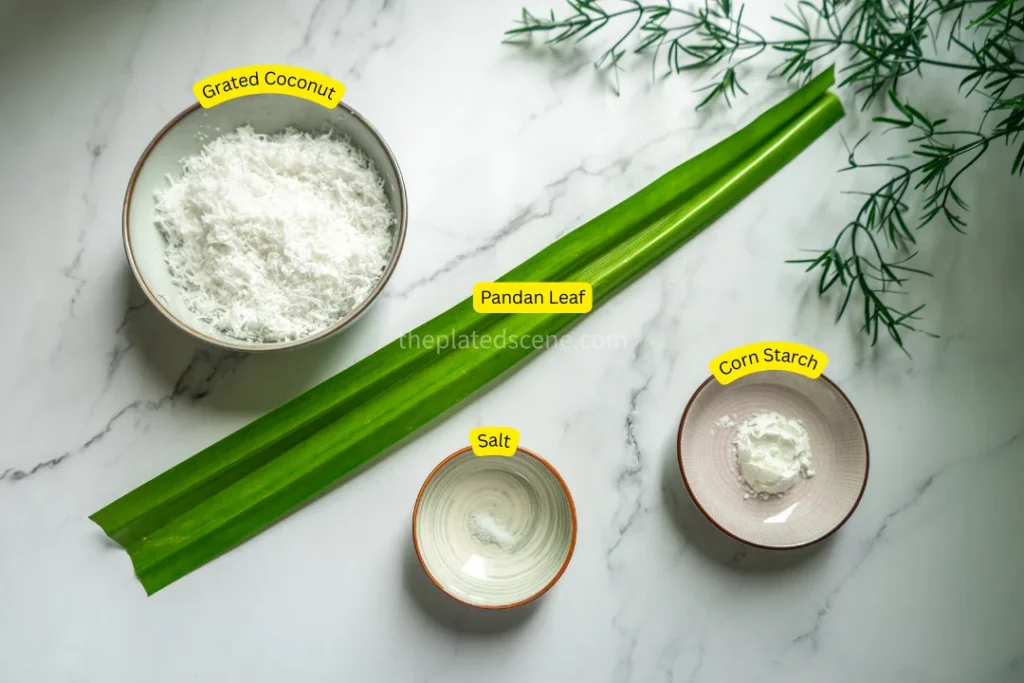
Coconut Upper Layer
- Grated coconut
Choose fresh or frozen grated coconut for the best taste. Fine or medium grate helps create a smooth, defined blossom shape. - Corn starch
Helps bind the coconut so the top layer stays firm after steaming. - Salt
A small pinch enhances the flavor and keeps the coconut layer from tasting bland. - Pandan leaf
Adds a natural aroma to the coconut. You can skip this if using pandan paste in the cake batter.
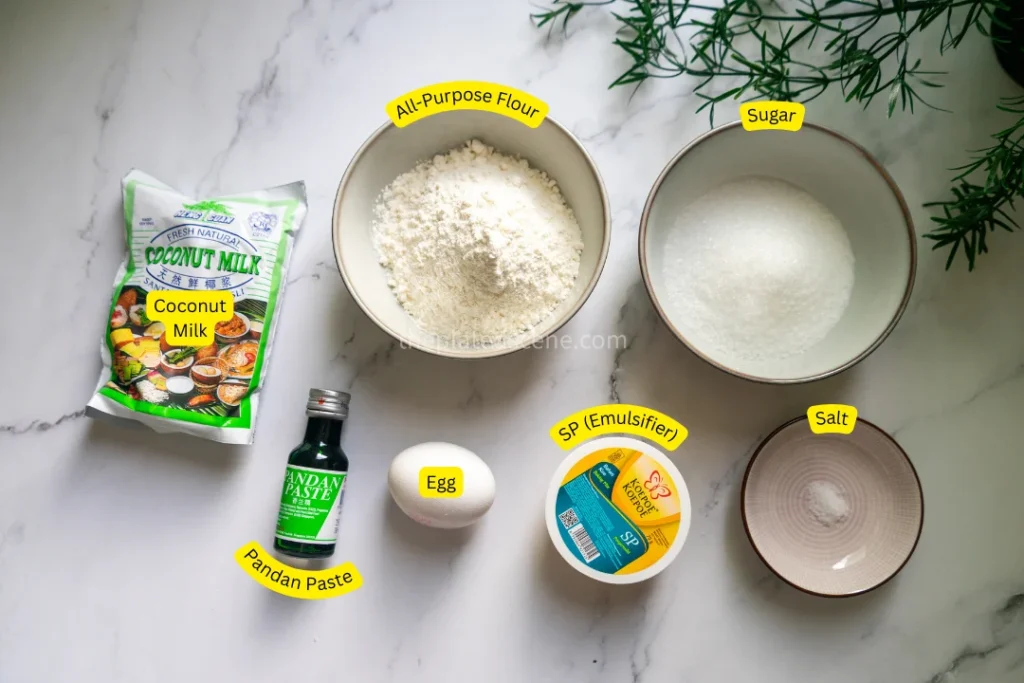
Cake Mixture
- Egg
Helps the batter whip up into a light and airy sponge. - Salt
Balances the sweetness and enhances the pandan flavor. - Sugar
Sweetens the cake and stabilizes the whipped egg mixture. - SP (emulsifier)
Helps create a fluffier and more stable batter. Optional but gives a lighter texture. - Coconut milk and water
Adds moisture and richness without making the cake too heavy. - All purpose flour
Creates structure while still keeping the sponge tender. - Pandan paste
Provides a vibrant green color and a strong pandan aroma that is consistent and easy to work with.
What Is SP and What Can You Use Instead
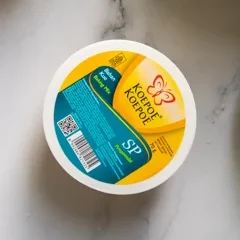
SP is a popular cake emulsifier used in many Southeast Asian steamed and baked cakes, including putu ayu. It helps the egg and sugar mixture whip up quickly, hold more volume, and stay stable during steaming. This is why putu ayu made with SP often turns out extra fluffy with a soft, even crumb. SP usually comes in a creamy paste and is added straight into the batter while whipping.
If you cannot find SP, there are a few easy alternatives. The closest substitutes are other cake stabilizers like Ovalette or Quick 75, which work in almost the same way and can be used in the same amount. If you prefer not to use emulsifiers at all, you can simply omit it. The texture will be a little denser, but the cakes will still be soft and delicious. You can also whip the egg and sugar mixture a bit longer to naturally build more air into the batter. This helps achieve a light texture even without SP. For a slightly richer flavor, a very small amount of softened butter can be added, although it will not replace the full stabilizing effect.
With or without SP, your Pandan Coconut Blossom Cakes will still turn out lovely as long as you follow the mixing steps carefully.
Step-by-Step Instructions
For this recipe, use an electric mixer at speed level 2 (the second from the lowest setting) for all mixing steps.
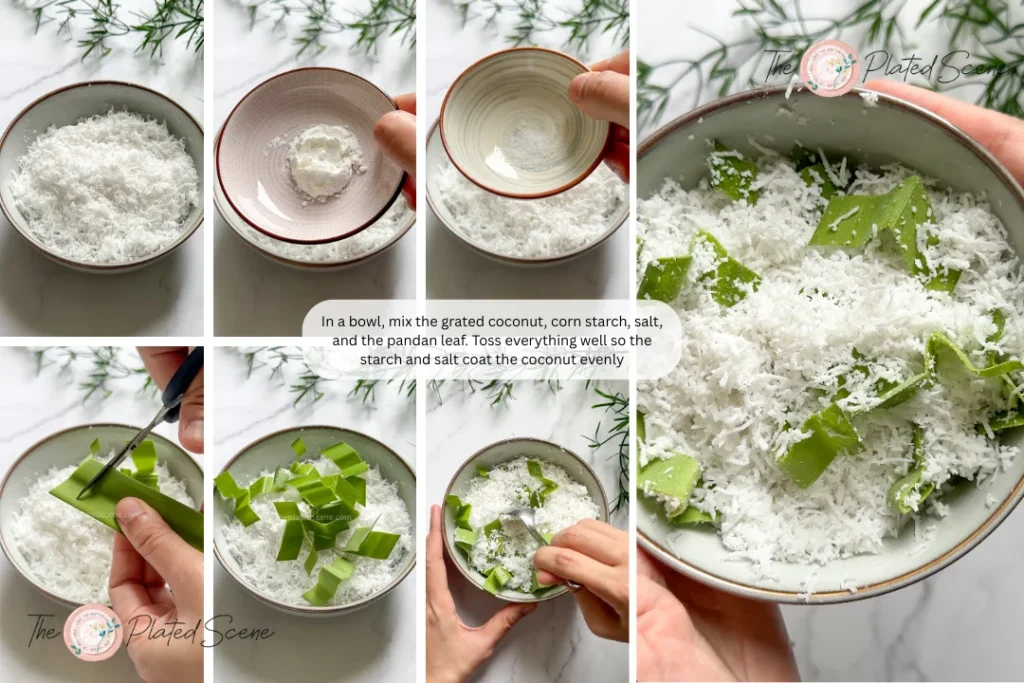
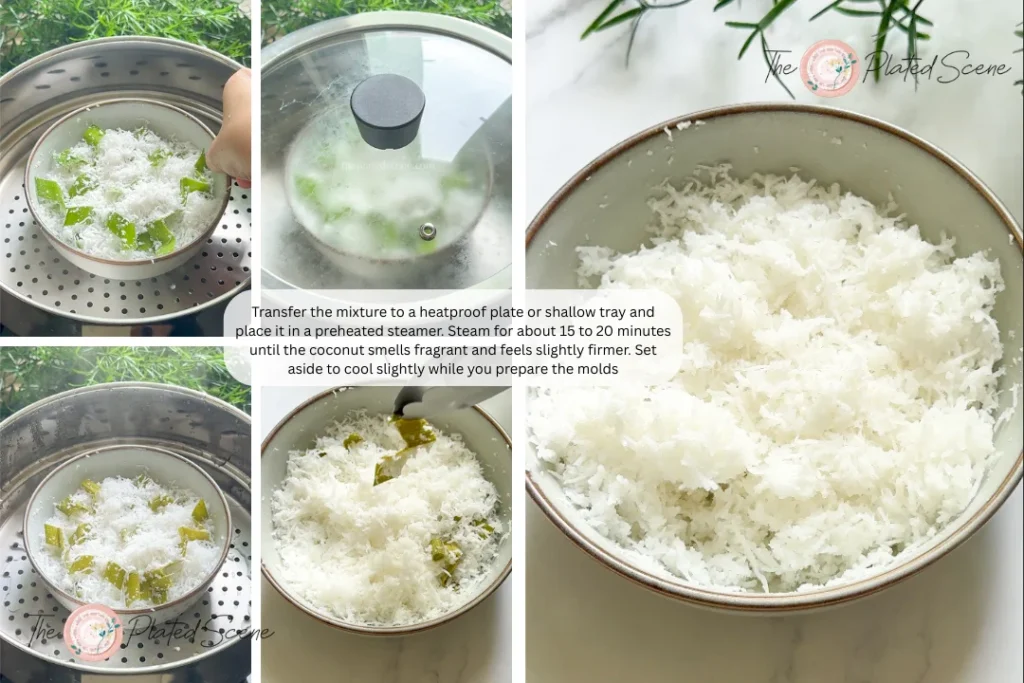
Step 1: Steam the coconut topping
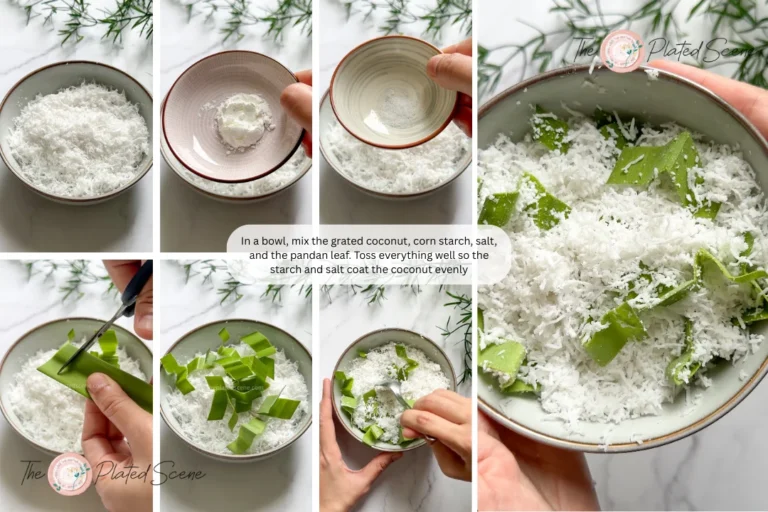
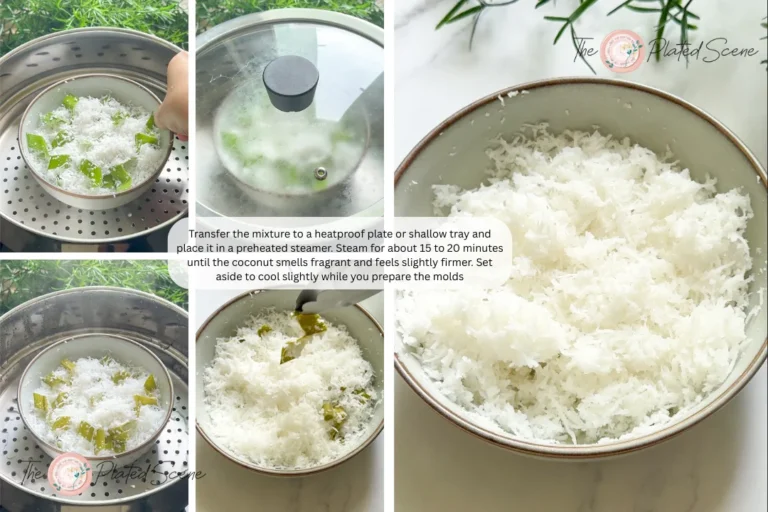
In a bowl, mix the grated coconut, corn starch, salt, and the pandan leaf. Toss everything well so the starch and salt coat the coconut evenly. Transfer the mixture to a heatproof plate or shallow tray and place it in a preheated steamer. Steam for about 15 to 20 minutes until the coconut smells fragrant and feels slightly firmer. Set aside to cool slightly while you prepare the molds.
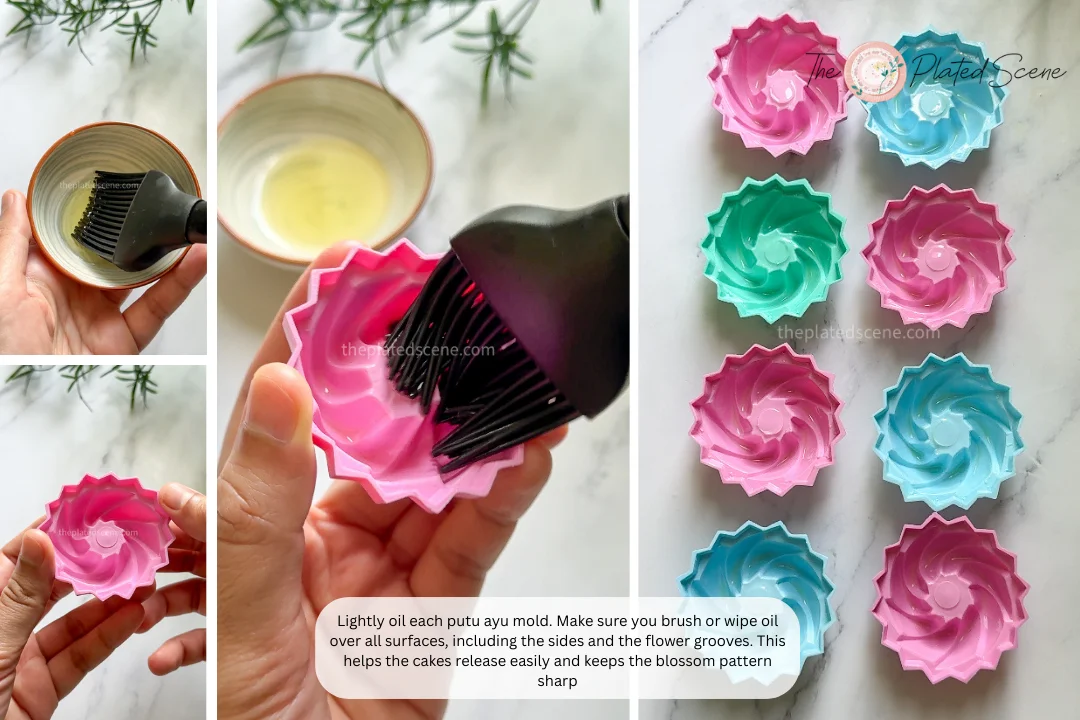
Step 2: Prepare the putu ayu molds
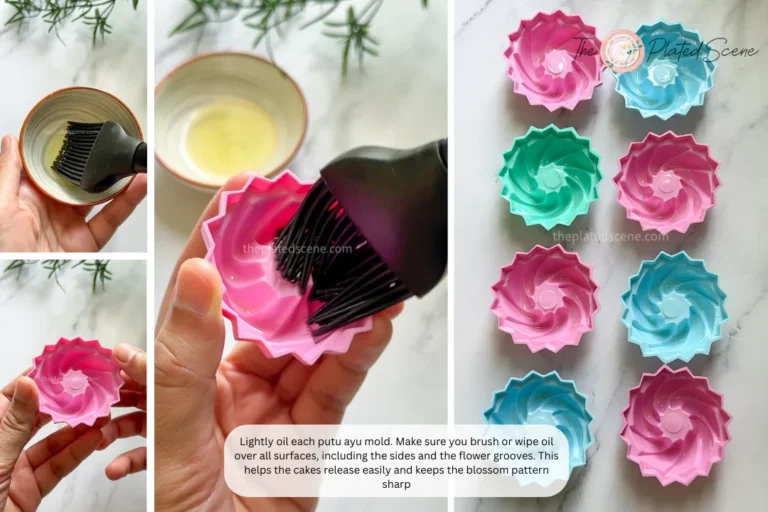
Lightly oil each putu ayu mold. Make sure you brush or wipe oil over all surfaces, including the sides and the flower grooves. This helps the cakes release easily and keeps the blossom pattern sharp.
Step 3: Pack the coconut into the molds
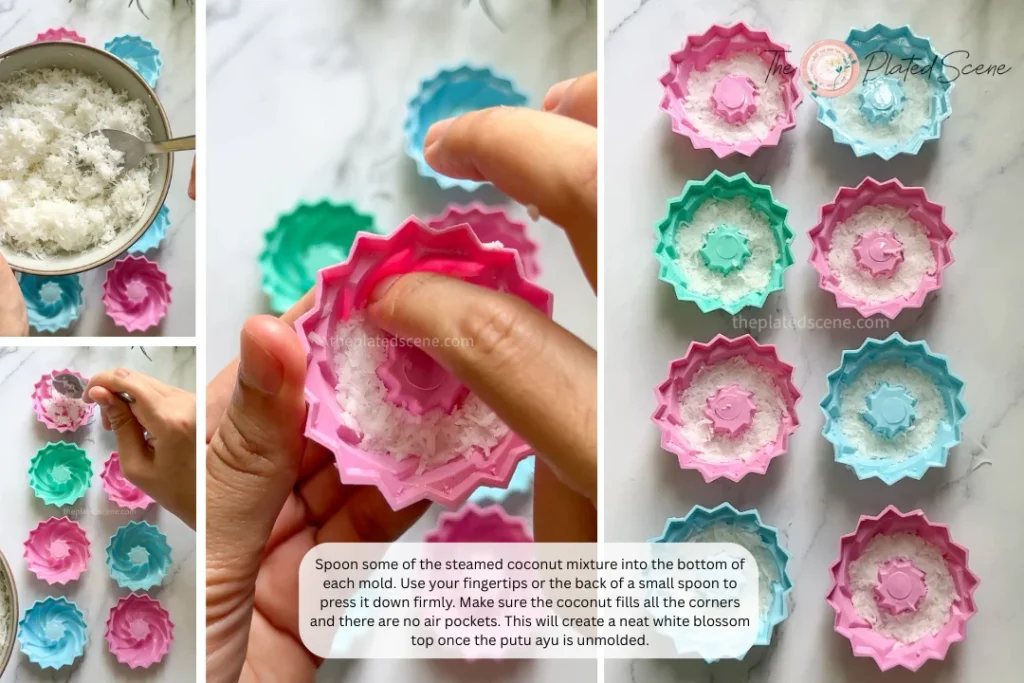
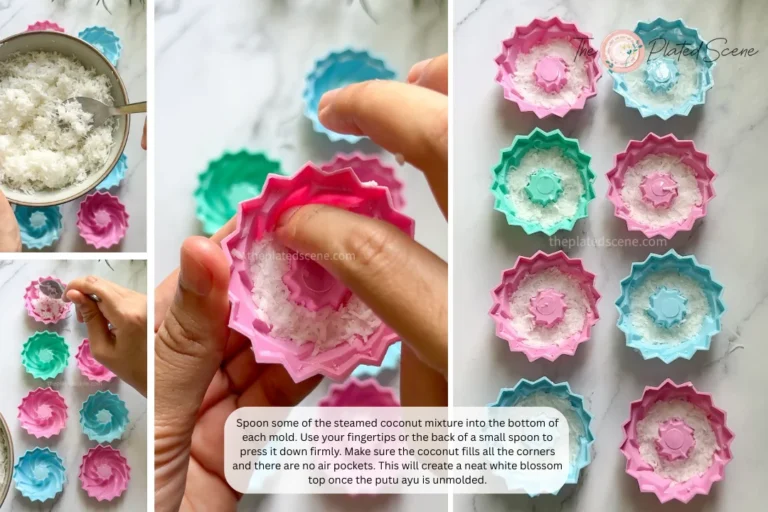
Spoon some of the steamed coconut mixture into the bottom of each mold. Use your fingertips or the back of a small spoon to press it down firmly. Make sure the coconut fills all the corners and there are no air pockets. This will create a neat white blossom top once the putu ayu is unmolded.
Step 4: Start the cake batter
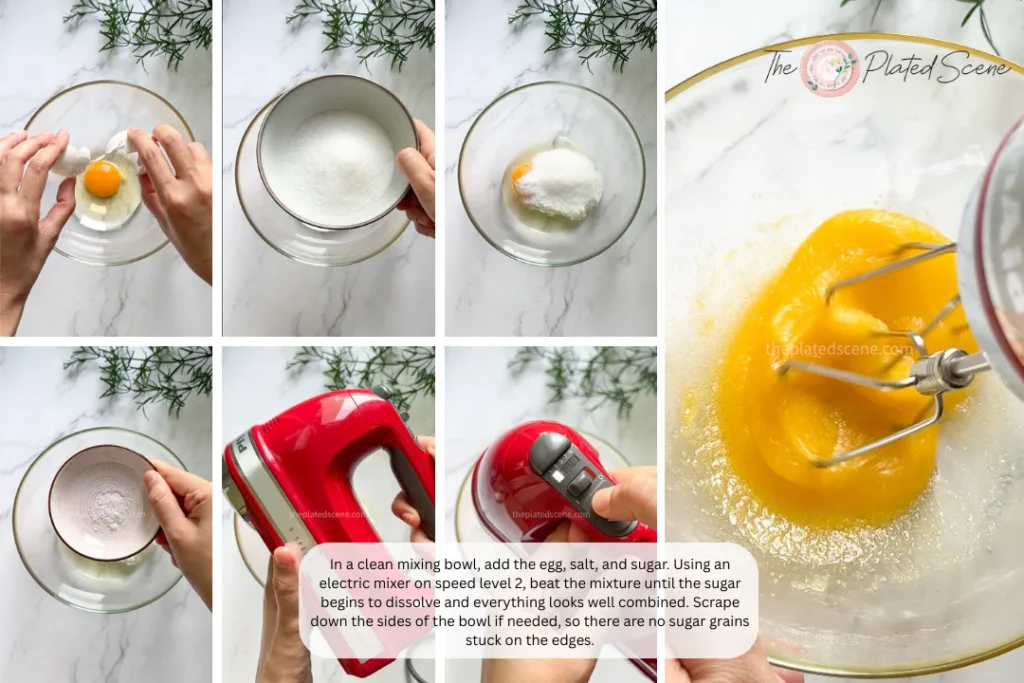
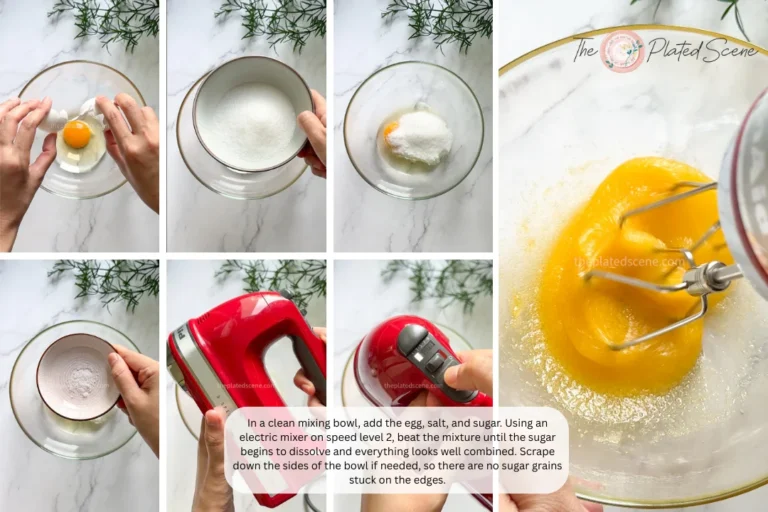
In a clean mixing bowl, add the egg, salt, and sugar. Using an electric mixer on speed level 2, beat the mixture until the sugar begins to dissolve and everything looks well combined. Scrape down the sides of the bowl if needed so there are no sugar grains stuck on the edges.
Step 5: Whip until thick and fluffy
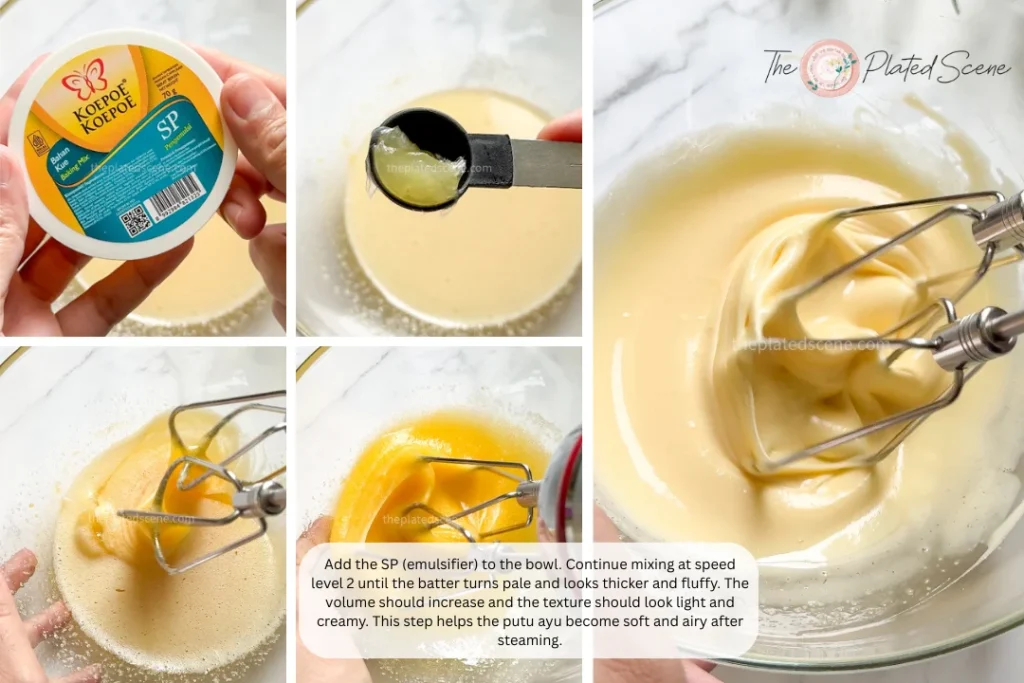
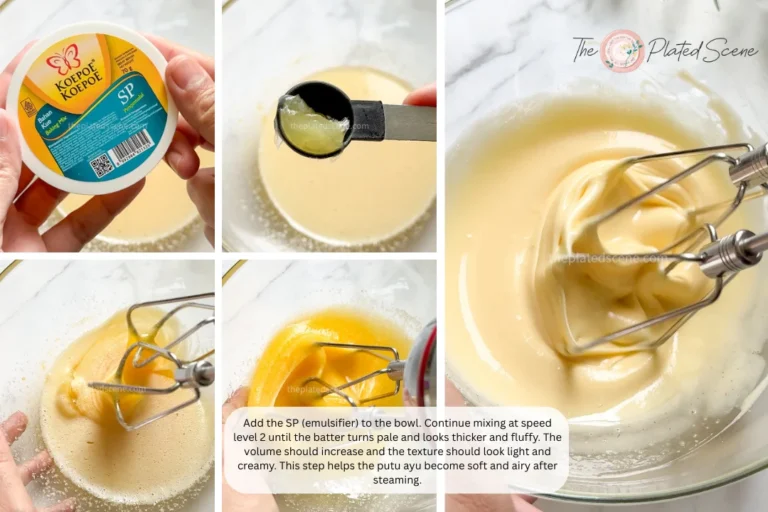
Add the SP (emulsifier) to the bowl. Continue mixing at speed level 2 until the batter turns pale and looks thicker and fluffy. The volume should increase and the texture should look light and creamy. This step helps the putu ayu become soft and airy after steaming.
Step 6: Add the coconut milk mixture
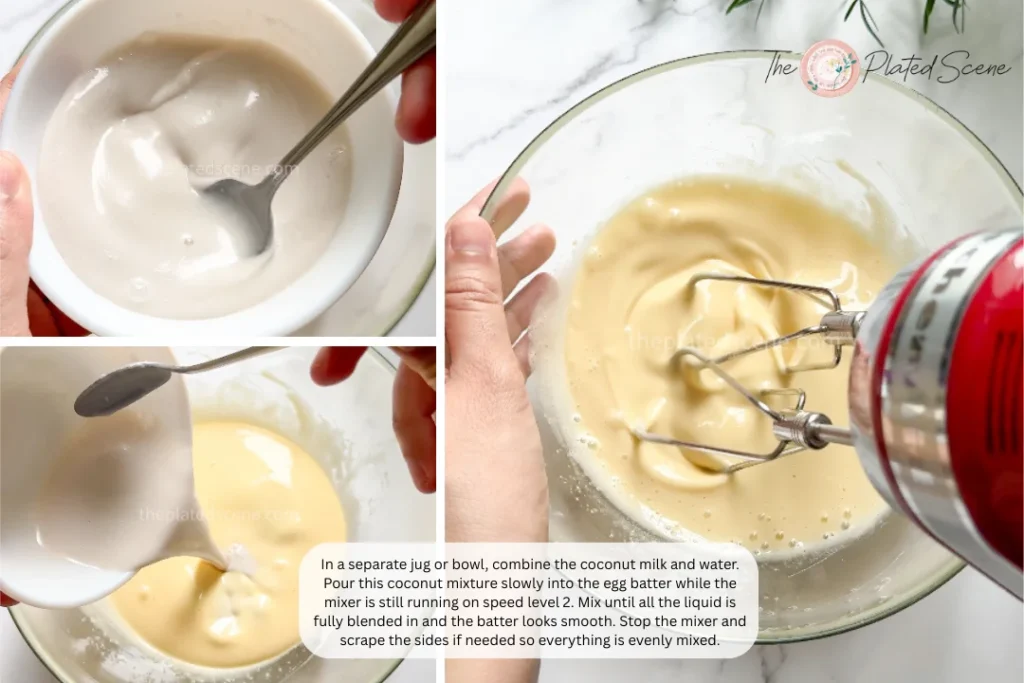
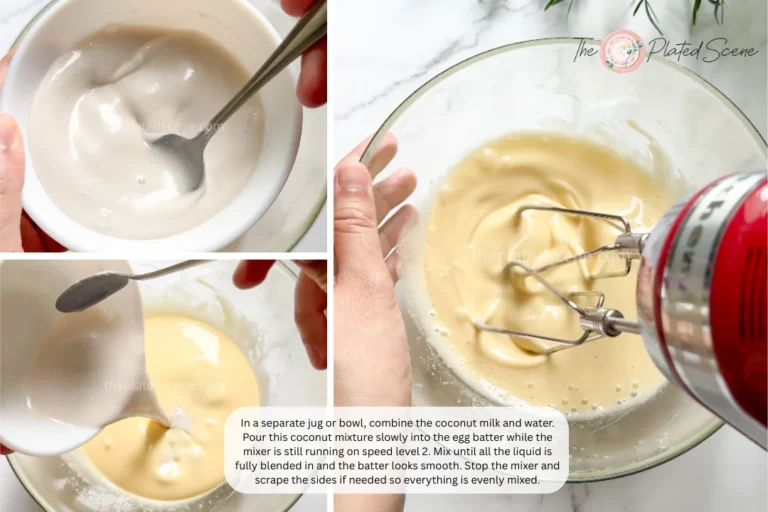
In a separate jug or bowl, combine the coconut milk and water. Pour this coconut mixture slowly into the egg batter while the mixer is still running on speed level 2. Mix until all the liquid is fully blended in and the batter looks smooth. Stop the mixer and scrape the sides if needed so everything is evenly mixed.
Step 7: Incorporate the flour
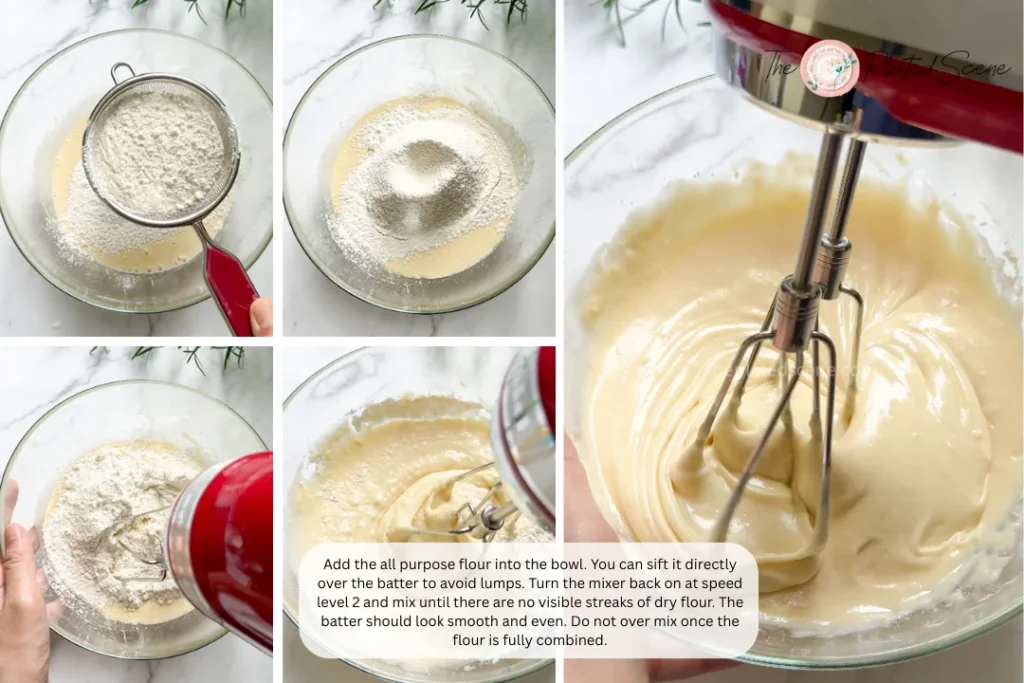
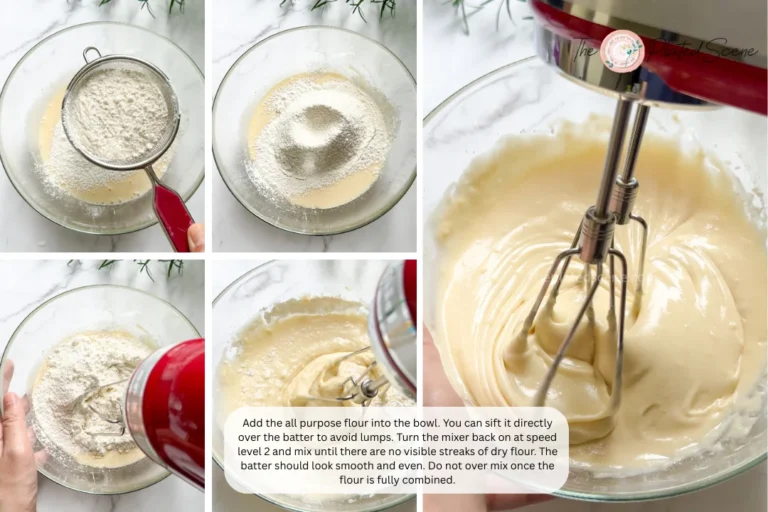
Add the all purpose flour into the bowl. You can sift it directly over the batter to avoid lumps. Turn the mixer back on at speed level 2 and mix until there are no visible streaks of dry flour. The batter should look smooth and even. Do not over mix once the flour is fully combined.
Step 8: Add the pandan paste
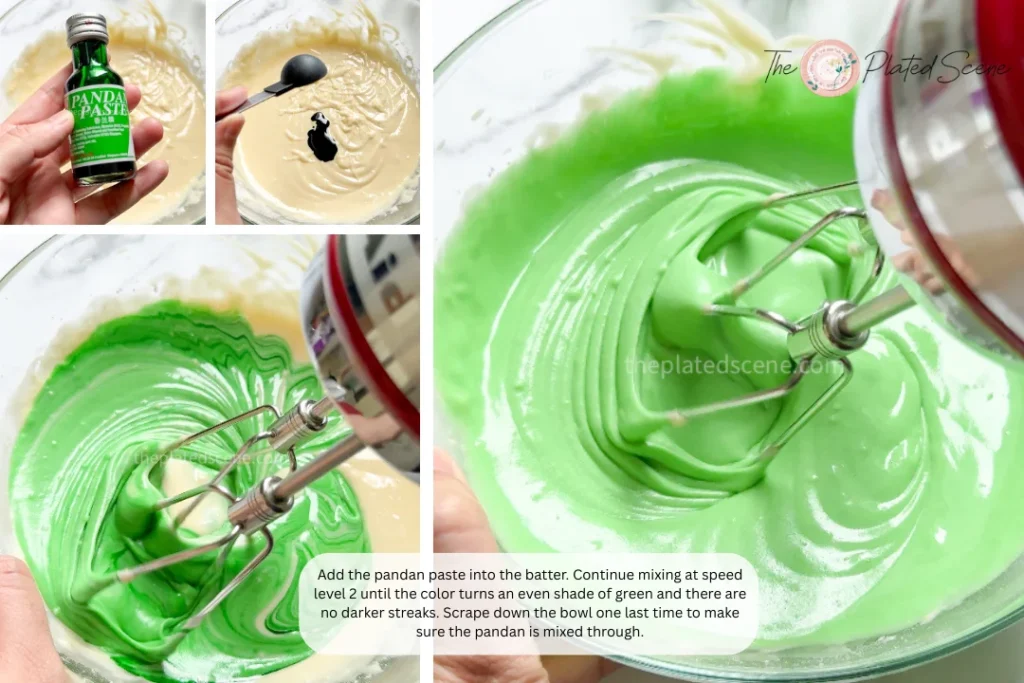
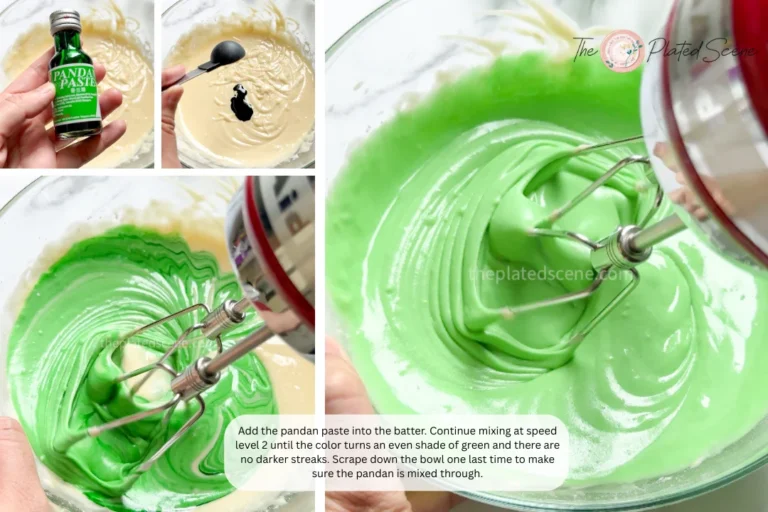
Add the pandan paste into the batter. Continue mixing at speed level 2 until the color turns an even shade of green and there are no darker streaks. Scrape down the bowl one last time to make sure the pandan is mixed through.
Step 9: Fill the molds
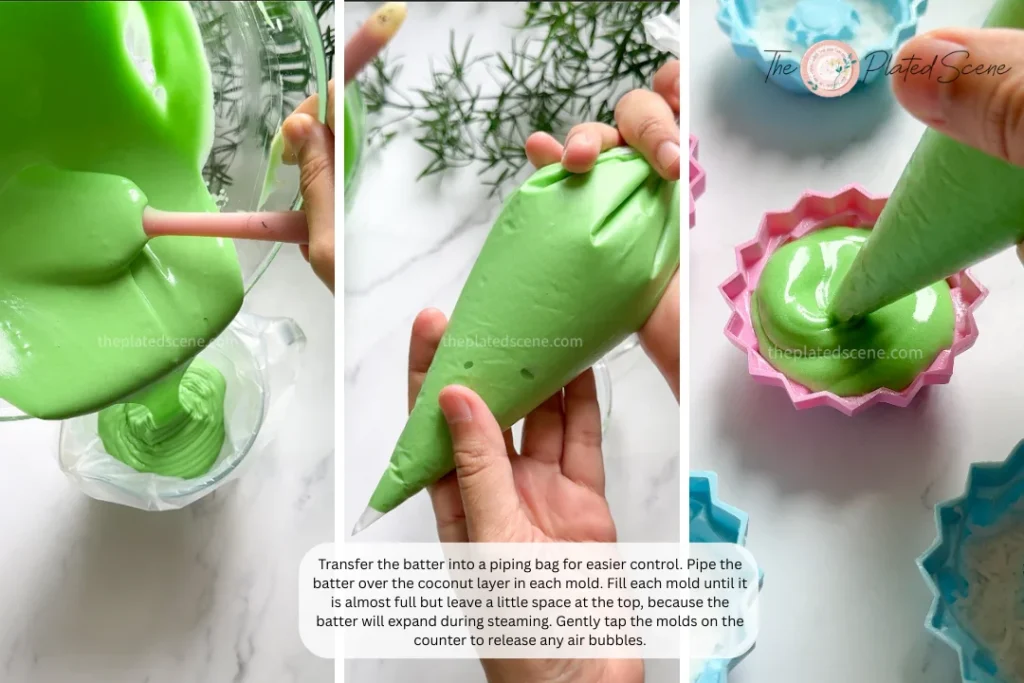
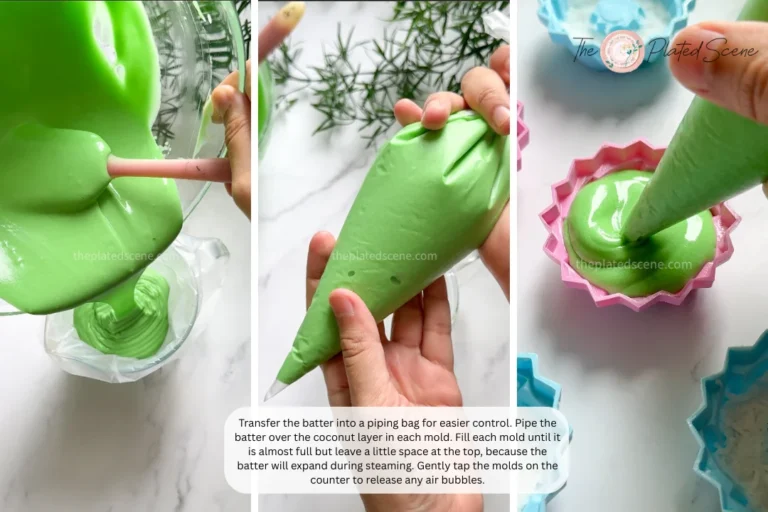
Transfer the batter into a piping bag for easier control. Pipe the batter over the coconut layer in each mold. Fill each mold until it is almost full but leave a little space at the top, because the batter will expand during steaming. Gently tap the molds on the counter to release any air bubbles.
Step 10: Steam the putu ayu
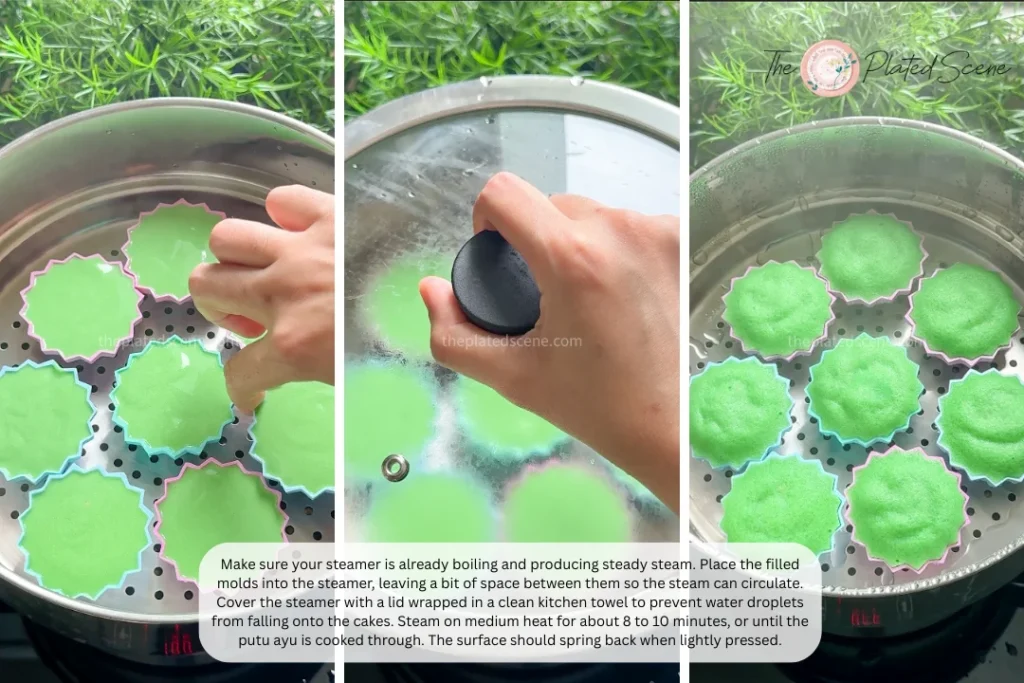
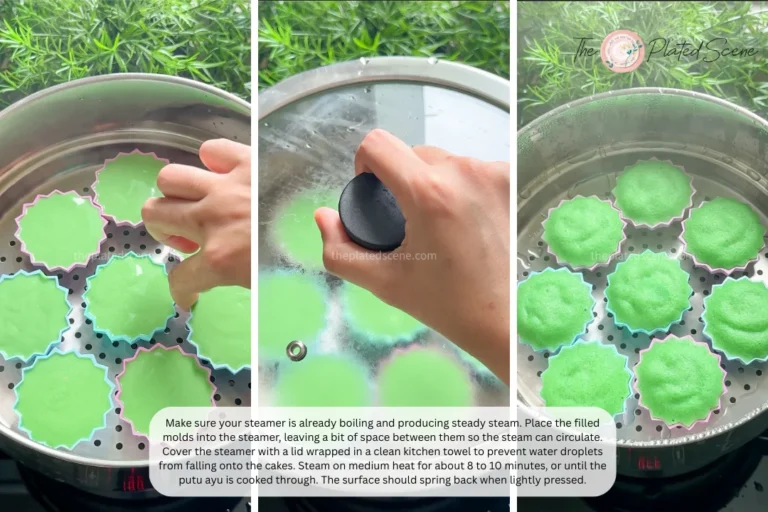
Make sure your steamer is already boiling and producing steady steam. Place the filled molds into the steamer, leaving a bit of space between them so the steam can circulate. Cover the steamer with a lid wrapped in a clean kitchen towel to prevent water droplets from falling onto the cakes. Steam on medium heat for about 8 to 10 minutes, or until the putu ayu is cooked through. The surface should spring back when lightly pressed.
Step 11: Cool and unmold
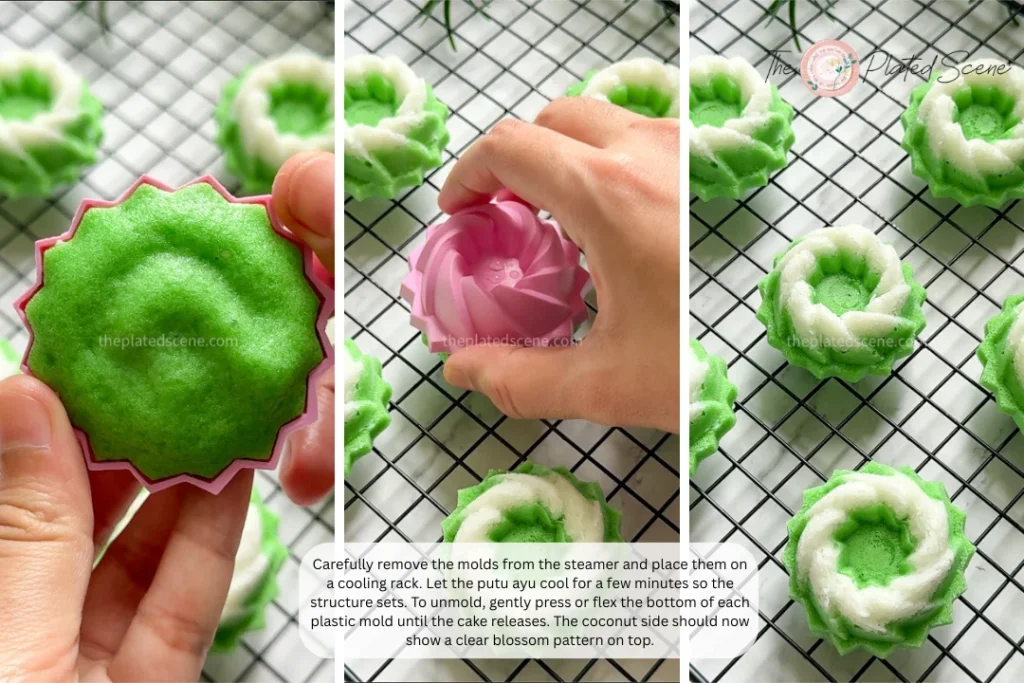
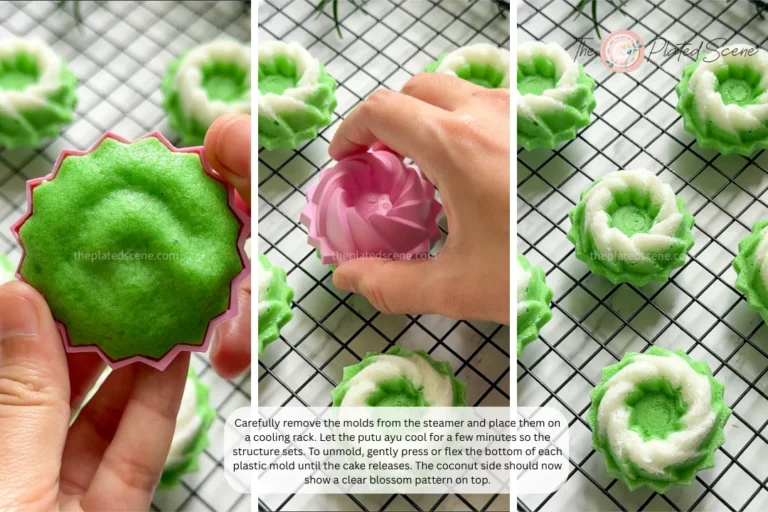
Carefully remove the molds from the steamer and place them on a cooling rack. Let the putu ayu cool for a few minutes so the structure sets. To unmold, gently press or flex the bottom of each plastic mold until the cake releases. The coconut side should now show a clear blossom pattern on top.
Step 12: Serve
Arrange the Pandan Coconut Blossom Cakes on a serving plate and enjoy them warm or at room temperature. They are perfect with a cup of tea or coffee. 😊
How to Get the Perfect Blossom Shape
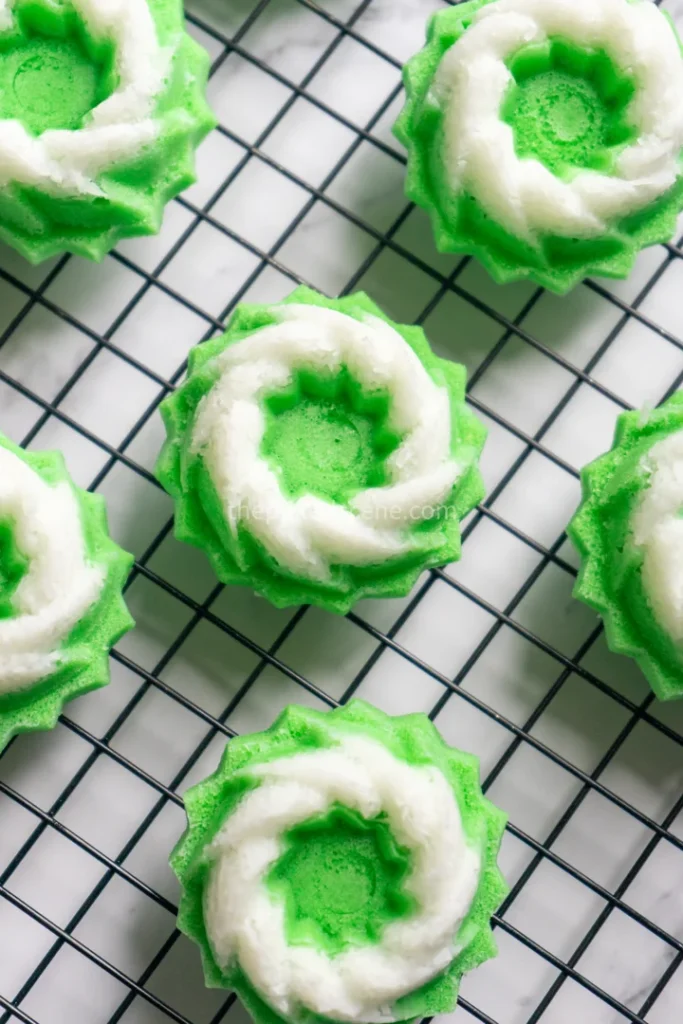
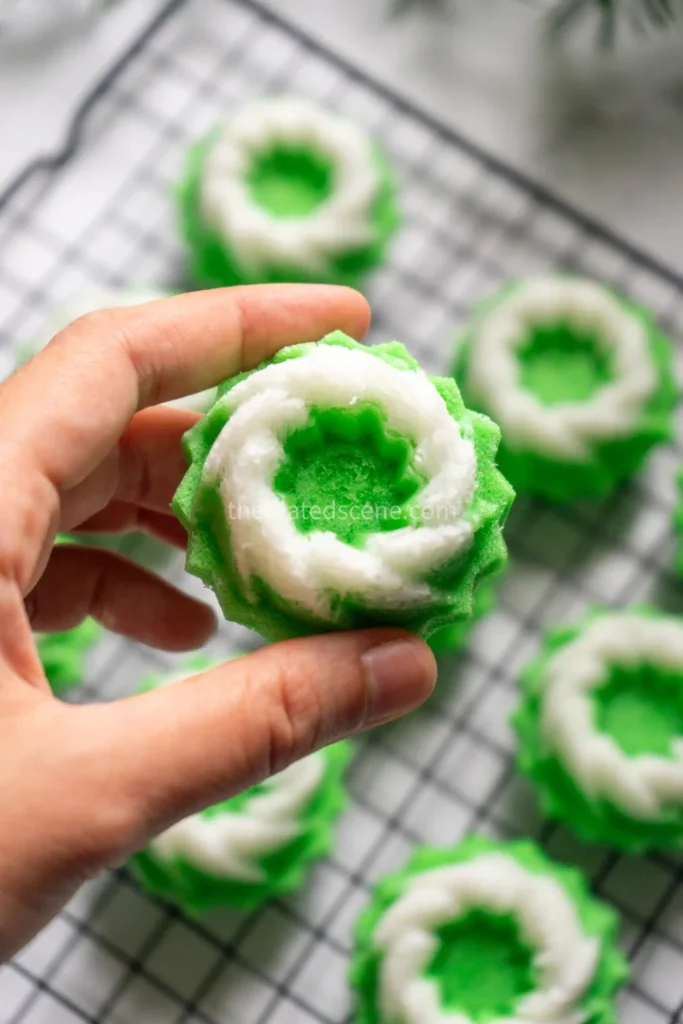
One of the most charming parts of putu ayu is its beautiful flower shape. The white coconut layer forms the “petals” while the pandan sponge rises underneath like a soft green bloom. Getting this blossom shape to look clean and crisp is easier than it looks as long as you follow the right steps.
- Pack the Coconut Firmly Into the Mold
The coconut layer forms the top of the blossom, so it needs to be packed tightly. Use your fingers or the back of a small spoon to press the coconut down firmly into every groove of the mold. This helps the pattern appear clearly once steamed. - Choose Fine or Medium Grated Coconut
If the coconut is too coarse, the flower details may look uneven. Finer coconut presses better and creates a clean, smooth blossom shape when unmolded. - Do Not Overfill the Mold With Batter
Pour the batter only to about 70 percent full. This gives the cake room to rise without losing the flower pattern. Overfilling can make the sponge overflow and hide the blossom shape. - Tap the Mold Gently After Pouring the Batter
Tapping removes air bubbles and helps the batter settle around the coconut layer evenly. This prevents gaps or holes between the layers and keeps the edges sharp. - Make Sure the Coconut Layer Is Moist but Not Wet
If the coconut is too dry, it will not stick. If it is too wet, it will become mushy. Lightly sprinkling the coconut with a pinch of salt and mixing helps keep the moisture just right. - Use Medium Heat for Steaming
Steaming on high heat makes the cakes rise too quickly and can distort the shape. Medium heat keeps the structure stable and helps retain the details of the mold. - Let the Cakes Cool Slightly Before Unmolding
Putu ayu is fragile when hot. Allowing the cakes to cool for a few minutes helps the sponge firm up. Gently press the bottom of the plastic mold to release the blossom shape without breaking any petals. - Test One Mold First
If you are using a new mold or a different type of coconut, make a single test cake. Adjust the amount of coconut or batter based on the result before steaming the full batch.
How to Steam Putu Ayu Properly
Steaming is one of the most important steps in making putu ayu, and getting this part right will ensure your cakes turn out soft, fluffy, and beautifully shaped. Even though steaming sounds simple, a few small techniques can make a big difference in the final results. Here is how to steam putu ayu properly so every batch comes out perfect.
- Preheat Your Steamer First
Always heat the steamer until the water is actively boiling before you place the putu ayu molds inside. Starting with strong steam helps the batter rise quickly and creates a light, airy texture. - Wrap the Lid With a Cloth
Water droplets from the steamer lid can drip onto your batter and create holes or dents on the surface. Wrap the lid with a clean kitchen towel to absorb condensation and keep the tops of your putu ayu smooth. - Use Medium Heat, Not High
High heat can cause the cakes to rise too quickly and collapse after steaming. Once the steam is strong, reduce the heat to medium. This helps the putu ayu cook evenly from top to bottom without deflating. - Leave Space Between the Molds
Do not overcrowd the steamer. A little space between the molds allows steam to move freely so the putu ayu cooks evenly. If necessary, steam in two batches. - Avoid Opening the Lid During Steaming
Opening the lid lets steam escape and lowers the temperature, which can result in dense or sunken cakes. Keep the lid closed until the steaming time is almost done. - Check for Doneness Gently
To test if your putu ayu is ready, press the surface lightly with your fingertip. If it springs back, the cake is cooked. You can also insert a toothpick into the center, and it should come out clean. - Let the Cakes Cool Before Unmolding
Putu ayu is delicate when hot. Let the cakes cool for a few minutes so the structure sets properly. This prevents the sponge from sticking or breaking when you remove them from the molds.
Storing and Reheating Tips
Because putu ayu is a type of kue basah, it has a naturally moist texture and a fresh coconut topping that needs proper storage to maintain its softness and flavor. Here is how to store and reheat your Pandan Coconut Blossom Cakes safely without losing their fluffy texture.
- Room Temperature
Putu ayu can stay fresh at room temperature for up to 24 hours if your kitchen is cool and low-humidity. Place the cakes in an airtight container to protect them from drying out. - Refrigeration
If you need to keep them longer, store them in the fridge for up to 2 to 3 days. Use an airtight container to prevent the coconut topping from absorbing fridge odors. The texture will firm up once chilled, but this is normal. - Freezing
Freezing is not recommended because the grated coconut topping can become watery or grainy after thawing. The texture of the steamed sponge may also change. - Reheating
To enjoy putu ayu with its original soft texture, reheat gently.- Steamer method
Place the cakes in a steamer for 2 to 3 minutes on low heat. This restores the softness without overcooking the sponge. - Microwave method
If you are in a hurry, place a cake on a microwave-safe plate and cover it loosely with a damp paper towel. Heat for 8 to 10 seconds. Do not overheat or the coconut will dry out.
- Steamer method
- Extra Tips
- Avoid storing the cakes uncovered because the coconut topping will dry quickly.
- If the coconut layer becomes slightly dry, a quick steam will refresh it.
- Always cool the cakes completely before storing to prevent condensation inside the container.
Other Indonesian Desserts You Might Like
If you enjoy the soft texture and nostalgic flavor of putu ayu, there are many other Indonesian sweets that offer the same comforting feeling. These treats are easy to make at home and carry the familiar flavors of coconut, pandan, and palm sugar that we all love.
- Wajik Ketan
Sticky rice cooked with palm sugar and coconut milk until glossy and rich. It has a deep caramel flavor and a chewy, satisfying bite. - Bubur Kacang Ijo
A sweet mung bean porridge cooked with coconut milk and palm sugar. Warm, cozy, and perfect for breakfast or dessert. - Bubur Pacar Cina
Colorful tapioca pearls served with creamy coconut milk. Light, refreshing, and a favorite during hot days.
Easy Putu Ayu (Pandan Coconut Blossom Cakes) Recipe
4
servings30
minutes40
minutes1
hour10
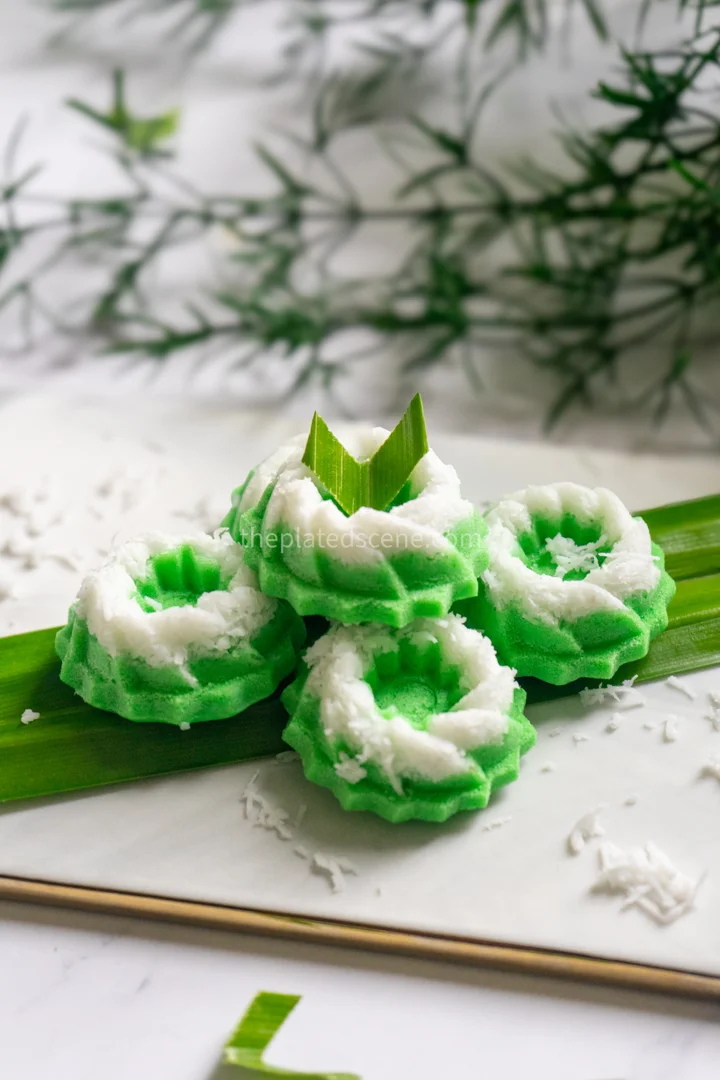
minutesThese Putu Ayu (Pandan Coconut Blossom Cakes) are soft, fragrant Indonesian steamed mini cakes made with a fluffy pandan sponge and a fresh coconut topping. The pretty flower-shaped design makes them perfect for tea time or festive gatherings. Light, aromatic, and easy to make, putu ayu is a comforting classic you can enjoy anytime.
Keep the screen of your device on
Ingredients
- Coconut Upper Layer
1 1/4 cups 125 g grated coconut
0.5 tablespoon 1/2 tbsp corn starch
a pinch of salt
Half a pandan leaf
- Cake Mixture
1 large 1 large egg
1/8 teaspoon 1/8 tsp salt
1/3 cup 80 g sugar
1/2 teaspoon 1/2 tsp SP (emulsifier)
1/4 cup 60 ml coconut milk
2 tablespoons 40 ml water
3/4 cup 100 g all purpose flour
1/2 teaspoon 1/2 tsp pandan paste
Directions
- Steam the coconut topping
In a bowl, mix the grated coconut, corn starch, salt, and the pandan leaf. Toss everything well so the starch and salt coat the coconut evenly. Transfer the mixture to a heatproof plate or shallow tray and place it in a preheated steamer. Steam for about 15 to 20 minutes until the coconut smells fragrant and feels slightly firmer. Set aside to cool slightly while you prepare the molds.
- Prepare the putu ayu molds
Lightly oil each putu ayu mold. Make sure you brush or wipe oil over all surfaces, including the sides and the flower grooves. This helps the cakes release easily and keeps the blossom pattern sharp. - Pack the coconut into the molds
Spoon some of the steamed coconut mixture into the bottom of each mold. Use your fingertips or the back of a small spoon to press it down firmly. Make sure the coconut fills all the corners and there are no air pockets. This will create a neat white blossom top once the putu ayu is unmolded. - Start the cake batter
In a clean mixing bowl, add the egg, salt, and sugar. Using an electric mixer on speed level 2, beat the mixture until the sugar begins to dissolve and everything looks well combined. Scrape down the sides of the bowl if needed so there are no sugar grains stuck on the edges. - Whip until thick and fluffy
Add the SP (emulsifier) to the bowl. Continue mixing at speed level 2 until the batter turns pale and looks thicker and fluffy. The volume should increase and the texture should look light and creamy. This step helps the putu ayu become soft and airy after steaming. - Add the coconut milk mixture
In a separate jug or bowl, combine the coconut milk and water. Pour this coconut mixture slowly into the egg batter while the mixer is still running on speed level 2. Mix until all the liquid is fully blended in and the batter looks smooth. Stop the mixer and scrape the sides if needed so everything is evenly mixed. - Incorporate the flour
Add the all purpose flour into the bowl. You can sift it directly over the batter to avoid lumps. Turn the mixer back on at speed level 2 and mix until there are no visible streaks of dry flour. The batter should look smooth and even. Do not over mix once the flour is fully combined. - Add the pandan paste
Add the pandan paste into the batter. Continue mixing at speed level 2 until the color turns an even shade of green and there are no darker streaks. Scrape down the bowl one last time to make sure the pandan is mixed through. - Fill the molds
Transfer the batter into a piping bag for easier control. Pipe the batter over the coconut layer in each mold. Fill each mold until it is almost full but leave a little space at the top, because the batter will expand during steaming. Gently tap the molds on the counter to release any air bubbles. - Steam the putu ayu
Make sure your steamer is already boiling and producing steady steam. Place the filled molds into the steamer, leaving a bit of space between them so the steam can circulate. Cover the steamer with a lid wrapped in a clean kitchen towel to prevent water droplets from falling onto the cakes. Steam on medium heat for about 8 to 10 minutes, or until the putu ayu is cooked through. The surface should spring back when lightly pressed. - Cool and unmold
Carefully remove the molds from the steamer and place them on a cooling rack. Let the putu ayu cool for a few minutes so the structure sets. To unmold, gently press or flex the bottom of each plastic mold until the cake releases. The coconut side should now show a clear blossom pattern on top. - Serve
Arrange the Pandan Coconut Blossom Cakes on a serving plate and enjoy them warm or at room temperature. They are perfect with a cup of tea or coffee. 😊

%20Recipe)