

Kapulaga jawa, known in English as Indonesian cardamom, is one of the most aromatic and comforting spices in the Indonesian kitchen. When you crush a pod, a sweet, woody scent fills the air, softer than cinnamon and rounder than clove. It brings a quiet warmth that ties together both savory and sweet dishes.
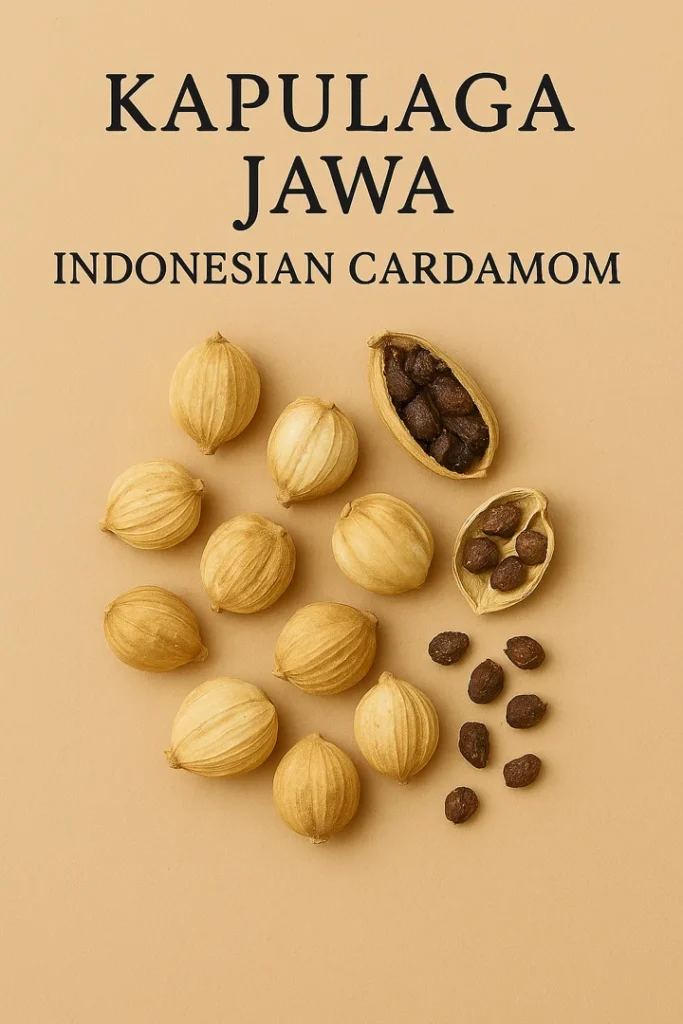
Table of Contents
What is Kapulaga Jawa?
Kapulaga jawa comes from the Amomum compactum plant, a species of cardamom native to Indonesia. The pods are small, round, and pale brown, usually containing tiny black seeds inside. Unlike the Indian green cardamom (Elettaria cardamomum), which is more floral and menthol-like, Indonesian cardamom has a gentler aroma — less sharp, more grounded, and slightly smoky.
This spice has been part of the Indonesian spice trade for centuries, used in gulai, rendang, soto betawi, and traditional herbal drinks like jamu. It also appears in sweet treats such as kolak or wedang uwuh, where it adds cozy warmth to coconut and palm sugar.
Aroma and Flavor
The aroma of kapulaga jawa is warm, woody, and slightly citrusy. When roasted or crushed, it releases a sweet fragrance that feels calming and rich, like the scent of a warm kitchen on a rainy afternoon.
The flavor is earthy and slightly resinous, with hints of pine and citrus peel. It is less intense than Indian cardamom, but it lingers longer on the palate. In curries, it softens strong spices like clove and nutmeg. In desserts, it brings gentle warmth without being sweet.
Kapulaga jawa is the kind of spice that blends in gracefully rather than standing out. It gives a sense of harmony to dishes, making them taste more complete.
How It’s Used in Indonesian Cooking
Kapulaga jawa is used whole or lightly crushed to release its oils. It is usually added early in cooking, especially in dishes that simmer for a long time.
- Rendang and Gulai: Adds depth and warmth to coconut milk sauces.
- Soto Betawi: Balances the richness of spiced beef broth.
- Semur and Opor Ayam: Gives a subtle sweetness to soy-based stews and creamy curries.
- Kolak and Wedang Uwuh: Adds fragrance to sweet coconut desserts and herbal drinks.
- Nasi Kebuli and Nasi Briyani: Infuses rice with aromatic warmth when cooked with cloves and cinnamon.
It is often paired with cinnamon, clove, and nutmeg — the trio that defines many Indonesian spice blends.
Physical Comparison with Similar Spices
| Spice | Appearance | Flavor | Used For | Key Difference |
|---|---|---|---|---|
| Kapulaga Jawa (Indonesian Cardamom) | Small round brown pod | Earthy, woody, mild citrus | Curries, rice, drinks | Softer, less floral |
| Kapulaga Hijau (Green Cardamom) | Small green oval pod | Sweet, floral, menthol-like | Indian curries, desserts | Sharper and more perfumed |
| Cengkeh (Clove) | Brown nail-shaped bud | Sweet, spicy, strong | Curries, drinks, desserts | Sharper and more pungent |
| Kayu Manis (Cinnamon) | Rolled brown bark | Sweet, woody | Stews, desserts | Sweeter, less citrusy |
| Pala (Nutmeg) | Round seed | Warm, nutty, slightly sweet | Stews, sauces, desserts | Richer and creamier flavor |
Cooking Tips
- Toasting: Lightly toast the pods before adding them to enhance their aroma.
- Crushing: Gently bruise the pod with the back of a knife or mortar to release the seeds.
- Timing: Add early in cooking for stews, or near the end for desserts.
- Pairing: Works beautifully with clove, nutmeg, and cinnamon for balanced warmth.
- Storage: Keep pods whole in an airtight jar to preserve their aroma.
If You Can’t Find It
If kapulaga jawa is unavailable, you can use green cardamom, but use it sparingly as its flavor is stronger and more floral. To make the substitute closer to Indonesian cardamom:
- Mix ½ teaspoon crushed green cardamom with a small pinch of cinnamon and a single clove to mimic the earthy warmth of kapulaga jawa.
- For curries and stews, add a bit of nutmeg powder to deepen the flavor.
- For desserts, use green cardamom with a drop of vanilla extract to tone down its sharpness.
The result will not be identical, but it will capture the same gentle warmth that kapulaga jawa brings to Indonesian dishes.
