

Daun kunyit, known in English as turmeric leaf, is one of Indonesia’s most fragrant secrets. Tear a fresh leaf, and the scent rises instantly — soft, earthy, and a little floral, with that golden warmth you recognize from turmeric root, but gentler and greener. It is a leaf that turns simple coconut dishes into something elegant and deeply aromatic.
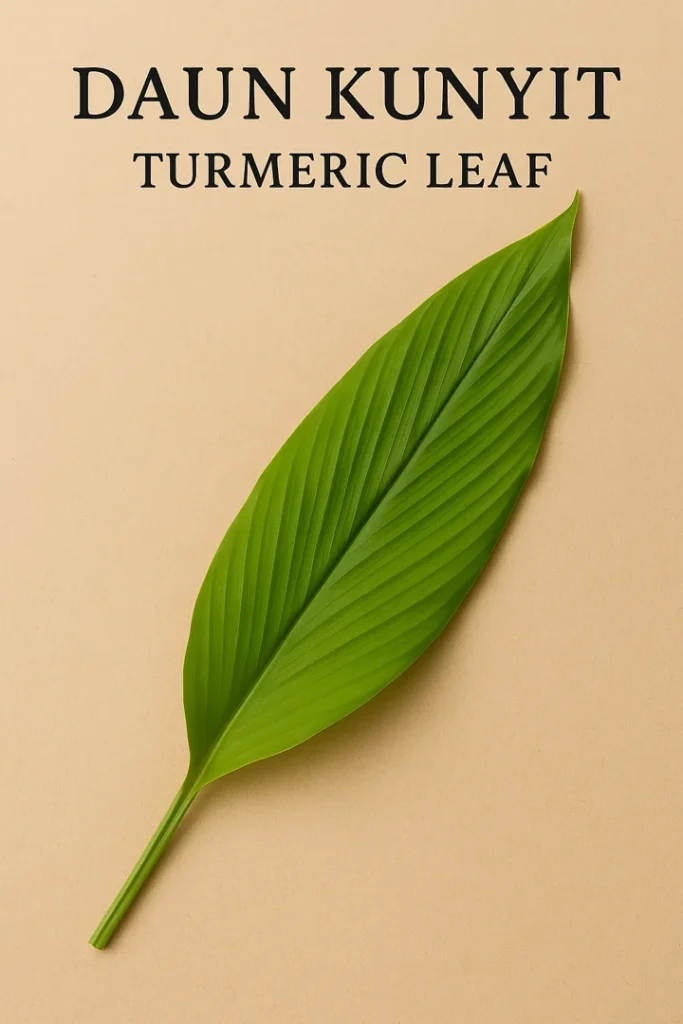
Table of Contents
What is Daun Kunyit?
Daun kunyit comes from the same plant that gives us turmeric root (Curcuma longa). While the rhizome is famous for its bright color and earthy spice, the leaf offers a lighter and more fragrant version of the same character. The leaves are long, broad, and deep green, often folded or tied into knots before cooking.
You can find daun kunyit fresh in traditional Indonesian markets, especially in Sumatra and Java. When fresh leaves are unavailable, frozen or dried versions are used, though they lose some of their fragrance.
In Indonesian cooking, daun kunyit is used whole to perfume dishes during cooking, then removed before serving. It is especially beloved in Sumatran and Malay cuisines, where coconut milk and spice blends need a gentle herbal lift.
Aroma and Flavor
The aroma of daun kunyit is warm, earthy, and slightly citrusy. It carries the essence of turmeric root but in a more delicate and grassy form. When added to hot liquid, the fragrance blooms softly, filling the kitchen with a scent that feels both comforting and fresh.
The flavor is subtle and herbal, with a hint of turmeric’s warmth and a touch of bitterness. It does not add color to dishes, only aroma. When simmered in coconut milk, it gives a light floral note that lingers pleasantly in the background. The taste feels “clean,” the kind of freshness that balances creamy sauces and heavy spices.
How It’s Used in Indonesian Cooking
Daun kunyit is often used to infuse soups, stews, and rice dishes. It works best when simmered slowly so the aroma has time to blend with other spices.
- Rendang and Gulai: Adds fragrance and a green freshness to rich coconut-based sauces.
- Nasi Uduk and Nasi Liwet: Infuses the rice with soft herbal warmth.
- Sayur Lodeh and Opor Ayam: Lightens the flavor of coconut milk stews.
- Pepes (Steamed in Banana Leaves): Combined with lemongrass and lime leaf to layer fragrance.
- Sambal and Bumbu Dasar: Sometimes blended finely to give a subtle earthy aroma.
In Minangkabau and Malay kitchens, daun kunyit is almost as important as lemongrass or lime leaf. It brings the calm, balanced middle note that holds complex flavors together.
Physical Comparison with Similar Leaves
| Leaf | Appearance | Flavor | Used For | Key Difference |
|---|---|---|---|---|
| Daun Kunyit (Turmeric Leaf) | Long, broad, green leaf | Earthy, floral, slightly citrusy | Curries, rice, stews | Warm and herbal, gentle turmeric aroma |
| Daun Pandan (Pandan Leaf) | Long, narrow, bright green leaf | Sweet, grassy, vanilla-like | Desserts, rice | Sweeter and floral |
| Daun Jeruk (Lime Leaf) | Glossy, double-lobed green leaf | Sharp, citrusy, floral | Curries, sambal | Brighter and more citrusy |
| Daun Salam (Bay Leaf) | Smooth, matte green leaf | Mild, woody | Stews, soups | Earthy but not floral |
Cooking Tips
- How to use: Add one or two leaves to your dish while simmering. Tie them into knots to release more aroma and make removal easier.
- Pairing: Combine with lemongrass, lime leaf, and galangal for a classic Indonesian fragrance.
- Blending: For spice pastes, use young leaves as they are softer and blend more easily.
- Storage: Keep fresh leaves in the refrigerator wrapped in a damp paper towel, or freeze them for longer use.
If You Can’t Find It
Substitute with a small piece of fresh turmeric root and a little pandan leaf to mimic the earthy and floral balance. It will not be the same, but it brings similar warmth and freshness.
