

Kas kas, known in English as poppy seeds, may look small and ordinary, but they play a graceful role in Indonesian cooking. When crushed or blended, they release a faint nutty aroma and turn into a smooth, creamy paste that thickens sauces naturally. In dishes where coconut milk and spices need a bridge, kas kas quietly brings everything together.
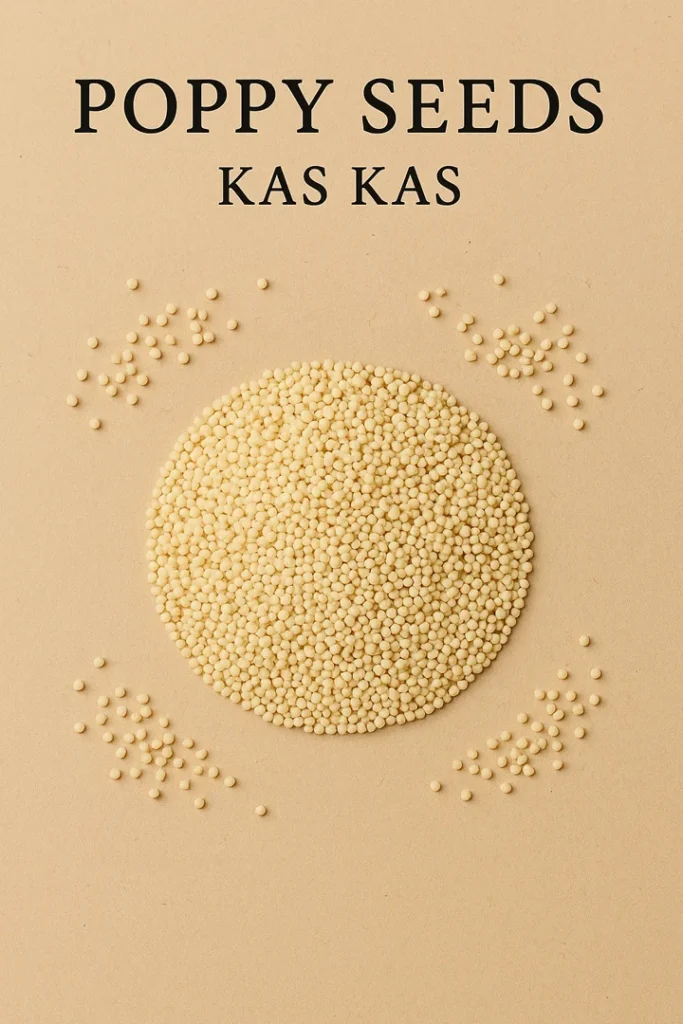
Table of Contents
What is Kas Kas?
Kas kas refers to the dried seeds of the opium poppy (Papaver somniferum). The tiny round seeds come in shades of white, blue, or gray, depending on their origin. The Indonesian kitchen most often uses white poppy seeds, which are slightly sweeter and milder than the darker variety.
These seeds are not used in large quantities and contain no narcotic properties once dried. Their purpose in cooking is texture, body, and a delicate nutty undertone rather than flavor intensity.
In Indonesia, kas kas appears in recipes with Indian or Malay influence, particularly in Sumatra, where thick coconut-based sauces and curry pastes often rely on a handful of blended poppy seeds for that creamy consistency.
Aroma and Flavor
The aroma of this herb is subtle. When raw, it has almost no scent, but once roasted or soaked, it releases a mild nuttiness with faint floral and earthy tones. Toasting deepens the aroma, adding a hint of roasted sesame and warm grain.
The flavor is soft, sweet, and nutty, with a buttery aftertaste. It does not compete with stronger spices such as cumin or clove but rounds them out. In sauces and stews, kas kas gives a faint sweetness that balances heat and sharpness. When ground, it turns slightly sticky, creating a creamy base that feels both rich and light at once.
How It’s Used in Indonesian Cooking
Kas kas is not as common as coriander or candlenut, but it appears in select dishes that require smooth texture and mild sweetness.
- Rendang and Gulai Variations: Used in Sumatran-style blends to thicken the sauce and deepen richness.
- Kari Ayam and Kari Kambing: Adds body and softens the edges of strong spices.
- Bumbu Dasar Putih: Occasionally blended with candlenut for a creamier paste.
- Vegetable Curries: Enhances coconut-based sauces with smooth consistency.
- Regional Sauces and Dressings: Mixed into peanut or spice sauces for nutty depth.
Though used sparingly, kas kas has a way of making sauces feel more polished and complete.
Physical Comparison with Similar Ingredients
| Ingredient | Appearance | Flavor | Used For | Key Difference |
|---|---|---|---|---|
| Kas Kas (Poppy Seeds) | Tiny round white or blue seeds | Mild, nutty, slightly sweet | Curries, sauces, dressings | Adds creaminess without heaviness |
| Kemiri (Candlenut) | Round ivory nut | Rich, buttery, nutty | Spice pastes, stews | Stronger aroma, thicker texture |
| Kacang Tanah (Peanut) | Small reddish nut | Sweet, earthy, nutty | Sauces, snacks | Bolder, more pronounced flavor |
| Wijen (Sesame Seed) | Tiny oval white seeds | Nutty, toasty | Toppings, sauces | Toastier and less creamy |
| Kelapa (Coconut) | White grated flesh | Sweet, tropical | Curries, desserts | Adds aroma but not body |
Cooking Tips
- Soaking: Soak in warm water for 20 to 30 minutes before grinding to help the seeds blend smoothly.
- Toasting: Lightly toast for a nuttier flavor, but do not overheat as they burn quickly.
- Blending: Combine with candlenut or coconut milk for thicker sauces.
- Storage: Keep in an airtight jar in a cool, dark place. Poppy seeds turn rancid quickly if exposed to moisture.
- Usage: A small handful (one to two teaspoons) is usually enough to enrich a family-sized dish.
If You Can’t Find It
Substitute with a mix of sesame seeds and a few macadamia nuts for similar nutty flavor and creaminess. The taste will be slightly stronger but still smooth and rich.
