

There is a kind of warmth that does not come from heat. It sneaks up softly, wrapping the air in something familiar and comforting. That is the scent of biji pala (nutmeg). A pinch in hot oil, a shave into broth, and suddenly, everything smells like home in slow motion.
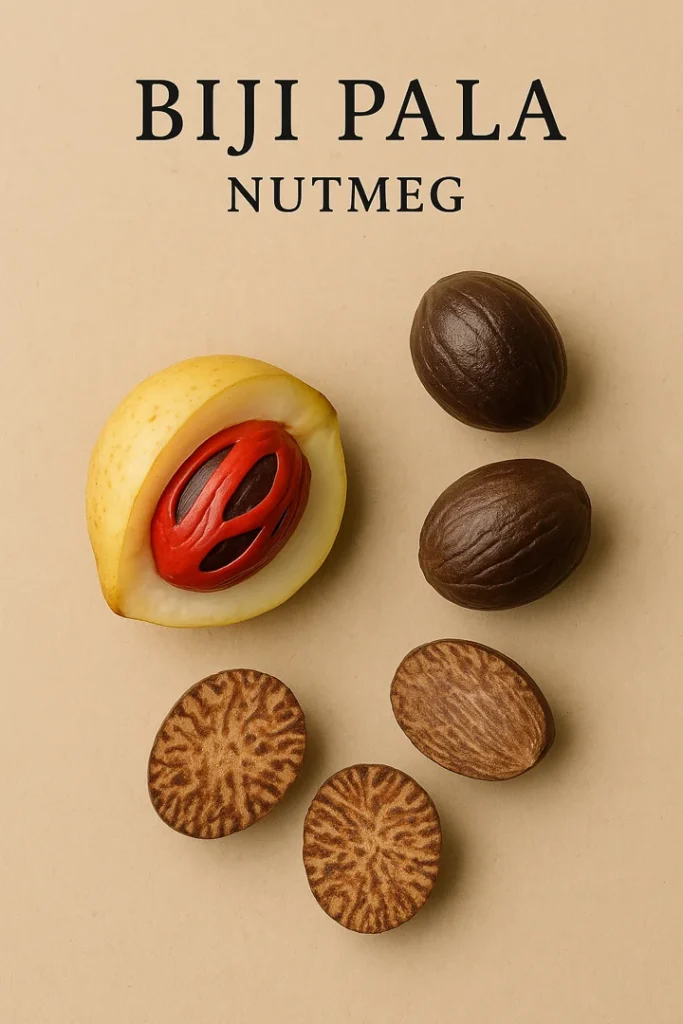
Table of Contents
What is Biji Pala?
Biji pala (nutmeg) is the seed of the nutmeg fruit (Myristica fragrans), a tree native to the Moluccas, also known as Indonesia’s Spice Islands. The seed is encased in a hard brown shell, surrounded by a thin, lace-like red covering called fuli or mace.
When you buy whole nutmeg, you are holding the dried seed kernel itself. It is hard, oval, and dark brown, about the size of an olive. To release its aroma, it must be grated or ground.
Indonesia, especially the Banda Islands in Maluku, was once the only place in the world where nutmeg grew. For centuries, it was so valuable that empires fought over it. Yet beyond its history of trade and conquest, biji pala has always been a quiet, trusted companion in Indonesian kitchens. It brings not fire, but comfort.
Aroma and Flavor
Biji pala has a fragrance that feels like warmth itself. It is sweet, woody, and slightly spicy, with a hint of clove and cinnamon. When freshly grated, it reveals a deeper scent with creamy and almost buttery notes that fill the air without being overwhelming.
The taste is rich and round, mildly sweet at first, then gently sharp with a touch of bitterness that keeps it balanced. It does not sting or burn like pepper. Instead, it glows softly and lingers. It is the spice version of candlelight, cozy and golden, bringing quiet life to a dish.
How It’s Used in Indonesian Cooking
Biji pala plays a key role in the slow, brown stews and spice blends of Java and Sumatra. It rarely stands alone. Instead, it blends into the background, rounding out stronger spices such as clove, cinnamon, and long pepper. You can find it in:
- Semur Daging: The rich soy-based beef stew where this spice balances sweetness with warmth.
- Empal, Rawon, and Soto Betawi: Adds depth to beef and offal dishes.
- Rendang and Gulai: Enhances coconut milk and slow-cooked spices.
- Bakso and Perkedel: A small amount (grated) brings a comforting aroma to meatballs and fritters.
- Jamu Pala: A soothing drink made from this spice, sugar, and sometimes milk, often used to promote relaxation and better sleep.
Physical Comparison with Similar Spices
| Spice | Appearance | Flavor | Used For | Key Difference |
|---|---|---|---|---|
| Biji Pala (Nutmeg Seed) | Hard, oval brown seed | Sweet, woody, warm | Stews, soups, cakes | Milder and sweeter than clove, deeper than cinnamon |
| Fuli (Mace) | Thin red-orange lace from nutmeg seed | Lighter, more floral | Desserts, soups, sauces | More delicate and citrusy |
| Cinnamon (Kayu Manis) | Rolled brown bark | Sweet, mild spice | Stews, drinks, desserts | Brighter and less nutty |
| Clove (Cengkeh) | Small dried flower buds | Sharp, spicy, intense | Stews, drinks, spice pastes | Stronger and more pungent |
| Cabe Jawa (Long Pepper) | Slim, wrinkled brown pods | Musky, floral, slow heat | Rendang, gulai, jamu | Spicier and more peppery warmth |
Cooking Tips
- How to use: Grate just before cooking for the freshest flavor. Pre-ground of this spice loses its aroma quickly.
- How much to use: A small pinch is enough since this spice can easily overpower a dish.
- Pair it with: Clove, cinnamon, and long pepper for classic Javanese spice bases.
- Storage: Keep whole seeds in a sealed jar away from light. They can last for years.
If You Can’t Find It
Whole nutmeg is widely available, but if you can only find ground version, use it quickly before the scent fades. Mace (fuli) can work as a lighter, more floral substitute that still carries a similar warmth.
