

Temu kunci, known in English as fingerroot, is one of the most distinctive rhizomes in Indonesian kitchens. Break a piece open and you will smell its clean, peppery aroma, something between ginger and galangal but lighter and more herbal. It gives dishes a refreshing brightness that cuts through oil and coconut milk, making it an essential ingredient in many Javanese and Balinese recipes.
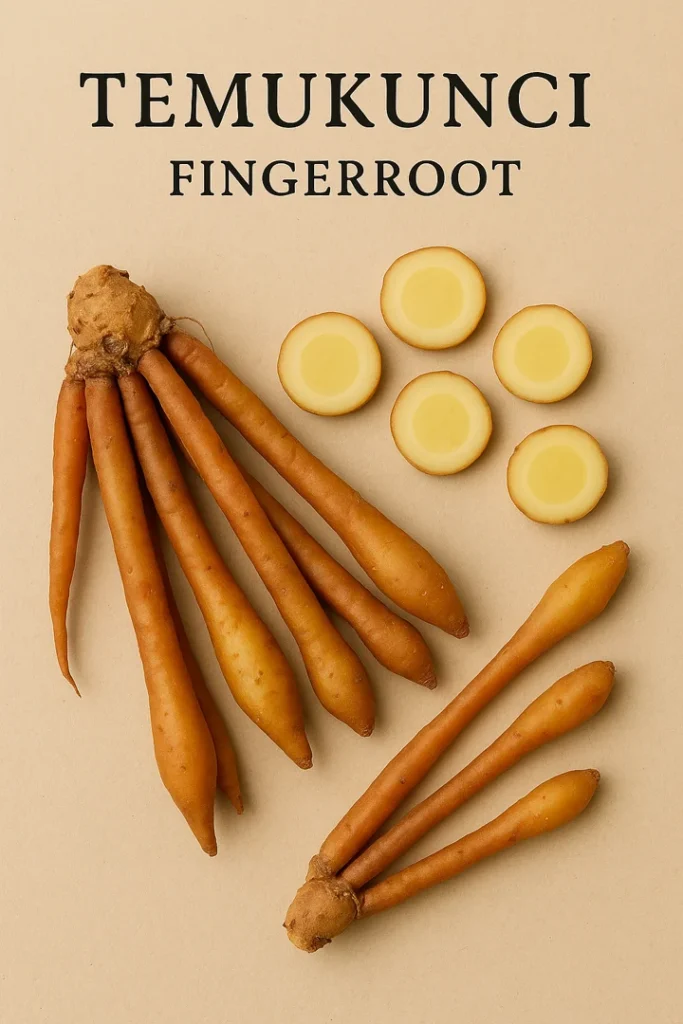
Table of Contents
What is Temu Kunci?
Temu kunci comes from the Boesenbergia rotunda plant, a member of the ginger family. Its name literally means “key turmeric” in Indonesian, a nod to its slender, finger-like shape. The rhizomes grow in clusters that resemble a bunch of keys.
The skin is light brown, while the inside is pale yellow. Compared to galangal or ginger, the texture is softer, and the flavor is gentler but more aromatic. You will find it sold fresh in traditional markets, sometimes dried or sliced for convenience.
In Indonesian cooking, it is most often used whole, sliced, or lightly crushed to infuse soups and stews. It is rarely grated or ground, as its strength lies in the subtle fragrance it releases during simmering.
Aroma and Flavor
The aroma of temu kunci is fresh, sharp, and slightly medicinal. It smells like ginger mixed with lemongrass, with a faint peppery note. When added to broth, it releases a scent that feels both clean and comforting.
The flavor is mild and slightly bitter, with citrus undertones. It gives warmth without heat and freshness without acidity. Unlike galangal, which is earthy and woody, or ginger, which is spicy and sweet, temu kunci sits somewhere in between. It clears the palate, balances rich sauces, and brings lightness to oily or creamy dishes.
How It’s Used in Indonesian Cooking
Temu kunci is especially popular in central and eastern Indonesia, where it gives clarity to broths and vegetable dishes.
- Sayur Bening and Sayur Asem: Adds clean, peppery fragrance to clear vegetable soups.
- Ikan Kuah Kuning and Ikan Woku: Infuses fish dishes with herbal brightness and removes fishy odor.
- Soto and Clear Chicken Soups: Enhances the broth with subtle spice.
- Pecel and Urap Seasoning: Sometimes blended in small amounts for a refreshing undertone.
- Tempeh or Tahu Dishes: Gives balance to savory stir-fries and coconut gravies.
Temu kunci pairs beautifully with lemongrass, lime leaf, and galangal, forming the lighter, herbal side of Indonesia’s spice spectrum.
Physical Comparison with Similar Rhizomes
| Rhizome | Appearance | Flavor | Used For | Key Difference |
|---|---|---|---|---|
| Temu Kunci (Fingerroot) | Long, thin yellow rhizome | Fresh, peppery, herbal | Soups, fish, vegetable dishes | Mild, citrusy aroma |
| Jahe (Ginger) | Knobby light-brown rhizome | Spicy, warm, sweet | Drinks, stir-fries | Hotter and sweeter |
| Lengkuas (Galangal) | Pale pink rhizome, tough texture | Woody, citrusy, strong | Stews, curries | Stronger and more earthy |
| Kencur (Aromatic Ginger) | Short, round rhizome | Earthy, sharp, slightly medicinal | Jamu, fried dishes | Stronger and more pungent |
| Kunyit (Turmeric Root) | Bright orange rhizome | Earthy, bitter, warm | Curries, rice | Adds color and depth rather than freshness |
Cooking Tips
- Slicing: Slice thinly or crush lightly before adding to soup or stew.
- Simmering: Add early in cooking so the flavor can infuse gently.
- Pairing: Combine with lemongrass, lime leaf, or turmeric for clean, fragrant flavor.
- Storage: Keep fresh roots refrigerated in a paper bag for up to a week or freeze for longer storage.
- Dried Temu Kunci: Soak in warm water before use to rehydrate and release aroma.
If You Can’t Find It
Fresh temu kunci can be difficult to find outside Southeast Asia, but you can recreate its flavor using a few common ingredients.
- Closest substitute: Combine ginger and lemongrass in equal parts. Ginger gives the warm spice, while lemongrass provides the fresh citrus note that fingerroot has naturally.
- For soups: Add 2 thin slices of ginger and 1 small piece of crushed lemongrass for every 1 tablespoon of sliced temu kunci.
- For fish dishes: Add a few drops of lime juice or grated lime zest to the ginger and lemongrass mixture to imitate the cleansing quality that fingerroot brings.
- For spice pastes: Blend a small amount of kencur (aromatic ginger) if available. It adds a slightly sharper aroma, closer to the herbal tone of fingerroot.
- For drinks or herbal infusions: Use young ginger and a touch of turmeric to mimic the gentle warmth and clarity of fresh temu kunci.
While no substitute can perfectly copy its unique aroma, this combination keeps your dish balanced, light, and fragrant, the qualities that make temu kunci so beloved in Indonesian cooking.
