

The moment cengkeh (clove) touches hot oil, the air changes. The scent is sharp and floral, almost sweet, filling the kitchen with warmth that feels alive. It is the kind of aroma that lingers in your clothes, your hands, and your memory. For many Indonesians, it is the smell of home — of spice pastes being stirred slowly, of stews bubbling quietly on the stove.
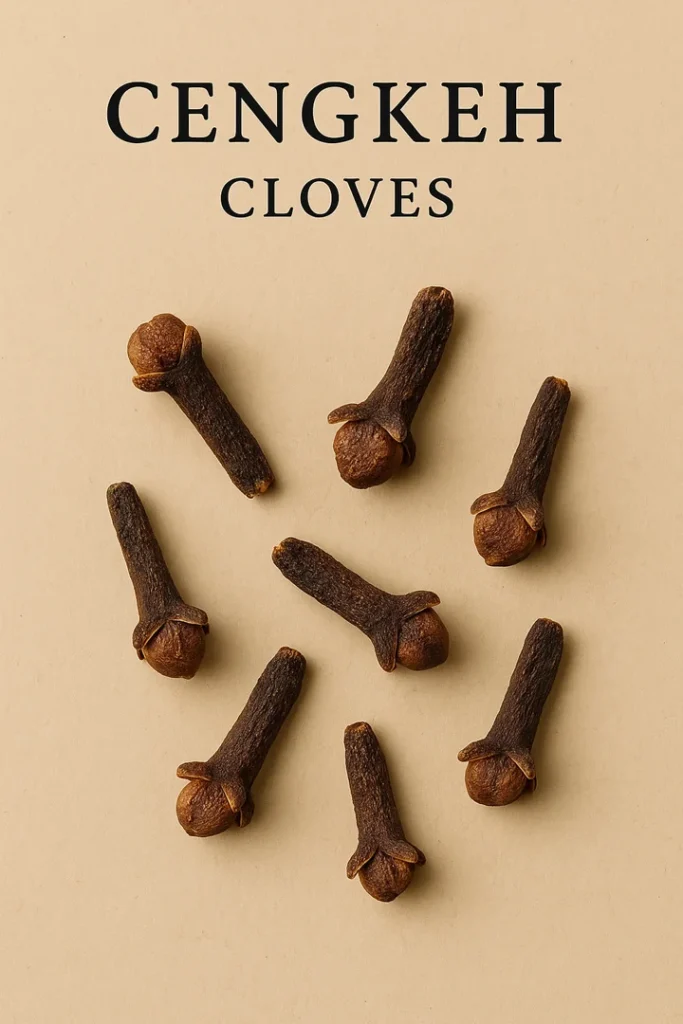
Table of Contents
What is Cengkeh?
Cengkeh, or clove, comes from the dried flower buds of the Syzygium aromaticum tree, native to the Maluku Islands in eastern Indonesia. The buds are harvested while still pink, then dried until they turn deep brown. Each clove looks like a small nail: a rounded top and a narrow stem.
Indonesia’s Maluku, or Spice Islands, were once the heart of the global clove trade. For centuries, clove was as valuable as gold. It was used not only for cooking but also for medicine, fragrance, and even preservation. Today, Indonesia remains one of the largest producers and consumers of cloves in the world — not only for food but also for kretek, the famous clove-scented cigarettes.
In cooking, cengkeh is a spice that transforms. It can sweeten, warm, and deepen flavors all at once, but it must be used with care. Too much, and it dominates everything. Just enough, and it makes a dish unforgettable.
Aroma and Flavor
The aroma of cengkeh is powerful and unmistakable. It begins with a burst of sweetness that feels almost fruity, followed by a deep, spicy warmth that settles into something slightly smoky. When you crush one, the scent is heady and bright, with hints of cinnamon and nutmeg.
The flavor is equally complex. It is sweet at first, then hot and slightly bitter, with a numbing sensation that lingers on the tongue. Clove has a high concentration of eugenol oil, which gives it both its intense aroma and its cooling, almost medicinal quality.
In small amounts, cengkeh gives dishes a luxurious warmth. It adds depth to coconut milk stews, balances the sweetness of soy sauce, and turns simple syrups or teas into something fragrant and elegant.
How It’s Used in Indonesian Cooking
Cengkeh is one of the cornerstones of Indonesian spice blends. You will find it in both savory dishes and sweet drinks, where it adds character and complexity.
- Semur Daging and Empal: Adds sweetness and warmth that balance the dark soy sauce.
- Rendang and Gulai: Strengthens the base aroma and rounds the heavier spices.
- Soto Betawi: A single clove can brighten the entire broth.
- Nasi Kebuli and Nasi Biryani: Works alongside cardamom, cinnamon, and nutmeg to perfume spiced rice.
- Wedang Uwuh and Jamu: Adds heat and fragrance to herbal drinks.
- Kue and Kolak: Gives festive sweets a nostalgic, spiced aroma.
Cengkeh rarely works alone. It thrives in company — with nutmeg, cinnamon, and cardamom — forming the heart of Indonesia’s most beloved spice combinations.
Physical Comparison with Similar Spices
| Spice | Appearance | Flavor | Used For | Key Difference |
|---|---|---|---|---|
| Cengkeh (Clove) | Small brown flower buds | Sweet, strong, spicy | Stews, drinks, desserts | Most intense and aromatic among warm spices |
| Biji Pala (Nutmeg) | Hard brown seed | Sweet, woody, creamy | Stews, soups, cakes | Milder and rounder |
| Kayu Manis (Cinnamon) | Rolled brown bark | Sweet, woody, mild | Curries, drinks, cakes | Softer and less sharp |
| Kapulaga (Cardamom) | Small green or brown pods | Cool, floral, citrusy | Stews, drinks, desserts | Fresher and lighter |
| Cabe Jawa (Long Pepper) | Slim, wrinkled brown pods | Musky, floral, slow heat | Rendang, gulai, jamu | Spicy and peppery rather than sweet |
Cooking Tips
- How to use: Add 1 or 2 whole cloves to stews, soups, or drinks while simmering. For spice pastes, use ground cloves sparingly.
- Balance carefully: Clove can overpower easily. A little goes a long way.
- Pairing: Combine with nutmeg, cinnamon, and cardamom for classic Javanese and Sumatran flavors.
- Storage: Keep whole cloves in an airtight jar. Whole cloves stay fragrant for years, while ground ones lose their aroma quickly.
If You Can’t Find It
Cloves are widely available, but if you need a substitute, a mix of cinnamon and nutmeg can provide a similar warmth. The flavor will be softer but still comforting.
