

The scent of kayu manis (cinnamon) is one of the first that greets you in an Indonesian kitchen. It is gentle and familiar, like warmth curling through the air. Add a stick to coconut milk, soy sauce, or even tea, and the aroma fills the room with a kind of sweetness that feels both festive and comforting.
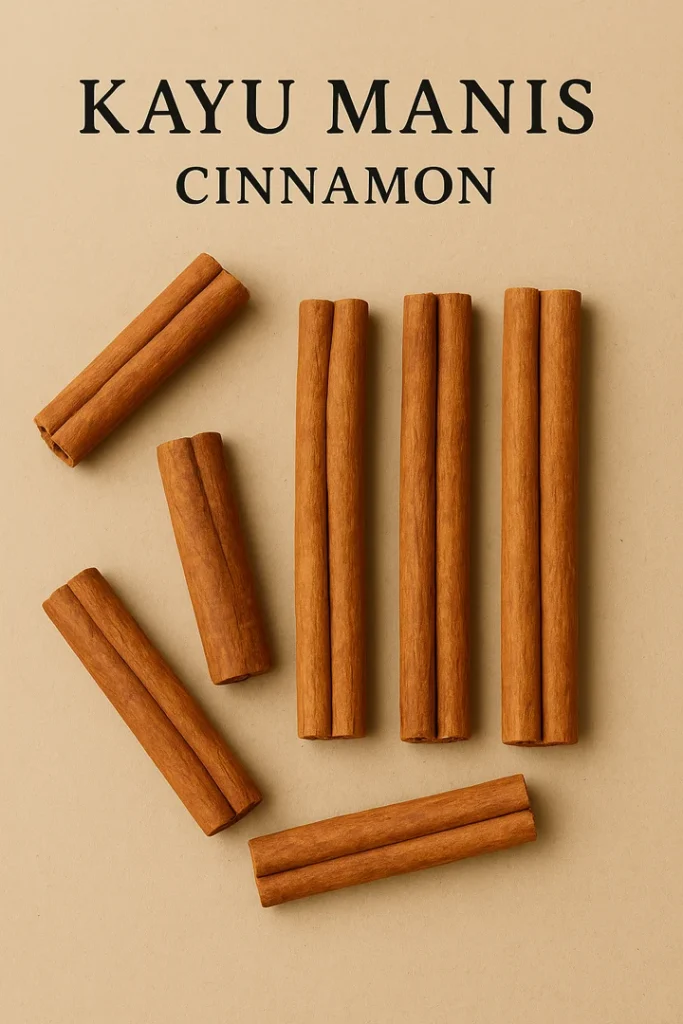
Table of Contents
What is Kayu Manis?
Kayu manis literally means “sweet wood” in Indonesian. It comes from the inner bark of trees from the Cinnamomum family. Once the bark is harvested, it curls naturally as it dries into thin rolls that we know as cinnamon sticks.
Indonesia produces two main types of cinnamon. Ceylon cinnamon (Cinnamomum verum) is softer and lighter in color, with a delicate, floral sweetness. Cassia cinnamon (Cinnamomum burmannii), often called Indonesian cinnamon, is thicker, darker, and stronger in flavor. The latter grows widely in Sumatra and Java and is the one most often used in Indonesian cooking.
The bark is used whole or ground, depending on the dish. Whole sticks are simmered in stews, soups, and drinks, while ground cinnamon is often added to spice pastes or desserts.
Aroma and Flavor
The aroma of kayu manis is warm, woody, and sweet. It opens with notes of caramel and honey, then deepens into something slightly smoky and earthy. When you taste it, the sweetness feels natural, like brown sugar that has just started to melt. There is no sharpness, only gentle warmth that lingers quietly.
Compared to the sharper spices in Indonesian cuisine such as clove or long pepper, kayu manis brings balance. It softens intensity, smooths edges, and ties flavors together. In stews, it keeps the spices from feeling too heavy. In desserts and drinks, it wraps sweetness with warmth.
How It’s Used in Indonesian Cooking
Kayu manis appears in both savory and sweet dishes, often as part of a spice blend that includes clove, nutmeg, and cardamom.
- Semur Daging and Empal: Adds warmth and gentle sweetness to the soy-based stew.
- Rendang and Gulai: Balances the richness of coconut milk and fried spices.
- Rawon and Soto Betawi: Deepens the aroma of the broth.
- Kolak and Bubur Kacang Hijau: Gives sweet soups and desserts a cozy scent.
- Wedang Jahe and Jamu: Brings a soft sweetness to traditional drinks.
Because of its mild nature, kayu manis is often the bridge between savory and sweet in Indonesian food.
Physical Comparison with Similar Spices
| Spice | Appearance | Flavor | Used For | Key Difference |
|---|---|---|---|---|
| Kayu Manis (Cinnamon) | Rolled brown bark | Sweet, woody, warm | Stews, drinks, desserts | Softer and milder than clove or nutmeg |
| Clove (Cengkeh) | Small dried flower buds | Sharp, spicy, strong | Stews, drinks, marinades | More pungent and intense |
| Biji Pala (Nutmeg) | Hard brown seed | Sweet, creamy, earthy | Stews, soups, cakes | Deeper and less sweet |
| Kapulaga (Cardamom) | Small green or brown pods | Cool, floral, refreshing | Stews, drinks, desserts | Brighter and fresher aroma |
| Cinnamon (Ceylon vs Cassia) | Thin layered bark vs thick single roll | Ceylon is delicate, Cassia is bold | Both used for cooking | Ceylon is lighter, Cassia is stronger and darker |
Cooking Tips
- How to use: Add a stick to your stew or sauce while simmering, then remove before serving. For spice pastes, use ground cinnamon sparingly.
- Toasting: Lightly toast the stick in a dry pan to bring out its aroma before use.
- Pairing: Works beautifully with clove, nutmeg, and cardamom in meat dishes and sweet drinks.
- Storage: Keep whole sticks in a glass jar away from light and moisture. Whole cinnamon lasts much longer than ground.
If You Can’t Find It
Ground cinnamon can substitute for sticks, but it releases its flavor faster and can overpower a dish if used too much. A small piece of cassia bark can replace Ceylon cinnamon in most recipes.
