

Daun ketumbar, known in English as coriander leaf or cilantro, is the fresh, green counterpart to the warm spice of coriander seeds. It looks delicate, but its fragrance is unmistakable. Tear a small handful, and the scent rises bright and citrusy with a trace of pepper and spice. In Indonesian food, it is often used as the final touch — the green note that brings life to the whole dish.
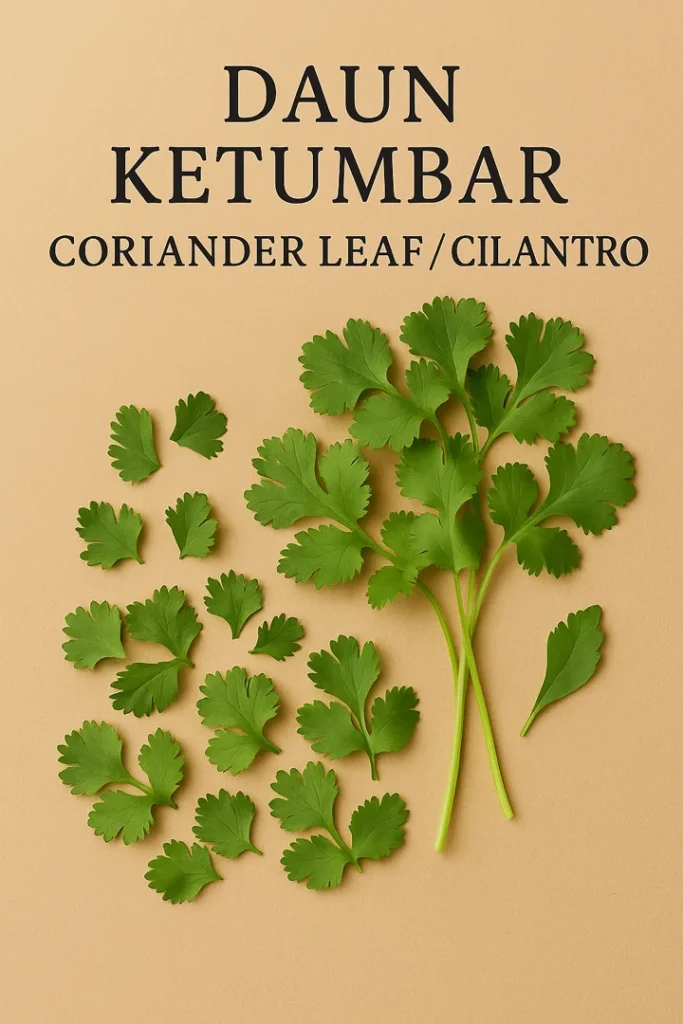
Table of Contents
What is Daun Ketumbar?
Daun ketumbar comes from the Coriandrum sativum plant, the same plant that produces coriander seeds (biji ketumbar). The leaves are flat, rounded, and deeply lobed, resembling parsley but with a distinct aroma. The stems are thin and tender, often used along with the leaves.
Fresh coriander leaves are not native to Indonesia, but they became part of local cooking through regional and trade influences, especially from Chinese, Indian, and Middle Eastern cuisines. Today, they are often used in Indonesian-style soups, salads, sauces, and marinades.
Aroma and Flavor
The aroma of daun ketumbar is bright, green, and citrusy. It smells fresh, almost like lime and pepper mixed with something slightly grassy. For some, it is instantly refreshing; for others, it can feel intense or even soapy. That bold scent is caused by natural aldehydes, the same compounds found in citrus peels.
The flavor is light and tangy with a hint of spice. When eaten raw, it gives a clean, slightly peppery bite that cuts through oil and heat. When added just before serving, it adds a burst of freshness that balances rich or spicy food.
Unlike the warm, nutty flavor of coriander seeds, daun ketumbar offers brightness and contrast. It is not meant to blend in but to stand out, adding lift and energy to the dish.
How It’s Used in Indonesian Cooking
Daun ketumbar is not as widely used in traditional Javanese cooking but appears more often in dishes with Malay, Chinese, or Indian influence. It is also popular in modern Indonesian recipes for its refreshing flavor and visual appeal.
- Soto Ayam and Soto Betawi: Sprinkled on top for a fresh, herbal finish.
- Bakso and Sup Ayam: Adds aroma and lightness to clear broths.
- Ayam Hainan and Nasi Ulam: Used as garnish for freshness and color.
- Sambal Matah and Fresh Chili Sauces: Mixed in for citrusy sharpness.
- Modern Fusion Dishes: Combined with lime juice and chili for Indonesian-inspired salads or marinades.
Because of its strong aroma, daun ketumbar is usually added at the end of cooking or just before serving.
Physical Comparison with Similar Herbs
| Herb | Appearance | Flavor | Used For | Key Difference |
|---|---|---|---|---|
| Daun Ketumbar (Coriander Leaf) | Flat, rounded green leaves | Bright, citrusy, peppery | Soups, salads, sambal | More citrusy and spiced than parsley |
| Daun Seledri (Asian Celery) | Thin, leafy green stems | Fresh, slightly bitter | Soups, toppings | Milder aroma, more savory |
| Daun Bawang (Scallion) | Long, hollow green stalks | Onion-like, mild | Stir-fries, soups | More pungent, less citrusy |
| Daun Kemangi (Lemon Basil) | Small, pointed green leaves | Sweet, herbal, lemony | Sambal, grilled dishes | Sweeter and floral |
| Peterseli (Parsley) | Curly or flat leaves | Mild, grassy | Garnish, salads | Less aromatic, mostly visual garnish |
Cooking Tips
- Timing: Add daun ketumbar at the very end of cooking or use as garnish to preserve its aroma.
- Pairing: Works beautifully with lime juice, chili, and garlic for sauces or marinades.
- Storage: Keep fresh leaves wrapped in paper towel inside a container in the fridge. Use within three days for best flavor.
- Preparation: Both leaves and tender stems are edible. Chop finely for garnish or blend with oil and lime for a green sauce.
- Balance: A little goes a long way. Too much can overpower the dish.
If You Can’t Find It
Substitute with flat-leaf parsley and a small amount of lime zest for similar freshness, though the flavor will be less citrusy and more mild.
