

At first glance, cabe jawa doesn’t look like a pepper at all. It’s slender, wrinkled, and brown: like a tiny pinecone. But crack one open, and the scent that escapes is warm and sweet, almost smoky, with a hint of flowers. This is one of Indonesia’s oldest spices, treasured long before the fiery red chilies we know today ever arrived.
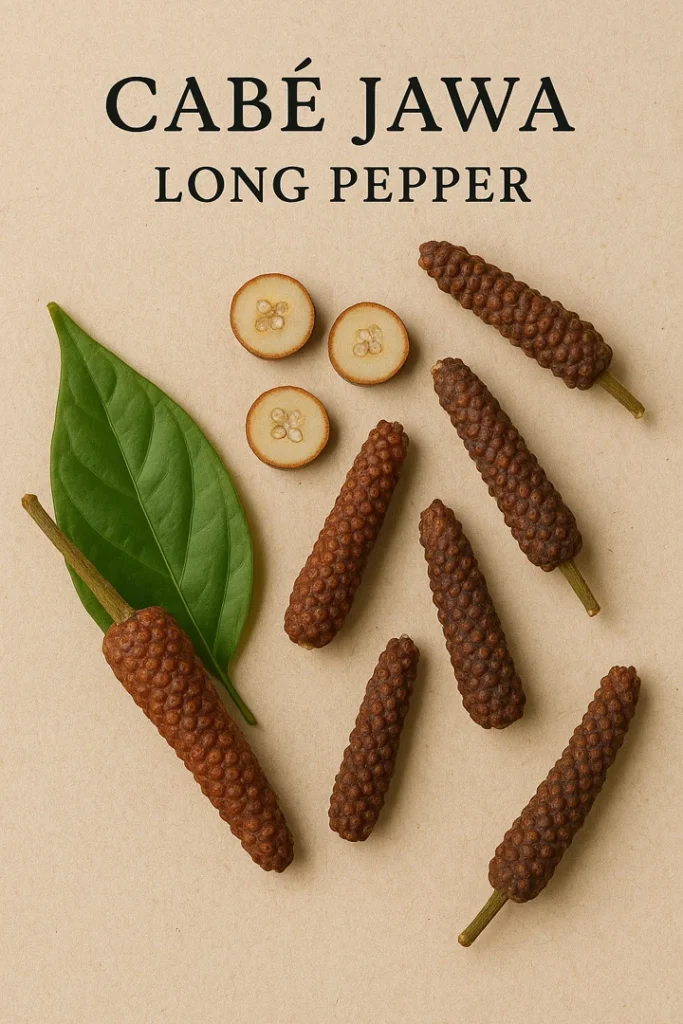
Table of Contents
What is Cabe Jawa?
Cabe jawa, or Indonesian long pepper, comes from the dried fruit of the vine Piper retrofractum, a cousin of black pepper (Piper nigrum). Each fruit is cylindrical, about 2 to 4 centimeters long, and made up of many tiny clustered berries fused together, creating a rough, bumpy texture. When fresh, the fruits are green; they turn dark brown once dried.
Long before modern chili peppers reached Southeast Asia from the Americas, cabe jawa was the main source of heat in Indonesian cooking. It was once a prized spice traded along the ancient maritime routes that connected Java, India, and the Middle East. In old Javanese manuscripts, it’s mentioned alongside cloves and nutmeg, spices so valuable they shaped kingdoms.
In the kitchen, cabe jawa plays a double role: it’s both a spice and a medicine. In cooking, it adds warmth, depth, and complexity to spice pastes. In traditional Javanese jamu, it’s believed to stimulate blood flow, improve digestion, and ease fatigue.
Today, it’s used less commonly in everyday home cooking, replaced by chili peppers for convenience, but still treasured by cooks who chase that old, slow kind of heat that feels more aromatic than fiery.
Aroma and Flavor
There’s something ancient about the scent of cabe jawa. It opens with a dry warmth, woody and resinous, then deepens into a fragrance that feels almost perfumed. When crushed, it releases a sweet, earthy aroma laced with notes of cinnamon, nutmeg, and clove. There’s also a faint floral edge, like dried roses in the back of a spice drawer.
The flavor is just as layered. The first taste is gentle, slightly sweet, with a musky, almost smoky undertone. Then comes a slow, rolling heat that spreads rather than burns. It’s not sharp or searing like chili. It feels round, cozy, and persistent, blooming at the back of your tongue and lingering long after the bite is gone.
If black pepper is a quick spark, cabe jawa is a slow ember. It doesn’t shout; it smolders. That’s why it works so beautifully in long-simmered dishes. It perfumes them from within, rather than dominating the surface.
How It’s Used in Indonesian Cooking
Cabe jawa appears in some of Indonesia’s most aromatic dishes, especially those from Java, Sumatra, and Bali:
- Rendang Sapi: Adds deep, fragrant heat that builds slowly through the long cooking time.
- Gulai Daging or Gulai Kambing: Enriches the coconut milk gravy with warmth and spice, harmonizing with cumin, coriander, and turmeric.
- Empal and Semur Daging: Blended with nutmeg and clove to create the dark, comforting flavor of Javanese stews.
- Gudeg Jogja: Lends subtle warmth beneath the sweetness of young jackfruit.
- Jamu Cabe Puyang: Combined with ginger and other roots as a traditional tonic for circulation and energy.
It’s especially at home in dishes that are rich, creamy, or slow-cooked — the kind that let spices speak gradually rather than shout.
Physical Comparison with Similar Spices
| Spice | Appearance | Flavor | Used For | Key Difference |
|---|---|---|---|---|
| Cabe Jawa (Long Pepper) | Slim, bumpy brown pods (2–4 cm) | Warm, musky, floral, slow heat | Stews, spice pastes, jamu | More complex and aromatic than black pepper |
| Black Pepper | Round black seeds | Sharp, immediate heat | Everyday seasoning | Hotter but less aromatic |
| Chili Pepper (Cabe Merah / Cabe Rawit) | Red or green pods | Fiery, direct heat | Sambal, stir-fries, soups | Brighter and spicier, not earthy |
| Cubeb (Kemukus) | Small round berry with tail | Woody, camphorous, spicy | Spice blends, herbal drinks | Sharper, menthol-like aroma |
Cooking Tips
- How to use: Toast lightly and grind before adding to spice pastes. It pairs beautifully with nutmeg, cloves, and coriander.
- Amount: Use sparingly. It’s more potent than black pepper.
- To store: Keep whole in an airtight jar, away from moisture, for up to a year.
- Pairing tip: Long pepper’s floral spice complements beef, goat, and coconut-based dishes especially well.
If You Can’t Find It
Substitute with a mix of black pepper + a pinch of nutmeg or allspice to mimic its warmth and depth. The flavor won’t be identical, but it’ll carry the same gentle complexity.
