
There’s a special kind of joy in desserts that appear without warning—and for me, bubur pacar cina is exactly that. My mom never made it by request. She would simply decide, out of the blue, that it was a good day to make bubur pacar cina, and the next thing I knew, the kitchen would be filled with the soft sound of boiling sago and the sweet fragrance of pandan.

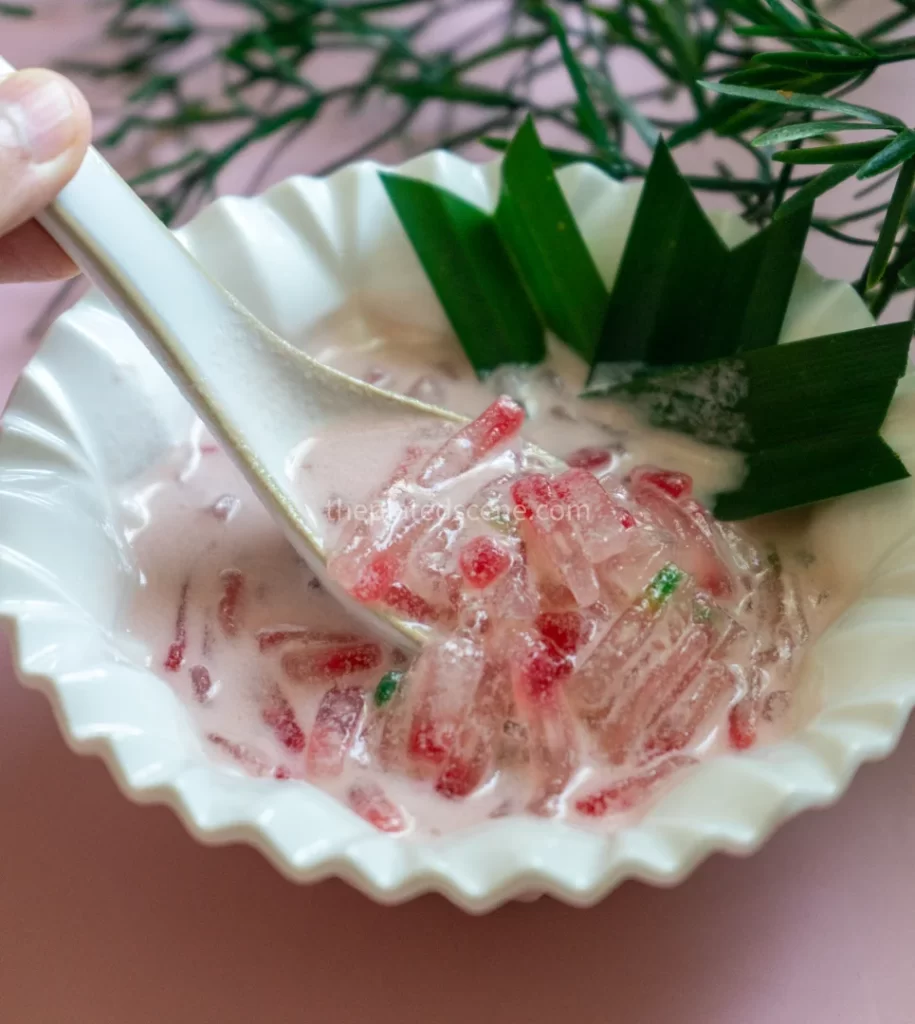
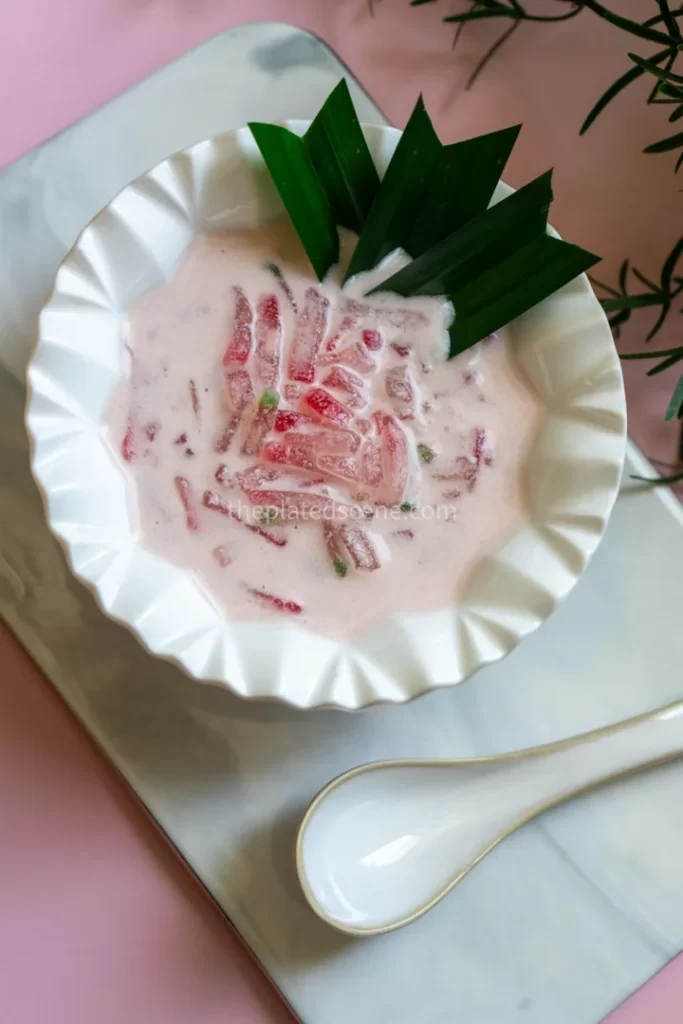
Unlike the more modern or store-bought versions that use round, pearl-like sago, the one I grew up with used traditional pacar cina—short, rectangular strands made from sago flour, dyed a vibrant pink and white, and slightly translucent when cooked. They looked like tiny matchsticks, but with a springy texture that soaked up the rich coconut sauce beautifully.
I’m not someone who usually craves sweet things. Cakes, cookies, and sugary drinks rarely tempt me. But this dish is my exception. There’s something so nostalgic, so gentle about it—the chewiness of the sago strips, the warmth of the coconut milk, and that signature aroma of pandan leaf. Whether served warm in the afternoon or chilled straight from the fridge, my mom’s bubur pacar cina was always the perfect little surprise. It wasn’t just a dessert—it was comfort in a bowl.
Table of Contents
What Does “Bubur Pacar Cina” Actually Mean?
To many Indonesians, bubur pacar cina is a familiar and nostalgic dessert. But if you’ve ever paused to wonder what the name actually means, you’re not alone.
Let’s start with the word bubur, which simply means porridge or pudding in Bahasa Indonesia. It can be sweet or savory—think bubur ayam (savory chicken porridge) or bubur sumsum (sweet rice flour pudding). In this case, it refers to a sweet dessert porridge made with chewy sago and creamy coconut milk.
Now, onto the more intriguing part: pacar cina. At first glance, you might think it translates to “Chinese boyfriend” (pacar = boyfriend/girlfriend, cina = Chinese). It certainly sparks curiosity and a few giggles. But in this context, the term has nothing to do with romance.
Pacar here actually refers to a plant—specifically pacar air (Impatiens balsamina), a balsam flower that was historically used to dye fingernails. The bright red-pink hue of the sago used in bubur pacar cina is believed to mimic the color of the flower, hence the name. As for cina, it denotes Chinese influence, which is fitting considering the widespread use of sago and tapioca-based desserts in both Indonesian and Chinese cuisines.
So no, it’s not named after someone’s lover. Rather, bubur pacar cina loosely translates to something like “Chinese-style balsam pudding.” It’s a poetic, culturally rich name that tells a story—one that reflects Indonesia’s diverse culinary influences and deep love for humble, home-cooked sweets.
The Taste and Texture of Bubur Pacar Cina
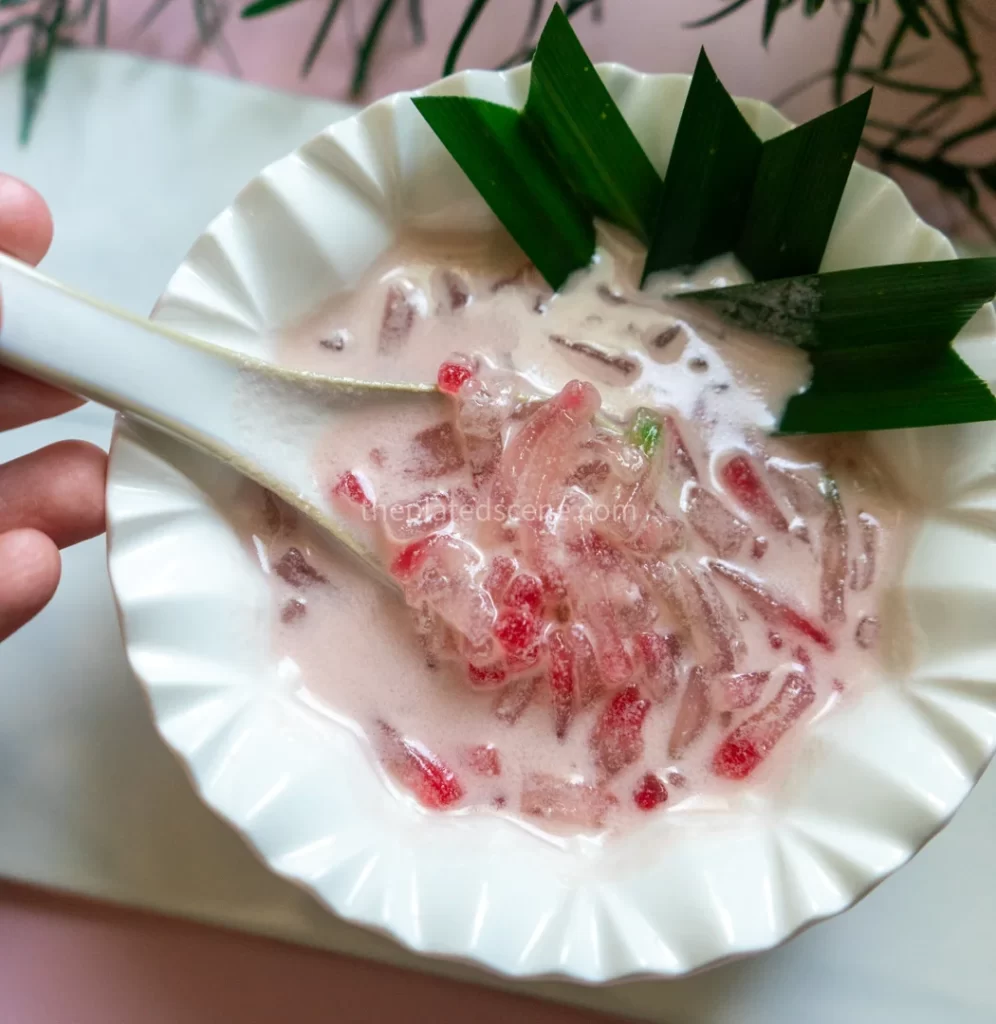
Bubur pacar cina is one of those desserts where texture plays just as important a role as flavor. The short, matchstick-like sago pieces are chewy yet tender, with just enough bounce to keep every spoonful satisfying. Once boiled, these bright pink and white strands turn slightly translucent and absorb the mellow sweetness of the coconut milk base.
Speaking of the coconut milk, it’s gently simmered with pandan leaf and a pinch of salt—nothing too overpowering. The result is a delicately flavored sauce that’s not overly sweet, with floral undertones from the pandan and richness from the coconut cream. The balance is key: the coconut milk enhances, rather than masks, the sago’s texture.
When served warm, bubur pacar cina is the kind of dish that soothes. When chilled, it becomes a refreshing treat that cools you down on a hot day. In both forms, it carries a sense of calm and quiet indulgence.
If you’re new to Indonesian desserts, bubur pacar cina is a great introduction. It doesn’t rely on elaborate spices or complicated techniques. Its charm lies in its simplicity—and in the comfort it delivers with each bite.
Regional and Modern Variations of Bubur Pacar Cina
While my version of bubur pacar cina sticks to the basics—rectangular sago strands, coconut milk, pandan, sugar, and a pinch of salt—there are countless variations across the archipelago and beyond.
In some regions, especially in more urban or festive settings, people jazz it up with additional ingredients like:
- Jackfruit slices: Adding ripe, sweet jackfruit brings another layer of tropical flavor and aroma.
- Young coconut flesh (kelapa muda): Adds soft texture and freshness.
- Palm sugar syrup (gula merah cair): Used instead of white sugar to deepen the flavor with caramel notes.
- Tapioca pearls: In places where traditional rectangular sago is unavailable, round boba-like pearls are used for convenience.
- Kopyor coconut: This naturally mutated coconut with jelly-like texture gives a luxurious twist.
- Shaved ice or condensed milk: Some serve it over ice for extra refreshment, drizzled with sweetened condensed milk for richness.
In modern adaptations, I’ve even seen it transformed into layered desserts in cups—stacked with sago, coconut milk jelly, grass jelly, and syrup. While not traditional, these variations show how flexible and beloved bubur pacar cina continues to be.
Of course, to me, nothing beats the classic version with chewy pink and white strands and warm coconut cream. It’s a dish best kept simple.
Things to Watch Out for When Making Bubur Pacar Cina
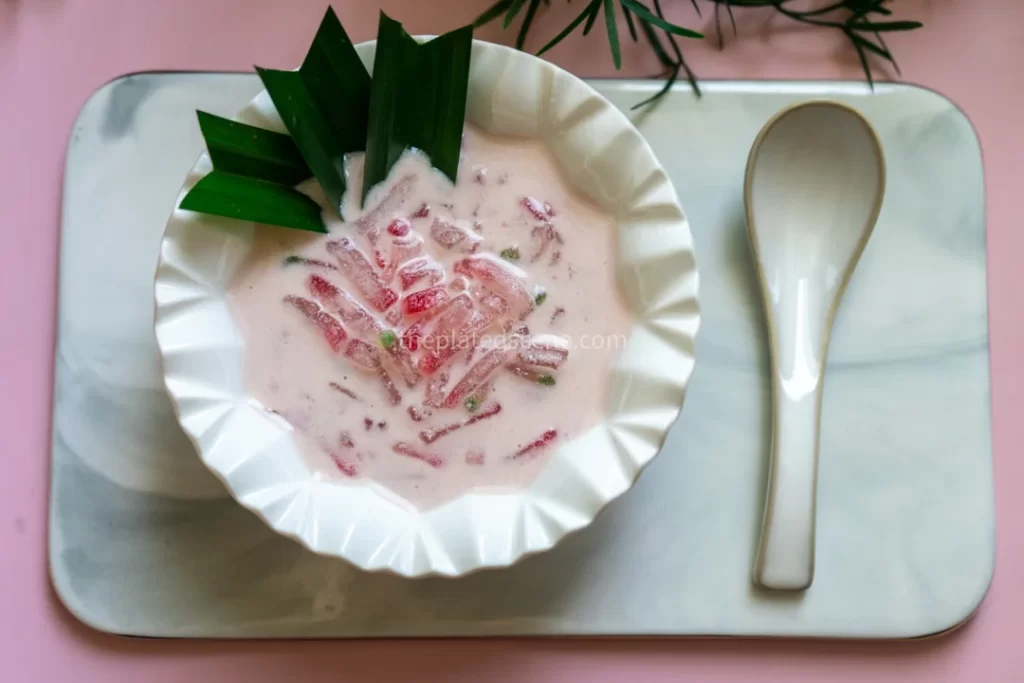
Even though bubur pacar cina is a relatively simple dessert, a few things can make or break the final result. Here are some tips and common pitfalls to avoid:
- Choose the Right Type of Pacar Cina. Traditional pacar cina comes in dried rectangular strips, typically white and dyed pink. These are not the same as tapioca pearls or boba. Make sure to find the matchstick-style sago, often sold in Asian grocery stores or traditional markets. If unavailable, you can use tapioca pearls, but know that the texture and aesthetic will be different.
- Cooking the Sago Correctly. One of the biggest challenges is getting the sago texture just right. Undercooked sago will have a hard, starchy center. Overcooked sago turns mushy and may dissolve. To avoid this (If you skip these steps, you might end up with a pot of pink goop or unevenly cooked sago):
- Boil in a large pot of water until most of the sago turns translucent but with a tiny white core remaining
- Turn off the heat, cover the pot, and let the residual heat finish the cooking for 10–15 minutes.
- Rinse with cold water to stop the cooking and prevent sticking
- Don’t Boil Coconut Milk at High Heat. Coconut milk can curdle if boiled too vigorously. Heat it gently and stir often. Adding a pandan leaf while it simmers enhances the aroma beautifully. Always add a pinch of salt—it brings out the natural sweetness. If using thick coconut cream (santan kental), you may want to dilute it slightly with water for a smoother consistency.
- Combine Before Serving, Not Before Storing. If you’re planning to store leftovers, keep the cooked sago and coconut milk in separate containers. Combine them only when serving. This preserves the sago’s chewy texture and prevents it from absorbing too much liquid and becoming mushy.
- Adjust Sweetness to Your Preference. Some like their bubur pacar cina sweet and rich, others prefer it subtle. Feel free to reduce or increase the sugar content. Palm sugar syrup adds a lovely depth if you want a more earthy flavor.
Ingredients for Bubur Pacar Cina
Here’s what you’ll need to make a comforting bowl of bubur pacar cina. This version uses rectangular sago strands instead of pearls, combined with creamy coconut milk and subtle aromatic notes.
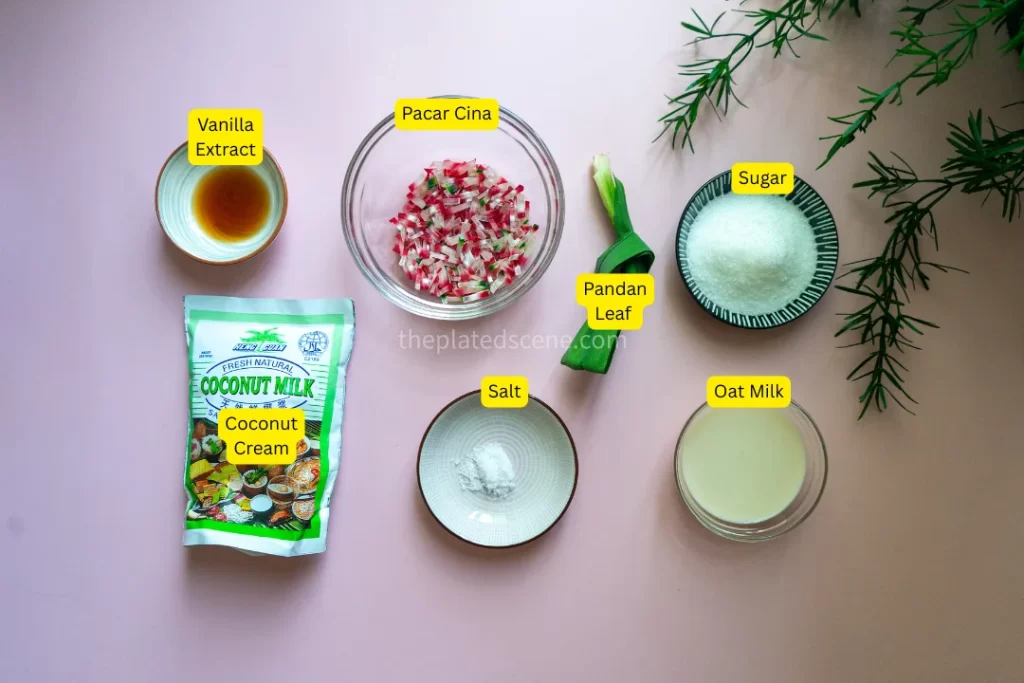
- Pacar Cina
These short, rectangular sago strips are the heart of bubur pacar cina. When cooked, they become chewy and slightly translucent. You can find them in most Asian grocery stores. If unavailable, tapioca pearls can be used as a substitute, though the texture will differ slightly. - Water
Used for boiling the pacar cina. Make sure to use enough to allow them to move freely while cooking and to prevent sticking. - Oat Milk
Adds a light creaminess and a mild nutty flavor. This can be substituted with regular milk, soy milk, or simply more coconut milk depending on your preference. - Sugar
White granulated sugar is commonly used to sweeten the coconut broth in bubur pacar cina. You can also use palm sugar or coconut sugar for a deeper, more caramel-like flavor. - Pandan Leaf
A fragrant leaf used widely in Southeast Asian desserts. It gives bubur pacar cina its signature aroma. If fresh pandan is unavailable, you can use frozen pandan or a few drops of pandan extract. - Vanilla Extract
Enhances the aroma and flavor of the coconut milk. If using pandan extract, you may skip this or reduce it slightly. - Coconut Cream
This is what gives bubur pacar cina its rich and silky texture. Use good quality coconut cream for best results. If you prefer a lighter consistency, dilute it slightly with water or use coconut milk instead. - Salt
A small pinch of salt enhances the overall flavor and balances the sweetness of the dish. Don’t skip it—it brings out the best in the coconut and sugar.
Storing Instructions for Bubur Pacar Cina
Bubur pacar cina is best enjoyed fresh, but you can store leftovers with a few precautions to maintain texture and flavor:
- Separate the components: For best results, store the cooked pacar cina and the coconut milk mixture in separate airtight containers. This prevents the sago from becoming overly soft or soggy.
- Refrigeration: Store both components in the refrigerator for up to 3 days. Reheat the coconut milk gently on the stove before serving. The pacar cina can be soaked briefly in hot water to revive its chewiness if needed.
- Do not freeze: Freezing is not recommended, as it may alter the texture of the sago and cause the coconut milk to separate or become grainy.
To serve, simply combine the chilled or warmed pacar cina with the coconut milk mixture in a bowl. Add a few ice cubes for a refreshing cold version or warm it slightly for a cozy treat.
Nutritional Value (Estimated per serving)
This estimation is based on a single portion of bubur pacar cina, assuming the recipe yields 2 servings.
- Calories: ~270 kcal
- Carbohydrates: ~30g
- Sugars: ~15g
- Fat: ~15g
- Saturated Fat: ~13g
- Protein: ~2g
- Fiber: ~1g
- Sodium: ~30mg
Please note that actual values may vary depending on the brand of coconut cream, type of sweetener used, and the exact amount served. This version uses oat milk and sugar, but substitutions like palm sugar or full-fat dairy may slightly increase the calorie count.
Love Bubur Pacar Cina? Try These Other Comforting Indonesian Desserts
If you enjoyed bubur pacar cina, you might also love some of these warm, nostalgic Indonesian sweet porridge recipes:
- Bubur Kacang Ijo
A hearty mung bean porridge simmered in coconut milk and palm sugar, bubur kacang ijo is rich, filling, and just as comforting. Perfect for breakfast or a midday snack. - Bubur Sumsum
Silky smooth rice flour pudding served with sweet palm sugar syrup. It’s a minimalist dessert that delivers maximum comfort. - Kolak Pisang
Banana and sweet potato simmered in coconut milk with a hint of cinnamon and pandan. It’s warm, sweet, and perfect during the fasting month or on rainy days.
Whether you’re revisiting your childhood favorites or discovering Indonesian desserts for the first time, these dishes offer a simple yet soulful way to connect with tradition—one spoonful at a time.

Bubur Pacar Cina: A Nostalgic Indonesian Dessert Made with Love
2
servings5
minutes25
minutes30
minutesKeep the screen of your device on
Ingredients
1.75 oz 50 g pacar cina (rectangular sago strands)
3/4 cup 200 ml water (for the coconut base)
3 tablespoons 50 ml oat milk
1/4 cup 50 sugar (adjust to taste; palm sugar or coconut sugar can be used as alternatives)
1 1 pandan leaf (tied into a knot)
1 cup 250 g coconut cream
1/2 teaspoon 1 tsp salt
1 teaspoon 1 tsp vanilla extract
4 cups 1 l Water for boiling pacar cina
Directions
- Boil the pacar cina
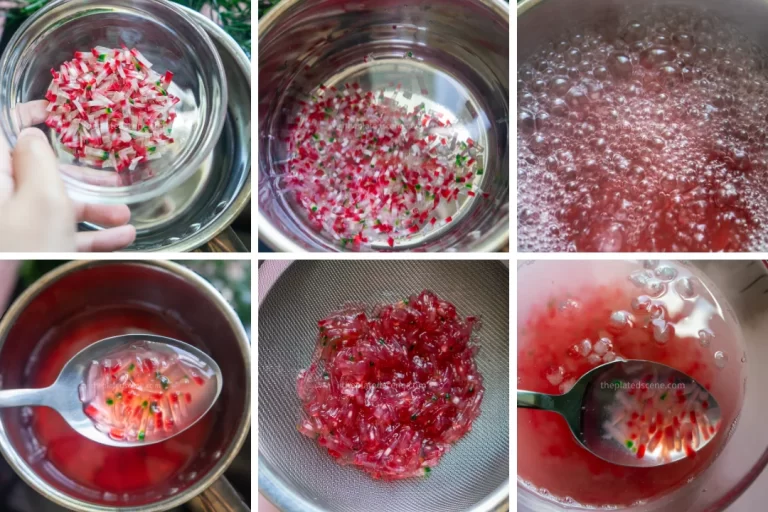
Bring a pot of water to a boil, then add the rectangular sago strands (pacar cina). Stir occasionally to prevent sticking. Boil until most of the pieces turn translucent with just a slight white core in the center. This usually takes around 10–15 minutes, but timing may vary depending on the brand.
Tip: After boiling, turn off the heat, cover the pot, and let it sit for another 10 minutes to fully cook through using residual heat. Then, drain and rinse the pacar cina under cold water to stop the cooking and maintain a chewy texture.
- In a separate pot, boil water, sugar, pandan leaf, and oat milk
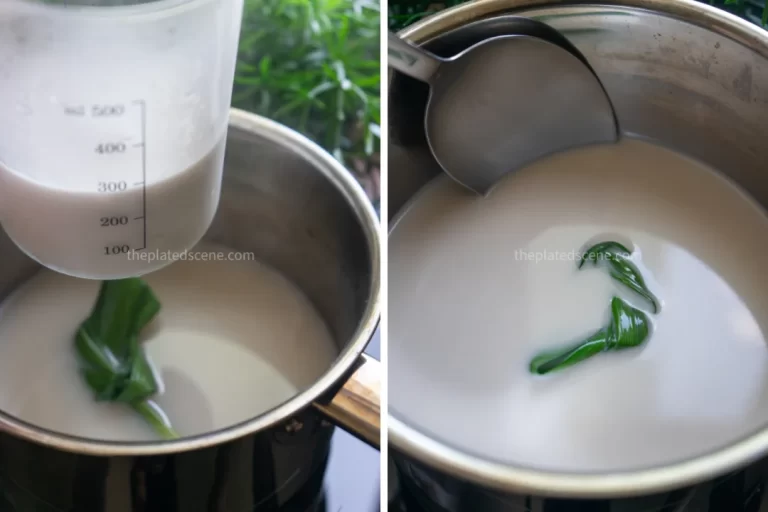
In a medium saucepan, combine the water, sugar, pandan leaf (tied into a knot for easy removal), and oat milk. Bring to a gentle boil over medium heat while stirring occasionally to dissolve the sugar completely.
Tip: If you’re using palm sugar instead of white sugar, chop it finely so it melts more easily. This step builds the base sweetness and aroma of the dish. - Lower the heat and add coconut cream
Once the mixture reaches a boil, reduce the heat to low and slowly pour in the coconut cream while stirring continuously. This prevents curdling and ensures a smooth, rich consistency.
Tip: Avoid high heat when working with coconut cream—simmer gently to keep it from separating. - Add salt and vanilla extract, then mix well
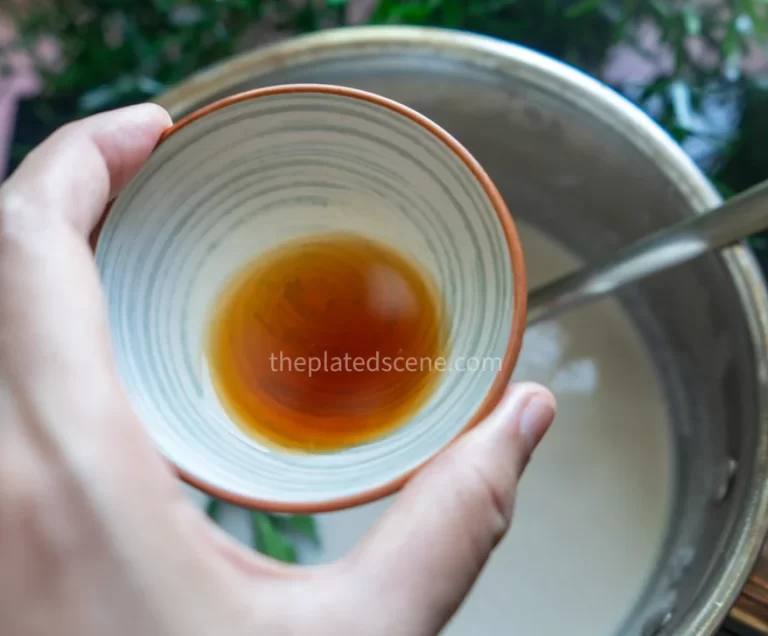
Season the mixture with salt and vanilla extract. Stir to blend everything together and let it simmer for another 2–3 minutes to develop flavor.
Tip: The salt may seem like a small addition, but it really enhances the creaminess and balances the sweetness of the coconut mixture.
- Turn off the heat and add the cooked pacar cina
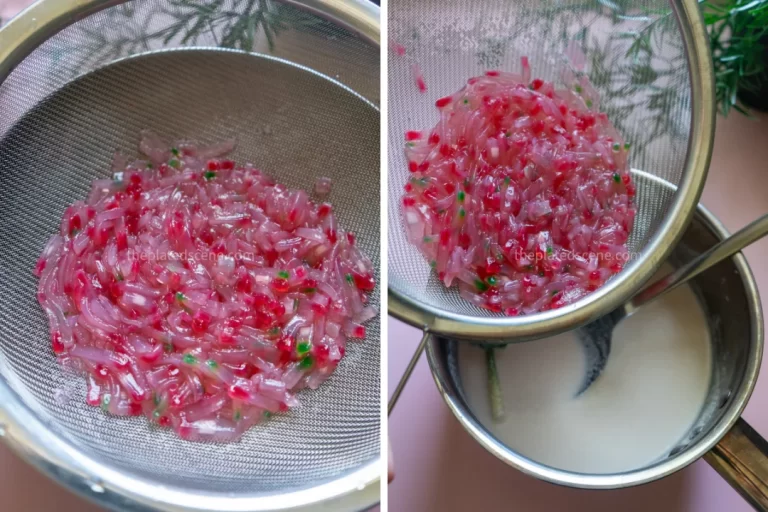
Once the coconut mixture is fully combined and slightly thickened, turn off the heat. Gently stir in the drained pacar cina. Mix until the strands are evenly distributed.
Tip: Let the mixture rest for a few minutes before serving, allowing the flavors to meld. You can serve it warm or chilled, depending on your preference.