

Growing up in Indonesia, bakwan sayur was the afternoon snack that always pulled me into the kitchen long before I could reach the countertop. I remember sitting on a small wooden stool while pretending to do homework, but in reality I was waiting for one thing. The moment my mother dropped the first spoonful of vegetable-filled batter into hot oil, the entire house filled with a warm, garlicky aroma that made my stomach flutter with excitement. I would watch the fritters turn golden on the strainer, always hoping she would let me try one before it was cool enough to touch. I usually burned my fingers a little, but the combination of crispy edges and soft center made it worth it every single time.

As I got older, I realized how deeply connected this simple snack is to everyday Indonesian life. Bakwan sayur is the fritter you grab from a street vendor on a busy afternoon, the one your mom makes when she needs something quick to feed a house full of hungry kids, and the one that somehow tastes even better when the weather turns cloudy and you need a little comfort. It is a snack that feels humble yet special, familiar yet exciting, and always made to be shared.
Even today, the sound of batter hitting hot oil brings me back to those childhood afternoons. It reminds me of the warmth of home, the joy of simple ingredients, and the magic of turning vegetables into something beautifully crisp and comforting. This recipe is a tribute to those memories, and I hope it brings the same sense of comfort to your kitchen.
How My Version Developed Over Time
My own version of bakwan sayur has changed over the years as I kept practicing and tasting. I still keep the foundation simple and true to what my mother made, but I also learned a trick that transformed the texture. I add a spoon of margarine into the batter.
This little tip came from a street vendor who made the crispiest bakwan I had ever tasted. The margarine melts into the batter and gives the fritters a subtle richness that makes every bite tastier. It also helps the batter fry into a crisp shell instead of absorbing too much oil. When combined with the mixture of all purpose flour, rice flour, and corn flour, the result is a fritter that stays crunchy longer and has that familiar savory aroma I grew up loving.
This recipe is my way of keeping the tradition alive while adding small improvements that make bakwan sayur even more satisfying.
What Makes a Good Bakwan Sayur
A truly good bakwan sayur has three things: the right texture, the right balance of vegetables to batter, and the right frying technique.

The texture should be crispy on the edges but tender in the center. The vegetables should not feel raw, but they should still have a slight natural crunch. A good fritter does not feel heavy. Instead, the batter should lightly coat the vegetables without drowning them. When the ratio is right, you can see strands of cabbage and carrot peeking out instead of a thick cake of flour.
A great bakwan sayur also has layers of aroma. When you take a bite, you should notice the garlic and shallot first. After that, the gentle warmth from coriander powder, followed by the sweetness of carrot and the fresh taste of spring onion.
Finally, the fritters should stay crisp even after resting. If they turn soft within minutes, it means the batter was too watery or the oil temperature was not correct. When everything is done right, your vegetable fritters have a light crunch that stays even after they cool down.
Ingredient Breakdown
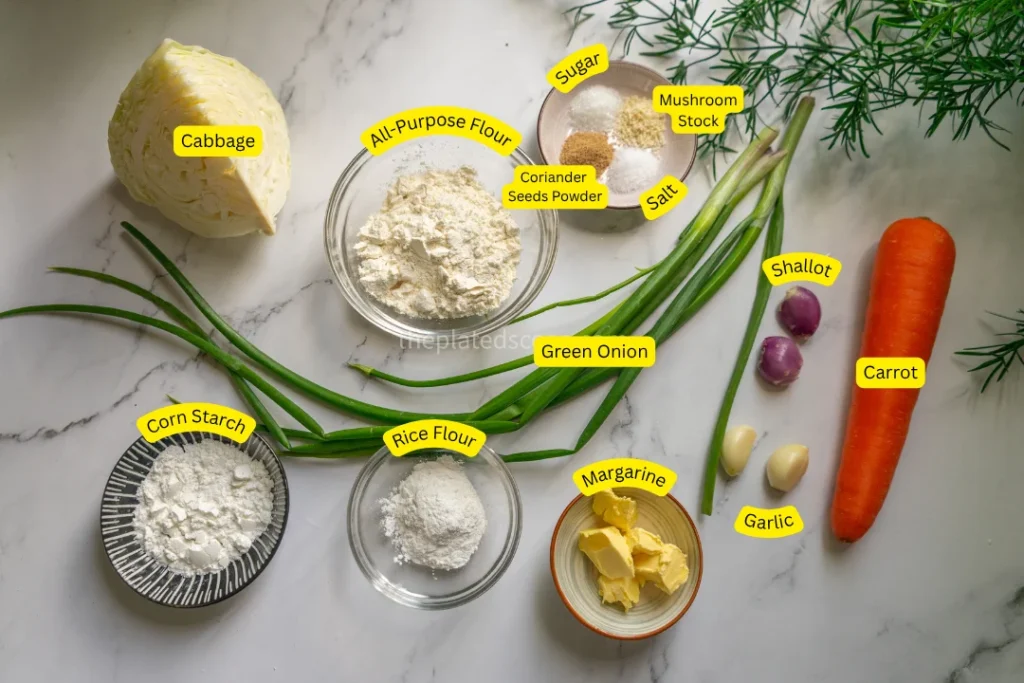
Every ingredient contributes to the final texture and flavor.
- Cabbage gives the fritters body and structure. Thin slices soften quickly in hot oil while still giving a pleasant bite.
- Carrot brings color and natural sweetness. When sliced very thin, it melds into the batter and fries beautifully.
- Spring onion adds freshness and a gentle onion aroma that carries through the whole fritter.
For seasoning,
- Garlic and shallot build the aromatic base.
- Coriander powder adds earthiness.
- Mushroom stock deepens the savory flavor.
- Salt and sugar create a balanced taste that enhances every vegetable.
The flour mixture is what makes the texture special.
- All purpose flour gives structure.
- Rice flour creates crispness.
- Corn flour keeps the fritter light.
When combined, the batter fries into a golden, lacy crust that stays crunchy even after cooling.
- A spoon of margarine enriches the batter and helps the fritters brown evenly.
Why the Three Flour Mix Matters
Many beginners use only all purpose flour, which creates soft and cakey bakwan. The three flour mixture creates the texture people expect from classic Indonesian vegetable fritters.
All purpose flour gives just enough structure so the vegetables stay together. Without it, the batter becomes too delicate and falls apart during frying. Rice flour brings crispiness. It helps the batter fry into a slightly harder shell, especially around the edges. This is the flour that keeps fritters crunchy even after they cool. Corn flour (cornstarch) adds lightness. It prevents the batter from feeling heavy and allows the fritters to puff slightly in the oil. It also improves the golden color.
Together, the three flours create a batter that is light, crisp, and stable. It clings to the vegetables perfectly and fries into a beautiful golden lace. This combination is the reason your bakwan sayur will not taste or look like a heavy flour pancake.
How to Slice the Vegetables Correctly
Thin slicing is one of the most important steps in making perfect bakwan sayur. The thinner the vegetables, the crispier and lighter the fritters will be.
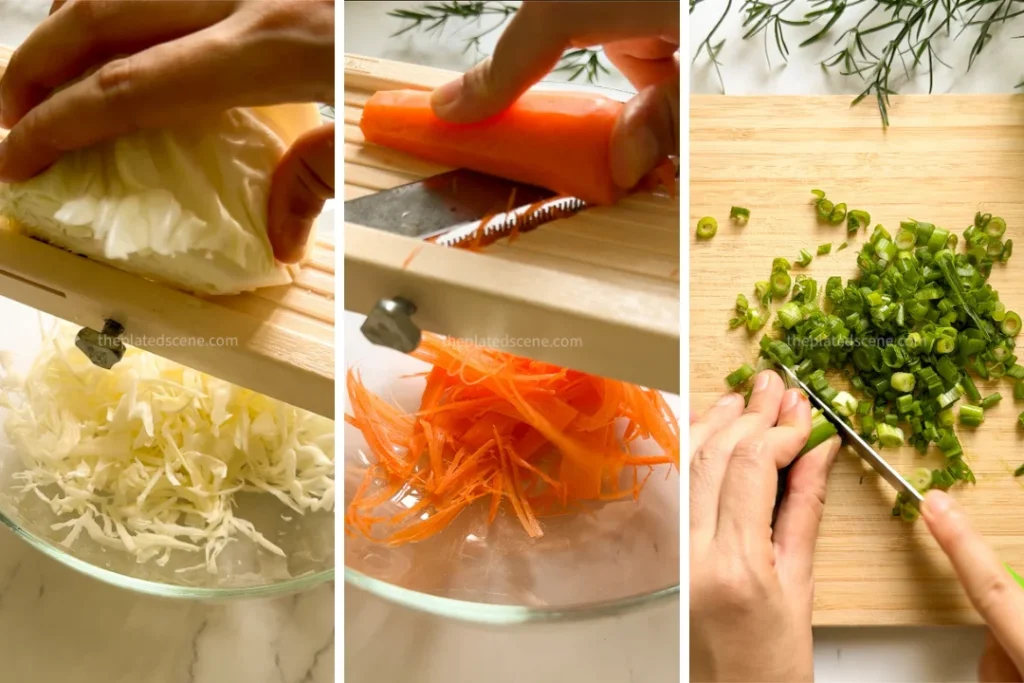
Using a mandoline makes this step easy and consistent. The mandoline shaves the cabbage and carrot into very thin pieces that cook evenly and blend beautifully into the batter. Thin strands create more surface area, which means more crispy edges once the fritters hit the oil.
Cabbage should look like fine coleslaw. Carrot should resemble thin matchsticks. Spring onion can be sliced with a knife, but aim for thin, even rings to prevent uneven cooking.
Thinly sliced vegetables also release less moisture, which helps keep the batter light and prevents the fritters from becoming soggy.
How to Fry Bakwan Sayur So It Stays Crispy
Temperature control is everything. Heat the oil over medium heat. If the oil is too cold, the fritters absorb oil and turn greasy. If it is too hot, the outside browns too quickly while the inside stays raw.
You can test the temperature by dropping a small bit of batter into the pan. If it bubbles steadily and floats to the surface, the oil is ready.

Place spoonfuls of the vegetable mixture into the oil and gently flatten them. Thin fritters cook evenly and stay crispy longer. Because the vegetables are sliced with a mandoline, they will fan out into delicate, lacy edges that fry beautifully.
Give each fritter enough space. Overcrowding lowers the temperature and creates soggy results.
Once golden, remove the fritters and drain them on a wire rack. A rack allows air to circulate and keeps the crust crisp.
If you want extra crunch, fry them a second time for one to two minutes.
Common Mistakes to Avoid
Several small mistakes can affect the texture of your bakwan sayur.
- Vegetables sliced too thick often stay raw and release water. Thin slicing solves this completely.
- Too much batter makes the fritters heavy and doughy. Bakwan sayur should be mostly vegetables with just enough batter to bind.
- Watery batter breaks apart in the oil. Adjust the flour or water if necessary.
- Cold oil leads to greasy fritters. Always wait until the oil reaches the right temperature.
- Draining on paper towels traps steam and softens the crust. A wire rack is the better choice.

How to Make Bakwan Sayur (Step by Step)
Step 1: Prepare and slice the vegetables
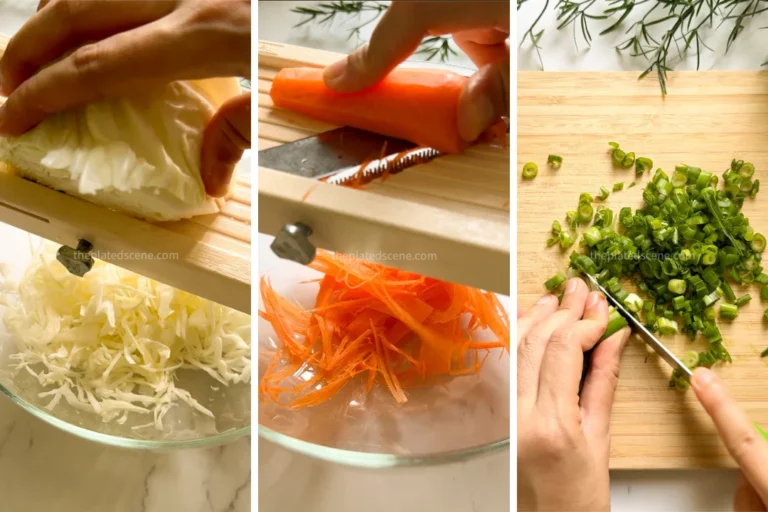
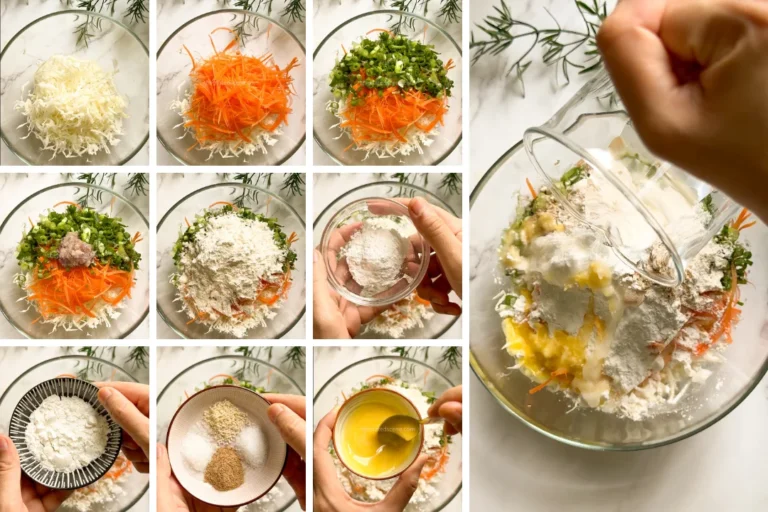
Peel the carrot and use a mandoline to slice it into very thin strips. Thin carrot cooks quickly and blends beautifully into the fritter. Shred the cabbage using a mandoline as well so you get fine, even strands. If the pieces are long, cut them in half for easier mixing. Slice the spring onion thinly with a knife. Place all the sliced vegetables in a large bowl and set aside.
Step 2: Prepare the aromatics
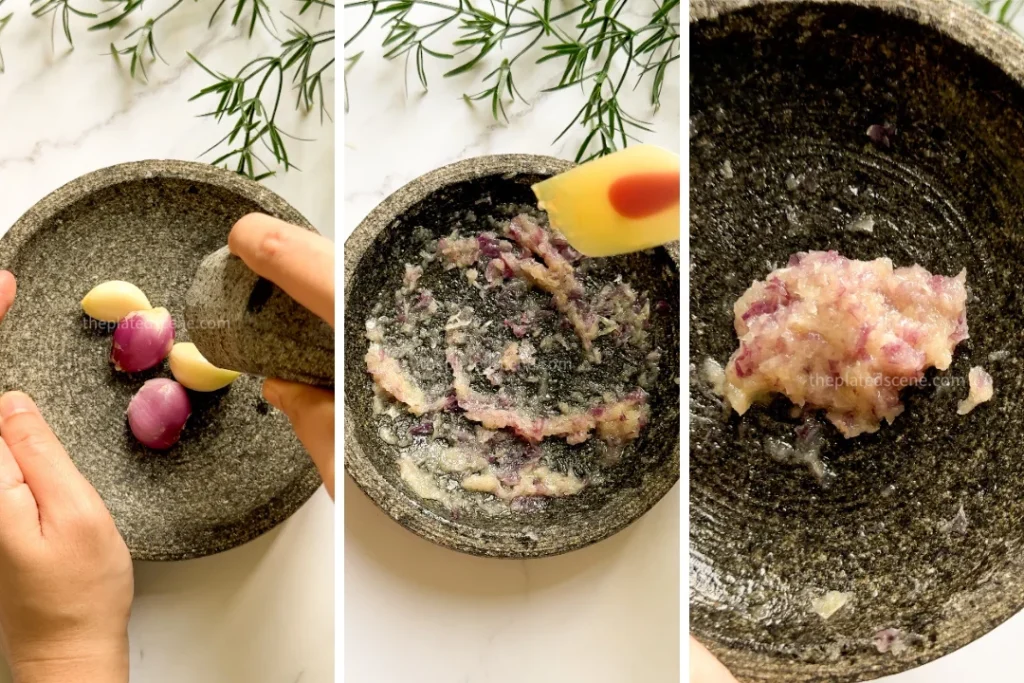
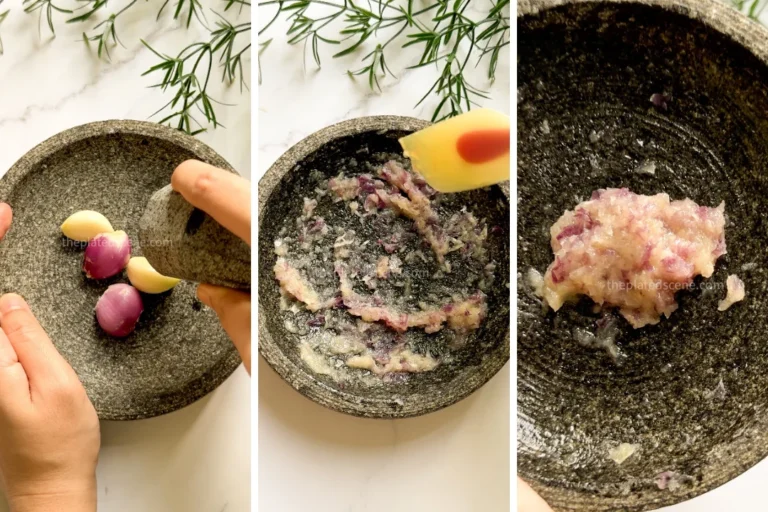
Peel the garlic and shallots. Pound them using a mortar and pestle until you get a smooth paste. The smoother the paste, the better it spreads through the batter. Set aside.
Step 3: Make the batter and combine everything in one bowl
Melt the margarine and let it cool slightly. In a large mixing bowl, add
- all the sliced vegetables,
- all-purpose flour,
- rice flour,
- corn flour,
- coriander powder,
- salt,
- sugar,
- mushroom stock,
- the garlic and shallot paste,
- the melted margarine, and
- all the water.
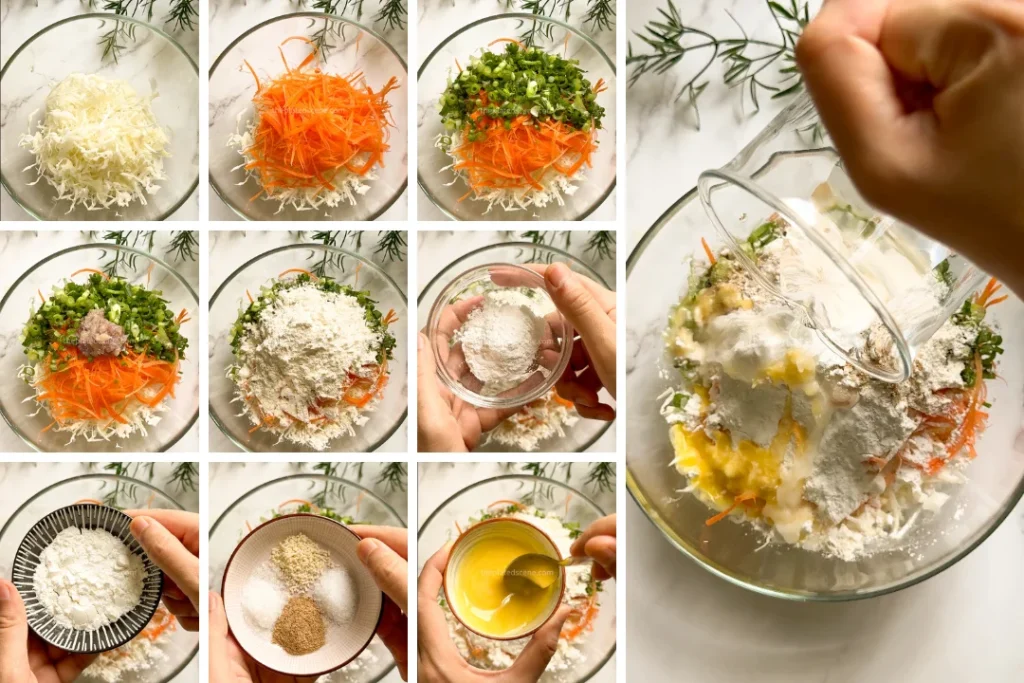
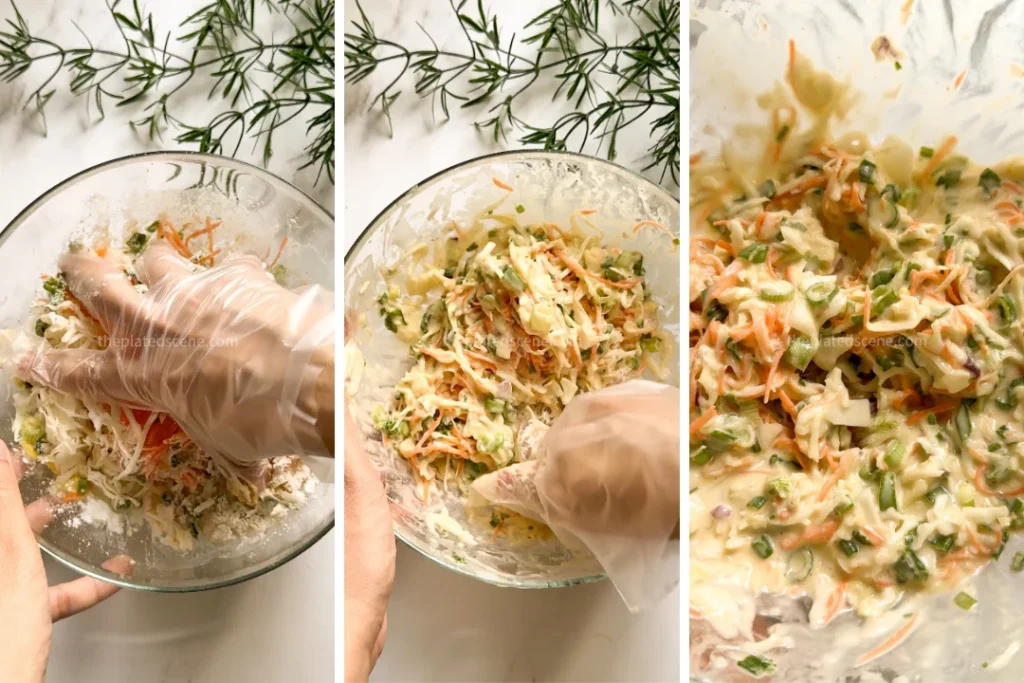
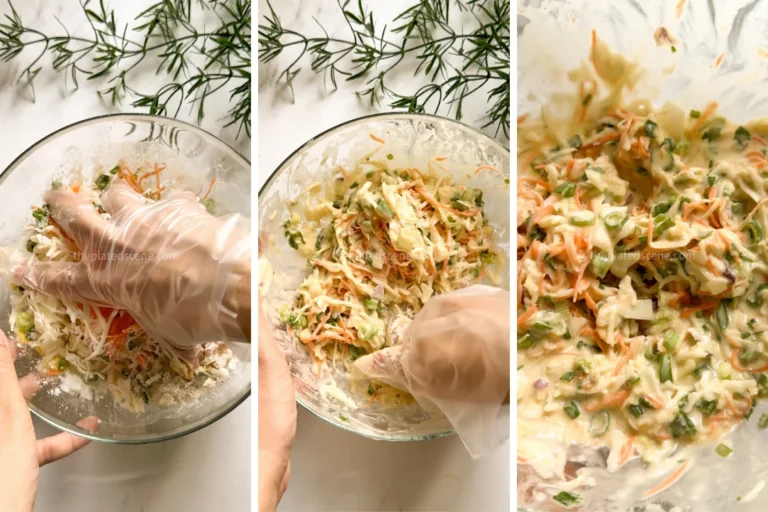
Mix everything together until the batter coats the vegetables evenly. Using your hand works best because you can gently massage the mixture and help the batter cling to each piece. This creates lighter, crispier bakwan sayur. If you prefer not to use your hands, you can mix with a spatula or ladle. Just make sure to lift the mixture from the bottom so everything blends well. The mixture should look like mostly vegetables with a thin coating of batter. If it seems too thick, add a teaspoon of water. If it seems too wet, add a handful of sliced cabbage.
Step 4: Heat the oil
Pour about 2 to 3 cm of oil into a deep pan or wok. Heat the oil over medium heat. To check if the oil is ready, drop in a tiny bit of batter. If it floats up with steady bubbles, you can start frying.
Step 5: Fry the bakwan sayur
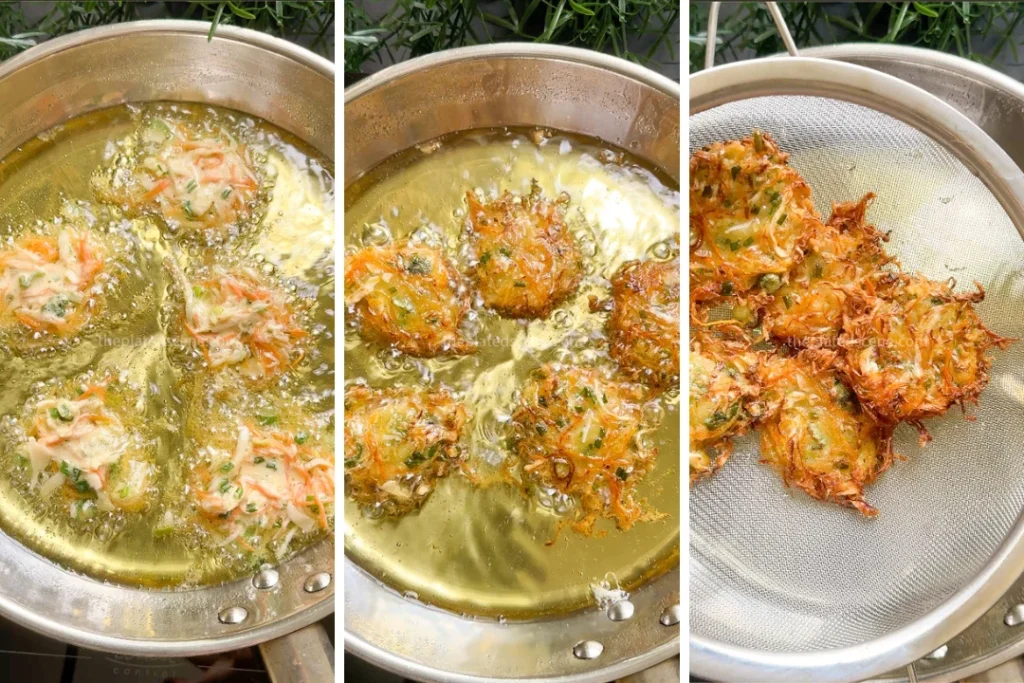
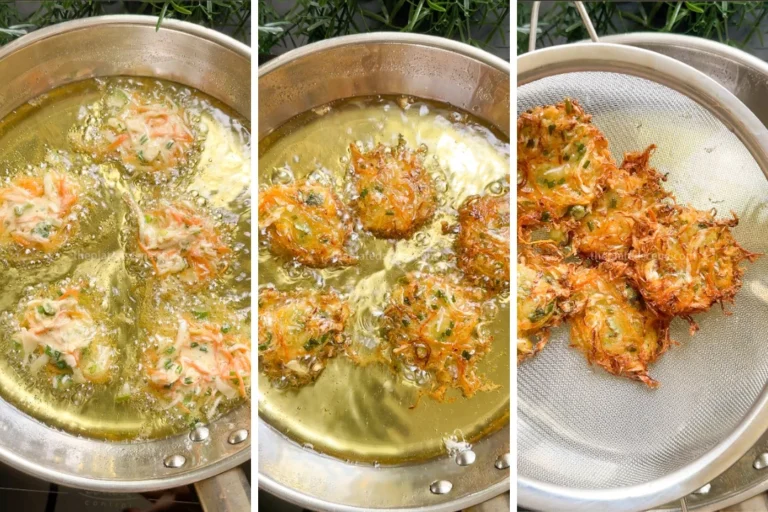
Give the mixture a quick stir so the vegetables are evenly coated. Scoop a spoonful of the mixture and gently slide it into the hot oil. Flatten it slightly with the back of the spoon so it cooks evenly. Add more spoonfuls, leaving space between each fritter. Overcrowding drops the temperature and makes the fritters oily. Let the fritters cook until the edges turn golden. Flip carefully and cook the other side until both sides are evenly browned. Adjust the heat if needed so the fritters cook through without burning.
Step 6: Drain and keep them crispy
Use a slotted spoon to lift the fritters from the oil. Place them on a wire rack so excess oil can drip away. A rack keeps the fritters crisp because steam can escape from underneath. Avoid stacking them while still hot.

Step 7: Taste and adjust
Taste one fritter while it is still warm. If you want a slightly stronger flavor, add a pinch of salt or mushroom stock to the remaining batter and mix before frying the next batch.
Step 8: Serve the bakwan sayur
Serve the bakwan sayur hot and crispy. They pair beautifully with chili sauce, sambal, spicy vinegar, or sweet soy sauce with sliced chili. Enjoy them as a snack or with rice as a simple comfort meal.
Variations You Can Try
There are many ways to personalize bakwan sayur.
- Add corn for sweetness.
- Add sliced chili for a spicy version.
- Add bean sprouts for extra lightness.
- Add finely chopped shrimp for more flavor.
- Make mini fritters for snacking or large ones to serve with rice.
Once you understand the basic batter ratio and slicing technique, you can adjust the fritters to match your taste.

Bakwan Sayur (Indonesian Vegetable Fritters) Recipe You Will Make Again and Again
4
servings15
minutes15
minutes30
minutesBakwan sayur is a classic Indonesian vegetable fritter made with cabbage, carrot, and spring onion in a crispy golden batter. Simple, delicious, and always satisfying.
Keep the screen of your device on
Ingredients
- Vegetables
2 oz 55 g carrot, thinly sliced with mandoline
3.5 oz 100 g cabbage, thinly sliced with mandoline
2 stalks 2 stalks spring onion, thinly sliced
- Seasoning
2 cloves 2 cloves garlic
2 pc 2 pc shallots
1/2 teaspoon 1/2 tsp coriander powder
1/2 teaspoon 1/2 tsp salt
1/2 teaspoon 1/2 tsp sugar
1/2 teaspoon 1/2 tsp mushroom stock powder
- Flour Mixture
7 tablespoons 7 tbsp all purpose flour
1 tablespoon 1 tbsp rice flour
1 tablespoon 1 tbsp corn flour (cornstarch)
- Other Ingredients
1/2 cup 100 ml water
1 tablespoon 15 g margarine (melted)
Oil for frying
Directions
- Prepare and slice the vegetables
Peel the carrot and use a mandoline to slice it into very thin strips. Thin carrot cooks quickly and blends beautifully into the fritter. Shred the cabbage using a mandoline as well so you get fine, even strands. If the pieces are long, cut them in half for easier mixing. Slice the spring onion thinly with a knife. Place all the sliced vegetables in a large bowl and set aside.
- Prepare the aromatics
Peel the garlic and shallots. Pound them using a mortar and pestle until you get a smooth paste. The smoother the paste, the better it spreads through the batter. Set aside. - Make the batter and combine everything in one bowl
Melt the margarine and let it cool slightly. In a large mixing bowl, add
– all the sliced vegetables,
– all-purpose flour,
– rice flour,
– corn flour,
– coriander powder,
– salt,
– sugar,
– mushroom stock,
– the garlic and shallot paste,
– the melted margarine, and
– all the water.
Mix everything together until the batter coats the vegetables evenly. Using your hand works best because you can gently massage the mixture and help the batter cling to each piece. This creates lighter, crispier bakwan sayur. If you prefer not to use your hands, you can mix with a spatula or ladle. Just make sure to lift the mixture from the bottom so everything blends well. The mixture should look like mostly vegetables with a thin coating of batter. If it seems too thick, add a teaspoon of water. If it seems too wet, add a handful of sliced cabbage. - Heat the oil
Pour about 2 to 3 cm of oil into a deep pan or wok. Heat the oil over medium heat. To check if the oil is ready, drop in a tiny bit of batter. If it floats up with steady bubbles, you can start frying. - Fry the bakwan sayur
Give the mixture a quick stir so the vegetables are evenly coated. Scoop a spoonful of the mixture and gently slide it into the hot oil. Flatten it slightly with the back of the spoon so it cooks evenly. Add more spoonfuls, leaving space between each fritter. Overcrowding drops the temperature and makes the fritters oily. Let the fritters cook until the edges turn golden. Flip carefully and cook the other side until both sides are evenly browned. Adjust the heat if needed so the fritters cook through without burning. - Drain and keep them crispy
Use a slotted spoon to lift the fritters from the oil. Place them on a wire rack so excess oil can drip away. A rack keeps the fritters crisp because steam can escape from underneath. Avoid stacking them while still hot. - Taste and adjust
Taste one fritter while it is still warm. If you want a slightly stronger flavor, add a pinch of salt or mushroom stock to the remaining batter and mix before frying the next batch. - Serve the bakwan sayur
Serve the bakwan sayur hot and crispy. They pair beautifully with chili sauce, sambal, spicy vinegar, or sweet soy sauce with sliced chili. Enjoy them as a snack or with rice as a simple comfort meal.


%20Recipe%20You%20Will%20Make%20Again%20and%20Again)