

There’s something magical that happens in my kitchen when I start making dimsum sauce recipe from scratch. The aroma of chilies and garlic simmering together takes me back to lazy Sunday afternoons spent with my mother, watching her expertly balance sweet, spicy, and tangy flavors in her own version of this beloved Indonesian condiment. She never measured anything, but somehow her dimsum sauce recipe always turned out perfectly – that glossy, vibrant red sauce that could transform even the simplest steamed dumplings into something extraordinary.
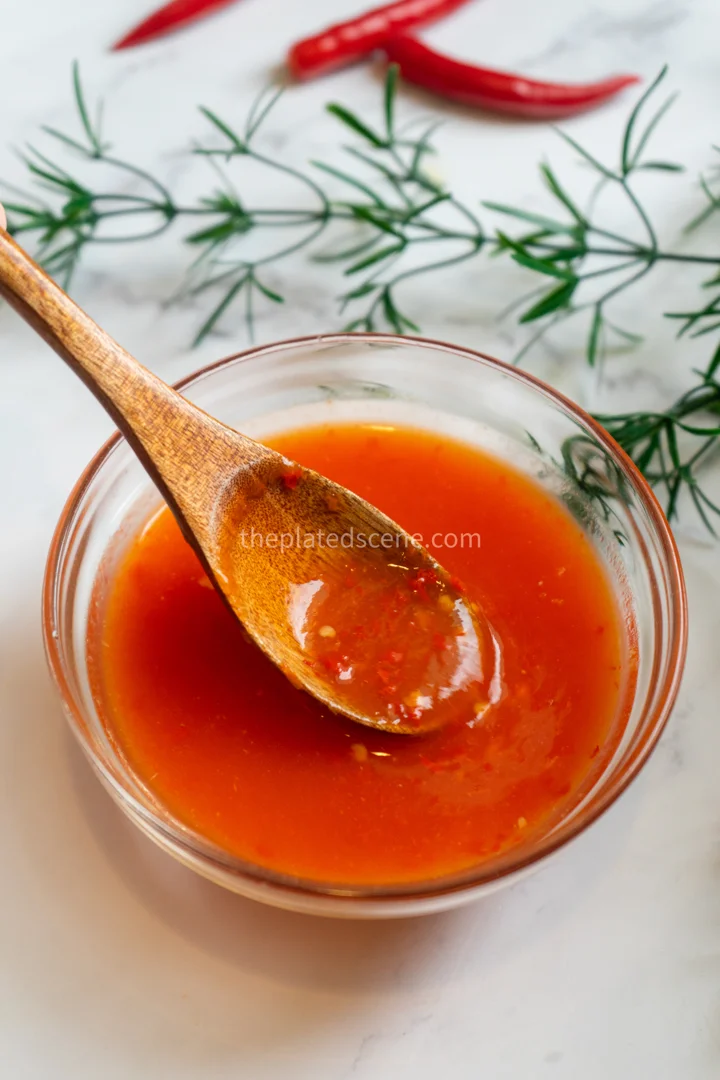
In our family, no dimsum feast was complete without this homemade sauce. While store-bought versions were convenient, nothing could compare to the depth of flavor that came from carefully selecting each chili, toasting the garlic just right, and finding that perfect balance between sweetness and heat. My mother would make big batches and store them in glass jars, knowing that this dimsum sauce recipe would elevate everything from wontons to spring rolls, and even simple grilled meats.
What I love most about this dimsum sauce recipe is how it brings people together. There’s something deeply satisfying about creating this fundamental condiment that will enhance countless meals to come. The process itself is almost meditative – the gentle bubbling of chilies softening in water, the rhythmic blending, the careful seasoning adjustments. This version strikes the perfect balance between traditional Indonesian flavors and the specific needs of dimsum lovers, creating a sauce that’s both authentic and absolutely irresistible.
Table of Contents
The Story Behind Dimsum Sauce Recipe
The roots of Indonesian chili sauces run deep in our culinary heritage, with variations of spicy-sweet condiments dating back centuries. This particular dimsum sauce recipe draws inspiration from the rich tradition of Indonesian sambals and chili-based sauces that have been perfected over generations. When Chinese immigrants brought dimsum culture to Indonesia, local cooks naturally began adapting their beloved chili sauce techniques to complement these delicate steamed and fried dumplings. The result was a fusion that honored both culinary traditions while creating something uniquely Indonesian.
In Indonesian culture, sharing food is an act of love, and condiments like this dimsum sauce recipe play a crucial role in that tradition. These sauces aren’t just accompaniments – they’re flavor enhancers that allow each person to customize their meal according to their preferences. Traditional Indonesian households would prepare various chili sauces for different occasions, and a good dimsum sauce became essential for family gatherings where steamed dumplings, wontons, and other dim sum treats were served. The sauce represents the Indonesian philosophy of balancing flavors – sweet, salty, spicy, and sour – all in perfect harmony.
Today, this dimsum sauce recipe has evolved from a special occasion condiment to an everyday kitchen staple. Modern Indonesian families keep homemade dimsum sauce in their refrigerators, ready to enhance not just traditional dim sum but also grilled meats, vegetables, and even rice dishes. The sauce has transcended its original purpose, becoming a versatile flavor booster that adds Indonesian flair to any meal. Street food vendors across Indonesia often serve their own versions, each with subtle variations that reflect regional preferences and family secrets passed down through generations.
What to Expect: Flavors and Textures
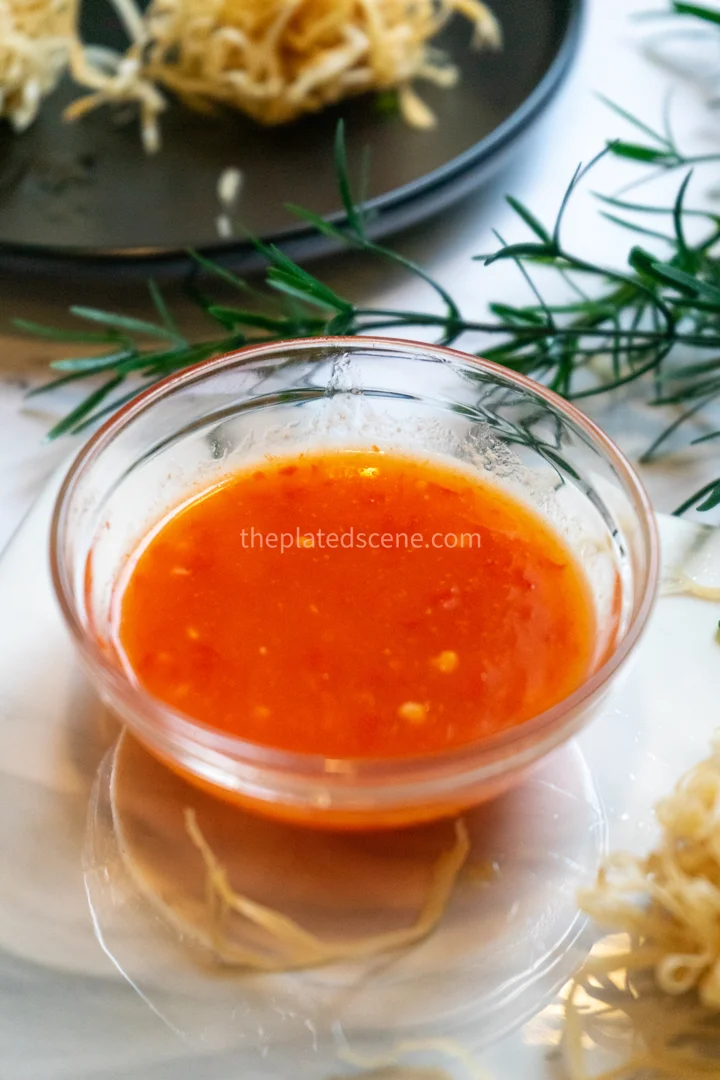
This dimsum sauce recipe creates a beautiful symphony of flavors that dance on your palate with each taste. The first thing you’ll notice is the gorgeous, glossy red color that immediately signals the perfect balance of sweet and spicy elements. The sauce has a smooth, slightly thick consistency thanks to the cornstarch, which helps it cling beautifully to dumplings and other foods. When you first taste it, you’ll experience a gentle sweetness from the sugar and ketchup, followed by a warm, building heat from the bird’s eye chilies. The garlic adds a rich, savory depth that grounds all the other flavors, while the vinegar provides just enough acidity to brighten the entire profile and prevent the sauce from being too heavy.
Delicious Variations to Try
One of the most wonderful aspects of this dimsum sauce recipe is how adaptable it is to different tastes and preferences. Every cook I know has their own special twist, and I encourage you to experiment once you’ve mastered the basic version.
- Extra Spicy Version – Double the bird’s eye chilies or add a tablespoon of sambal oelek for serious heat lovers. You can also include a few Thai chilies for an even more intense kick that will make your dimsum sauce recipe unforgettable.
- Sweet and Tangy Style – Add an extra tablespoon of sugar and increase the vinegar to 2 teaspoons for a sauce that’s perfect with fried foods. Some families also add a squeeze of lime juice at the end for extra brightness.
- Garlicky Paradise – Increase the garlic to 30 grams (about 6 cloves) for those who can never have too much garlic. This version pairs exceptionally well with steamed vegetables and grilled meats.
- Smoky Twist – Char the red chilies and garlic over an open flame before boiling for a subtle smoky flavor that adds incredible depth to your dimsum sauce recipe.
- Herb-Infused Version – Add a small piece of ginger (about 10 grams) during the boiling process for warmth, or include a stalk of lemongrass for a citrusy note that’s particularly lovely with seafood dumplings.
- Rich and Savory Style – Replace half the water with chicken or vegetable broth, and add a teaspoon of soy sauce for umami depth that complements meat-filled dumplings perfectly.
Common Mistakes to Avoid
Don’t worry if your first attempt at this dimsum sauce recipe doesn’t turn out exactly as expected – that’s completely normal! The most common issue I see is adding the cornstarch mixture too quickly, which can create lumps instead of that smooth, glossy texture we’re after. Always whisk the cornstarch slurry thoroughly before adding it, and pour it in slowly while stirring constantly. Another thing to watch for is overcooking the sauce after adding the cornstarch – once it thickens, remove it from heat immediately to prevent it from becoming gluey. If you’re finding the heat level hard to predict, remember that bird’s eye chilies can vary significantly in spiciness, so start with fewer and add more next time if needed.
Let’s Talk About the Ingredients
The beauty of this dimsum sauce recipe lies in its simplicity – just a handful of carefully chosen ingredients that work together to create something much greater than the sum of their parts. Each component plays a crucial role in building the complex flavor profile that makes this sauce so irresistible. Understanding why each ingredient matters will help you make the best version possible and know when substitutions might work.
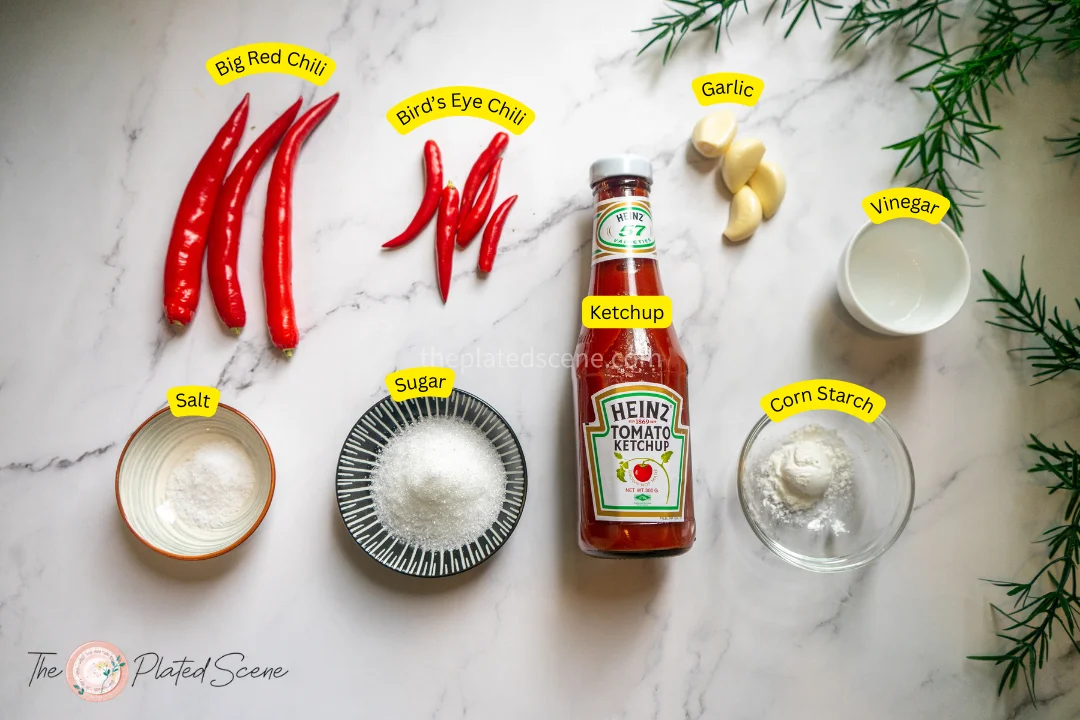
- Big Red Chilies – These are the backbone of your dimsum sauce recipe, providing the beautiful red color and moderate heat that forms the base. Look for fresh, firm chilies without wrinkled skin. They’re milder than bird’s eye chilies but still pack flavor. You can substitute with red bell peppers plus extra bird’s eye chilies if needed, though the flavor will be slightly different.
- Bird’s Eye Chilies – These tiny powerhouses bring the serious heat to your sauce. They’re incredibly spicy, so handle with care and adjust quantities based on your heat tolerance. If you can’t find bird’s eye chilies, Thai chilies or serrano peppers work as substitutes, though you might need to adjust the amounts.
- Garlic – Fresh garlic adds that essential savory depth and aromatic quality that makes this dimsum sauce recipe so compelling. Choose firm, plump cloves without green shoots. The cooking process mellows the garlic’s bite while concentrating its sweet, nutty flavors.
- Water – This might seem basic, but water is what helps soften all your aromatics and creates the proper consistency for blending. Use clean, filtered water if your tap water is heavily chlorinated, as it can affect the final taste.
- Sugar – The sweetness balances the heat and acidity, creating that perfect sweet-and-spicy profile that makes dimsum sauce so addictive. Regular granulated sugar works perfectly, though you can experiment with palm sugar for a more complex sweetness.
- Salt – Essential for enhancing all the other flavors and bringing everything into balance. Start with the recommended amount and adjust to taste – you want enough to brighten the flavors without making the sauce taste salty.
- Vinegar – This adds the crucial acidic note that prevents the sauce from being too heavy or cloying. White vinegar works well, but rice vinegar will give a slightly milder, more rounded acidity that’s particularly nice in this dimsum sauce recipe.
- Ketchup – Beyond adding sweetness and color, ketchup contributes body and a subtle tomato flavor that rounds out the sauce beautifully. Choose a good-quality ketchup without high fructose corn syrup if possible, as it will give you better flavor control.
- Corn Starch – This is your thickening agent, creating that glossy, clingy texture that makes the sauce coat food perfectly. Always mix it with cold water before adding to prevent lumps, and remember that the sauce will continue to thicken slightly as it cools.
How to Make Dimsum Sauce Recipe
Don’t let the idea of making your own dimsum sauce intimidate you – this process is much more forgiving than you might think! The key is taking your time with each step and trusting your senses. You’ll know you’re doing it right when your kitchen fills with that incredible aroma of chilies and garlic cooking together.
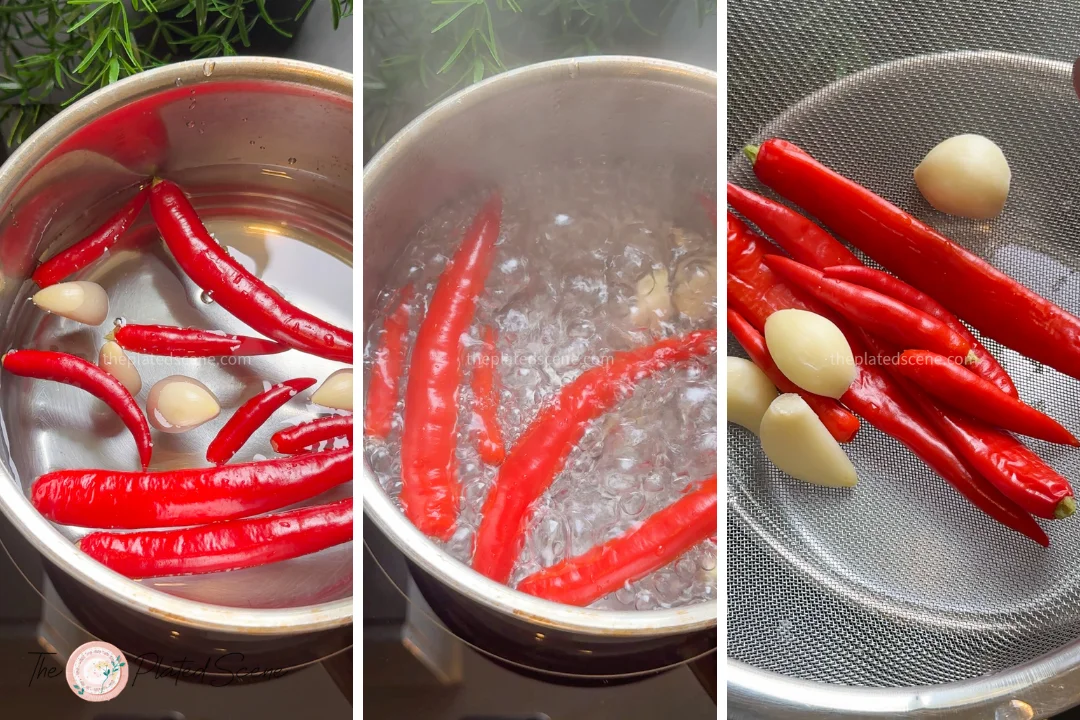
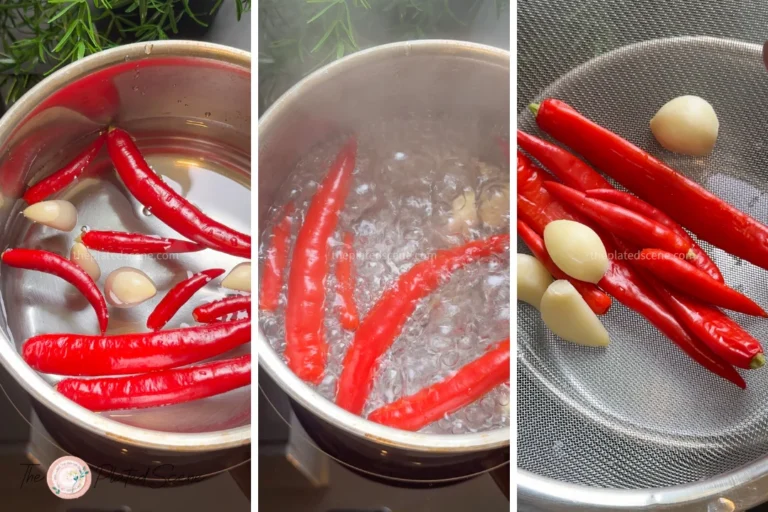
1. Boil the big red chilies, bird’s eye chilies, and garlic until everything is cooked and soft, then drain the water. Fill a medium saucepan with enough water to cover all your aromatics by about an inch. Bring it to a rolling boil, then add your chilies and garlic. This step is crucial because it softens the chilies’ tough skins and mellows the garlic’s sharpness, making them much easier to blend into a smooth paste. You’ll know they’re ready when the chilies have changed to a deeper red color and feel tender when pierced with a fork – this usually takes about 10-15 minutes. The garlic should be completely soft and almost creamy when pressed. Don’t rush this step, as properly softened aromatics are the foundation of a great dimsum sauce recipe. Drain thoroughly and let them cool slightly before handling.
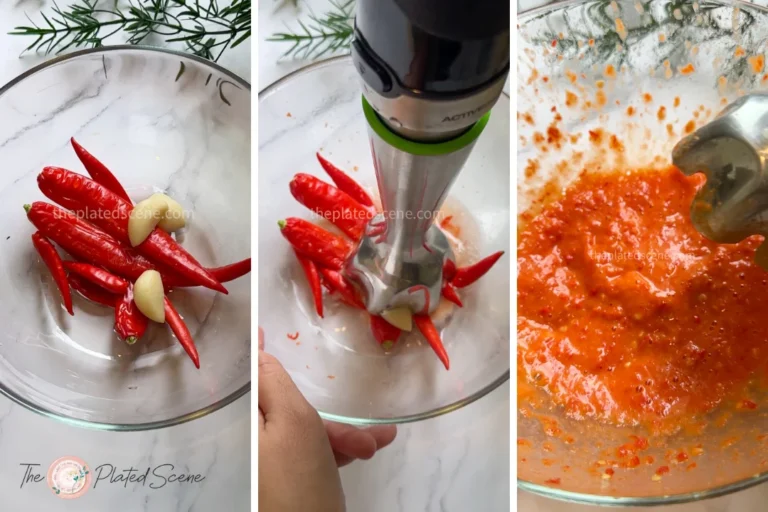
2. Blend the chilies and garlic with 1-2 tablespoons of water until completely smooth. Transfer your cooled, drained aromatics to a blender or food processor. Add just a tablespoon or two of fresh water – you want just enough liquid to help the blades move, but not so much that your paste becomes watery. Start blending on low speed and gradually increase, stopping to scrape down the sides as needed. This is where patience really pays off in your dimsum sauce recipe. Keep blending until you achieve a completely smooth, vibrant red paste with no visible chunks of chili skin or garlic. This might take 2-3 minutes of blending, and the paste should be thick but pourable. If your blender struggles, add water one teaspoon at a time until it moves freely.
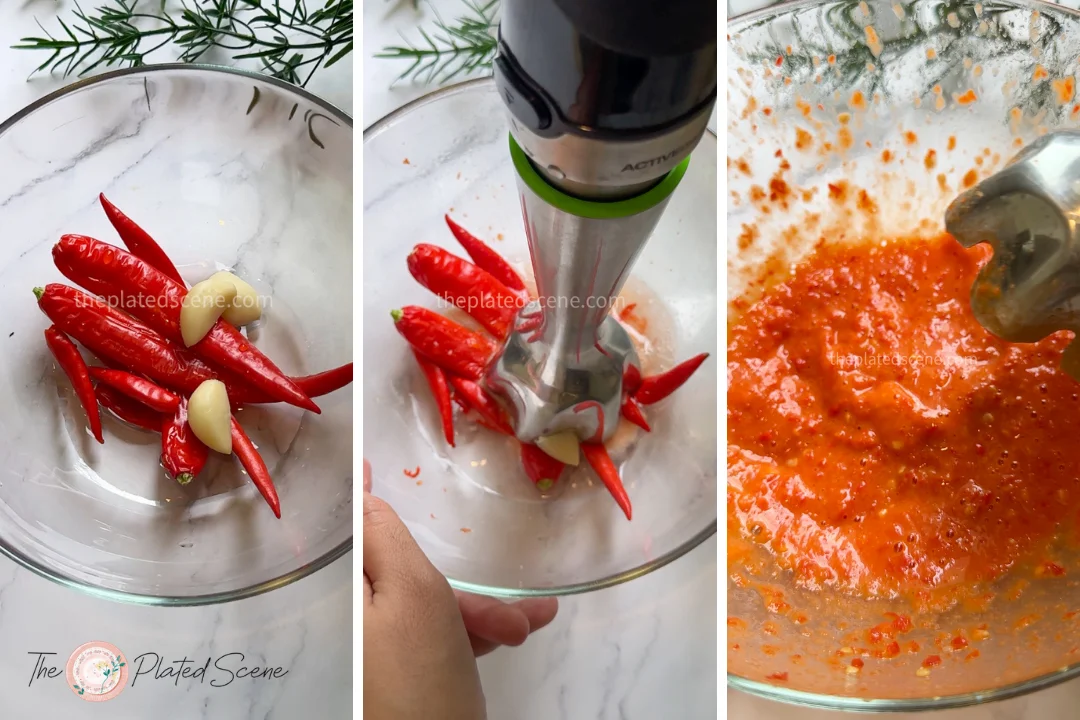
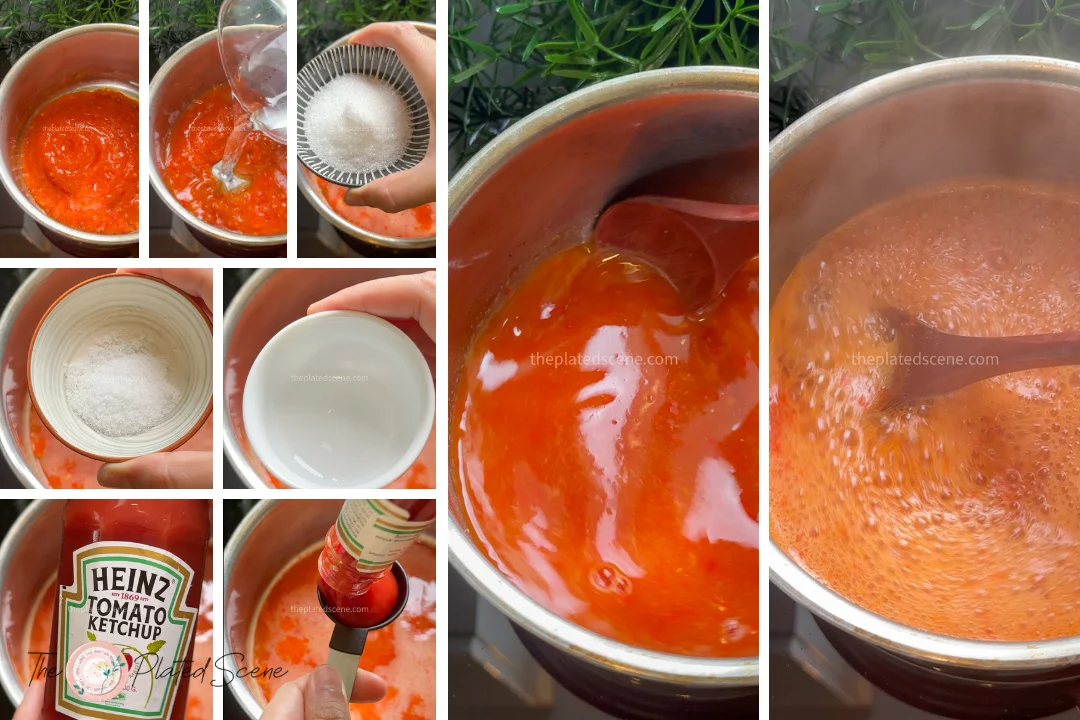
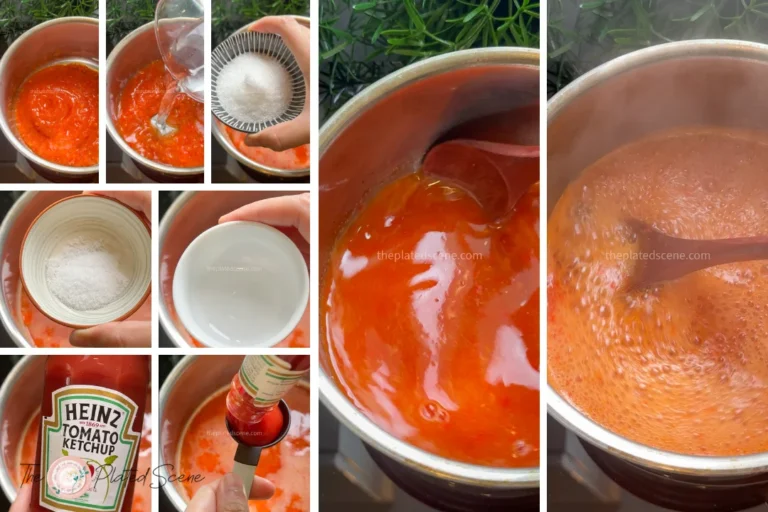
3. Put the blended mixture into the pot, then add the water, sugar, salt, vinegar, and ketchup, mixing well and waiting until it reaches a boil. Return your beautiful red paste to the saucepan and place it over medium heat. Add all your remaining ingredients – the 300ml of water, sugar, salt, vinegar, and ketchup. Whisk everything together thoroughly to ensure there are no lumps and all ingredients are well incorporated. The mixture will look quite thin at this point, but don’t worry – that’s exactly what we want. Bring everything to a gentle boil, stirring occasionally to prevent sticking. You’ll notice the sauce starting to develop that characteristic glossy sheen as it heats. This simmering process allows all the flavors to meld together and creates the base for your perfect dimsum sauce recipe. Let it boil for about 2-3 minutes to ensure everything is well combined.
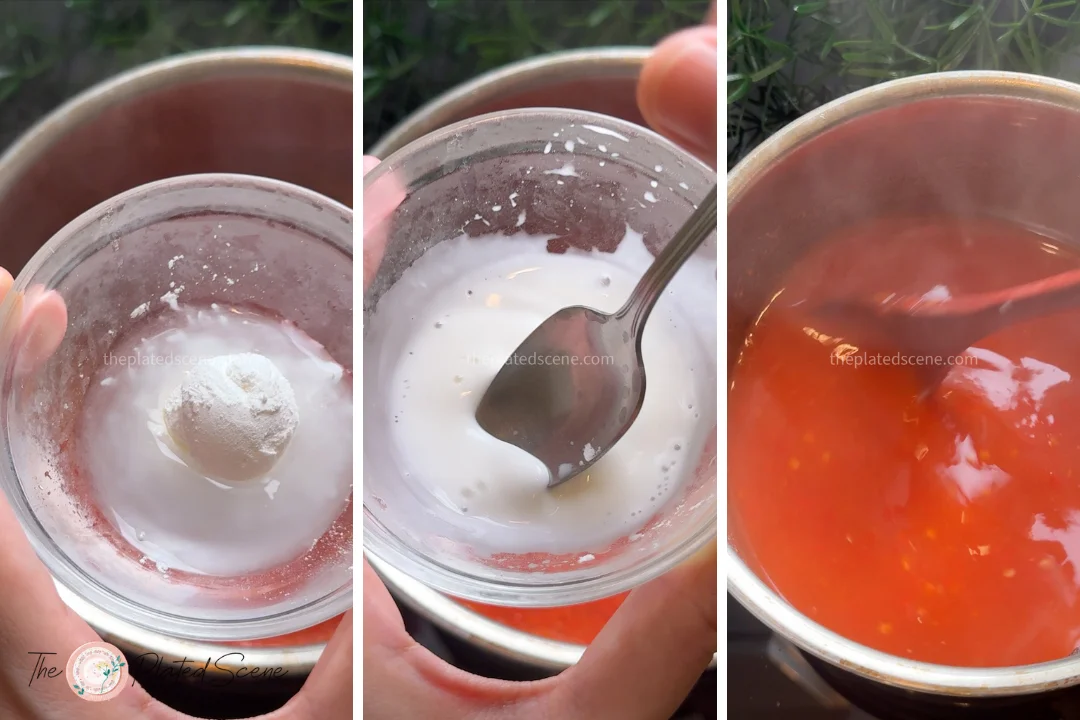
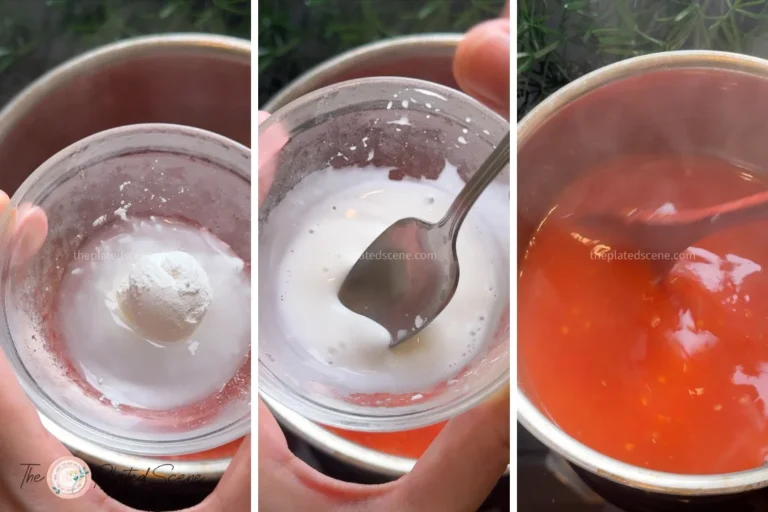
4. Add the cornstarch mixture to thicken the sauce to perfect consistency. While your sauce is simmering, whisk together the cornstarch and 1 tablespoon of cold water in a small bowl until completely smooth – no lumps allowed! This slurry is what will transform your thin sauce into that perfect, glossy dimsum sauce consistency. Remove the saucepan from heat temporarily, then slowly drizzle the cornstarch mixture into the sauce while whisking constantly. Return to medium heat and stir continuously for about 1-2 minutes until the sauce thickens noticeably and develops that beautiful, glossy finish that makes a great dimsum sauce recipe so appealing. The sauce should coat the back of a spoon but still pour easily. Remove from heat immediately once thickened – overcooking can make it gluey. Taste and adjust seasoning if needed, then let it cool slightly before serving.
What to Serve With Dimsum Sauce Recipe
While this sauce was created specifically for dimsum, its versatility makes it a fantastic companion to so many different dishes. The sweet and spicy profile complements everything from delicate steamed dumplings to heartier fried foods. Try it with our crispy wontons for an absolutely perfect pairing – the contrast between the crunchy wrapper and smooth, flavorful sauce is incredible. It’s also wonderful with steamed vegetables, grilled chicken, or even as a dipping sauce for fresh spring rolls.
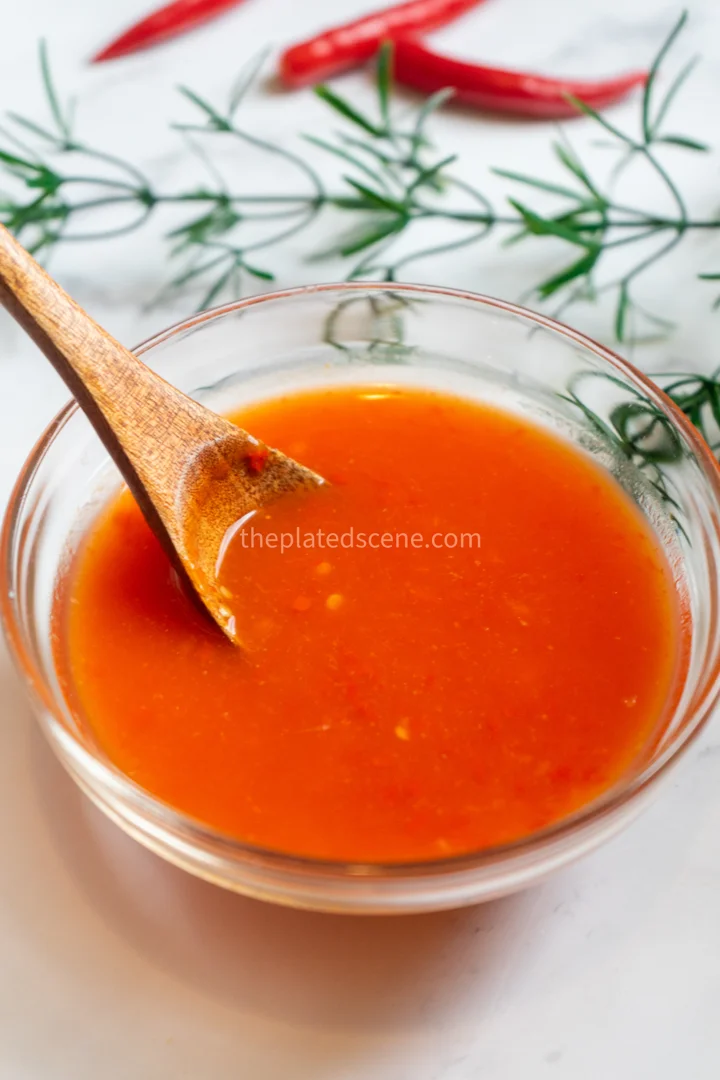
For a complete Indonesian meal experience, serve this dimsum sauce recipe alongside traditional dishes like perkedel kentang or use it as a condiment with rice dishes. The sauce also works beautifully as a marinade base for grilled meats – just thin it slightly with a bit of oil and lime juice. Keep a jar in your refrigerator, and you’ll find yourself reaching for it to add excitement to everyday meals.
Troubleshooting Tips
If your dimsum sauce recipe turned out too spicy, don’t panic! Simply make another half batch without the bird’s eye chilies and mix the two together until you reach your preferred heat level. Too thick? Whisk in warm water one tablespoon at a time until you reach the desired consistency. If it’s too thin, make a fresh cornstarch slurry (1 teaspoon cornstarch mixed with 1 tablespoon cold water) and stir it in while the sauce is gently warming. Lumpy texture usually means the cornstarch was added too quickly – next time, make sure to remove the pan from heat and whisk constantly while adding the slurry. Remember, this sauce tastes even better after sitting for a few hours as the flavors continue to meld together.
Frequently Asked Questions
Can I make this dimsum sauce recipe ahead of time?
Absolutely! This sauce actually improves in flavor when made ahead. Prepare it up to 3 days in advance and store it covered in the refrigerator. The flavors will deepen and meld beautifully. Just give it a good stir before serving, as it may thicken slightly when cold.
How should I store leftover dimsum sauce?
Store your homemade sauce in a clean, airtight glass jar or container in the refrigerator for up to one week. Always use clean utensils when serving to prevent contamination. The sauce may separate slightly when cold – just stir it back together.
Can I freeze this dimsum sauce recipe?
While you can freeze it for up to 3 months, the texture may change slightly due to the cornstarch. If you plan to freeze it, consider freezing it before adding the cornstarch, then thickening it when you reheat. Thaw completely in the refrigerator before using.
What can I substitute for bird’s eye chilies if I can’t find them?
Thai chilies, serrano peppers, or even jalapeños can work as substitutes, though you’ll need to adjust quantities. Thai chilies are closest in heat level, while serranos are milder and jalapeños much milder still. Start with less and add more to taste.
Why did my dimsum sauce turn out lumpy?
Lumpy texture typically results from adding the cornstarch mixture too quickly or not whisking it properly beforehand. Always mix the cornstarch with cold water until completely smooth, remove the pan from heat, and add the slurry slowly while whisking constantly.
I hope this dimsum sauce recipe brings as much joy to your kitchen as it has to mine over the years. There’s something truly special about creating this perfect balance of sweet, spicy, and savory flavors from scratch. Take your time, trust the process, and don’t be afraid to adjust the seasonings to match your family’s preferences. Once you’ve mastered this basic dimsum sauce recipe, you’ll never want to buy store-bought again. I’d love to hear how your version turns out – share your photos and let me know what variations you tried!
Dimsum Sauce Recipe: Sweet & Savory Dipping Sauce
8
servings10
minutes15
minutes25
kcal25
minutesKeep the screen of your device on
Ingredients
1.59 oz 45 g big red chili (3pc)
5 bird 5 eye chili
0.71 oz 20 g garlic (4pc)
1.27 cups 300 ml water
6 tsp 6 tsp sugar
1 tsp 1 tsp salt
1 tsp 1 tsp vinegar
3 tbsp 3 tbsp ketchup
0.5 tbsp 0.5 tbsp corn starch with 1 tbsp water
Directions
- Boil the big red chilies, bird’s eye chilies, and garlic until everything is cooked and soft, then drain the water.
Fill a medium saucepan with enough water to cover all your aromatics by about an inch. Bring it to a rolling boil, then add your chilies and garlic. This step is crucial because it softens the chilies’ tough skins and mellows the garlic’s sharpness, making them much easier to blend into a smooth paste. You’ll know they’re ready when the chilies have changed to a deeper red color and feel tender when pierced with a fork – this usually takes about 10-15 minutes. The garlic should be completely soft and almost creamy when pressed. Don’t rush this step, as properly softened aromatics are the foundation of a great dimsum sauce recipe. Drain thoroughly and let them cool slightly before handling.
- Blend the chilies and garlic with 1-2 tablespoons of water until completely smooth.
Transfer your cooled, drained aromatics to a blender or food processor. Add just a tablespoon or two of fresh water – you want just enough liquid to help the blades move, but not so much that your paste becomes watery. Start blending on low speed and gradually increase, stopping to scrape down the sides as needed. This is where patience really pays off in your dimsum sauce recipe. Keep blending until you achieve a completely smooth, vibrant red paste with no visible chunks of chili skin or garlic. This might take 2-3 minutes of blending, and the paste should be thick but pourable. If your blender struggles, add water one teaspoon at a time until it moves freely. - Put the blended mixture into the pot, then add the water, sugar, salt, vinegar, and ketchup, mixing well and waiting until it reaches a boil.
Return your beautiful red paste to the saucepan and place it over medium heat. Add all your remaining ingredients – the 300ml of water, sugar, salt, vinegar, and ketchup. Whisk everything together thoroughly to ensure there are no lumps and all ingredients are well incorporated. The mixture will look quite thin at this point, but don’t worry – that’s exactly what we want. Bring everything to a gentle boil, stirring occasionally to prevent sticking. You’ll notice the sauce starting to develop that characteristic glossy sheen as it heats. This simmering process allows all the flavors to meld together and creates the base for your perfect dimsum sauce recipe. Let it boil for about 2-3 minutes to ensure everything is well combined. - Add the cornstarch mixture to thicken the sauce to perfect consistency.
While your sauce is simmering, whisk together the cornstarch and 1 tablespoon of cold water in a small bowl until completely smooth – no lumps allowed! This slurry is what will transform your thin sauce into that perfect, glossy dimsum sauce consistency. Remove the saucepan from heat temporarily, then slowly drizzle the cornstarch mixture into the sauce while whisking constantly. Return to medium heat and stir continuously for about 1-2 minutes until the sauce thickens noticeably and develops that beautiful, glossy finish that makes a great dimsum sauce recipe so appealing. The sauce should coat the back of a spoon but still pour easily. Remove from heat immediately once thickened – overcooking can make it gluey. Taste and adjust seasoning if needed, then let it cool slightly before serving.
Notes
- Best served at room temperature with dumplings or spring rolls. Store in refrigerator for up to one week in an airtight container.

