

Sambal bawang is one of the first sambals I learned to make without measuring anything. No spoon, no scale, no recipe card taped to the wall. Just a mortar, a pan, and the quiet confidence that comes from watching someone else cook it over and over again.
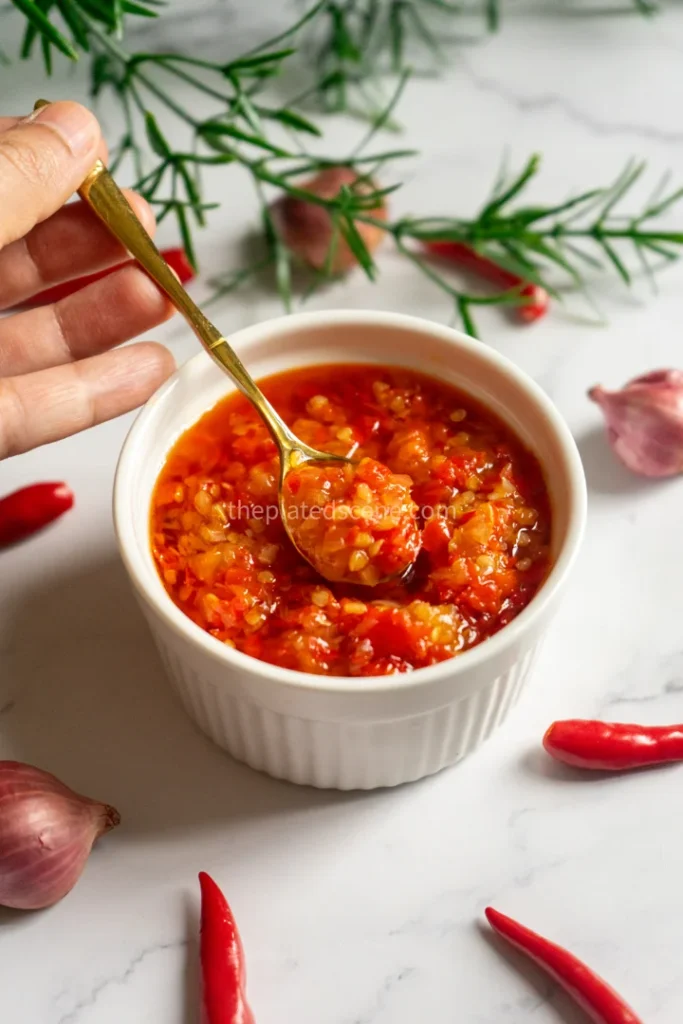
I remember this sambal as something that appeared almost casually on the table. It was never announced. It simply arrived next to rice, fried tempeh, or telur ceplok, still warm, still glistening with oil. Someone would say, “ada sambal bawang,” and that was enough. You knew the meal was about to be good.
What stayed with me was how intentional it looked, despite how simple it was. The chilies were never blended smooth. The garlic was never burned. The oil always smelled right. And there was always that one moment near the end, when a little water went into the pan. Not much. Just enough to hiss and steam before disappearing again.
As a child, I never questioned it. As an adult, I started noticing how that small step changed everything. The sambal tasted less harsh, less oily, more complete. The heat lingered instead of shouting. It made sense in a way that only kitchen habits do, learned through repetition rather than explanation.
This version of sambal bawang comes from that memory. It is still simple. Still bold. But it takes its time. The garlic perfumes the oil. The chilies and shallots soften properly. The water has its brief moment, then steps aside.
It is not a sambal meant to impress. It is a sambal meant to be eaten with rice, with your fingers, without thinking too much. The kind that makes you reach for one more spoonful even when you are already full.
And maybe that is exactly why it deserves to be written down.
Table of Contents
What Is Sambal Bawang
Sambal bawang is one of the most familiar sambals in Indonesian home cooking, yet it rarely comes with a formal introduction. It is simply understood. If there is rice, something fried, and a small bowl of sambal bawang on the table, the meal already feels complete.
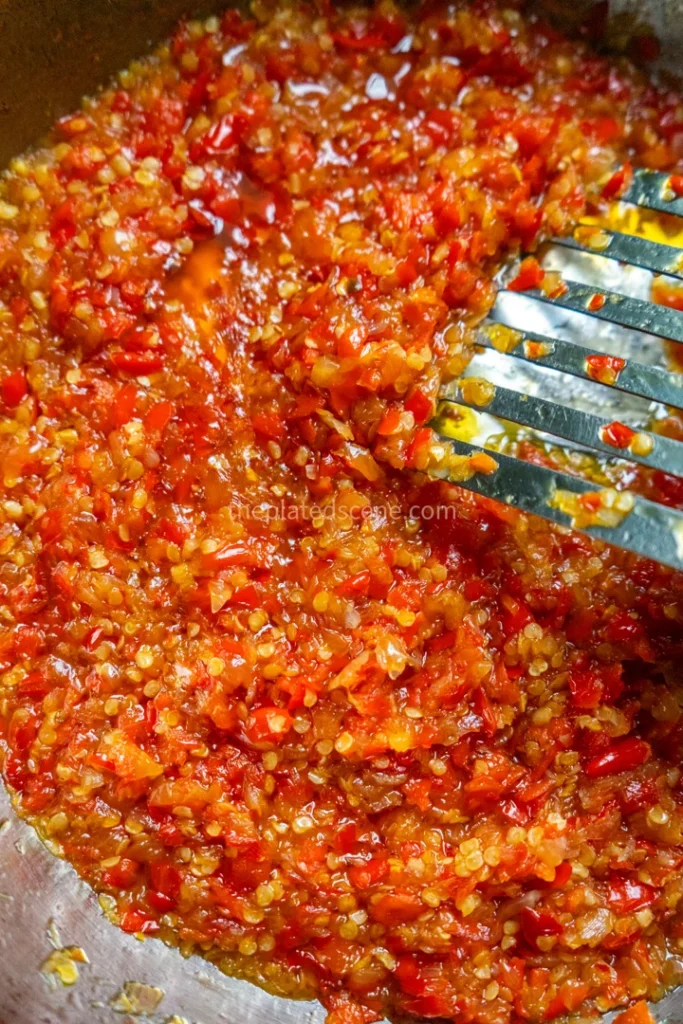
At its core, sambal bawang is a chili and shallot sambal. Bird’s eye chilies bring sharp heat, while shallots add sweetness and body. Garlic plays a quieter role here, not as the main flavor, but as a background note, often used to perfume the oil rather than dominate the sambal itself.
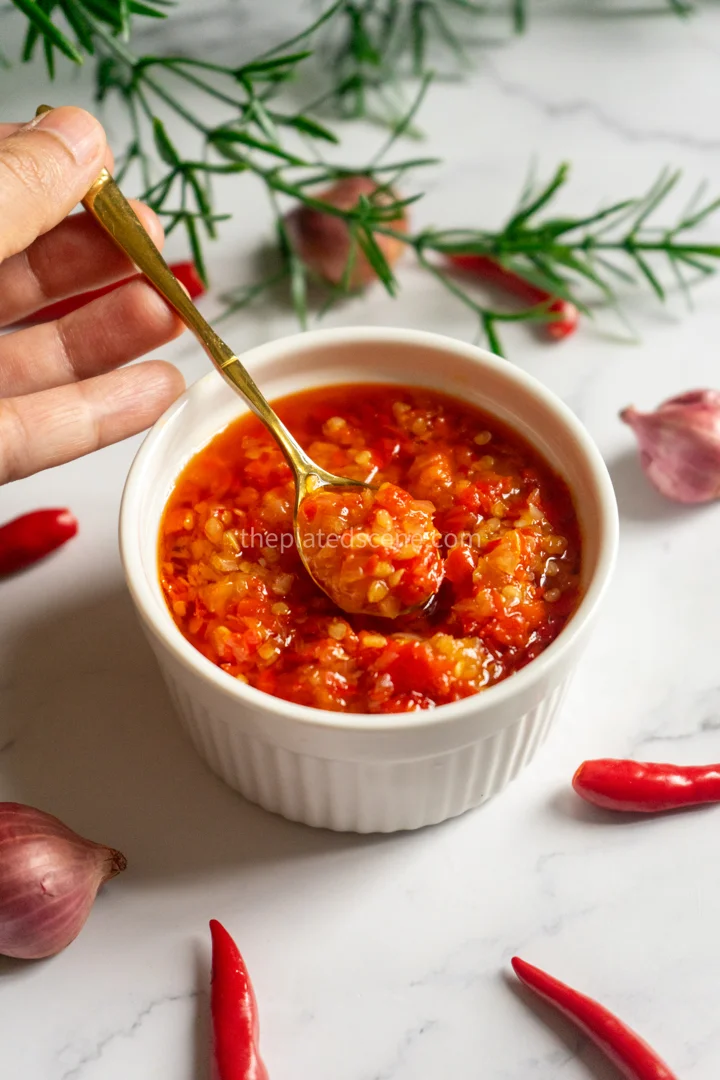
Unlike sambals that rely on many spices or long cooking times, sambal bawang is about restraint. The ingredients are few, and the technique does most of the work. The chilies are not blended smooth, the shallots are cooked just until soft, and the oil is handled carefully so it carries aroma without heaviness.
You will find sambal bawang served in many forms. Sometimes it is raw and finished with hot oil. Sometimes, like in this version, it is gently cooked so the heat feels rounder and the flavors more cohesive. Both are recognizably sambal bawang, shaped by household habits rather than strict rules.
More than anything, sambal bawang is a sambal you eat instinctively. It is not meant to impress or stand alone. It exists to make simple food better, one spoonful at a time.
About the Garlic
If you are used to blending garlic directly into sambal, this step might feel a little unexpected. In this sambal bawang, the garlic is treated differently on purpose.
Instead of blending it together with the chilies and shallots, the garlic is lightly smashed and fried first. This allows the garlic to release its aroma slowly into the oil. The oil becomes fragrant, warm, and savory before any chilies go into the pan.
Once the garlic has done its job, it is removed. This prevents it from burning or turning bitter as the sambal continues to cook. Garlic cooks much faster than chilies and shallots, and leaving it in the pan for too long can overpower the sambal or give it a harsh edge.
By taking the garlic out, the sambal keeps its focus where it belongs. On the heat of the chilies and the natural sweetness of the shallots. The garlic stays present, but gently, woven into the background through the oil rather than sitting loudly in every bite.
This method creates a sambal bawang that is aromatic without being garlicky, bold without feeling heavy. It is a small choice, but it changes the character of the sambal in a quiet, intentional way.
If you prefer a stronger garlic presence, you can always add some of the fried garlic back in at the end. But for this version, letting the garlic speak through the oil keeps the sambal clean, balanced, and easy to eat.
Why Add Water at the End
Adding water at the end of making sambal bawang might sound counterintuitive. After all, sambal is about intensity. Heat, oil, and aroma. Why would you soften it with water?
But this small step is one of those quiet kitchen habits that makes a big difference, especially in a cooked sambal like this one.
When chilies are sautéed in oil, they release a lot of their heat quickly, but parts of them can still taste sharp or slightly raw, especially bird’s eye chilies. Adding a little water creates steam in the pan, which helps the chilies cook evenly from the inside out. The heat becomes rounder and more comfortable, without losing its punch.
Water also helps bring the sambal together. Instead of feeling oily and separated, the chili, shallot, and garlic flavors briefly loosen and mingle. It gives the sambal a moment to calm down, so everything tastes more cohesive rather than loud in different directions.
Then comes the important part. The water is not meant to stay. By continuing to cook until it evaporates, you keep all the flavor while improving the texture. The sambal thickens again, but now it feels smoother, lighter, and more balanced. It clings better to rice and fried food, instead of sitting heavily in oil.
This is not about diluting heat or making sambal polite. It is about giving the sambal a chance to finish cooking properly and taste complete. A small pause in the process, just long enough to let everything come together before it is reduced back down.
It is a simple step, but once you try it, the difference is hard to ignore.
The Ingredients, Explained
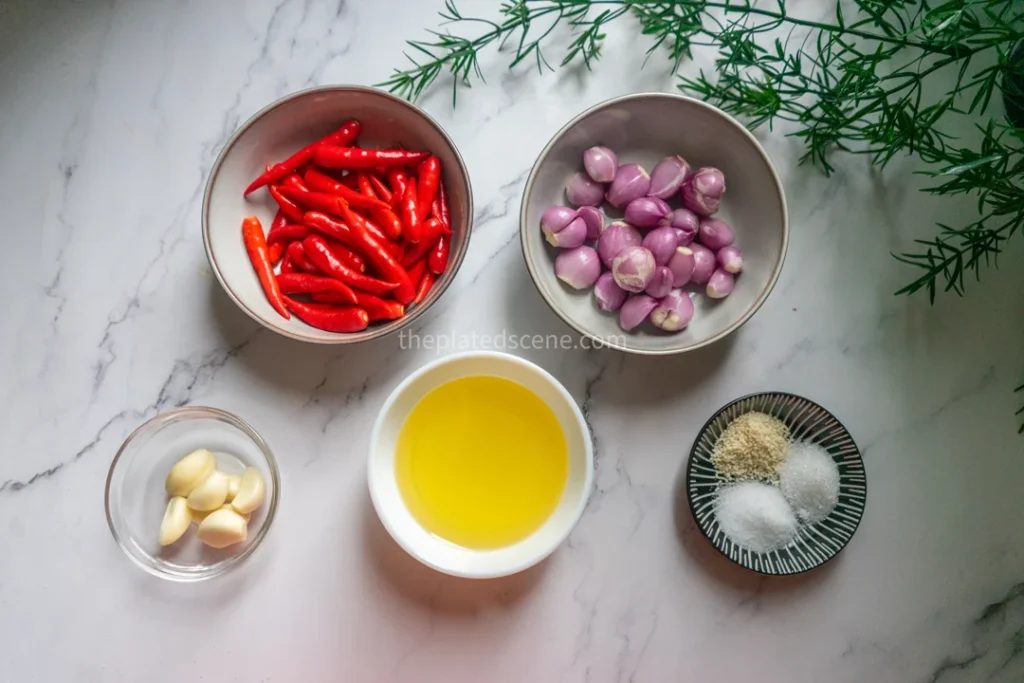
Sambal bawang uses very few ingredients, which means every one of them has a clear purpose. There are no supporting spices to hide behind. What you taste is exactly what goes into the pan.
Bird’s eye chilies
These chilies form the backbone of the sambal. Small but powerful, they deliver a sharp, direct heat that defines sambal bawang. Blending them coarsely keeps the sambal lively and textured, instead of turning it into a smooth paste.
Shallots
Shallots soften the heat of the chilies and give the sambal its body. When cooked, they become gently sweet and slightly jammy, helping the sambal feel rounded and comforting rather than harsh.
Garlic
Garlic is used here for aroma, not dominance. By smashing and frying it first, the garlic releases its fragrance into the oil. Removing it afterward prevents bitterness and keeps the sambal focused on chili and shallot, with garlic quietly supporting in the background.
Neutral cooking oil
The oil carries flavor and aroma. It absorbs the garlic’s fragrance and helps cook the chilies and shallots evenly. A neutral oil keeps the sambal clean and lets the main ingredients speak for themselves.
Water
Water is added briefly at the end to help the chilies cook through and to bring the sambal together. It softens any remaining raw edge and balances the oil before being fully evaporated, improving texture without diluting flavor.
Salt
Salt sharpens everything. It intensifies the chili heat and enhances the natural sweetness of the shallots. In a sambal this simple, proper salting is essential.
Sugar
Just a small amount of sugar rounds out the heat. It does not make the sambal sweet, but it smooths the edges and balances the sharpness of the chilies and garlic.
Mushroom stock
Mushroom stock adds depth and savoriness without overpowering the sambal. It supports the chili and shallot flavors quietly, giving the sambal a fuller, more satisfying taste without changing its character.
What to Serve with Sambal Bawang
Sambal bawang shines when paired with familiar, comforting dishes. Foods that are gently seasoned, coconut-based, or fried give the sambal space to do what it does best. Add heat, aroma, and contrast.
Here are some dishes from The Plated Scene that pair especially well:
Nasi Kuning
The richness of coconut milk and turmeric in nasi kuning welcomes something sharp on the side. Sambal bawang cuts through the creaminess and keeps each bite bright and balanced.
Ayam Goreng Lengkuas
Crispy chicken coated in fragrant galangal crumbs pairs beautifully with sambal bawang. The heat lifts the savory notes and keeps the fried chicken from feeling too heavy.
Tempe Tahu Bacem
Sweet, braised tempeh and tofu need something bold to offset their caramelized flavors. Sambal bawang adds just enough bite to bring the dish back into balance.
Sayur Bening Bayam
This clear, delicate spinach soup may seem simple, but a spoon of sambal bawang on the side transforms it completely. The contrast between light broth and spicy sambal is deeply comforting.
Terik Tahu Tempe
The mild coconut gravy in terik tahu tempe is the perfect backdrop for sambal bawang. The sambal cuts through the richness and adds dimension without overwhelming the dish.
Satay Ayam
Grilled chicken skewers become even more satisfying with sambal bawang on the side. The heat complements the smoky, savory notes of the satay and keeps each bite lively.
Sambal bawang does not dominate the plate. It moves quietly between dishes, lifting flavors and tying everything together, one spoonful at a time.
How to Store Sambal Bawang
Let the sambal bawang cool completely before storing. This prevents condensation, which can affect both texture and shelf life.
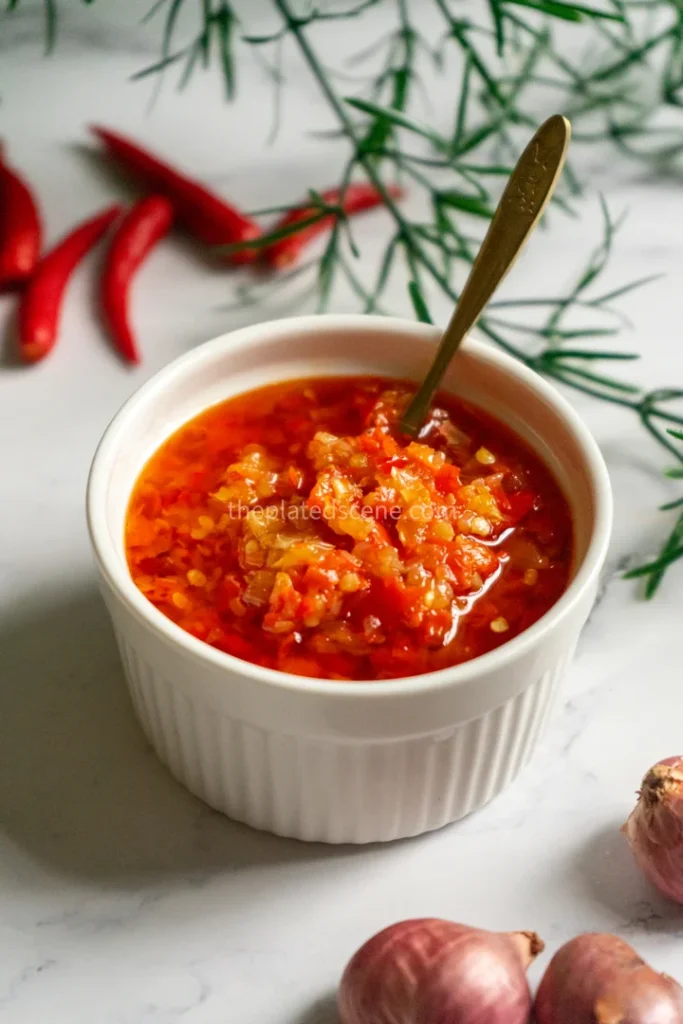
Once cooled, transfer the sambal into a clean, airtight glass jar or container. Stored in the refrigerator, this cooked sambal bawang can last for up to 2 weeks. Because the sambal is fully cooked and the water is evaporated at the end, it is more stable than raw sambal.
Always use a clean, dry spoon when taking sambal from the jar. This small habit goes a long way in keeping it fresh.
For longer storage, sambal bawang can also be frozen. Portion it into small containers or freezer-safe jars so you only thaw what you need. Frozen sambal bawang keeps well for up to 2 months.
To use, thaw overnight in the refrigerator or warm it gently in a pan over low heat. If needed, add a small splash of water or oil to bring it back to the right consistency.
This makes sambal bawang an easy make-ahead condiment, ready whenever a simple meal needs a little heat and comfort.
Sambal Bawang: 5 Simple Steps to a Deeply Flavorful Chili and Shallot Sambal
10
servings15
minutes25
minutes40
minutesKeep the screen of your device on
Ingredients
3.5 ounces 100 g shallots
3.5 ounces 100 g bird’s eye chilies
1 oz 25 g garlic
2 teaspoons 2 tsp salt
2 teaspoons 2 tsp mushroom stock powder
1 teaspoon 1 tsp sugar
1/3 cup 100 ml neutral cooking oil
3/4 cup 200 ml water
Directions
- Blend the chilies and shallots
Blend the bird’s eye chilies until coarse, then blend the shallots separately, also until coarse. Do not blend them together and do not blend them smooth. Keeping them separate helps you control texture and ensures both ingredients cook evenly later. The sambal should look rustic, with visible bits of chili and shallot rather than a paste. Set both aside. - Smash the garlic
Place the garlic cloves on a cutting board and lightly smash them using the side of a knife or a mortar. You only want to crack the cloves open. This allows the garlic to release its aroma gently into the oil without breaking it down too much, which can make the sambal taste sharp or bitter. - Infuse the oil with garlic
Heat the cooking oil in a pan over medium heat. Once the oil is warm, add the smashed garlic. Fry the garlic slowly until it is cooked and fragrant. The garlic should turn lightly golden, not brown. Stir gently and watch closely, as garlic cooks quickly. When the aroma is released, remove the garlic from the pan. Leaving it in would cause it to burn once the sambal cooks further. The oil should now smell distinctly garlicky. - Cook the chilies and shallots
Carefully add the blended chilies and shallots to the garlic-infused oil. Stir well to coat them evenly. Cook over medium heat, stirring regularly. As they cook, the chilies will soften and the shallots will turn translucent. The mixture may splatter slightly, so keep the heat controlled. This stage builds the base flavor of the sambal. Take your time and let the ingredients soften properly. - Add the seasoning
Once the chilies are soft and the shallots are fully translucent, add the salt, mushroom stock powder, and sugar. Stir well so the seasoning dissolves evenly. At this point, the sambal will start to smell deeper and more rounded. Taste and adjust seasoning if needed. - Add water and finish cooking
Pour in the water and mix thoroughly. The sambal will loosen and look lighter in texture. Continue cooking over medium heat, stirring occasionally, until the water fully evaporates. This step allows the chilies to cook through evenly and brings all the flavors together. As the water disappears, the sambal will thicken again and look glossy but not oily. This is the final texture you are aiming for. - Cool and store
Remove the sambal from the heat and let it cool completely in the pan.
A Note on the Ratios
- This recipe uses equal parts shallots and chilies to create a sambal that is fiery but not one-dimensional. The shallots soften and sweeten as they cook, balancing the sharp heat of the chilies.
The garlic is kept separate and used to infuse the oil, so a smaller amount is enough. Seasoning is intentionally simple, relying on salt, a touch of sugar, and mushroom stock for depth without overpowering the sambal.
The water may seem generous, but it is fully evaporated by the end. It allows the chilies to soften properly and helps the sambal come together before reducing back down to a thick, concentrated paste.

