

Jeruk nipis, known in English as key lime, is the citrus that gives Indonesian dishes their sparkle. A quick squeeze over fried fish, a spoonful in sambal, or a drizzle on noodles is often all it takes to wake up a dish. Its sharp, fragrant acidity balances the heat of chili and the richness of coconut milk, turning bold flavors into something clean and refreshing.
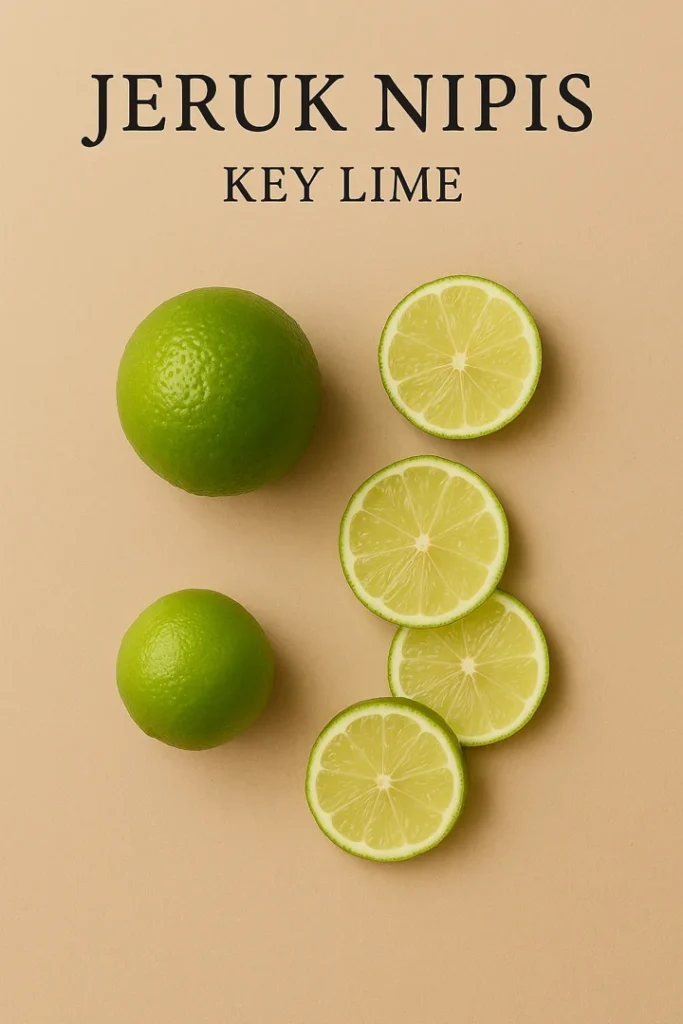
Table of Contents
What is Jeruk Nipis?
Jeruk nipis comes from the Citrus aurantiifolia tree, a small, round lime native to tropical Southeast Asia. The fruit is usually about the size of a golf ball, with thin green skin that turns yellow as it ripens. The flesh is juicy and intensely sour with a fragrant aroma that sets it apart from regular limes or lemons.
In Indonesia, jeruk nipis is everywhere — from household kitchens to street stalls. It is squeezed over grilled seafood, used in herbal drinks, stirred into dipping sauces, or mixed into sambal to add brightness. Its juice cuts through oil and spice, leaving food tasting lighter and more balanced.
Aroma and Flavor
The aroma of jeruk nipis is lively, floral, and citrusy, with a subtle bitterness in the rind. When freshly cut, it releases a burst of refreshing scent that feels instantly clean.
The flavor is sharp and sour with a hint of sweetness, more intense than regular lime but less biting than lemon. It gives an immediate burst of acidity that balances rich or spicy food. Unlike lemon, which is crisp and bright, key lime has a deeper, more aromatic sourness that lingers softly.
Jeruk nipis is not just about sourness — it’s about balance. It brings harmony to complex dishes, softens strong spices, and enhances aroma.
How It’s Used in Indonesian Cooking
Jeruk nipis is one of the most versatile ingredients in Indonesian kitchens. It can be used raw, squeezed, or cooked.
- Sambal Matah and Sambal Bajak: Adds freshness and brightness that rounds out chili and shallots.
- Soto Ayam and Bakso: A few drops before eating give a clean, zesty finish to the broth.
- Ikan Bakar and Ayam Goreng: Squeezed on top to cut through oil and smoke.
- Udang Goreng Mayones: Adds citrus balance to creamy mayonnaise sauce, keeping the dish rich but not heavy.
- Jamu and Herbal Drinks: Mixed with honey or turmeric for a cooling, cleansing flavor.
- Nasi Goreng and Mie Goreng: A final squeeze at the end enhances aroma and cuts oiliness.
It is often paired with shallots, chili, and palm sugar in sambal or dipping sauces, where its acidity acts as the perfect finishing touch.
Physical Comparison with Similar Citrus
| Citrus | Appearance | Flavor | Used For | Key Difference |
|---|---|---|---|---|
| Jeruk Nipis (Key Lime) | Small round green fruit | Sharp, floral, aromatic | Sambal, soups, grilled food | More aromatic and sour than lemon |
| Jeruk Limo (Kaffir Lime) | Round green fruit with bumpy skin | Bitter, aromatic | Sambal, curry paste | Strong rind fragrance, less juicy |
| Jeruk Lemon (Lemon) | Large oval yellow fruit | Bright, crisp, acidic | Western-influenced dishes | Less aromatic, more tart |
| Jeruk Purut (Kaffir Lime Leaf) | Glossy, double-lobed leaf | Citrus, floral | Curries, soups | Used for fragrance, not juice |
| Jeruk Bali (Pomelo) | Large thick-skinned fruit | Mild, sweet, less sour | Salads, desserts | Light and refreshing, not tart |
Cooking Tips
- Juicing: Roll the fruit before cutting to release more juice. Use a fine strainer to catch seeds.
- Timing: Add lime juice only at the end of cooking to preserve its aroma and acidity.
- Pairing: Works beautifully with chili, fried garlic, and soy sauce in dipping sauces.
- Storage: Keep at room temperature for up to a week, or refrigerate for longer freshness.
- Zest: The rind is fragrant but slightly bitter, best used in small amounts for marinades or dressings.
If You Can’t Find It
If jeruk nipis is unavailable, substitute with regular lime or lemon with a few drops of vinegar to mimic its sharper acidity.
- For savory dishes like soto or ikan bakar, use 1 tablespoon regular lime juice + ½ teaspoon rice vinegar to bring out brightness.
- For sambal, mix lime juice with a little grated zest to add aroma closer to key lime.
- Avoid bottled lime juice as it lacks the fragrance and freshness of fresh jeruk nipis.
