

Bawang putih, known in English as garlic, is the soul of Indonesian cooking. It is often the first thing that hits the pan, sizzling in oil until golden and fragrant. That familiar aroma is the foundation of countless Indonesian dishes, a scent that signals comfort, warmth, and home.
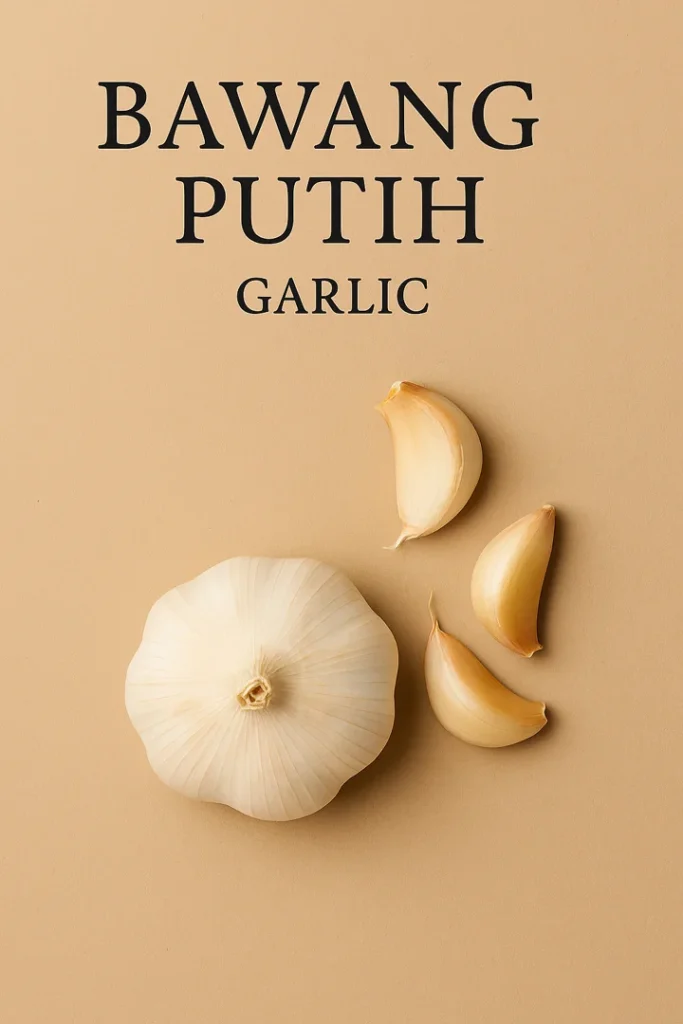
Table of Contents
What is Bawang Putih?
Bawang putih comes from the Allium sativum plant, part of the same family as onions and shallots. The bulb consists of several cloves covered in thin papery skin, each one holding a powerful mix of pungent aroma and savory flavor.
Garlic has been used in Indonesian kitchens for centuries, introduced through early trade and adapted into local cooking traditions. It is rarely the main star but always the quiet presence that gives depth and balance. Whether pounded into spice pastes, fried into crisp toppings, or used raw in sambal, it brings warmth and character to everything it touches.
Aroma and Flavor
The aroma of bawang putih is sharp, spicy, and slightly sweet when raw, but transforms completely when cooked. Once sautéed, it turns soft and nutty with a rich, caramelized fragrance that fills the kitchen.
The flavor is bold and savory, with a natural sweetness that deepens as it cooks. Raw garlic gives a sharp bite that wakes up sambal and marinades. Fried garlic adds crunch and toasty aroma. Blended garlic in bumbu provides umami depth that ties all the spices together.
Its strength lies in versatility. it can be fiery, comforting, or delicate depending on how it is used.
How It’s Used in Indonesian Cooking
Bawang putih appears in nearly every Indonesian dish, often paired with shallots (bawang merah) as the base of flavor. It can be fried, crushed, blended, or even fermented, depending on the recipe.
- Nasi Goreng and Mie Goreng: Crushed and fried until golden to give a smoky aroma.
- Bumbu Dasar Putih: Blended with shallots and candlenut for mild, creamy dishes like opor ayam.
- Sambal and Marinades: Used raw or lightly sautéed to add sharpness and heat.
- Sayur Lodeh and Soto: Enhances the broth with savory depth.
- Ayam Goreng and Tempe Bacem: Mixed into spice pastes or marinades for richness.
- Crispy Garlic Toppings: Fried slices sprinkled on noodles, rice, or soups for extra aroma and texture.
This aromatics is truly the heartbeat of the Indonesian kitchen. Its fragrance is the first sign that something good is cooking.
Physical Comparison with Similar Aromatics
| Ingredient | Appearance | Flavor | Used For | Key Difference |
|---|---|---|---|---|
| Bawang Putih (Garlic) | White bulb with multiple cloves | Pungent, savory, sweet when fried | Spice pastes, stir-fries, sambal | Strong and aromatic |
| Bawang Merah (Shallot) | Small purple bulb | Sweet, mild, aromatic | Fried toppings, stews, curries | Sweeter and less sharp |
| Bombay Onion | Large round bulb | Mild, slightly sweet | Soups, Western-inspired dishes | Juicier, lighter flavor |
| Lemongrass (Sereh) | Long, fibrous stalk | Fresh, lemony | Soups, curries | Herbal and citrusy |
| Ginger (Jahe) | Knobby root | Spicy, warm, earthy | Soups, drinks, marinades | Warmer, not pungent like garlic |
Cooking Tips
- Frying: Use medium heat to avoid burning. Garlic turns bitter if fried too long.
- Blending: Combine with shallots, candlenut, and oil for smooth spice pastes.
- Roasting: Whole roasted cloves become creamy and sweet, perfect for sauces.
- Storage: Keep bulbs in a cool, dry place. Do not refrigerate, as it may sprout faster.
- Balancing: If garlic flavor becomes too strong, add a bit of palm sugar or lime juice to soften it.
If You Can’t Find It
Fresh garlic is available almost everywhere, but if you need an alternative:
- Garlic paste or powder: Use half the amount, as these are more concentrated.
- Shallots or leeks: Add a milder, sweeter note when garlic is unavailable.
- Roasted garlic oil: Can replace minced garlic in fried rice or stir-fry for a more delicate aroma.
Avoid bottled “fried garlic” as a direct substitute for raw cloves; it lacks the same depth when cooked into bumbu.
