

Daun kari, known in English as curry leaves, are small but powerful leaves that bring a rich, savory aroma to Indonesian and Southeast Asian cooking. Drop them into hot oil and the fragrance rises instantly, nutty, herbal, and deeply comforting. It is the scent that marks the beginning of something delicious.
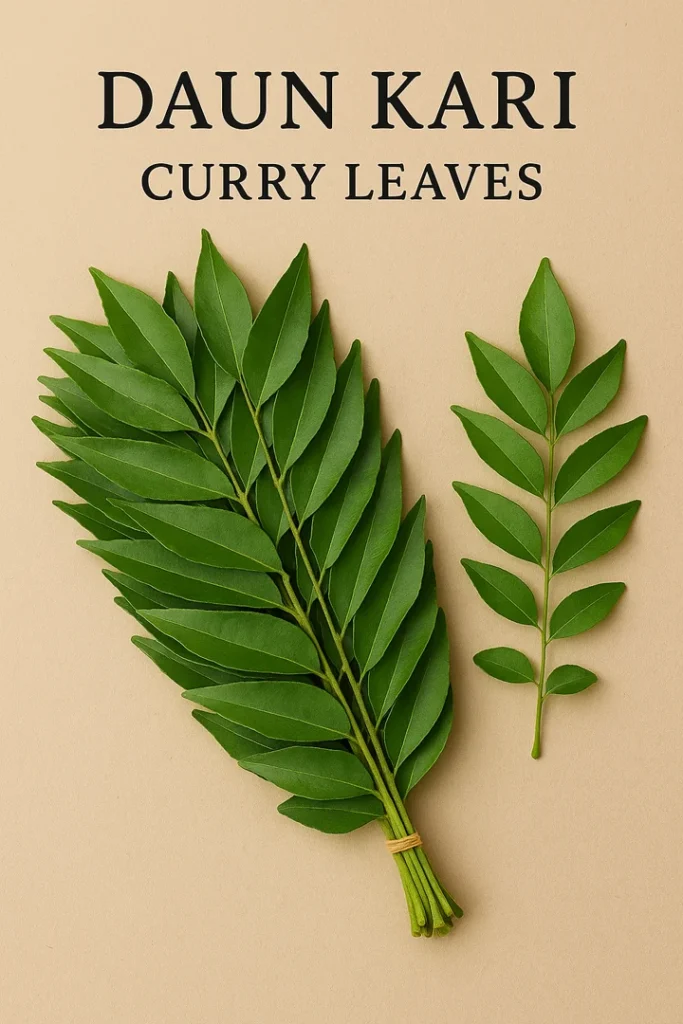
Table of Contents
What is Daun Kari?
Daun kari comes from the Murraya koenigii tree, native to South and Southeast Asia. The leaves are small, dark green, and glossy, growing in clusters along a slender stem. Each leaflet is thin and delicate, which allows its essential oils to release easily when fried.
While curry leaves are most common in South Indian and Sri Lankan cuisines, they have become a beloved part of Indonesian and Singapore-style dishes too. In Indonesia, they appear in curries, coconut-based stews, and modern recipes like salted egg chicken and cereal prawn, where their toasty, fragrant flavor complements buttery sauces perfectly.
Fresh leaves are ideal for cooking. Dried or frozen leaves can be used when fresh ones are not available, though they carry a milder aroma.
Aroma and Flavor
The aroma of daun kari is warm and savory with subtle citrus notes. When it hits hot oil, the scent transforms, becoming richer, nuttier, and slightly smoky. It feels cozy and homey, the kind of smell that fills the air and lingers pleasantly long after cooking.
The flavor is layered and gentle. It has a soft bitterness, mild sweetness, and a touch of lemony sharpness that brightens heavy or buttery dishes. Daun kari does not taste like curry powder; it gives depth and natural fragrance instead. In coconut-based stews, it adds warmth. In fried dishes, it brings a crisp, aromatic edge that makes every bite more fragrant.
How It’s Used in Indonesian Cooking
Daun kari is usually fried in oil or butter at the beginning of cooking to release its aroma. It infuses the dish from the base up and can also be crisped for garnish.
- Kari Ayam and Kari Kambing: Fried with shallots and spices to create the aromatic foundation of the curry.
- Gulai and Rendang Variations: Adds depth and warmth to coconut sauces.
- Salted Egg Chicken and Cereal Prawn: Fried in butter until crispy, releasing a nutty, buttery fragrance that makes the sauce irresistible.
- Sambal Daun Kari: A fragrant chili sambal where curry leaves are fried until crisp.
- Tempeh or Tofu Stir-Fry: Adds herbal aroma and mild bitterness to balance salty sauces.
In both traditional and modern cooking, daun kari gives richness without heaviness, the kind of aroma that makes a dish feel indulgent and comforting.
Physical Comparison with Similar Herbs
| Herb | Appearance | Flavor | Used For | Key Difference |
|---|---|---|---|---|
| Daun Kari (Curry Leaf) | Small, glossy green leaflets | Savory, nutty, citrusy | Curries, fried dishes, sambal | Distinct toasty aroma when fried |
| Daun Jeruk (Lime Leaf) | Double-lobed glossy leaf | Bright, citrusy, floral | Curries, sambal, soups | Lighter and more citrusy |
| Daun Salam (Indonesian Bay Leaf) | Smooth, matte green leaf | Mild, woody | Stews, rice, soups | Earthier and less fragrant |
| Daun Kemangi (Lemon Basil) | Small, pointed green leaves | Sweet, herbal, lemony | Sambal, grilled dishes | Fresher and sweeter |
| Daun Kunyit (Turmeric Leaf) | Broad, smooth green leaf | Earthy, floral | Curries, rice, coconut stews | Deeper and more herbal aroma |
Cooking Tips
- Fry daun kari briefly in oil or butter to release its aroma. The hot fat carries the fragrance through the whole dish.
- For modern dishes like salted egg chicken or cereal prawn, fry until crisp for added texture and fragrance.
- Combine with butter, chili, curry powder, and salted egg yolk for rich sauces.
- About 10 to 15 leaves are enough for one dish.
- Keep fresh leaves refrigerated in an airtight container or freeze them to preserve aroma.
If You Can’t Find It
Substitute with lime zest and a few basil leaves to bring freshness and mild citrus aroma. The flavor will not be as nutty or deep, but it still adds life to the dish.
