

Lada putih, known in English as white pepper, is one of the most familiar spices in Indonesian cooking. A small pinch is all it takes to wake up a dish. It brings warmth that feels immediate and clean, the kind that lingers on the tongue rather than burns. In every household kitchen, there is always a small jar of the ground version within reach.
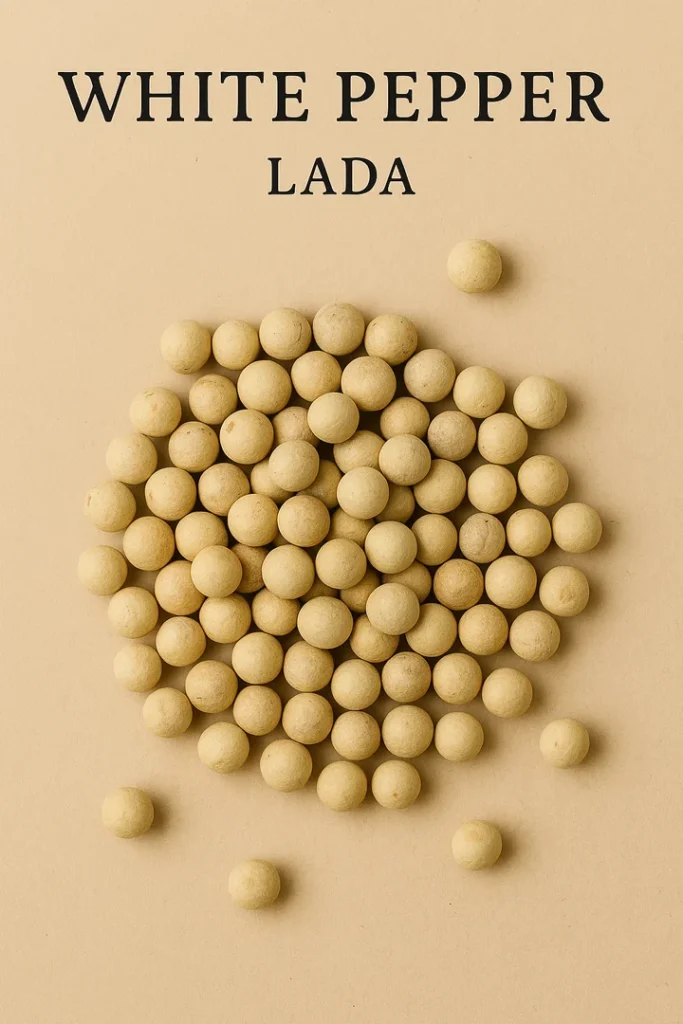
Table of Contents
What is Lada Putih?
Lada putih comes from the same fruit as black pepper (Piper nigrum). The difference lies in the processing. White pepper is made by soaking fully ripe pepper berries to remove the dark outer skin, leaving behind the pale, smooth inner seed. The result is a milder yet more penetrating spice with a sharper aroma.
Indonesia, especially Bangka Island and Lampung in Sumatra, is one of the world’s largest producers of this spice. Locally, it is prized for its distinct pungency and clean heat that blends easily into soups, sauces, and spice pastes.
Aroma and Flavor
The aroma of this spice is sharp, earthy, and slightly fermented, with a clean finish. It is less floral than black pepper and carries a hint of mustiness that deepens as it cooks. When ground fresh, it gives off a savory scent that instantly signals warmth.
The flavor starts mild and builds gradually, leaving a dry, tingling heat on the tongue. It is peppery but not fiery, and its sharpness cuts beautifully through rich or creamy sauces. In comparison, black pepper feels more floral and robust, while white pepper tastes simpler, leaner, and more focused.
Because of its subtle flavor, lada putih is often used where color and clarity matter. It keeps coconut milk, soups, and sauces bright while still adding depth.
How It’s Used in Indonesian Cooking
This spice is a staple spice that appears in nearly every part of Indonesian cuisine, from clear soups to deep-fried snacks.
- Bakso and Soto Ayam: Gives the broth its signature peppery warmth without darkening the soup.
- Nasi Goreng and Capcay: Adds gentle heat and aroma to stir-fried rice and vegetables.
- Opor and Sayur Lodeh: Balances the creaminess of coconut milk with clean sharpness.
- Ayam Goreng and Ikan Goreng: Mixed into marinades with garlic, coriander, and salt for subtle spice.
- Perkedel and Tahu Isi: Enhances the savory taste of fried snacks.
It also forms the base of many bumbu dasar putih (white spice pastes), where it pairs beautifully with garlic, shallots, and candlenut.
Physical Comparison with Similar Peppers
| Pepper | Appearance | Flavor | Used For | Key Difference |
|---|---|---|---|---|
| Lada Putih (White Pepper) | Smooth, pale seed | Sharp, earthy, clean heat | Soups, stir-fries, marinades | Sharper and more neutral than black pepper |
| Lada Hitam (Black Pepper) | Wrinkled, dark seed | Floral, bold, smoky | Grilled dishes, sauces | More aromatic and complex |
| Cabe Putih (White Chili) | Pale green or yellow chili | Hot, bright, fresh | Sambal, stir-fries | Spicier, not earthy |
| Lada Sichuan (Sichuan Peppercorn) | Reddish husks | Citrusy, numbing | Chinese cuisine | Tingling heat, not true pepper |
| Jinten (Cumin) | Thin brown seed | Earthy, smoky | Stews, curries | Warm but not peppery |
Cooking Tips
- Toasting: Toast whole white peppercorns briefly to deepen their aroma before grinding.
- Grinding: Grind only what you need, as white pepper loses fragrance quickly.
- Pairing: Works best with garlic, shallots, and coriander in soups and fried dishes.
- Usage: Use sparingly. White pepper’s sharpness can overpower if added too much.
- Storage: Keep in an airtight jar, away from sunlight and moisture, to preserve freshness.
If You Can’t Find It
You can use black pepper as a substitute, though the flavor will be bolder and more floral. To maintain a lighter color in white sauces or soups, mix a small amount of ground black pepper with a pinch of coriander powder.
