

Daun jeruk, known in English as kaffir lime leaf or lime leaf, brings brightness and life to Indonesian food. Tear one gently, and a burst of citrus fills the air, sharp but floral, clean yet comforting. It is a fragrance that feels like sunlight in the kitchen, crisp and unmistakably Indonesian.
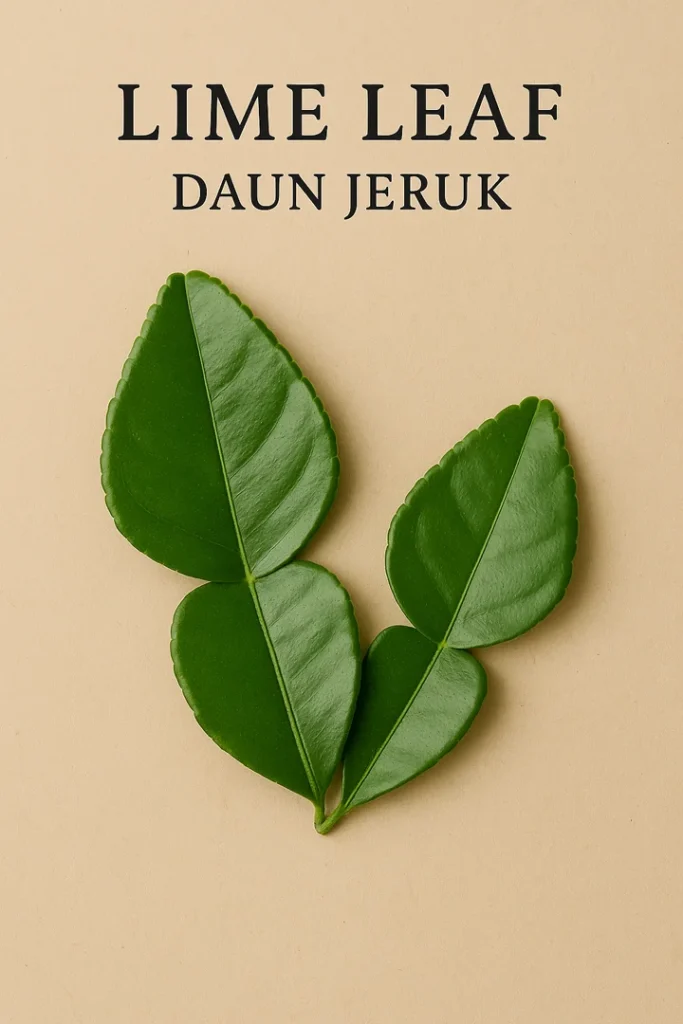
Table of Contents
What is Daun Jeruk?
Daun jeruk comes from the Citrus hystrix tree, a type of lime native to Southeast Asia. The leaves are glossy, dark green, and double-lobed, as if two leaves were joined tip to tip. Both the leaves and the rind of the fruit are used in cooking, but the leaves are the real stars in everyday Indonesian kitchens.
You can find them fresh, frozen, or dried. Fresh leaves are preferred for their vibrant aroma, while dried ones are softer and milder. When fresh leaves are unavailable, frozen ones retain their scent best.
Aroma and Flavor
The aroma of daun jeruk is sharp, clean, and citrusy with a delicate floral undertone. It smells like lime zest mixed with lemongrass and a hint of spice. The fragrance wakes up even the simplest dish, whether it is coconut milk simmering on the stove or sambal being stirred in a hot pan.
The flavor is bright and slightly bitter, with a lingering citrus note that cuts through oil and richness. When added whole, it perfumes the sauce gently. When finely sliced or crushed, it releases an intense burst of lime flavor that instantly refreshes the palate. Daun jeruk works like salt in the world of aroma — not dominant, but essential.
How It’s Used in Indonesian Cooking
Daun jeruk appears in all kinds of Indonesian dishes, from stews and soups to chili-based sambal. It can make rich food taste lighter and spicy food taste more fragrant.
- Telor Balado and Terong Balado: Gives sambal a citrus lift that balances the heat of chili.
- Bumbu Pecel: Adds a fragrant note to the peanut sauce, cutting through the richness of roasted nuts.
- Rendang and Gulai: Refreshes the coconut milk base and balances heavy spices.
- Soto Ayam and Sayur Asem: Brightens the broth with a clean, fresh note.
- Pepes and Tumisan: Mixed into banana leaf parcels or stir-fried spice bases for aroma.
- Nasi Uduk and Nasi Liwet: Infuses the rice with a delicate lime scent.
It pairs naturally with lemongrass, galangal, and bay leaf (daun salam), forming the foundation of many Indonesian spice bases.
Physical Comparison with Similar Herbs
| Herb | Appearance | Flavor | Used For | Key Difference |
|---|---|---|---|---|
| Daun Jeruk (Lime Leaf) | Glossy, double-lobed green leaf | Sharp, citrusy, floral | Curries, sambal, stir-fries | Strong lime aroma, slightly bitter |
| Daun Salam (Indonesian Bay Leaf) | Smooth, single green leaf | Mild, woody | Stews, rice, soups | Earthier, less fragrant |
| Daun Pandan (Pandan Leaf) | Long, narrow green leaf | Sweet, grassy | Desserts, rice | Sweet and floral, not citrusy |
| Sereh (Lemongrass) | Tall, fibrous stalk | Fresh, lemony | Curries, soups | Softer and more herbal |
Cooking Tips
- How to use: Add whole leaves to curries and soups, or slice thinly into sambal and stir-fries. Remove before serving unless finely chopped.
- Pairing: Combine with lemongrass, galangal, and chili for a balanced flavor base.
- Storage: Wrap fresh leaves in paper towels and store in the fridge for up to a week, or freeze them in small portions.
- Dried leaves: Soak briefly in warm water before cooking to revive their fragrance.
If You Can’t Find It
Substitute with lime zest and a bit of lemongrass for a similar aroma. The scent will be lighter, but it will still bring freshness to your dish.
