

Kemiri, known in English as candlenut, is the quiet builder of body and richness in Indonesian cooking. Grind it raw and it feels oily under your fingers. Toast it and a soft, nutty aroma fills the kitchen, gentle, buttery, and slightly earthy. Every time a bumbu turns silky and thick, kemiri is usually the reason.
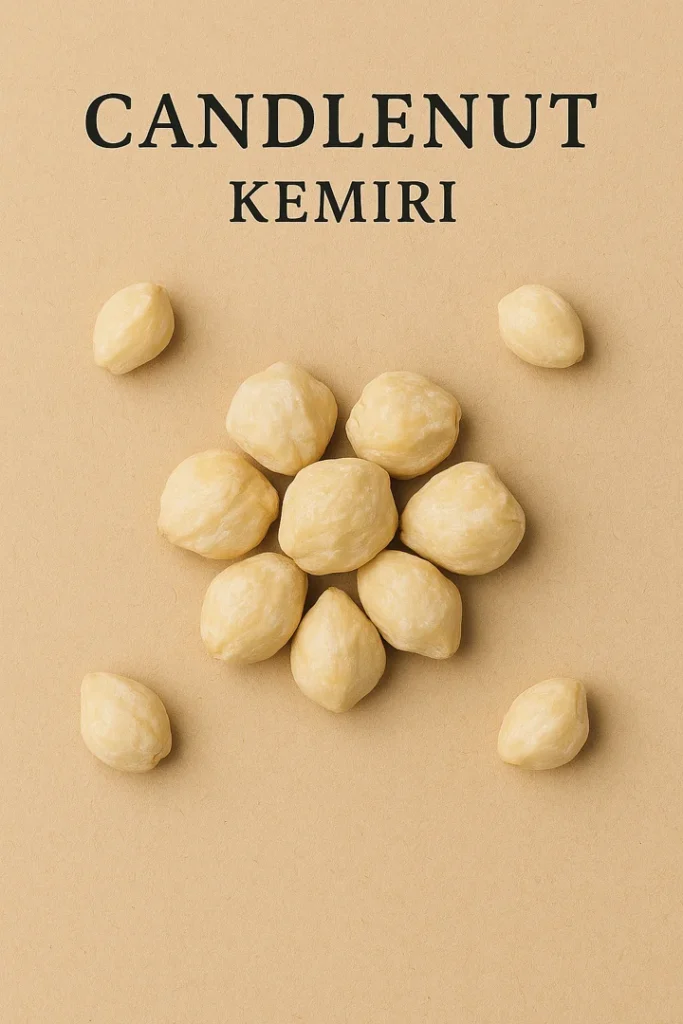
Table of Contents
What is Kemiri?
Kemiri comes from the Aleurites moluccanus tree, which grows widely across Indonesia and other tropical regions. The nuts are round, ivory-colored, and hard-shelled, similar in shape to macadamia but not safe to eat raw. They contain natural oils that are mildly toxic when uncooked, so this herbs must always be roasted or fried before use. Once cooked, it becomes soft, aromatic, and richly flavorful.
In Indonesian cooking, kemiri is blended into bumbu dasar, the essential spice pastes that form the base of countless dishes. Its high oil content gives sauces a creamy, cohesive texture while its subtle flavor allows other spices to shine.
Aroma and Flavor
The aroma of kemiri is soft, warm, and deeply comforting. When raw, it smells faintly woody and nutty, almost like fresh coconut shell. Once toasted, the transformation is instant. The scent turns richer and sweeter, with a delicate hint of roasted peanut, butter, and mild caramel. Some cooks say the smell feels “fatty,” not in a heavy way, but in the same satisfying way warm oil perfumes a kitchen.
The flavor of kemiri is mild, smooth, and slightly creamy. There is a gentle sweetness at first, followed by a nutty finish that lingers without bitterness. When ground into spice pastes, it creates a full, round mouthfeel that ties all the sharp flavors together.
It does not stand out on its own but acts as a unifier. Chili becomes less aggressive, garlic tastes softer, and coconut milk feels richer. Kemiri adds warmth without spice, depth without salt, and thickness without cream. Its taste is subtle but unmistakable — the kind of flavor you only notice when it is missing.
How It’s Used in Indonesian Cooking
Kemiri is a foundation ingredient in traditional Indonesian bumbu. Almost every region uses it to thicken and mellow strong spice blends.
- Opor Ayam and Kari Ayam: Gives coconut-based sauces a creamy body and smooth mouthfeel.
- Rendang and Gulai: Helps the spices cling to the meat while adding richness.
- Sambal Goreng and Tumisan: Balances the sharpness of chili and garlic.
- Pecel and Satay Sauces: Adds nutty depth to peanut-based dressings.
- Sayur Lodeh: Contributes a subtle round texture to vegetable stews.
Kemiri also appears in many fried spice blends and traditional sambal recipes where it gives weight and balance.
Physical Comparison with Similar Ingredients
| Ingredient | Appearance | Flavor | Used For | Key Difference |
|---|---|---|---|---|
| Kemiri (Candlenut) | Round, ivory-colored nut | Mild, creamy, nutty | Spice pastes, stews, sauces | Adds texture and oiliness, not strong flavor |
| Kacang Tanah (Peanut) | Small, reddish nut | Sweet, earthy, nutty | Sauces, snacks | Stronger taste, less oil |
| Macadamia Nut | Round, cream-colored nut | Buttery, mild | Desserts, sauces | Similar texture but sweeter |
| Almond | Oval, light brown nut | Nutty, slightly bitter | Snacks, baking | Drier and crunchier |
| Kelapa (Coconut) | White grated flesh | Sweet, tropical | Curries, desserts | Adds flavor and aroma, not thickness |
Cooking Tips
- Always toast or fry before use. Raw kemiri is mildly toxic. Toast until golden or fry until lightly browned to remove bitterness.
- Grind with shallots, garlic, and other spices to create a smooth paste.
- Substitute with macadamia nuts if it is not available. The flavor will be slightly sweeter but the texture similar.
- Use about three to five nuts per dish to add body without making the paste too oily.
- Store whole nuts in an airtight jar in a cool, dark place. Ground kemiri should be used within a week.
If You Can’t Find It
Replace it with macadamia nuts or blanched almonds mixed with a little oil. The texture will be similar, though the nutty flavor will be stronger.
