

Daun salam, or Indonesian bay leaf, is one of those ingredients that quietly defines the taste of home. Slip a few leaves into coconut milk, soup, or rice, and the whole kitchen smells instantly familiar: soft, woody, and comforting. It is never the loudest aroma in the pot, yet without it, something always feels incomplete.
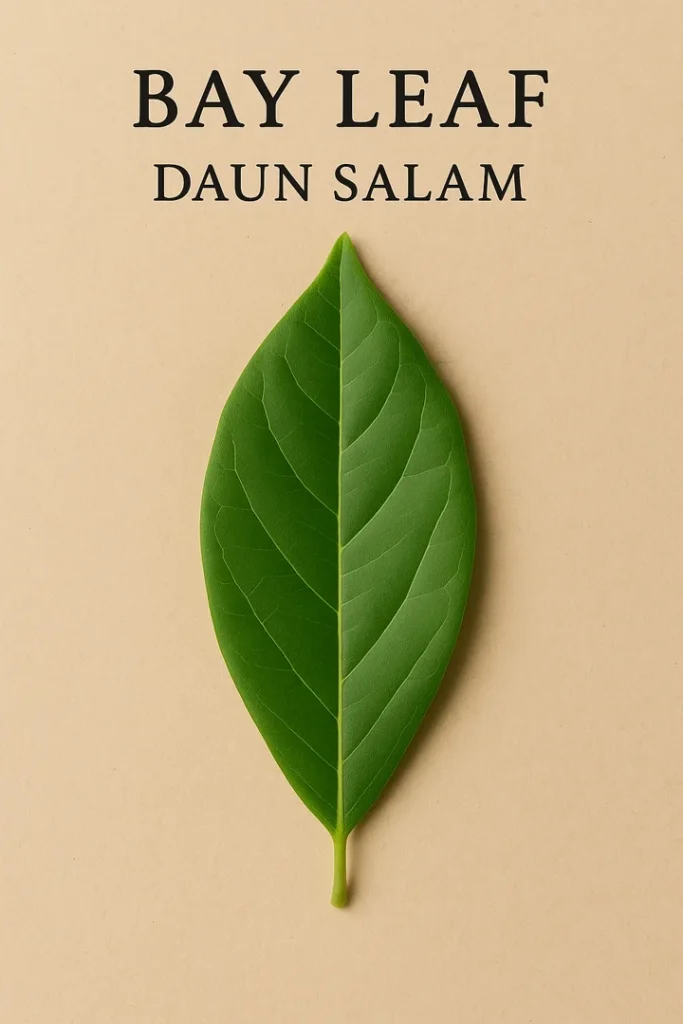
Table of Contents
What is Daun Salam?
Daun salam (bay leaf) comes from the Syzygium polyanthum tree, a species native to Indonesia and parts of Southeast Asia. The leaves are long, smooth, and slightly leathery, deep green when fresh and olive-brown when dried.
Although it shares the same nickname as the Mediterranean bay leaf (Laurus nobilis), daun salam is completely different in both aroma and flavor. Western bay leaves are sharper, with a eucalyptus-like scent. Daun salam is gentler, more herbal, with a hint of clove and cinnamon that blends beautifully with the warm spices of Indonesian cooking.
You will find it fresh in Indonesian markets, often sold in small bundles. Dried daun salam is common in overseas Asian stores and keeps its aroma surprisingly well when stored properly.
Aroma and Flavor
The scent of daun salam is subtle but distinct. When crushed or cooked, it releases a mild, woody fragrance with traces of spice and earthiness. Some describe it as a mix between cinnamon, nutmeg, and tea leaves.
The flavor is light and slightly sweet, without bitterness. It does not dominate a dish; instead, it ties everything together. In coconut-based stews, it keeps the richness from becoming heavy. In soups and rice dishes, it gives a background note of warmth and freshness.
Think of daun salam as the rhythm behind the melody: quiet, steady, and essential.
How It’s Used in Indonesian Cooking
Daun salam appears in nearly every type of Indonesian dish, from soups to desserts. It is one of the first ingredients to enter the pot and one of the last to leave, usually removed before serving.
- Sayur Lodeh: Brings balance to coconut milk and vegetables.
- Rendang and Opor Ayam: Adds subtle depth to rich, spiced sauces.
- Nasi Uduk and Nasi Liwet: Perfumes rice with gentle aroma.
- Tempe Bacem and Gudeg: Complements palm sugar and soy sauce in sweet-salty stews.
- Kolak and Bubur Ketan Hitam: Used in some desserts to add complexity to coconut milk.
Daun salam is almost always paired with lemongrass (sereh), galangal (lengkuas), and kaffir lime leaf (daun jeruk). Together, they form the soul of the Indonesian kitchen.
Physical Comparison with Similar Leaves
| Leaf | Appearance | Flavor | Used For | Key Difference |
|---|---|---|---|---|
| Daun Salam (Indonesian Bay Leaf) | Smooth, elongated green leaf | Mild, woody, slightly spicy | Stews, rice, soups | Gentle and earthy, not bitter |
| Bay Leaf (Laurus nobilis) | Oval, thick, matte green leaf | Sharp, eucalyptus-like | Western stews, sauces | Stronger and more pungent |
| Daun Jeruk (Kaffir Lime Leaf) | Glossy, double-lobed leaf | Bright, citrusy | Curries, soups | Sharper and more aromatic |
| Pandan Leaf (Daun Pandan) | Long, narrow leaf | Sweet, grassy | Desserts, rice | More floral and used for fragrance |
Cooking Tips
- How to use: Add 2 to 3 leaves whole to your dish during cooking. Remove before serving.
- Fresh vs dried: Fresh leaves are brighter in aroma, but dried daun salam works well when simmered longer.
- Pairing: Combine with lemongrass, galangal, and kaffir lime leaf for a classic Indonesian base.
- Storage: Keep dried daun salam in an airtight jar. Fresh leaves can be frozen in small bundles for later use.
If You Can’t Find It
Substitute with a mix of bay leaf and a small piece of cinnamon stick to capture both its earthy and slightly sweet aroma. It will not be the same, but it will bring a similar warmth to your dish.
