

Before the heat of chili or the perfume of lemongrass, there is always the quiet scent of biji ketumbar. Toasted in a dry pan, the seeds crackle softly and release an aroma that is both earthy and bright, something between citrus and roasted nuts. It is a scent that feels like the foundation of Indonesian cooking: simple, calm, and familiar.
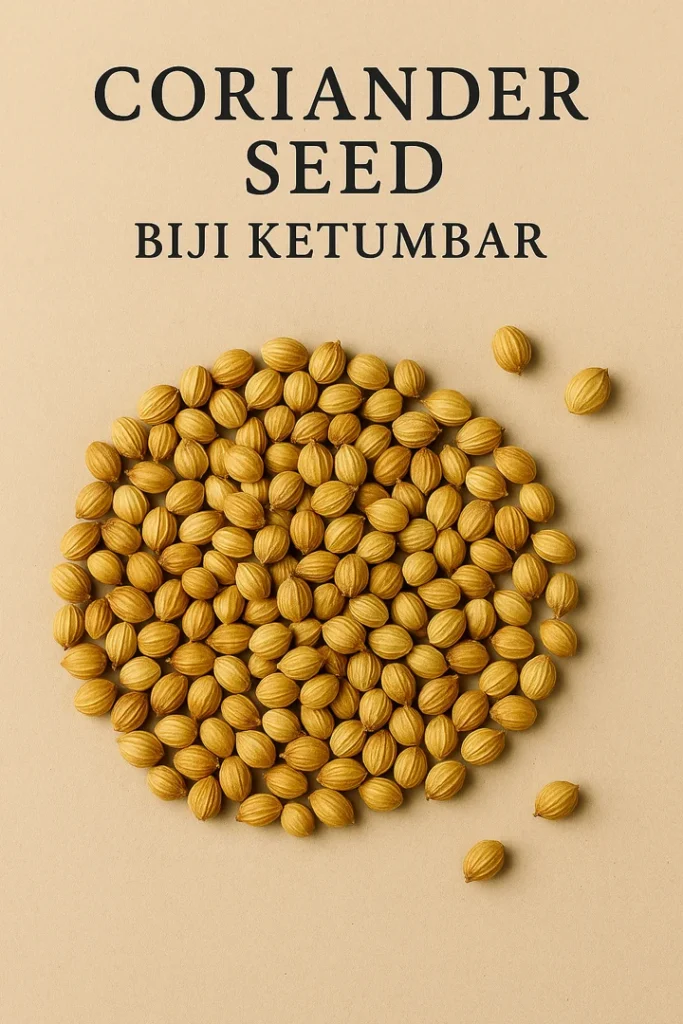
Table of Contents
What is Biji Ketumbar?
Biji ketumbar, or coriander seed, comes from the dried fruit of the Coriandrum sativum plant, a member of the parsley family. The seeds are small, round, and light brown, with tiny ridges on their surface.
In Indonesian markets, they are usually sold whole, not powdered. Before using, the seeds are lightly toasted to bring out their fragrance and then ground into spice pastes called bumbu. The ground form becomes the base for countless dishes, from fried chicken to stews and sambal.
Coriander seeds were among the earliest spices brought to Indonesia through ancient trade routes from India and the Middle East. Over time, they became so deeply woven into local cooking that most households cannot imagine a kitchen without them.
Aroma and Flavor
The scent of biji ketumbar is gentle yet distinctive. It opens with a warm, nutty aroma that turns citrusy as the seeds are crushed. There is a faint sweetness underneath, balanced by a dry, earthy note.
In flavor, coriander seed is mild and round. It does not bite like pepper or burn like chili. Instead, it brings a clean brightness that ties other spices together. It adds body to spice pastes, keeps rich sauces from feeling heavy, and leaves a soft aftertaste that feels almost lemony.
When toasted, biji ketumbar deepens in color and taste. The citrus note fades slightly, replaced by something toasty and warm, perfect for dishes that simmer slowly.
How It’s Used in Indonesian Cooking
Biji ketumbar is one of the most versatile spices in Indonesia. It appears in dishes from every region, whether for daily meals or festive cooking.
- Bakwan Jagung: Ground coriander brings subtle aroma to the corn batter, balancing the sweetness of the kernels.
- Tahu and Tempe Bacem: Adds a mild warmth that blends with palm sugar and soy sauce in the Javanese marinade.
- Tempe Mendoan: Gives the light batter its savory fragrance when combined with garlic and shallots.
- Ayam Goreng Ketumbar: The classic fried chicken marinade built around ground coriander, garlic, and salt.
- Rendang and Gulai: Adds gentle citrus warmth to the coconut base and heavier spices.
- Soto and Sup Ayam: Infuses the broth with a clean, aromatic layer without overpowering it.
In Javanese cooking, coriander is so essential that its absence is instantly noticed. It is the quiet rhythm beneath the melody of spices.
Physical Comparison with Similar Spices
| Spice | Appearance | Flavor | Used For | Key Difference |
|---|---|---|---|---|
| Biji Ketumbar (Coriander Seed) | Small, round, light brown seeds | Earthy, citrusy, nutty | Spice pastes, marinades, soups | Mild and balanced, connects other spices |
| Jintan Putih (Cumin) | Thin, elongated brown seeds | Warm, smoky, pungent | Curries, rendang, spice pastes | Stronger and deeper aroma |
| Jintan Hitam (Black Cumin) | Smaller, darker seeds | Bitter, sharp, slightly peppery | Herbal drinks, certain stews | More bitter, used sparingly |
| Merica (Black Pepper) | Round, black seeds | Hot, sharp | Seasoning, marinades | Spicier and more direct |
| Biji Pala (Nutmeg) | Hard, brown seed | Sweet, woody | Stews, soups, desserts | Warmer and sweeter, not citrusy |
Cooking Tips
- Toasting: Always toast the seeds before grinding to bring out their fragrance.
- Grinding: Use a mortar and pestle or spice grinder for a fine texture. Add salt while grinding to prevent clumping.
- Balance: Coriander pairs well with cumin, turmeric, and garlic in most Indonesian spice blends.
- Storage: Keep whole seeds in an airtight jar. Ground coriander should be used within a few months for the best aroma.
If You Can’t Find It
Ground coriander is widely available in most stores. If you can only find fresh coriander (cilantro), note that the flavor is very different. The leaves are more herbal, while the seeds are warm and nutty.
