

The first time you crush kapulaga (cardamom), the scent feels almost like a breath of air after rain. It is light, cool, and sweet, with a quiet sophistication that fills the kitchen long before the stew even begins to boil. Kapulaga is not a loud spice. It is soft, clean, and graceful, the kind that brightens heavy flavors and leaves a trace of calm behind.
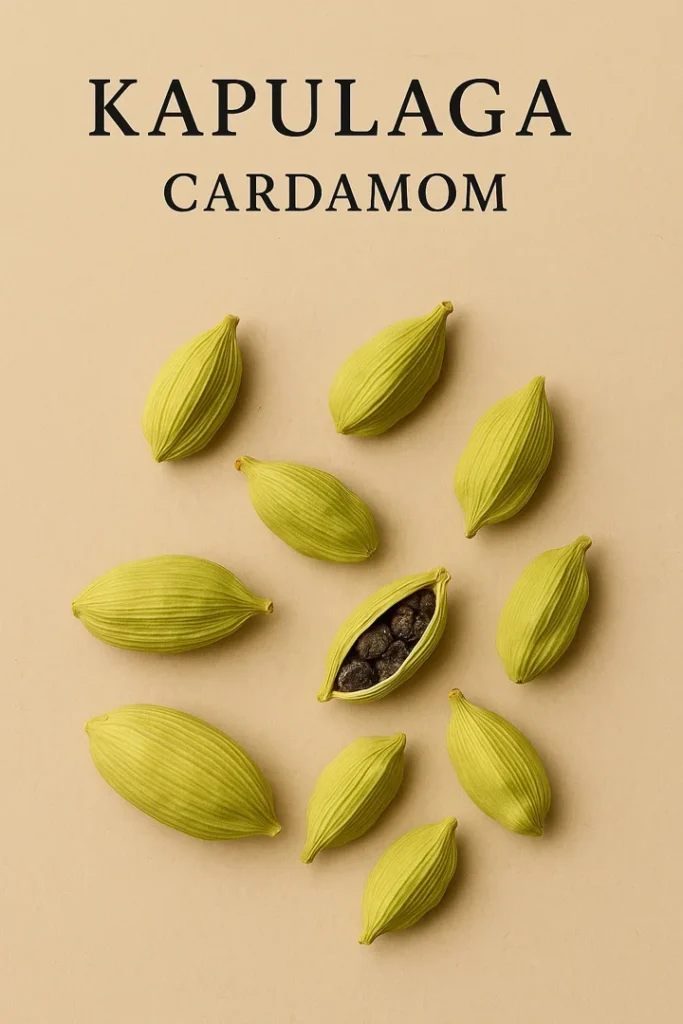
Table of Contents
What is Kapulaga?
Kapulaga, or cardamom, comes from the seed pods of plants in the Zingiberaceae family, the same family as ginger and galangal. Each pod holds tiny black seeds that are the source of its fragrance. The outer shell can be pale green or brown, depending on the variety and where it grows.
In Indonesia, two main types are used. Green cardamom (Kapulaga Hijau) is the kind most often seen in Middle Eastern or Indian cooking. Javanese or Brown cardamom (Kapulaga Jawa) is slightly larger, darker, and more resinous in aroma. It grows in the highlands of Java and Sumatra and is the one most often found in Indonesian kitchens.
Kapulaga has been part of Indonesian cooking for centuries. Traders brought it to the archipelago along the spice routes, and it soon became one of the quiet foundations of local stews, soups, and herbal drinks.
Aroma and Flavor
The scent of kapulaga is unlike any other. It begins with a cool freshness that feels almost minty, then unfolds into something sweet, floral, and a little citrusy. When you bite into one of the seeds, the flavor feels bright and clean, with hints of eucalyptus, lemon, and camphor.
Green cardamom is delicate and fragrant, perfect for sweet dishes and light broths. Brown cardamom, on the other hand, is smokier and deeper, often used in savory dishes with beef, lamb, or coconut milk. Both share the same core warmth, but each speaks in a slightly different tone.
Kapulaga has a balancing effect on rich flavors. In stews and curries, it lifts the heaviness of coconut milk and fried spices. In desserts and drinks, it softens sugar’s sweetness with a cool, elegant perfume.
How It’s Used in Indonesian Cooking
Kapulaga finds its place in both the savory and the sweet sides of Indonesian cuisine.
- Gulai and Rendang: Enhances the warmth of other spices like clove, nutmeg, and cinnamon.
- Soto Betawi and Empal: Adds a bright top note that keeps the broth fragrant but not heavy.
- Jamu and Wedang: Infuses drinks with calm, refreshing depth.
- Kue and Sweet Drinks: Used in festive sweets, spiced syrups, and milk-based desserts.
It is often paired with clove, cinnamon, and nutmeg to form the heart of Javanese and Sumatran spice blends.
Physical Comparison with Similar Spices
| Spice | Appearance | Flavor | Used For | Key Difference |
|---|---|---|---|---|
| Kapulaga (Cardamom) | Small oval pods with tiny black seeds | Cool, sweet, floral | Stews, drinks, desserts | Brighter and fresher than clove or nutmeg |
| Clove (Cengkeh) | Small dried flower buds | Sharp, spicy, intense | Stews, spice pastes, drinks | Stronger, more pungent aroma |
| Cinnamon (Kayu Manis) | Rolled brown bark | Sweet, woody, mild | Curries, drinks, cakes | Warmer and less floral |
| Biji Pala (Nutmeg) | Hard, brown seed | Sweet, woody, creamy | Stews, soups, cakes | Heavier and earthier |
| Fennel Seed (Adas) | Pale green seeds | Sweet, anise-like | Spice blends, teas | More licorice-like sweetness |
Cooking Tips
- How to use: Lightly crush the pods before adding them to a dish to release their aroma. Remove them before serving if you prefer a milder taste.
- Toasting: A brief dry toast in a pan enhances their fragrance.
- Pairing: Works beautifully with cinnamon, nutmeg, and clove in slow-simmered dishes.
- Storage: Keep whole pods in a sealed jar, away from moisture and sunlight. Ground cardamom loses its fragrance quickly.
If You Can’t Find It
Green cardamom can usually replace brown cardamom and vice versa. The flavor will vary slightly, but both bring a gentle brightness to food. A mix of cinnamon and clove can provide a similar warmth in a pinch, though the cooling freshness will be missing.
