

Living in Singapore, finding truly traditional beef rendang is surprisingly difficult. You’ll see it on nasi padang stalls, yes, but more often than not, it’s a shortcut version: saucy, a bit sweet, sometimes missing that deep, nutty aroma that makes rendang sapi unforgettable. The kind I grew up with in Indonesia was slow-cooked until the coconut milk turned into oil, the beef absorbed every drop of spice, and the whole kitchen smelled of toasted coconut, lemongrass, and warmth.
When I first moved here, I missed that familiar taste terribly. I tried buying ready-made rendang pastes, but they never hit the same note. So I started experimenting, batch after batch, learning from my mother’s notes, food stalls in Padang, and even old Minangkabau cookbooks. What you’ll find here is the version that finally made me close my eyes and think, “Yes, this is it.”
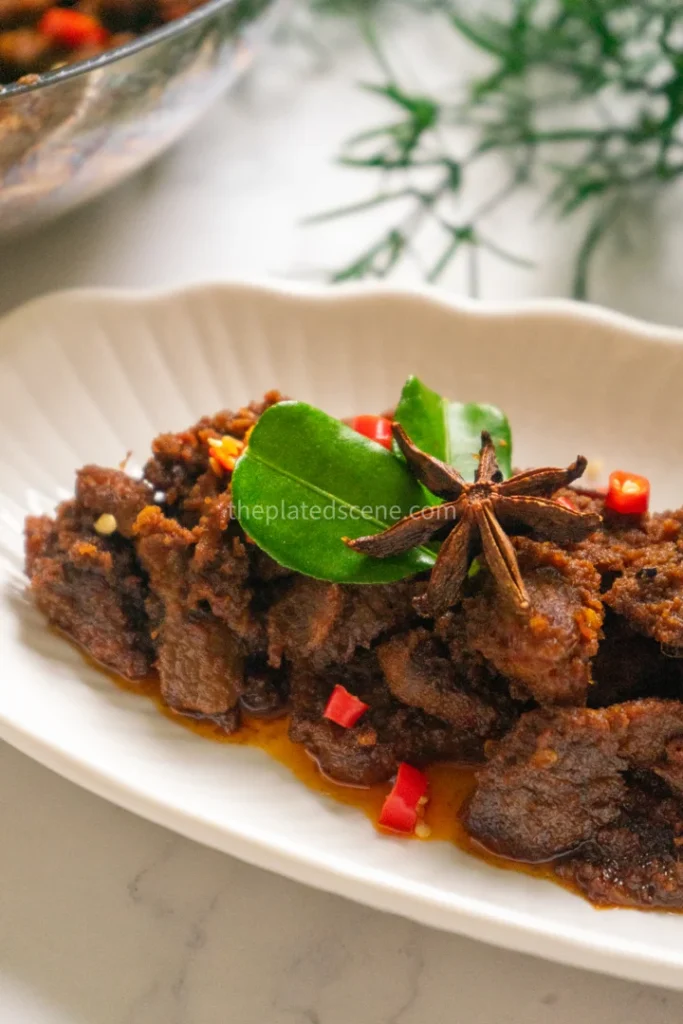
Don’t be intimidated when you see the long list of Indonesian herbs and spices, such as galangal, turmeric leaf, kaffir lime leaves, lemongrass, candlenuts, and all those earthy ingredients. They’re what make rendang sapi so extraordinary. Once you start cooking, the aroma will tell you exactly why this dish is one of the world’s best. In fact, CNN once named beef rendang the number one food in their “World’s 50 Best Foods.” And honestly, anyone who has ever dipped warm rice into its thick, caramelized gravy will agree.
Table of Contents
What Is Rendang?
Rendang isn’t just a dish; it’s a cultural heritage. Originating from West Sumatra, Indonesia, specifically from the Minangkabau people, rendang started as a way to preserve meat before refrigeration existed. The long, slow cooking process allowed the coconut oil and spices to coat the beef, acting as a natural preservative. When done right, traditional rendang can last for days, even weeks, without spoiling. This dish will be perfect for long journeys or festive occasions.
The word “rendang” itself comes from the Minangkabau word “merendang,” which means to cook slowly while stirring continuously. The process is everything. The goal is not just to cook the beef but to let it absorb every layer of spice until it becomes deeply flavorful. The sauce reduces, darkens, and eventually clings to the meat as a thick, dry coating.
Today, rendang is more than just a staple in West Sumatra. It’s celebrated across Indonesia and even beyond. Malaysia, Singapore, and Brunei have their own versions. In Indonesia, it’s often served during festive events, family gatherings, and weddings, symbolizing respect and honor. It’s not just food; it’s a symbol of togetherness.
When people outside Indonesia talk about “beef rendang,” they often imagine a curry-like dish. But authentic rendang sapi is not a curry. It starts as one but transforms as the liquid evaporates, leaving behind a concentrated paste that clings to the beef. That’s what makes it unique: it’s simultaneously rich, dry, and aromatic.
How Beef Rendang Tastes
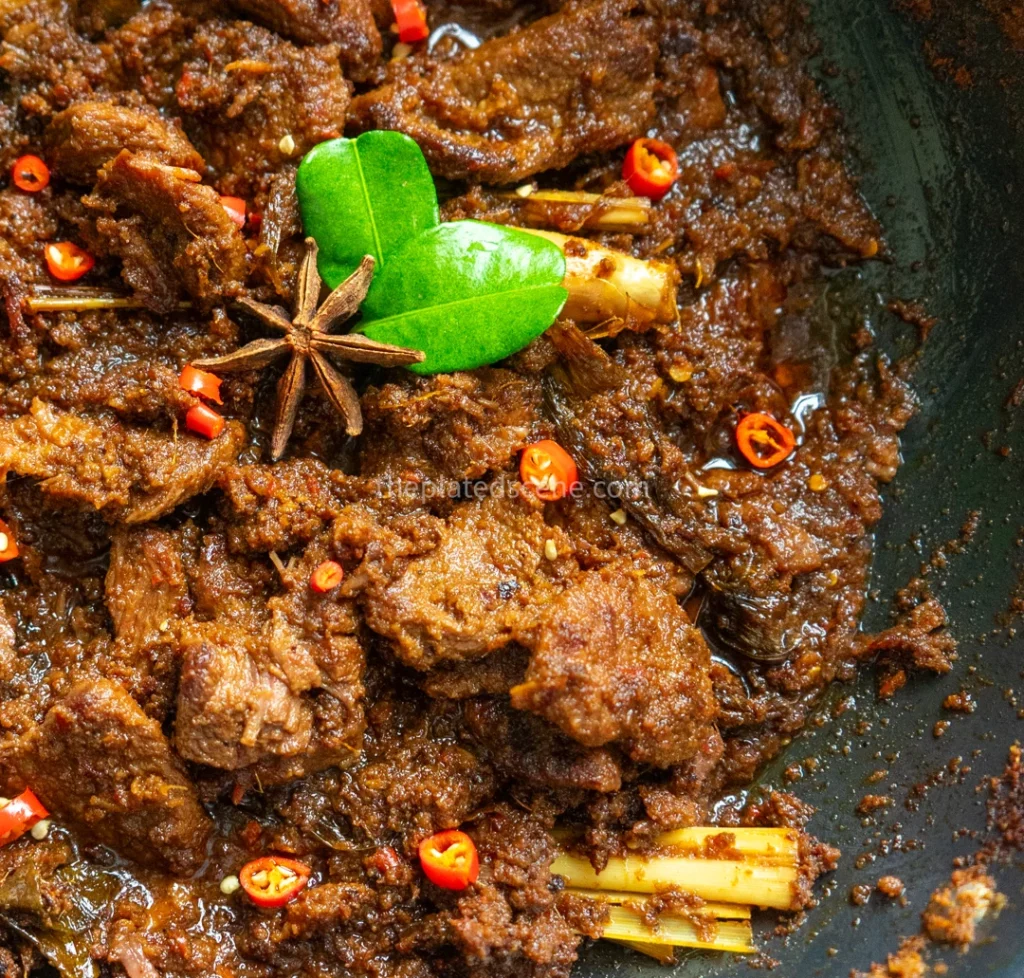
If you have never tried authentic rendang sapi before, imagine a dish where every bite is layered with complexity. This is the Minangkabau-style beef rendang, and it leans more toward the savory side rather than sweet. The flavors start with the richness of coconut milk and build up through a medley of spices, with lemongrass bringing brightness, galangal adding warmth, turmeric leaf giving its earthy fragrance, and chili offering a slow, gentle heat.
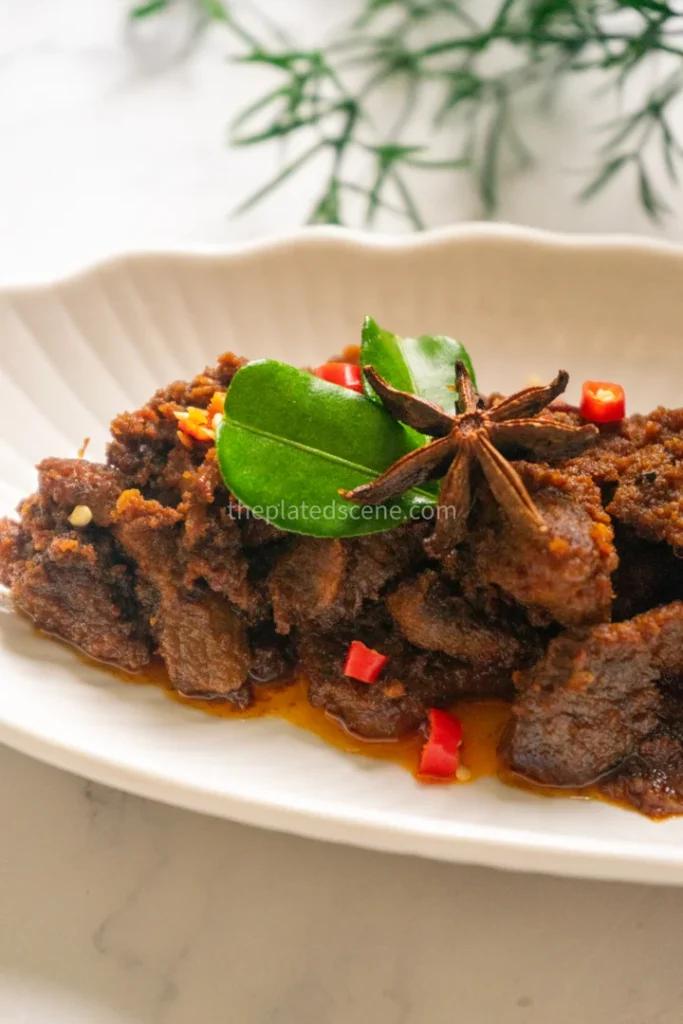
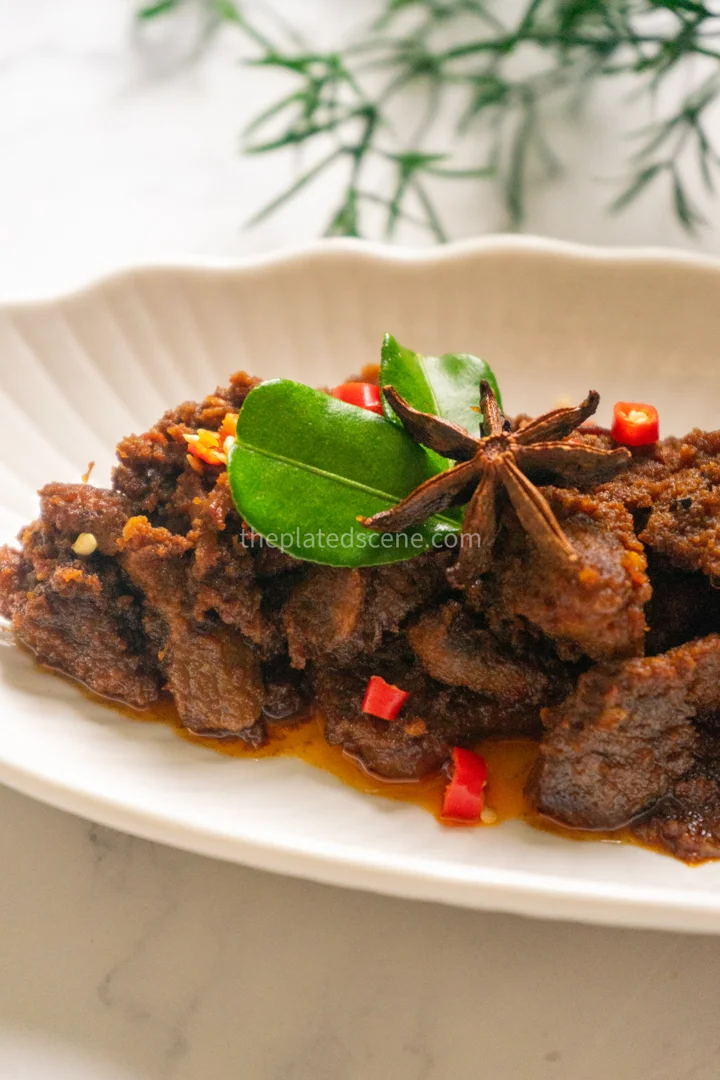
The first thing you will notice is the texture. The beef is fork-tender but never falling apart. Each piece is coated in a dense, caramelized spice paste that turns almost black from the long cooking process. The edges develop a slight crispness from the coconut oil, giving every bite a mix of tenderness and a pleasant chew.
Then comes the flavor. It is savory, nutty, spicy, and has just a hint of sweetness that rounds everything out. The longer you cook it, the more intense the flavor becomes. There is no rushing rendang sapi because the magic happens over time. Every minute allows the spices to sink deeper into the beef.
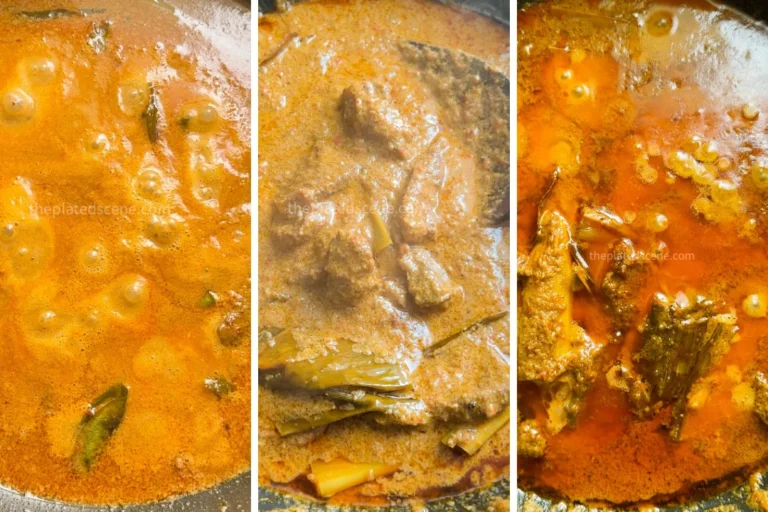
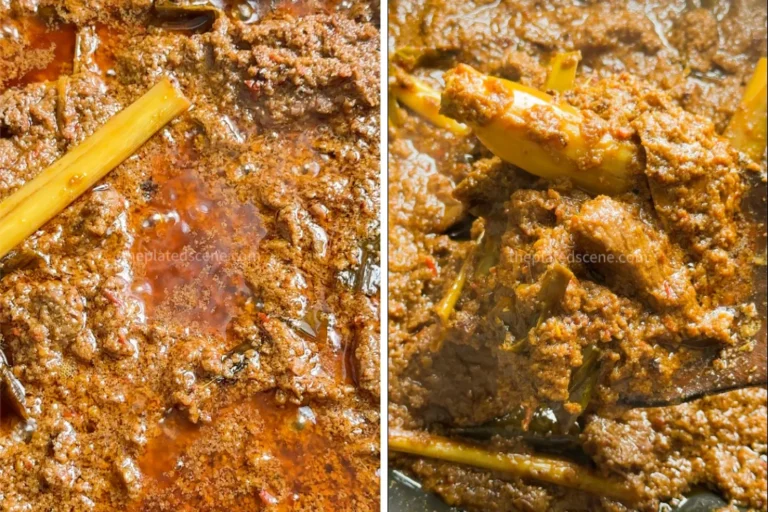
If you taste it after the first hour, it will still feel like a curry. But keep going, slowly and patiently, and by the third hour it transforms completely. The coconut milk separates into oil, the color deepens into dark brown, and suddenly your kitchen smells like an Indonesian festival. That is the moment you know it is ready.
This particular version is less sweet than the Javanese rendang you might find in Java or at some eateries in Singapore. Minangkabau rendang celebrates spice and savoriness. The toasted coconut, or kerisik, adds body, and the turmeric leaf brings its unmistakable aroma. It is the kind of dish that makes rice disappear quickly, one spoonful at a time.
Variations of Rendang
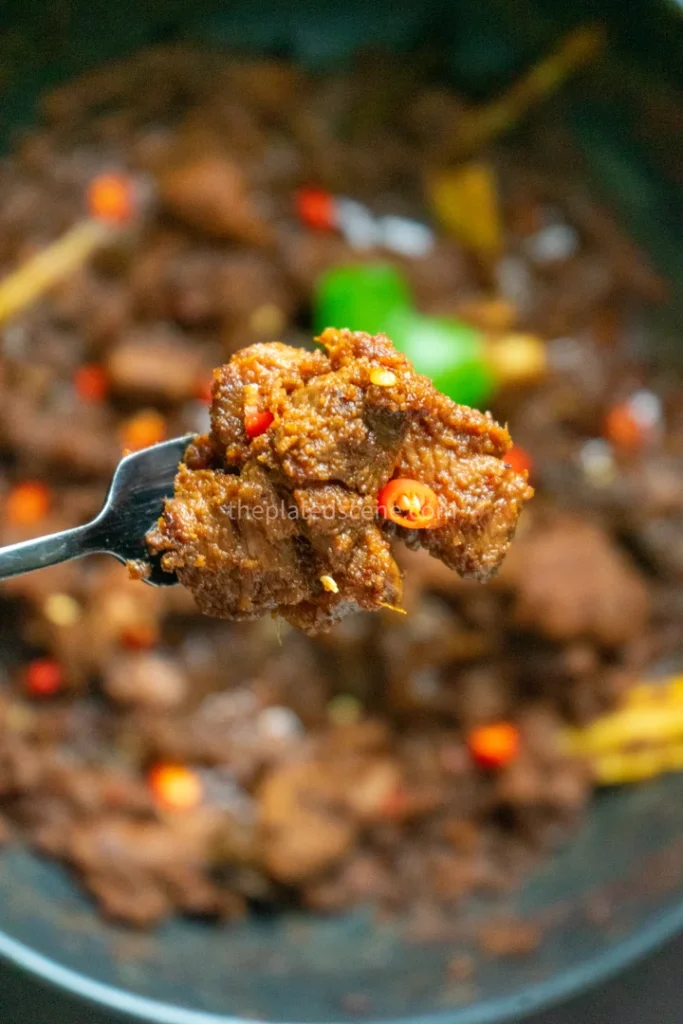
Across Indonesia, rendang takes on different personalities depending on where you go. The base idea remains the same, which is slow-cooked beef in coconut milk and spices, but the flavor profiles change beautifully from region to region.
In Padang, the heartland of rendang sapi, you will find the dry, dark version that is cooked until the sauce nearly disappears. This is considered the most authentic style, often served at weddings and special ceremonies. Every household may have its own version, usually passed down through generations.
In Java, rendang tends to be sweeter, with palm sugar or coconut sugar added to the spice mix. The cooking time is often shorter, resulting in a dish that is more like a thick curry than a dry rendang. This version is popular among those who enjoy milder and slightly sweeter flavors.
There is also rendang ayam, made with chicken, and rendang paru, made with beef lungs, both of which are beloved in Indonesia. In some parts of Sumatra, you will find rendang made with duck, egg, or jackfruit. Rendang nangka, or young jackfruit rendang, is a wonderful vegetarian version that mimics the texture of meat, especially when cooked in the same rich spice base.
Outside Indonesia, in places like Malaysia and Singapore, rendang has evolved even further. You will often see a saucier version served with nasi lemak. It is delicious in its own way, but different. It is less dry, milder, and often uses fewer spices. It is fascinating how one dish can travel across borders and adapt to local tastes while still keeping its essence.
For me, the traditional dry rendang sapi is still the benchmark. It is the dish I crave when I miss home. It takes time, effort, and a lot of stirring, but the reward is something more than flavor. It carries nostalgia, warmth, and a sense of pride in every bite.
Things to Watch Out for When Cooking Beef Rendang
Cooking rendang sapi can feel like a test of patience. It’s not complicated, but it demands attention and time. Here are a few things I’ve learned after many rounds of experimenting.
First, the beef cut matters. Choose a cut with some fat and connective tissue—something like chuck, brisket, or shank. Lean cuts will turn tough after hours of cooking, but a bit of marbling ensures tenderness and richness. When the fat melts into the sauce, it makes the rendang even more luxurious.
Second, the coconut milk. Freshly squeezed coconut milk is ideal, but if you’re using canned, choose one without stabilizers or additives. The quality of the coconut milk affects both flavor and texture. As it simmers, it should gradually separate into oil. That’s a good thing—it’s the sign your rendang is progressing.
Third, don’t rush the process. Rendang takes time to evolve. You’ll start with a large volume of liquid, and for the first hour or so, it might look like a stew. But as it reduces, the aroma will deepen, the color will darken, and the oil will start to emerge on the surface. Keep stirring occasionally to prevent burning, especially once the liquid gets thick.
A lot of first-time rendang makers panic when they see the coconut milk curdle, but that’s part of the process. It’s the coconut oil separating, and it’s what gives beef rendang that glossy, caramelized finish. If you stop too early, you’ll end up with a curry-like dish, not rendang sapi.
The next thing to watch is the spice paste. It’s tempting to use store-bought rendang paste, but making it fresh is what gives the dish depth. The mix of shallots, garlic, chilies, ginger, galangal, lemongrass, and candlenut creates the foundation of flavor. When you toast or sauté it before adding the coconut milk, it releases a fragrance that sets the tone for the whole dish.
Lastly, patience. There’s no shortcut here. You’ll need about three to four hours of gentle simmering. The key is to let the beef cook in its own time, without rushing the heat. Too high, and it burns; too low, and it never caramelizes. You’ll know it’s perfect when the sauce is thick and clings to the beef, the oil has separated, and the color is deep brown.
If you want to store it, the good news is rendang keeps beautifully. In fact, it tastes even better the next day as the flavors continue to develop. Some people even say that real rendang isn’t eaten fresh but a day or two later, once the seasoning has settled into the meat.
Getting to Know the Ingredients
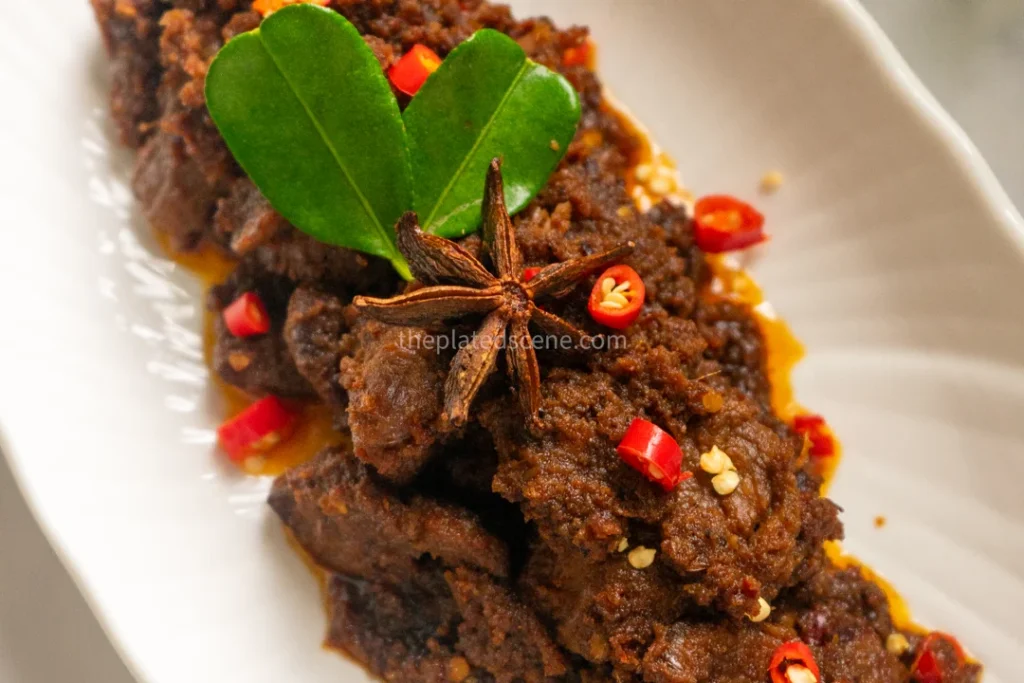
At first glance, the ingredient list for rendang sapi (Indonesian beef rendang) can look long and maybe even a little intimidating. But don’t worry, every single item has a purpose. Once you start cooking, you’ll see how beautifully everything works together. The spices build in layers, the herbs fill your kitchen with fragrance, and by the time the coconut milk turns dark and glossy, you’ll understand why beef rendang is one of Indonesia’s most celebrated dishes.
Think of it like an orchestra. Each group of ingredients plays its own melody, and together they create something rich, complex, and deeply comforting. Take your time, enjoy the process, and let the aroma guide you.
1. The Heart of the Dish: Main Ingredients
This is where it all begins. These are the core elements that give rendang sapi its rich body and creamy texture.
Beef (chuck)
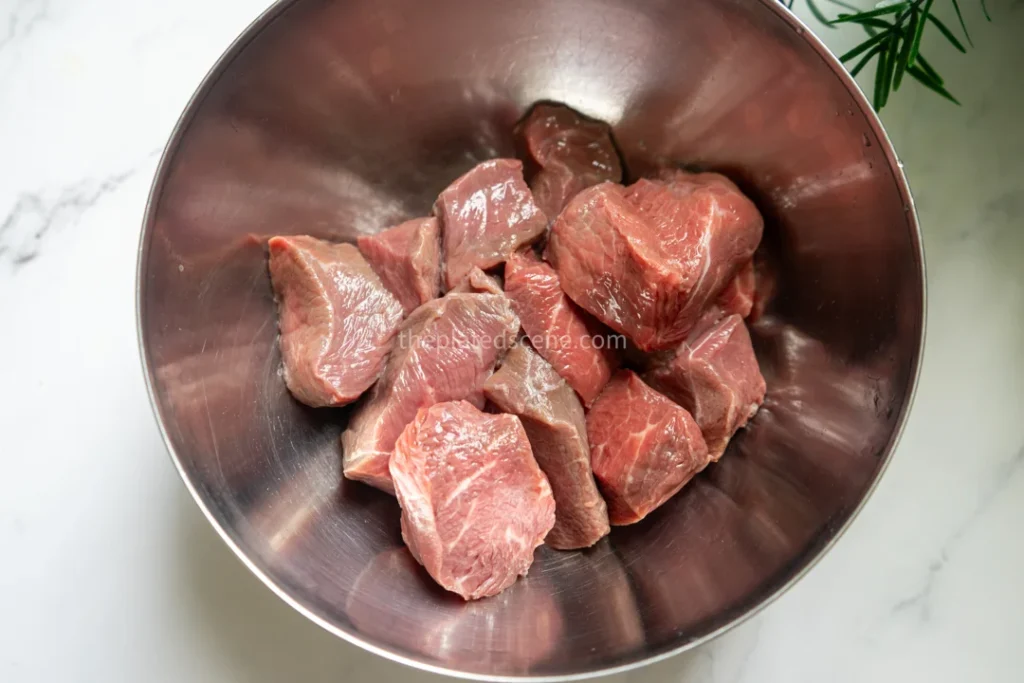
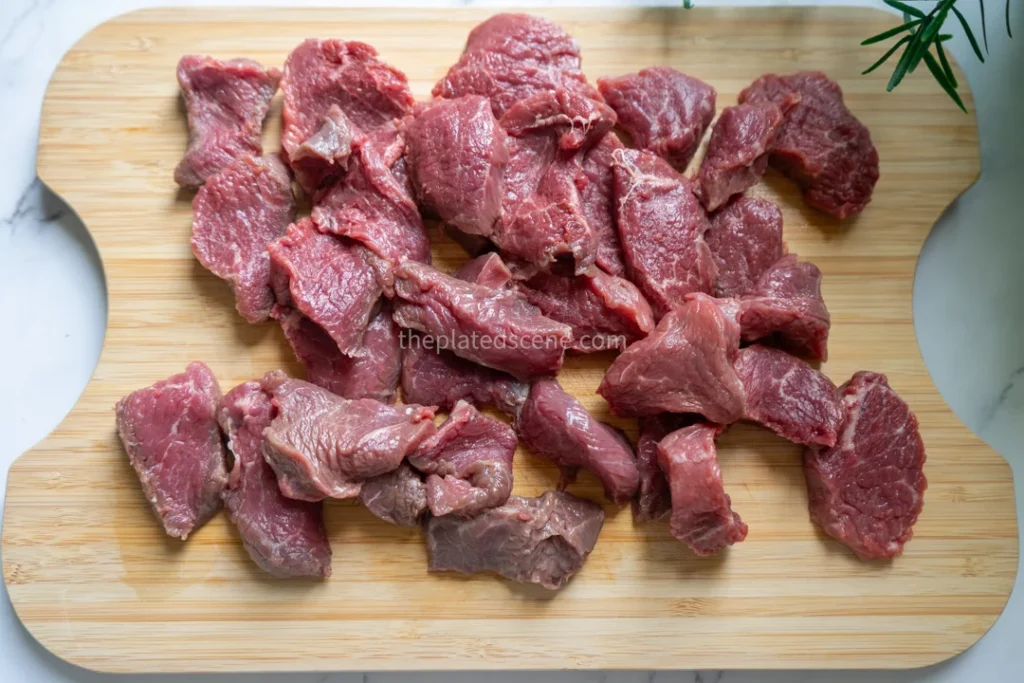
Choosing the right cut of beef is one of the most important steps in making a truly good rendang sapi. Because the dish cooks for several hours, not every cut can withstand that long simmer. You want something that stays juicy and becomes tender without falling apart completely.
I like to use beef chuck, the shoulder part of the cow. It has the perfect balance of lean meat, fat, and connective tissue. When cooked slowly, the fat melts into the sauce, and the collagen breaks down, giving you tender beef with a rich, almost buttery texture. Each bite holds its shape but yields easily under the fork.
Other good options include brisket, shank, or short ribs. These cuts are tougher at first but reward patience with incredible flavor. Avoid very lean cuts like tenderloin or sirloin — they’ll dry out and lose their character during the long cooking process.
When cutting the beef, aim for medium-sized cubes, around 1.5 to 2 inches (3.5–5 cm) per side. Smaller pieces can turn stringy after hours of simmering, while larger chunks take too long to absorb the spices evenly. The goal is for every piece to soak up the coconut milk and spice paste, becoming deeply infused inside and out.
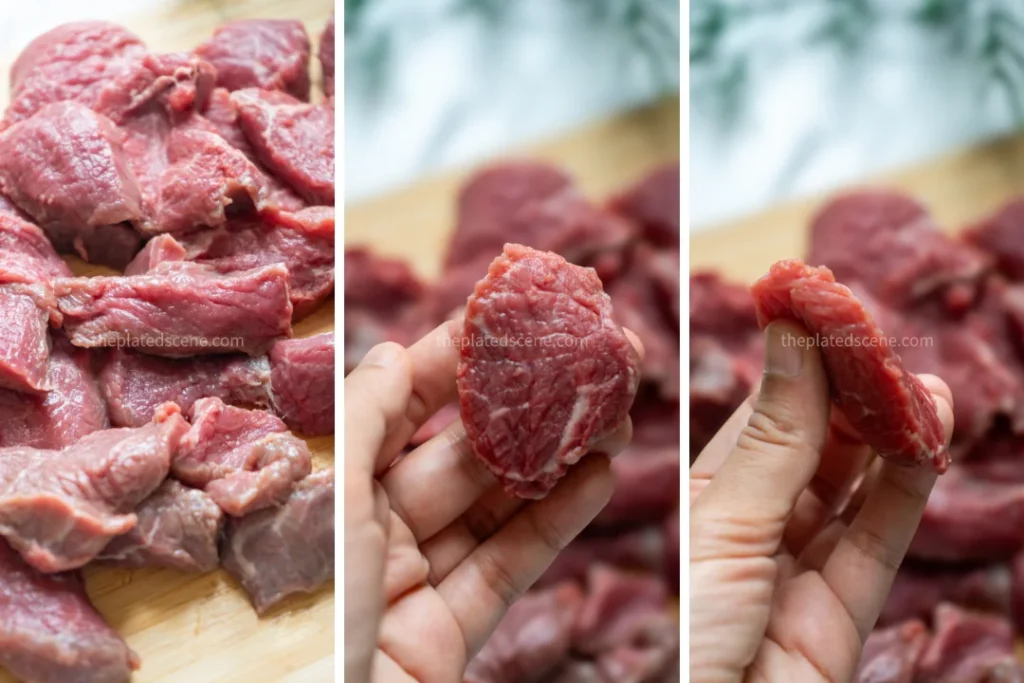
Before adding the beef to the pot, I often pat it dry with a paper towel. This helps it sear better when it first hits the hot spice mixture. You’re not exactly browning the beef like in Western stews, but this small step helps the flavors stick and keeps the texture meaty instead of mushy.
Coconut milk
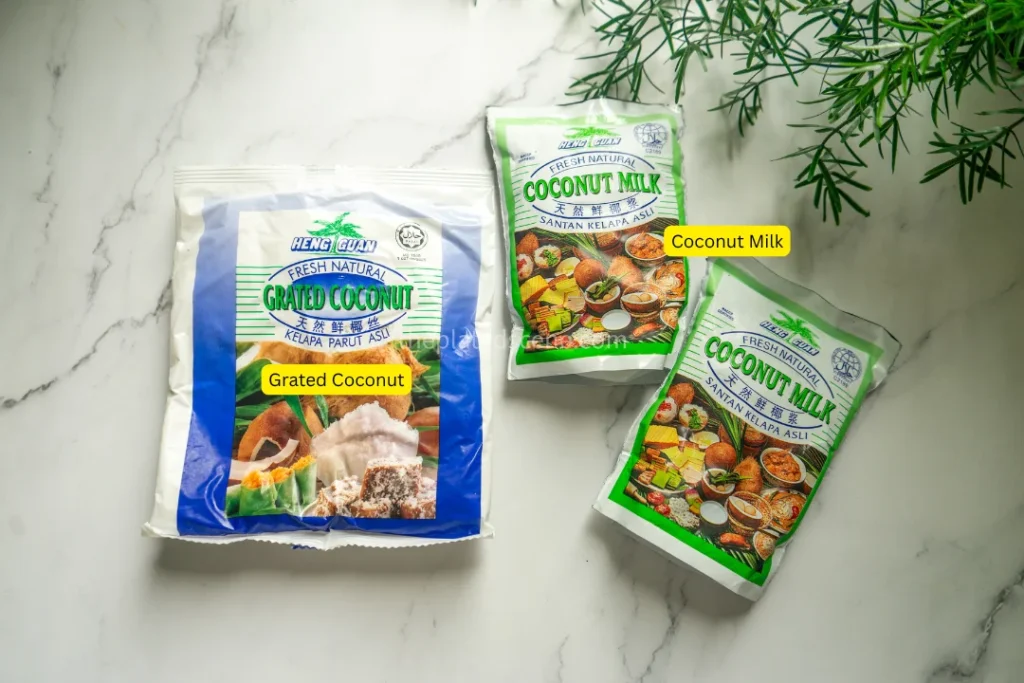
The creamy base that transforms the spice paste into a silky sauce. As it cooks, the milk thickens and releases fragrant coconut oil that coats the beef perfectly.
Grated coconut (toasted)
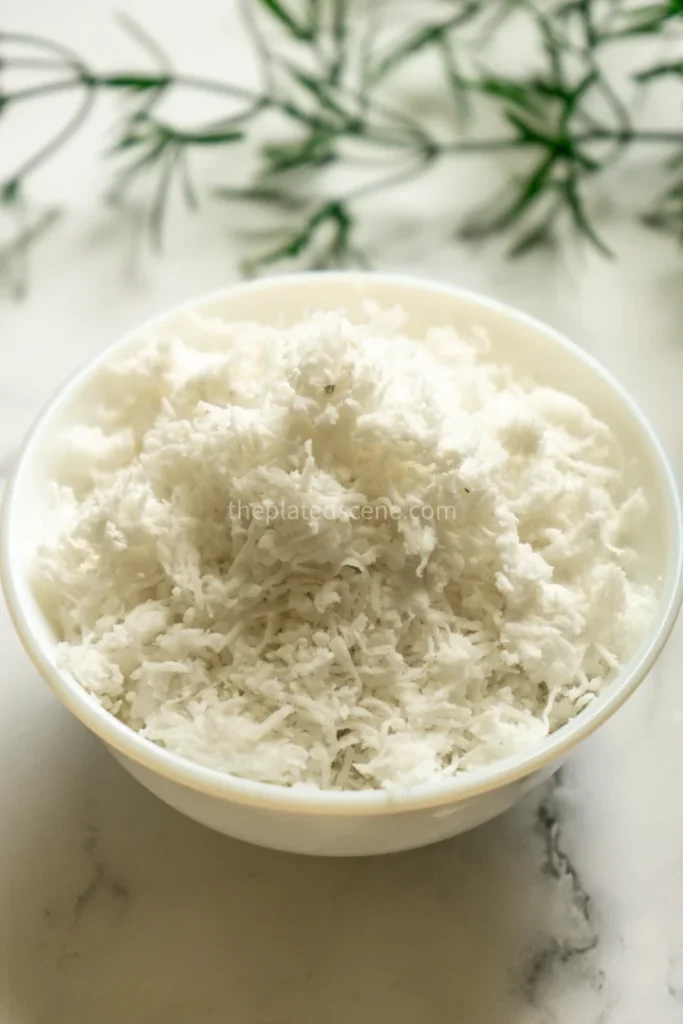
Toasted grated coconut, or kelapa sangrai, adds a nutty aroma and slightly smoky depth. Stir in a few spoonfuls toward the end for that authentic rendang taste.
2. The Secret Depth: Heritage Spice Mix
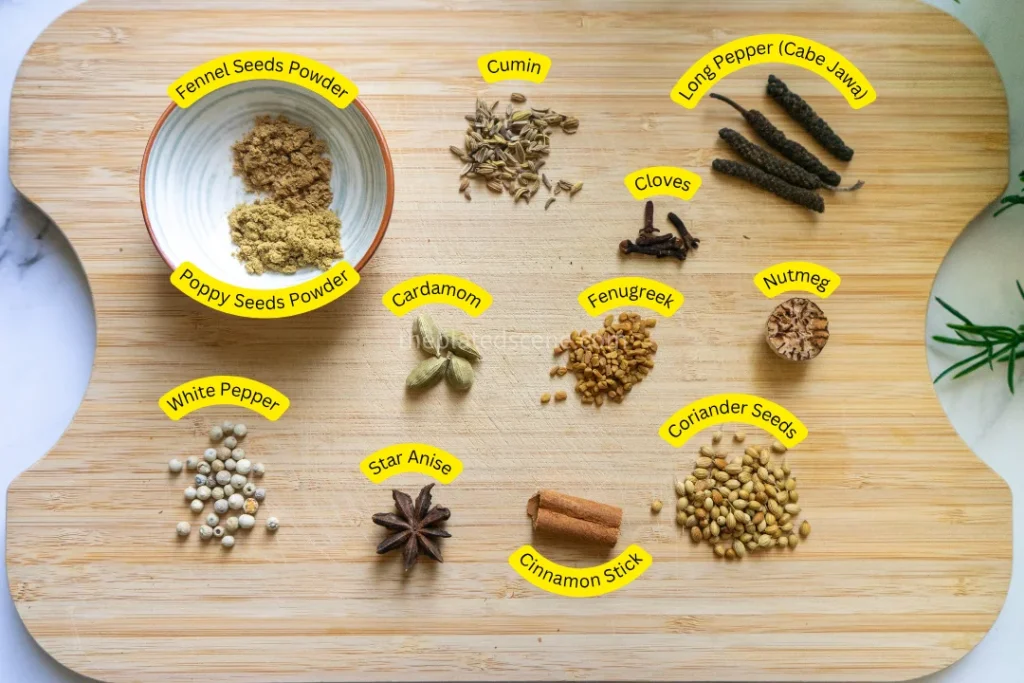
This blend of spices is the soul of beef rendang. It gives the dish its warmth, depth, and unmistakable complexity. Each spice plays a distinct role, and together they create the base of flavor that makes rendang unforgettable.
- Long pepper (cabe jawa) – Adds a gentle, lingering heat that’s aromatic rather than fiery.
- White cumin seeds (jinten) – Bring warmth and an earthy tone.
- Fenugreek (alba) – Slightly bitter, helping to balance the richness of the coconut milk.
- Nutmeg – Adds sweetness and warmth that round out the flavor.
- Cloves – Deeply fragrant and warm, giving the dish a festive aroma.
- Cardamom – Floral and fresh, lightens the stronger spices.
- Fennel seeds – Add mild sweetness with a hint of licorice.
- Star anise – Offers subtle depth and a faint licorice scent.
- Pepper – Brings sharpness and balance.
- Coriander seeds – Earthy and slightly citrusy, a key note in Indonesian cooking.
- Poppy seeds – Give a light nuttiness that softens the spice.
- Cinnamon – Warm and aromatic, it ties all the spices together.
3. The Living Soul: Ground Spice Base
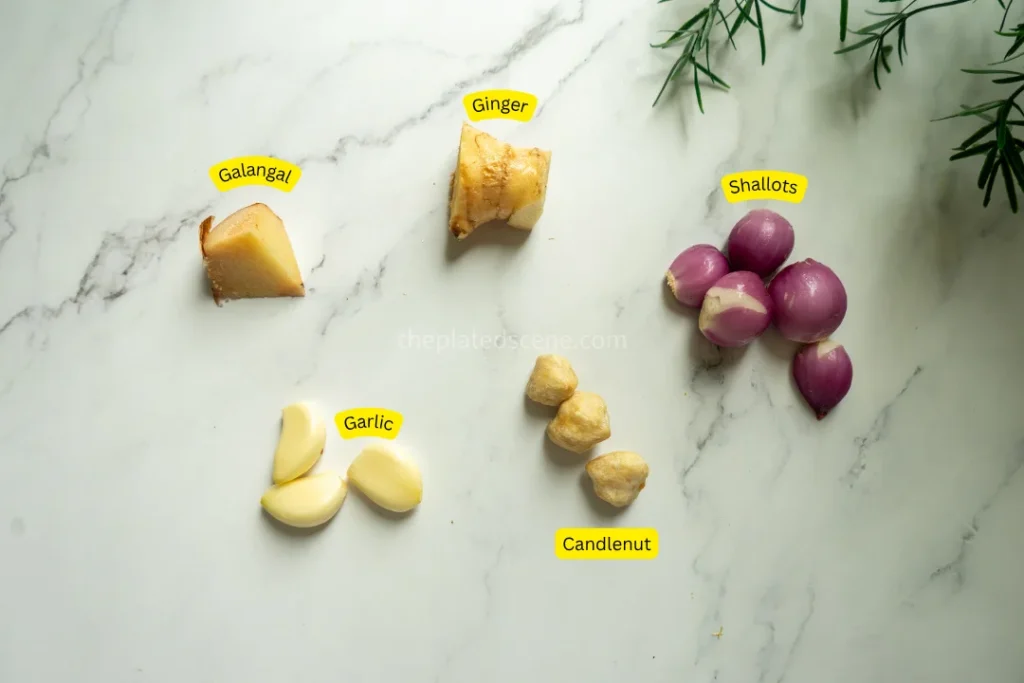
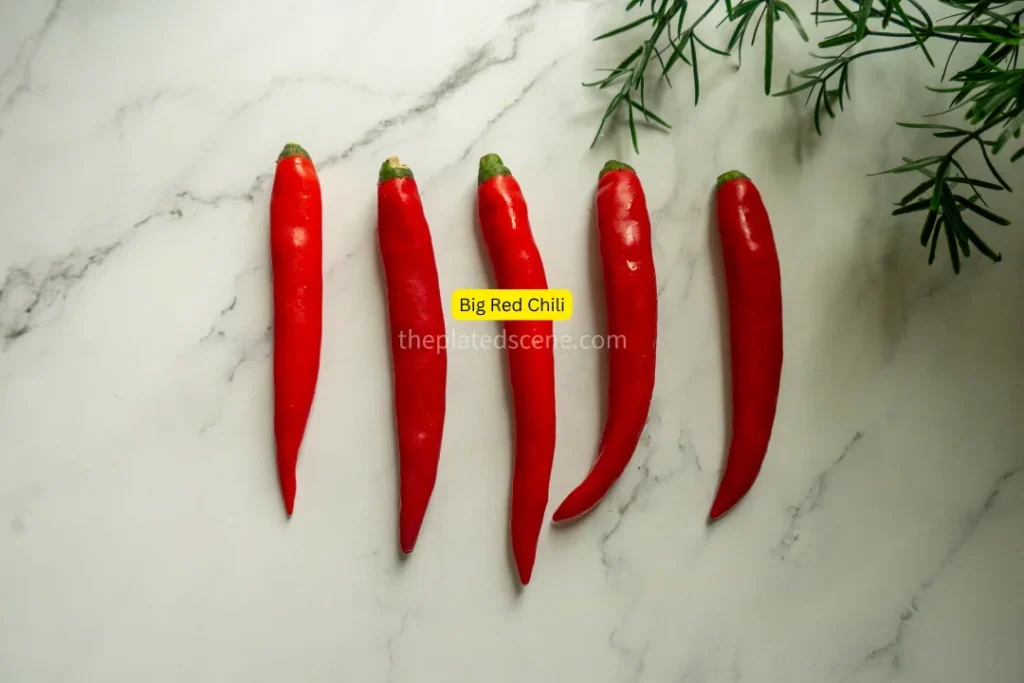
This is where the heart of rendang sapi comes alive. These fresh aromatics are blended into a smooth, fragrant paste that will eventually cling to the beef and carry all the flavor.
- Big red chili – Gives color, depth, and a mild heat.
- Garlic – Adds savory strength and depth.
- Shallots – Provide sweetness and fragrance that balance the spice.
- Ginger – Adds warmth and a little bite.
- Galangal – Earthy and citrusy, giving that unmistakable Indonesian note.
- Candlenut – Adds creaminess and helps thicken the sauce naturally.
4. The Fragrant Layers: Leaf Ensemble
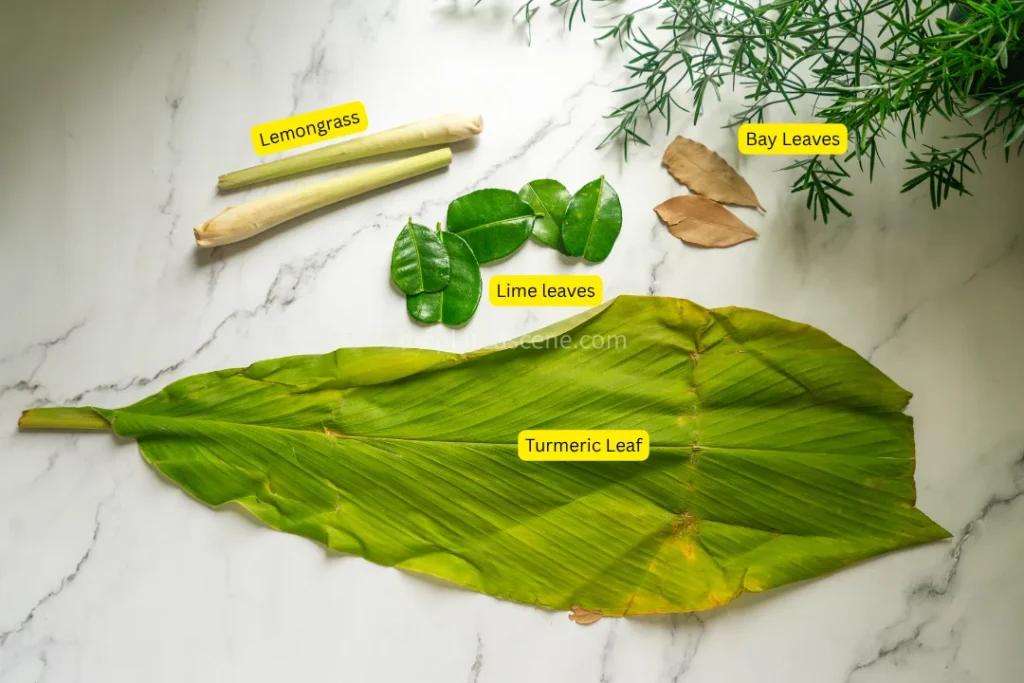
These leaves are quiet but essential. They infuse beef rendang with fragrance and balance, softening the heaviness of the coconut milk.
- Turmeric leaf – Adds an earthy, herbal scent that defines authentic rendang.
- Bay leaf – Brings depth and a touch of bitterness that grounds the flavor.
- Lime leaves – Add brightness and a citrusy aroma that lifts the dish.
- Lemongrass – Sweet and aromatic, creating harmony between the beef and spices.
5. The Balance: Seasonings That Complete the Flavor
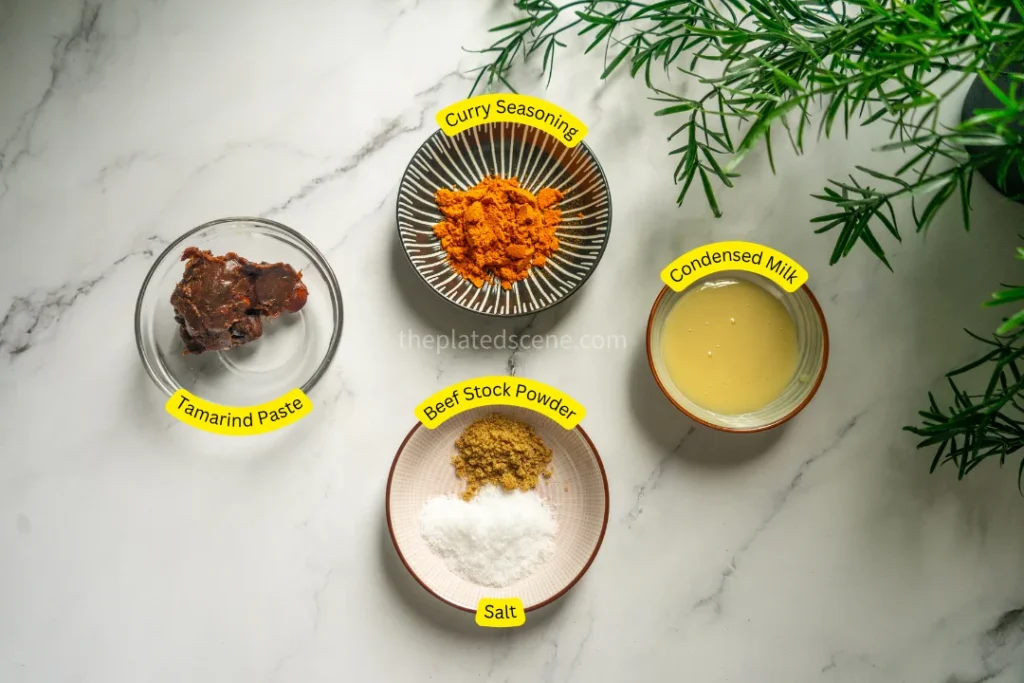
These simple seasonings tie everything together. They balance the richness of the coconut milk, the intensity of the spices, and the heat of the chili.
- Curry seasoning – Adds warmth and enhances the color.
- Salt – Brings out the natural flavor of the beef and spices.
- Beef powder seasoning – Deepens the savory base and boosts umami.
- Sweetened condensed milk – Rounds the edges of the spice with a touch of sweetness.
- Tamarind paste (mixed with water) – Adds acidity and freshness, cutting through the richness and keeping the flavors bright.
6. The Base Note: The Finishing Touch
- Vegetable oil – Helps cook the spice paste evenly and prevents it from sticking to the pan. As the dish simmers, the oil combines with the coconut oil released from the milk, creating that beautiful glossy finish that signals your rendang sapi is done.
How to Make Rendang Sapi (Indonesian Beef Rendang)
Making rendang sapi takes time, patience, and care. Each stage builds flavor slowly, layer by layer, until the beef turns tender and the sauce becomes dark, rich, and fragrant. Follow these steps closely, and your kitchen will smell like an Indonesian festival by the time you are done.
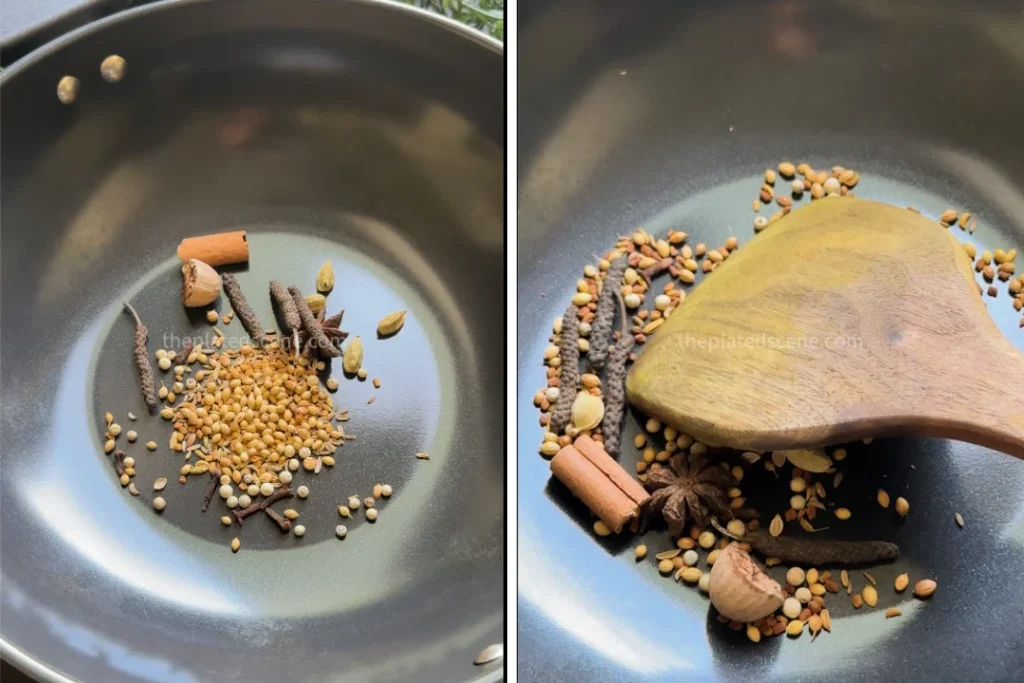
Step 1: Prepare the Heritage Spice Mix
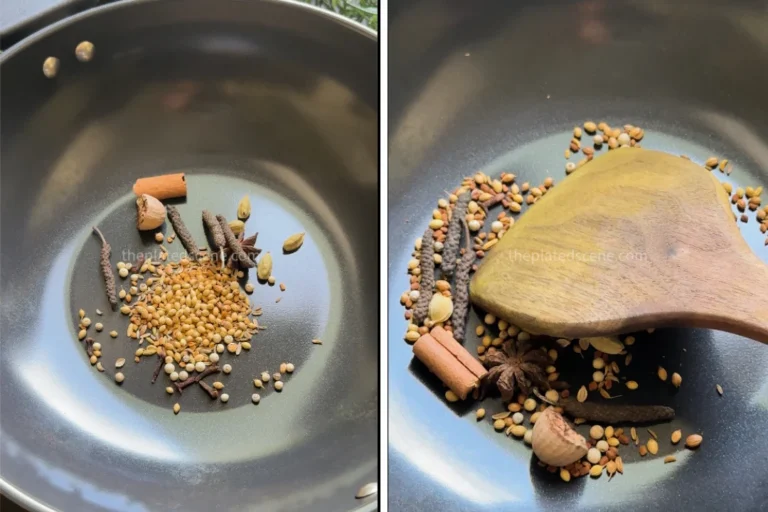
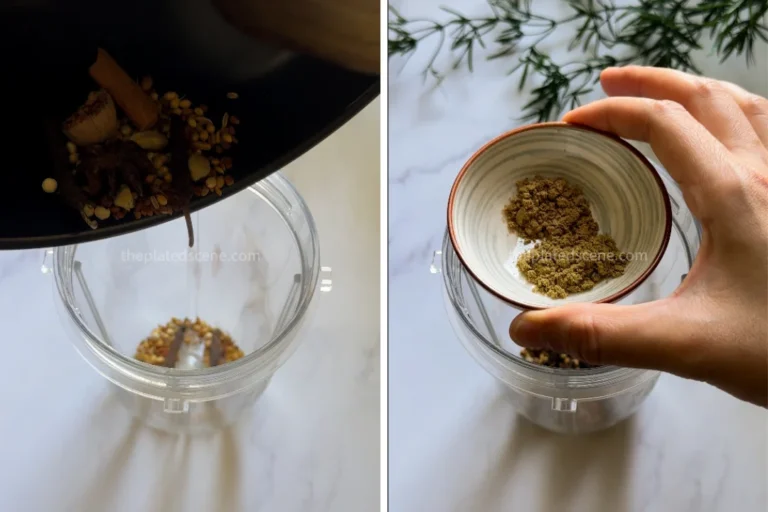
Put all the heritage spices (long pepper, cumin, fenugreek, nutmeg, cloves, cardamom, fennel seeds, star anise, pepper, coriander, poppy seeds, and cinnamon) into a dry pan.
Dry-fry them over low heat until fragrant, stirring constantly so they do not burn. Once the aroma becomes strong and the color darkens slightly, remove from heat.
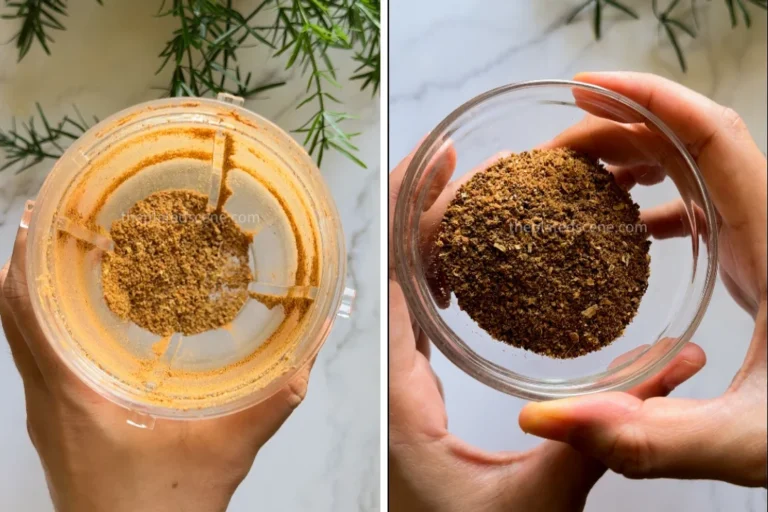
Transfer the spices into a chopper or grinder and blend until they turn into fine powder. Take half of the powder for this recipe and store the rest in an airtight jar for future use.
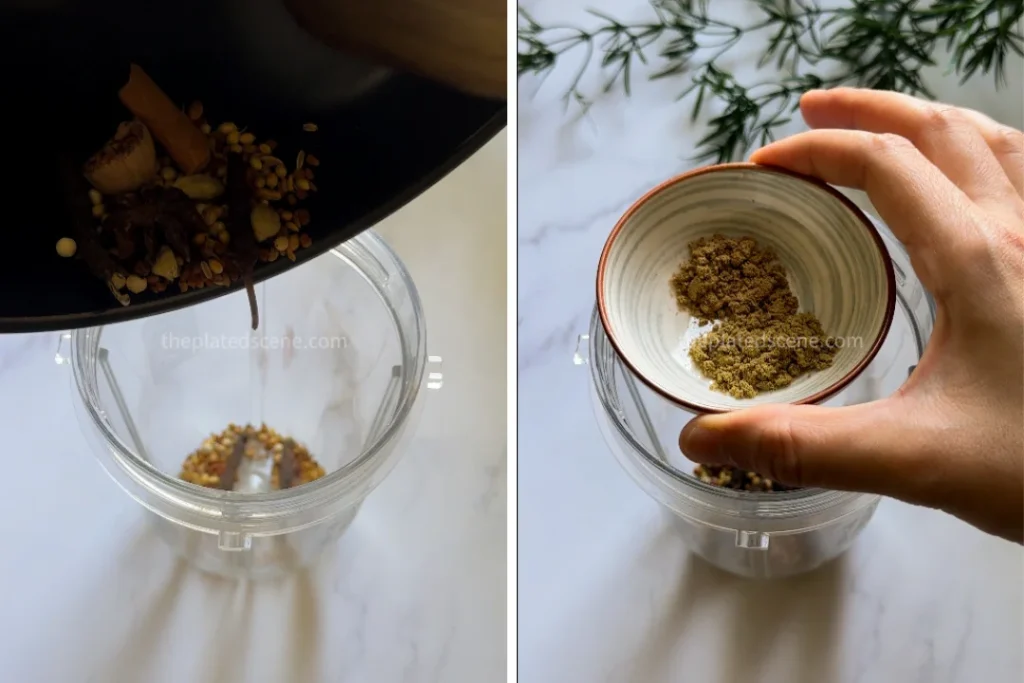
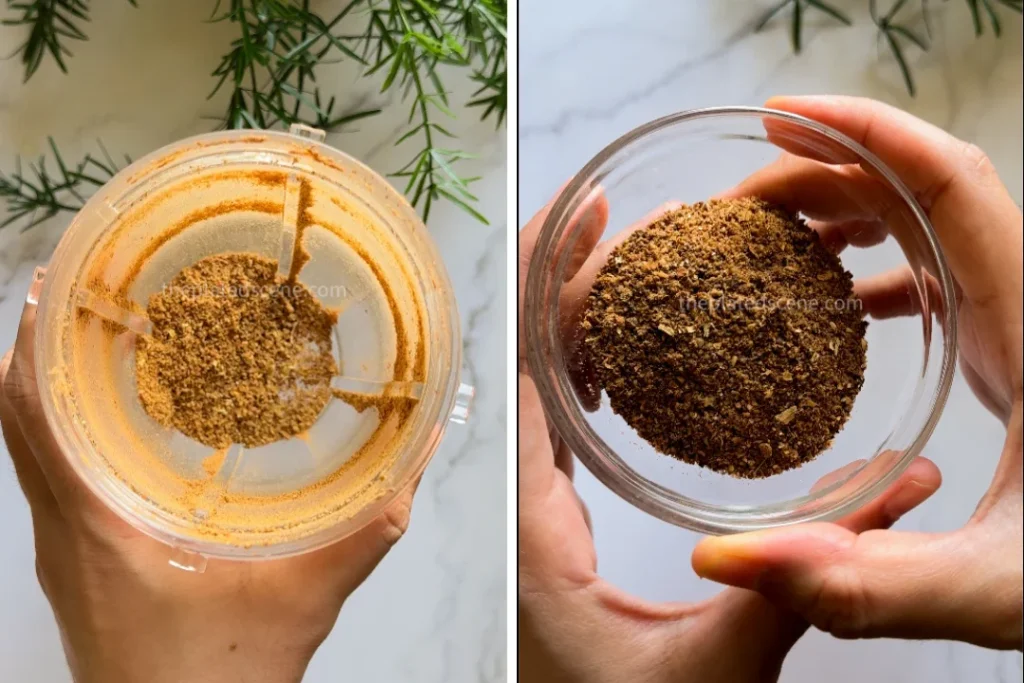
Step 2: Toast the Grated Coconut
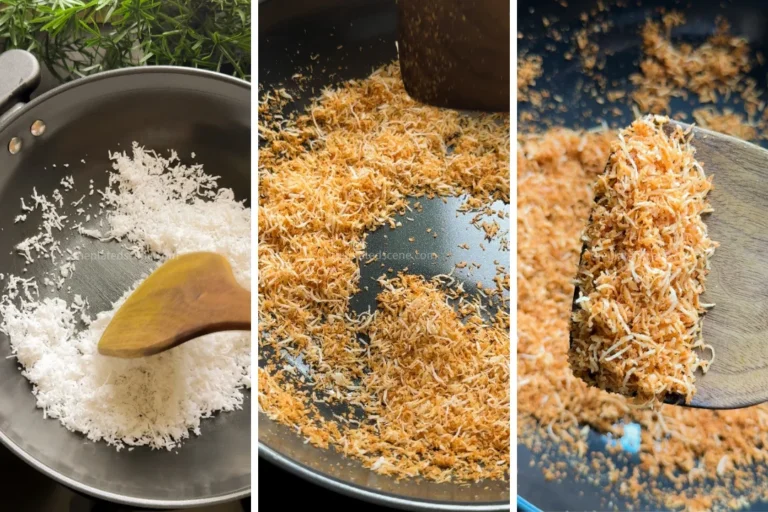
Add the grated coconut to the same pan and dry-fry over medium-low heat. Keep stirring until it turns golden brown and smells nutty.
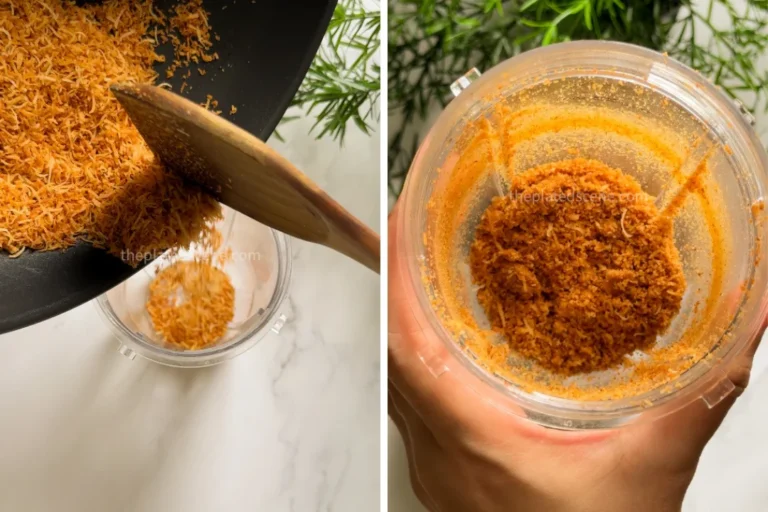
Remove from the pan and transfer to a chopper. Pulse until it becomes crumbly but not oily. This toasted coconut, or kelapa sangrai, will add texture and a deep, toasty flavor to the rendang.
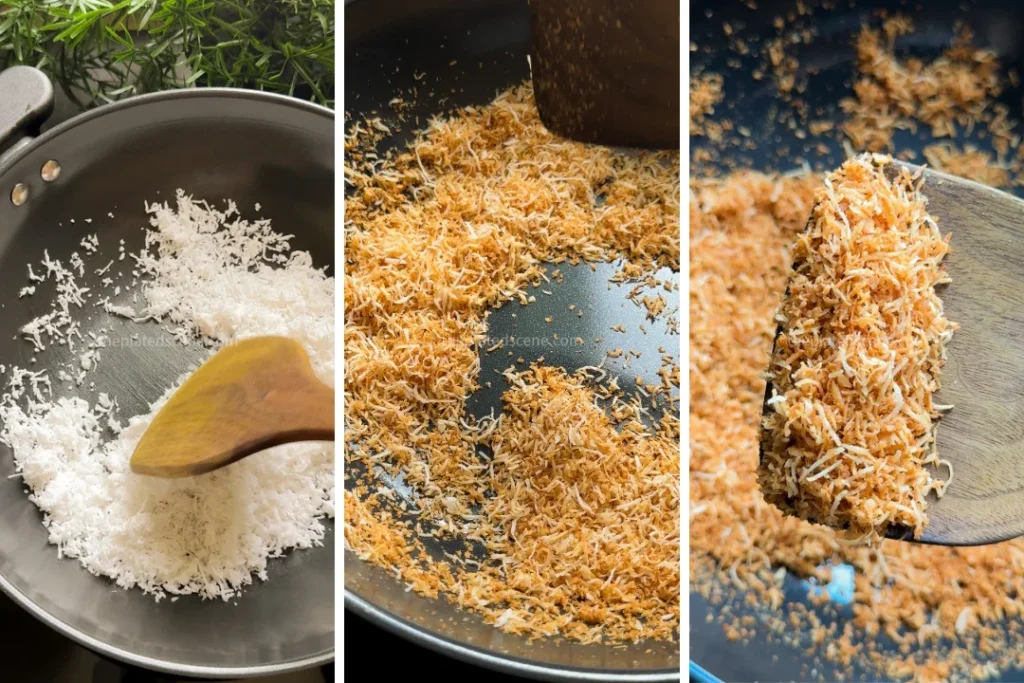
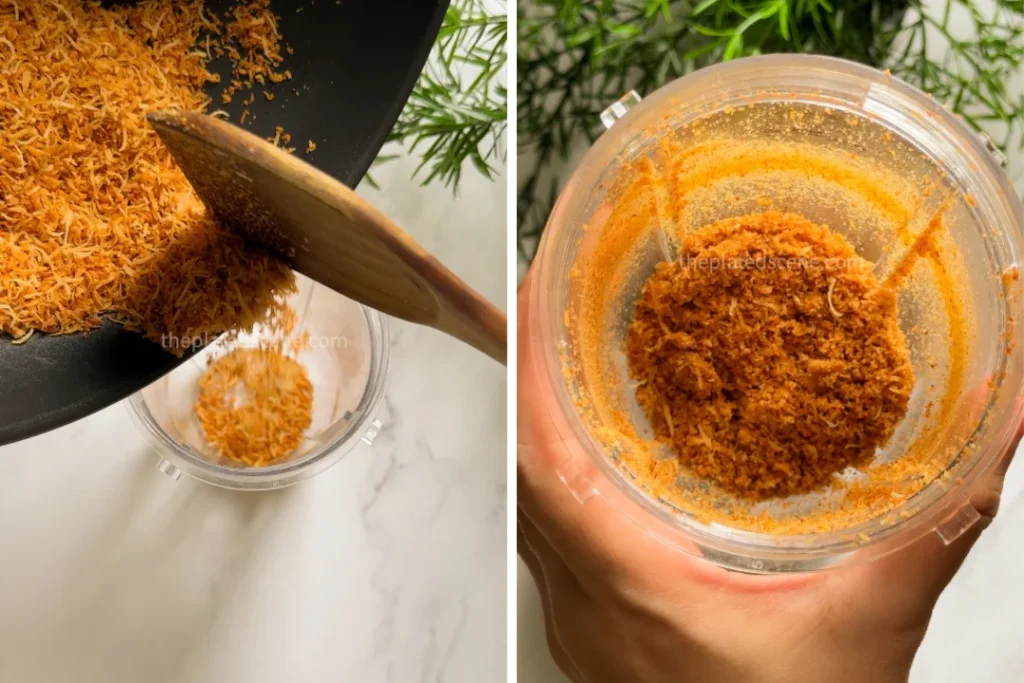
Step 3: Blend the Chili
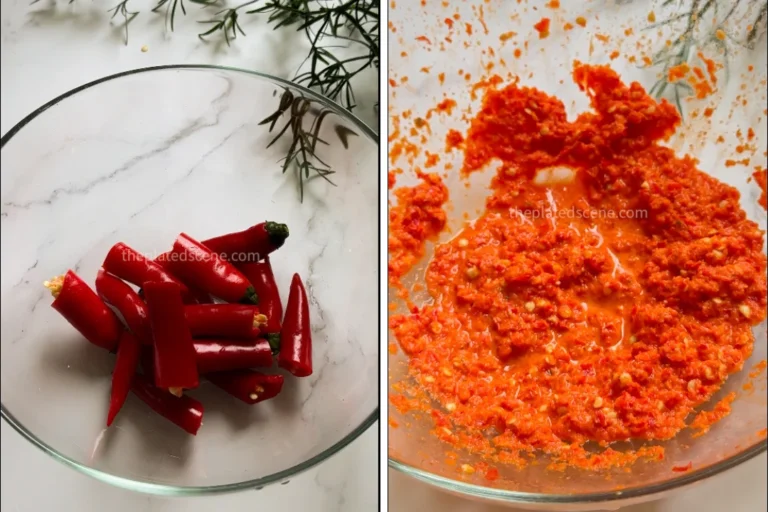
Blend the big red chili with one tablespoon of oil using a regular blender or hand blender. Blend until smooth and set aside. This gives rendang sapi its color and gentle heat.
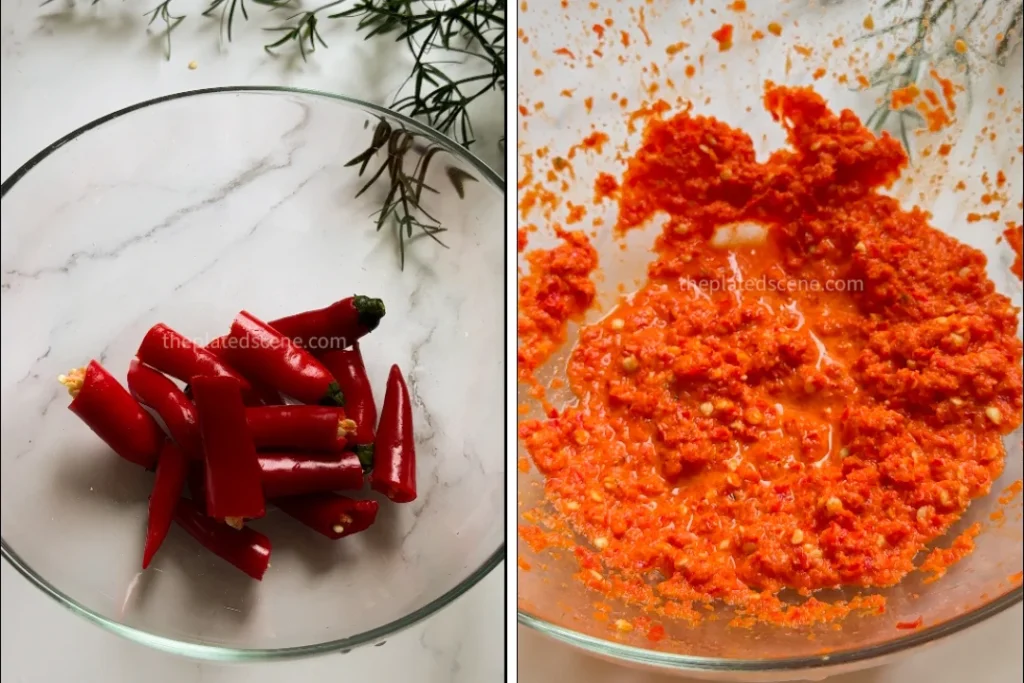
Step 4: Make the Aromatic Spice Paste
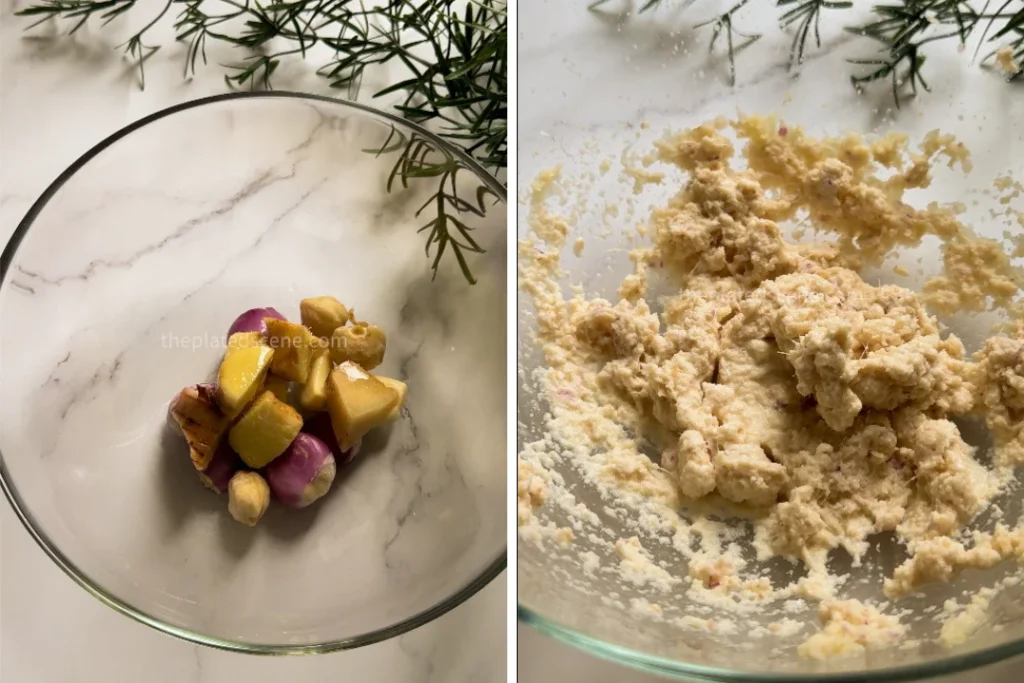
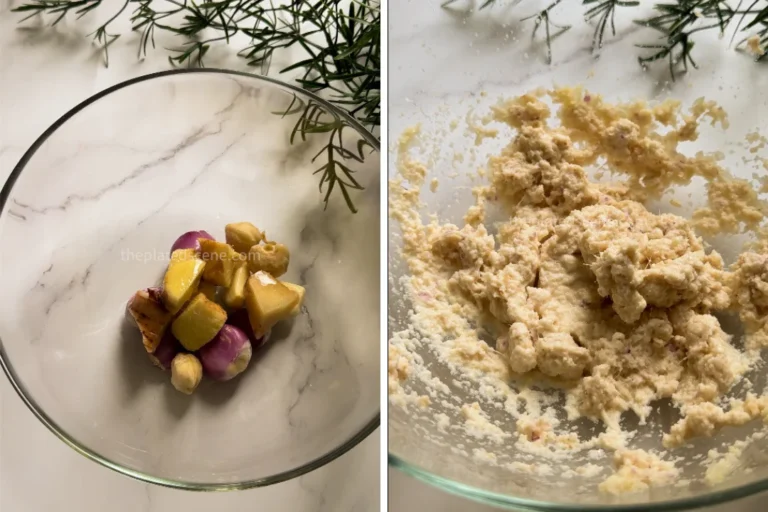
Blend the garlic, shallots, galangal, ginger, and candlenuts until smooth. You can use a hand blender or a regular blender. Set the paste aside. This mixture forms the aromatic base of the dish.
Step 5: Prepare the Beef
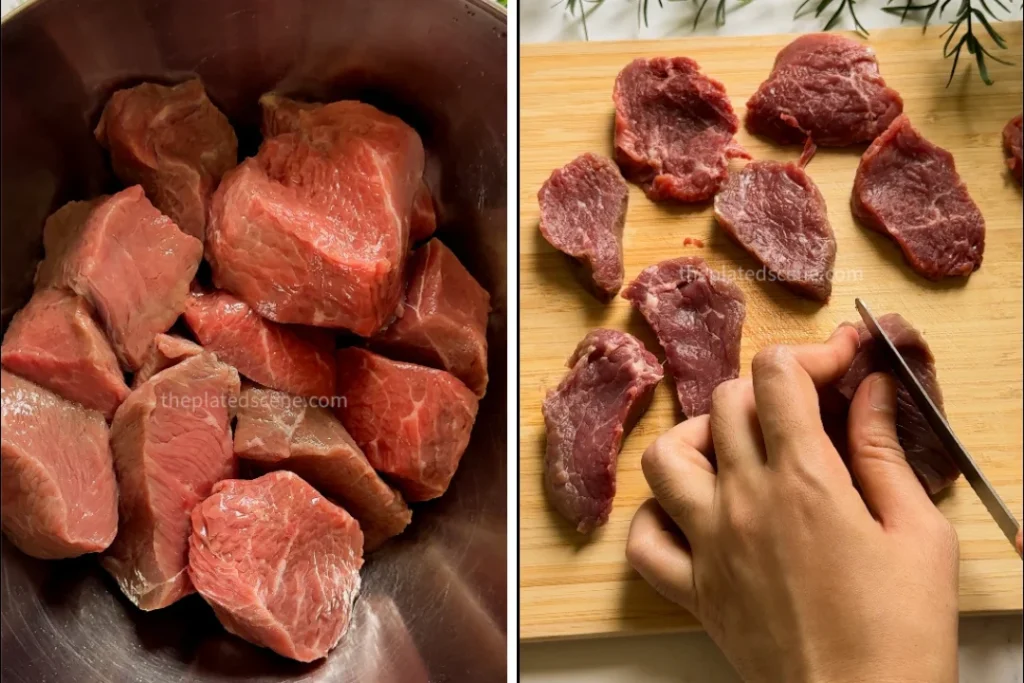
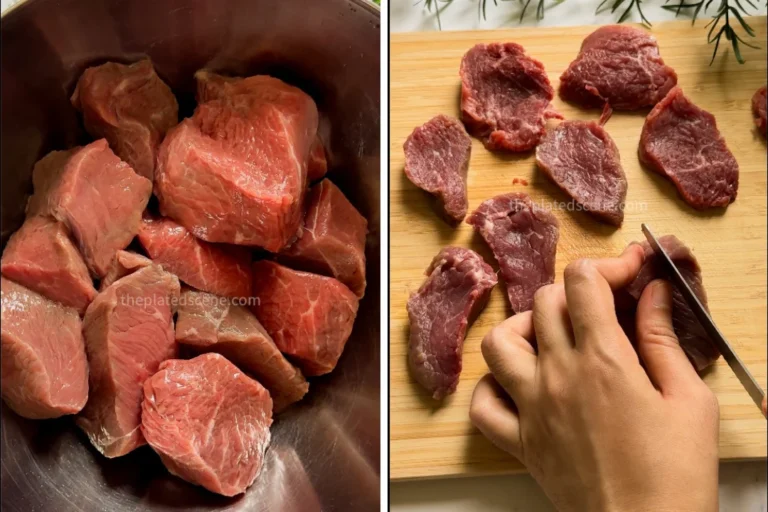
Cut the beef into cubes about four to five centimeters or one and a half to two inches each.
Cut against the grain to make it tender. Keeping the pieces uniform helps them cook evenly. Trim only excess fat because some fat will melt during cooking and enrich the sauce.
Step 6: Build the Flavor Base
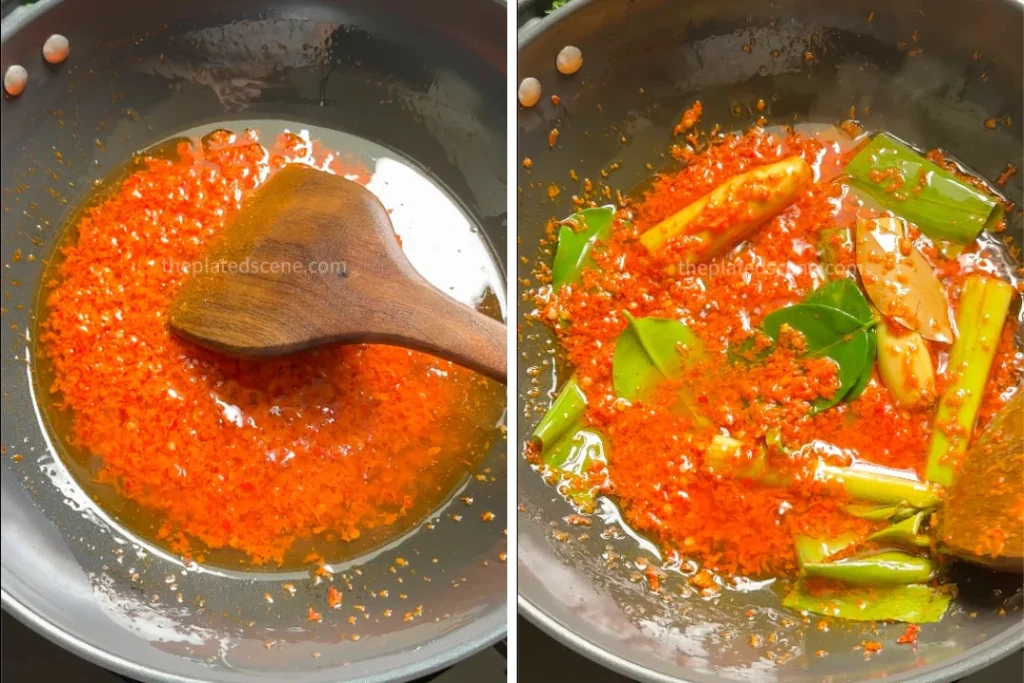
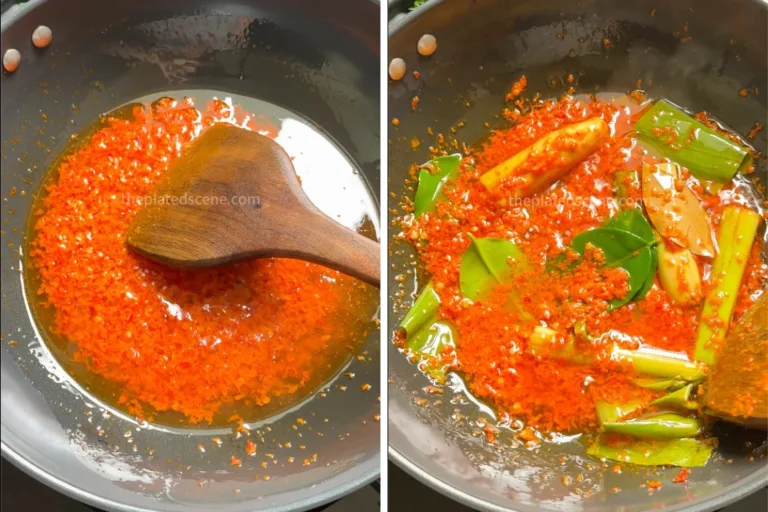
Heat 100 milliliters of vegetable oil in a large pan over medium heat. Once the oil is hot, add the blended chili and stir until fragrant and slightly darker in color.
Add the turmeric leaf, bay leaves, and lime leaves. Stir until softened and fragrant. These leaves add freshness and aroma to the oil.
Step 7: Add the Aromatic Paste and Spice Mix
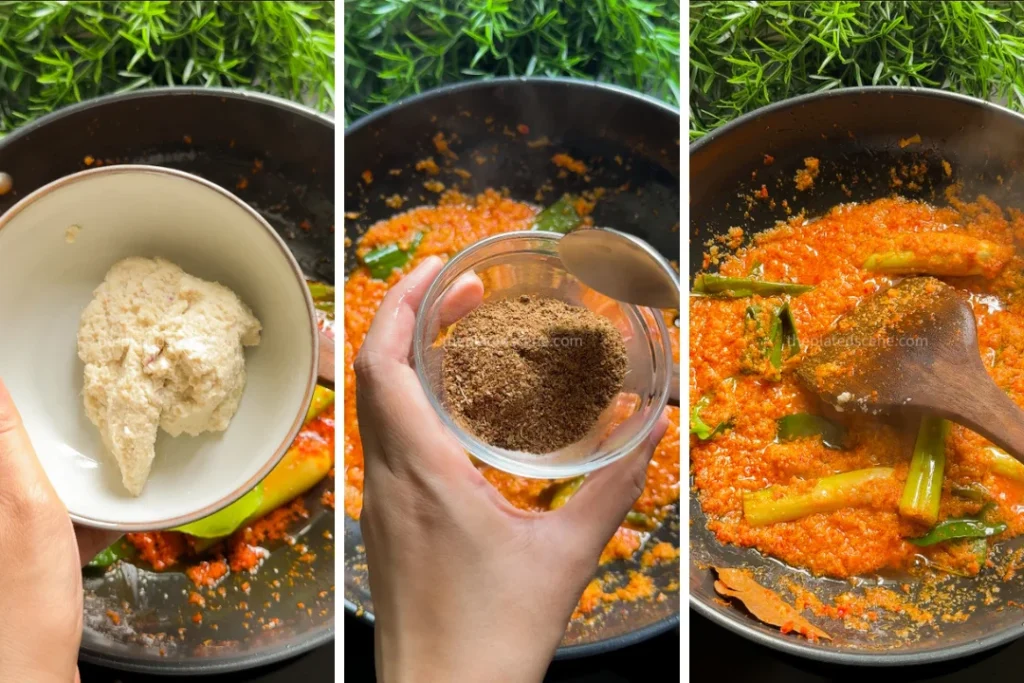
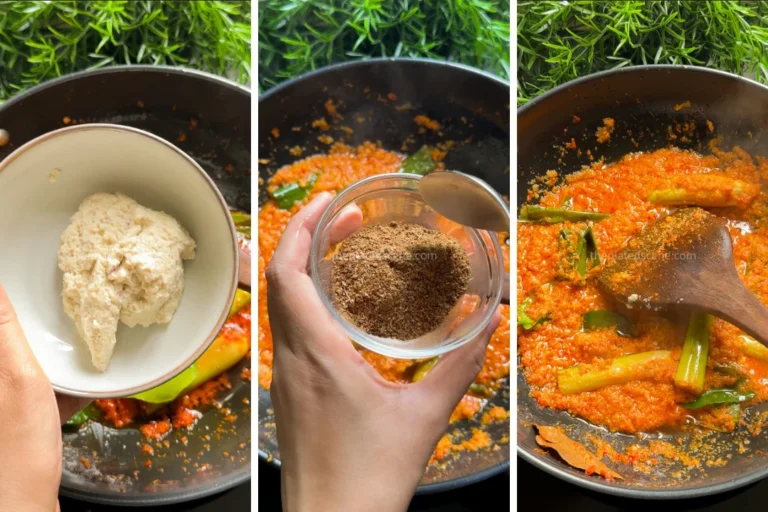
Add the blended garlic, shallot, ginger, galangal, and candlenut paste. Stir and cook until it turns golden and smells aromatic.
Add the blended heritage spice mix from step one and stir again.
This is when the flavors start to build their depth, and your kitchen will smell amazing.
Step 8: Add the Beef and Coconut Milk
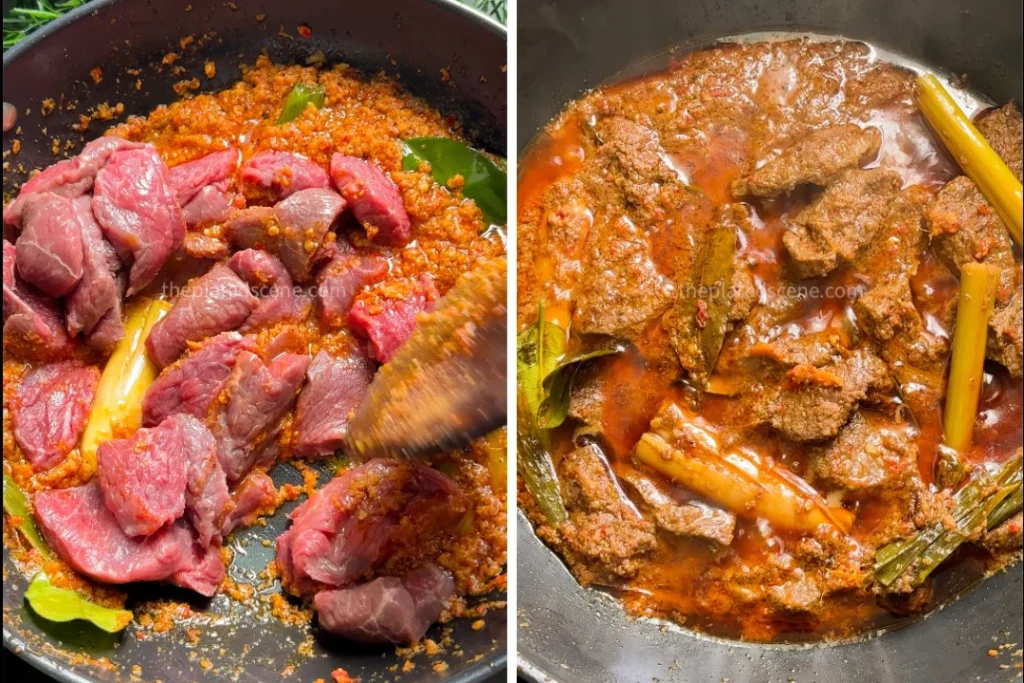
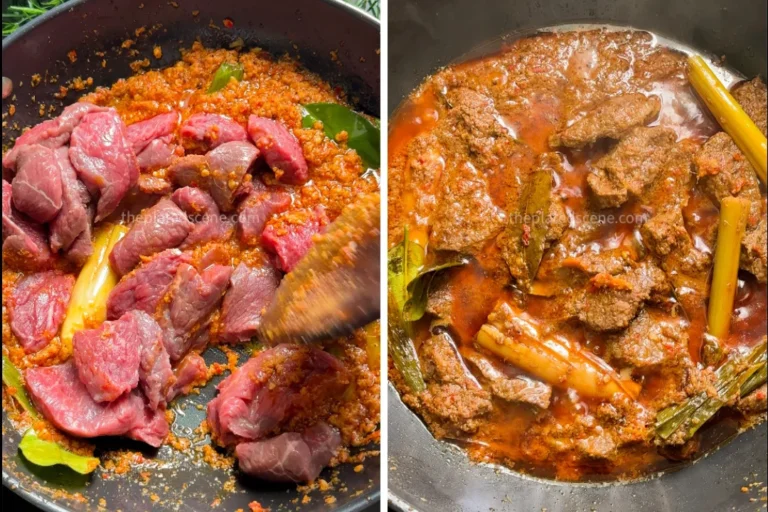
Add the beef cubes to the spice mixture. Stir until all the pieces are coated. Continue cooking until the beef releases a little oil; this may take several minutes.
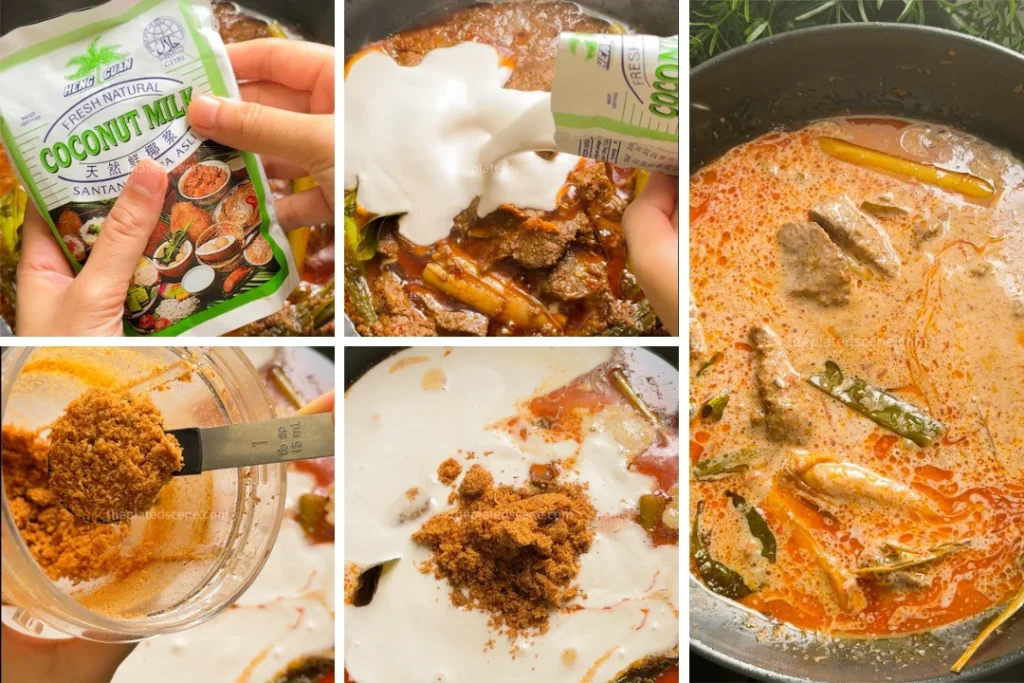
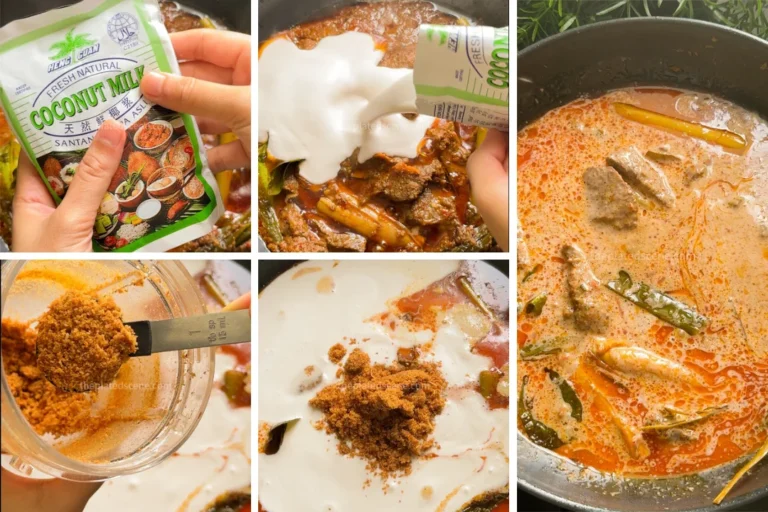
Pour in the coconut milk and add three tablespoons of the ground toasted coconut. Stir well.
Lower the heat to medium-low and cook slowly, stirring every five to ten minutes to prevent sticking at the bottom of the pan. The sauce will thicken and deepen in flavor as it cooks.
Step 9: Add Seasonings
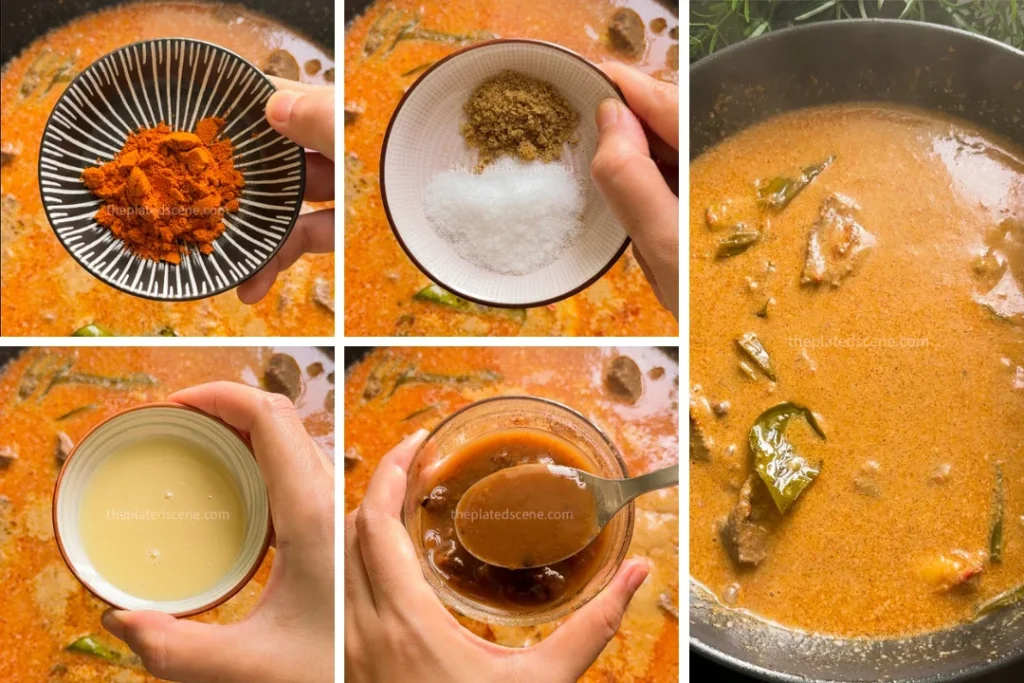
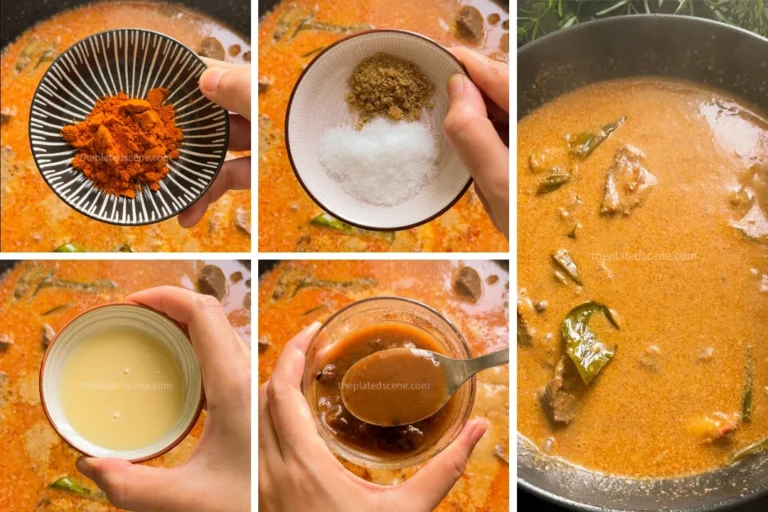
When the coconut milk has reduced and the mixture becomes thicker, add the curry seasoning, sweetened condensed milk, salt, tamarind liquid, and beef stock powder. Stir until everything is well combined. These ingredients balance the flavors with saltiness, sweetness, and a touch of tang.
Step 10: Continue Slow Cooking
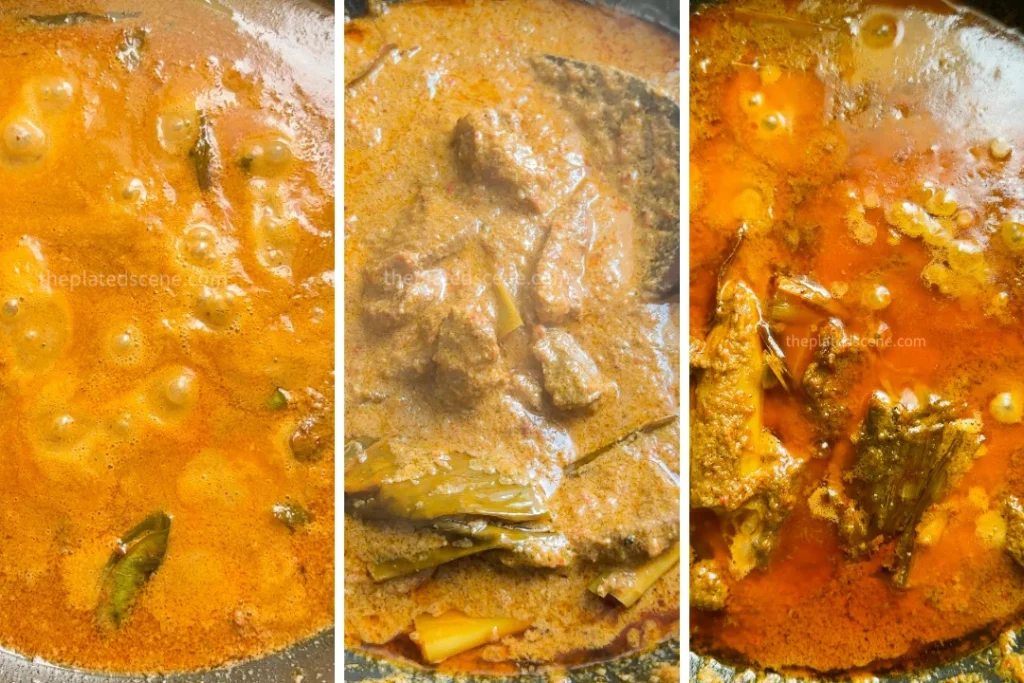
Keep cooking on low to medium-low heat, stirring every five to ten minutes.
Over time, the sauce will darken and thicken, and oil will start to separate from the mixture. This is a sign that your rendang is nearly done.
The longer you cook, the darker and more flavorful it becomes. The goal is to reach a thick, caramelized sauce that coats the beef completely.
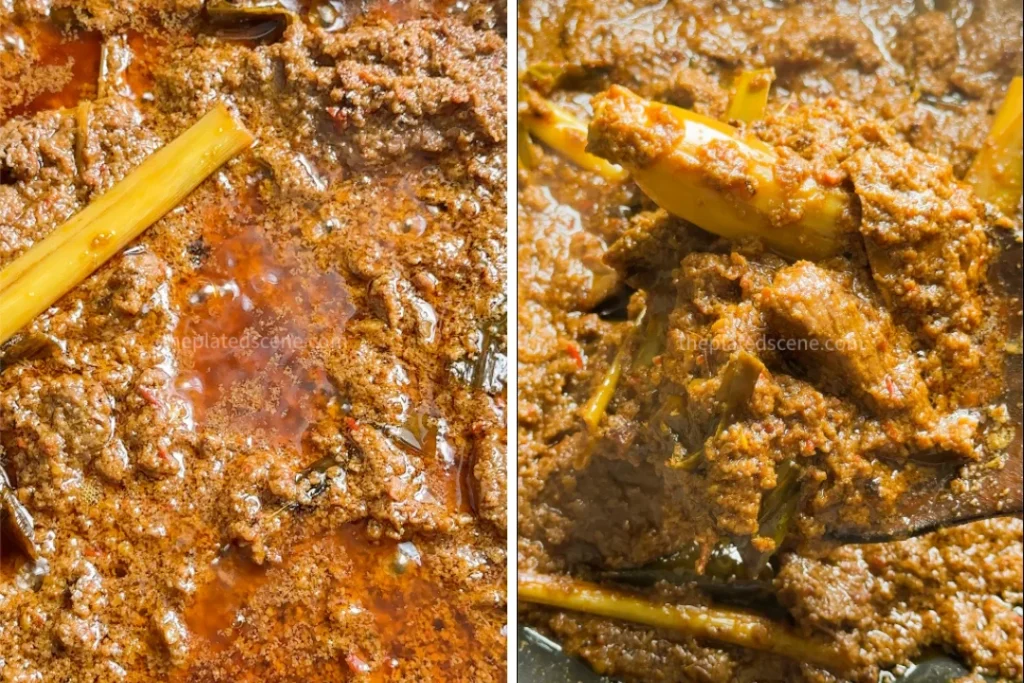
Step 11: Serve
When the beef is tender and coated in dark, glossy sauce, remove from heat.
Serve warm with freshly steamed rice. Each bite of beef rendang will be rich, aromatic, and layered with deep, nutty flavor from hours of patient cooking.
Why Beef Rendang Takes Forever to Cook (and the Difference Between Rendang and Kalio)
If you’ve ever made rendang sapi (Indonesian beef rendang), you already know it’s not the kind of dish you can rush. It’s the opposite of fast food. It’s slow, deliberate, and deeply rewarding. The long cooking time isn’t just tradition; it’s transformation.
When you first start cooking, the pot looks more like a coconut milk stew. The beef swims in a pale, creamy liquid with bright flecks of chili and herbs. But as time passes, everything begins to change. The coconut milk thickens and slowly releases its oil, the liquid reduces, and the spices deepen in color. The beef softens, absorbing every bit of flavor from the lemongrass, galangal, and toasted coconut. What began as a simple mixture slowly turns into something dark, fragrant, and intense.
That slow simmer is what builds depth. Every bubble and every stir coax the spices into harmony. If you stop cooking too early, you’ll end up with kalio, the halfway version of rendang. Kalio is what happens when the sauce is still thick and creamy, a warm brown color, and just starting to coat the beef. It’s rich and flavorful, with a beautiful balance of spice and coconut, but the liquid hasn’t yet turned to oil. Many restaurants in Indonesia and Singapore serve this version because it’s quicker to make and still delicious.
If you keep going, patiently, stirring as the sauce thickens, the dish will slowly cross the line into true rendang. The sauce becomes dry and caramelized, the color deepens to dark brown or almost black, and the beef is coated with a thick layer of spice and coconut oil. This stage takes time, usually three to four hours, but it’s what gives rendang sapi its legendary flavor and texture. The beef becomes tender yet slightly chewy, the spices cling to the surface, and the oil that pools at the bottom of the pan is a badge of honor.
Nutritional Information for Rendang Sapi (Indonesian Beef Rendang)
Here’s an approximate nutritional breakdown for one serving of rendang sapi (Indonesian beef rendang). These values are estimated and can vary depending on the specific ingredients, beef cut, coconut milk brand, and portion size used in your kitchen.
Estimated Nutrition per Serving
(Serving size: about 200g cooked rendang, including beef and sauce)
| Nutrient | Amount | Notes |
|---|---|---|
| Calories | ~520 kcal | Most calories come from coconut milk and beef fat. |
| Protein | ~32 g | From the beef; helps keep you full and supports muscle repair. |
| Fat | ~40 g | A mix of saturated fat from coconut milk and beef, plus some healthy fats from candlenut and oil. |
| Saturated Fat | ~27 g | Naturally present in coconut milk and beef; gives that creamy richness. |
| Carbohydrates | ~8 g | Comes mainly from shallots, chili, and tamarind. |
| Sugars | ~4 g | From sweetened condensed milk and natural coconut sugars. |
| Fiber | ~2 g | From the spice paste and toasted coconut. |
| Sodium | ~750 mg | Depends on salt, curry powder, and seasoning levels. |
| Cholesterol | ~95 mg | From beef and coconut milk. |
| Potassium | ~450 mg | Found naturally in chili, lemongrass, and galangal. |
| Iron | ~3.5 mg | From the beef and whole spices like cloves and nutmeg. |
| Vitamin C | ~8 mg | From chili and lime leaves. |
| Calcium | ~45 mg | From coconut and aromatic spices. |
Health Insights
- High in protein and full of flavor: Beef rendang is hearty, rich, and deeply satisfying.
- Coconut milk contributes healthy fats but also increases saturated fat, so use light coconut milk if you prefer a lighter version.
- Spices add more than aroma. Ingredients like galangal, turmeric leaf, and lemongrass have natural anti-inflammatory properties.
- Naturally gluten-free and made without added starches or thickeners.
Serving Suggestion
Serve rendang sapi with:
- Steamed white rice or nasi uduk (coconut rice)
- Acar (Indonesian pickled vegetables) for acidity and crunch
- Fresh sambal or a squeeze of lime to brighten the richness
How to Store Rendang Sapi (Indonesian Beef Rendang)
One of the special things about rendang sapi (Indonesian beef rendang) is how beautifully it keeps. Long before refrigerators were common, people in West Sumatra cooked rendang as a way to preserve meat. The slow cooking process doesn’t just build flavor but it also naturally extends the dish’s shelf life.
When rendang sapi is cooked properly, the coconut milk reduces until the oil separates, coating the beef in a rich layer of spices and fat. This oil acts as a natural preservative, while the salt and aromatic spices (like turmeric leaf, lemongrass, and galangal) help prevent spoilage. That’s why authentic dry rendang can last days at room temperature and even longer with proper care.
Here’s how to store it, both traditionally and with modern methods:
- Let It Cool Completely. Before storing, allow the rendang to cool to room temperature. Placing it in the fridge while still warm can cause condensation, which encourages bacterial growth and shortens its shelf life.
- Storing at Room Temperature (Traditional Method). If your beef rendang is the dry version, dark brown, with most of the coconut milk cooked off and oil released, it can safely last at room temperature for up to 3 days in a cool, dry place.
- Store it in a clean, covered container.
- If your kitchen is humid, reheat it daily over low heat. Each reheating remelts the coconut oil and refreshes the dish, helping it last longer.
- In traditional Indonesian households, reheating daily could extend its shelf life to 5 days or more.
- Avoid leaving kalio (the wetter, lighter brown version) at room temperature, as the moisture content makes it spoil faster.
- Storing in the Refrigerator. For modern kitchens, refrigeration is the safest choice, especially if your rendang still has a bit of sauce left.
- Transfer the cooled rendang into an airtight container.
- Store in the refrigerator for up to 5 days.
- When reheating, use a pan over low heat. Add a spoonful of coconut milk or water if it feels too dry, and stir gently until it’s warm and glossy again.
- Freezing for Long-Term Storage. Rendang freezes beautifully without losing its aroma or texture.
- Divide into smaller portions for easy reheating.
- Place each portion in a freezer-safe container or resealable bag, making sure it’s tightly sealed.
- Label the container with the date and freeze for up to 2 months.
- To serve, thaw overnight in the fridge and reheat gently in a pan.
- Quick Tip for Meal Prep: If you love having ready-to-eat meals, rendang is perfect for meal prep. Pair it with rice and vegetables in individual containers and freeze them. The flavor will only deepen over time.
Rendang Sapi (Indonesian Beef Rendang)
4
servings30
minutes3
hours3
hours30
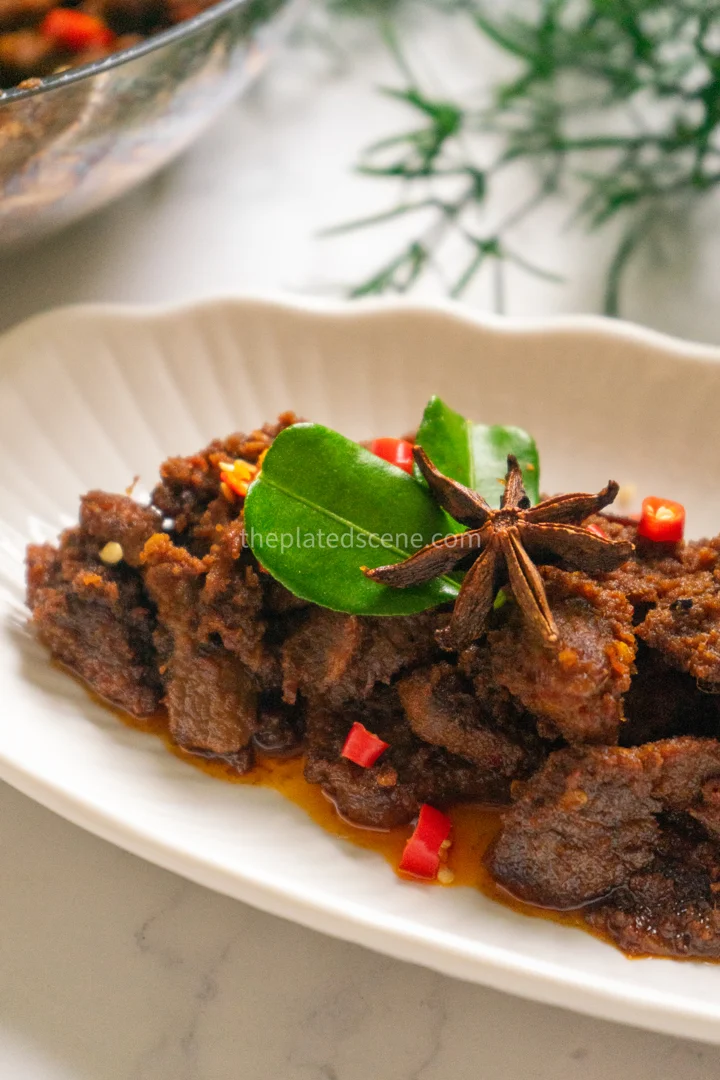
minutesA rich and deeply aromatic Indonesian beef rendang slow-cooked until the coconut milk caramelizes into a dark, flavorful coating. Tender beef cubes simmer with toasted coconut, fresh aromatics, and whole spices to create a savory Minangkabau-style rendang with a nutty, complex taste. Perfect with warm rice and even better the next day.
Keep the screen of your device on
Ingredients
- Main Ingredients
1.1 lb 500 g beef chuck, cut into cubes
2 cups 500 ml coconut milk
1 cup 125 grated coconut, toasted (use 3 tablespoons in the recipe)
- Heritage Spice Mix (After Blending, use half of it)
4 pc 4 pieces long pepper (cabe jawa)
1 teaspoon 1 tsp white cumin seeds
1/2 teaspoon 1/2 tsp fenugreek
1/2 pc 1/2 piece nutmeg
6 pc 6 cloves
4 pc 4 cardamom pods
1/2 teaspoon 1/2 tsp fennel seeds
1 pc 1 star anise
1/2 teaspoon 1/2 tsp black pepper
1 teaspoon 1 tsp coriander seeds
1 teaspoon 1 tsp poppy seeds
3/ inch a small piece cinnamon stick
- Ground Spice Base
2.8 oz 80 g big red chili
3 cloves 3 cloves garlic
5 pc 5 pc shallots
0.7 oz 20 g ginger
0.35 oz 10 g galangal
3 pc 3 pc candlenuts
- Leaf Aromatics
1/2 pc 1/2 pc turmeric leaf
2 pc 2 pc bay leaves
5 pc 5 pc lime leaves
2 stalks 2 stalks lemongrass
- Seasonings
2 tablespoons 2 tbsp curry seasoning
2 teaspoons 2 tsp salt
1 teaspoon 1 tsp beef stock powder
1 1/2 tablespoons 1 1/2 tbsp sweetened condensed milk
1 oz 30 g tamarind paste mixed with 3 tablespoons water (use 4 tablespoons of the liquid)
- Other
1/2 cup 100 ml vegetable oil
Directions
- Prepare the Heritage Spice Mix
Put all the heritage spices (long pepper, cumin, fenugreek, nutmeg, cloves, cardamom, fennel seeds, star anise, pepper, coriander, poppy seeds, and cinnamon) into a dry pan.
Dry-fry them over low heat until fragrant, stirring constantly so they do not burn. Once the aroma becomes strong and the color darkens slightly, remove from heat.
Transfer the spices into a chopper or grinder and blend until they turn into fine powder. Take half of the powder for this recipe and store the rest in an airtight jar for future use.
- Toast the Grated Coconut
Add the grated coconut to the same pan and dry-fry over medium-low heat. Keep stirring until it turns golden brown and smells nutty.
Remove from the pan and transfer to a chopper. Pulse until it becomes crumbly but not oily. This toasted coconut, or kelapa sangrai, will add texture and a deep, toasty flavor to the rendang. - Blend the Chili
Blend the big red chili with one tablespoon of oil using a regular blender or hand blender. Blend until smooth and set aside. This gives rendang sapi its color and gentle heat. - Make the Aromatic Spice Paste
Blend the garlic, shallots, galangal, ginger, and candlenuts until smooth. You can use a hand blender or a regular blender. Set the paste aside. This mixture forms the aromatic base of the dish. - Prepare the Beef
Cut the beef into cubes about four to five centimeters or one and a half to two inches each.
Cut against the grain to make it tender. Keeping the pieces uniform helps them cook evenly. Trim only excess fat because some fat will melt during cooking and enrich the sauce. - Build the Flavor Base
Heat 100 milliliters of vegetable oil in a large pan over medium heat. Once the oil is hot, add the blended chili and stir until fragrant and slightly darker in color.
Add the turmeric leaf, bay leaves, and lime leaves. Stir until softened and fragrant. These leaves add freshness and aroma to the oil. - Add the Aromatic Paste and Spice Mix
Add the blended garlic, shallot, ginger, galangal, and candlenut paste. Stir and cook until it turns golden and smells aromatic.
Add the blended heritage spice mix from step one and stir again.
This is when the flavors start to build their depth, and your kitchen will smell amazing. - Add the Beef and Coconut Milk
Add the beef cubes to the spice mixture. Stir until all the pieces are coated. Continue cooking until the beef releases a little oil; this may take several minutes.
Pour in the coconut milk and add three tablespoons of the ground toasted coconut. Stir well.
Lower the heat to medium-low and cook slowly, stirring every five to ten minutes to prevent sticking at the bottom of the pan. The sauce will thicken and deepen in flavor as it cooks. - Add Seasonings
When the coconut milk has reduced and the mixture becomes thicker, add the curry seasoning, sweetened condensed milk, salt, tamarind liquid, and beef stock powder. Stir until everything is well combined. These ingredients balance the flavors with saltiness, sweetness, and a touch of tang. - Continue Slow Cooking
Keep cooking on low to medium-low heat, stirring every five to ten minutes.
Over time, the sauce will darken and thicken, and oil will start to separate from the mixture. This is a sign that your rendang is nearly done.
The longer you cook, the darker and more flavorful it becomes. The goal is to reach a thick, caramelized sauce that coats the beef completely. - Serve
When the beef is tender and coated in dark, glossy sauce, remove from heat.
Serve warm with freshly steamed rice. Each bite of beef rendang will be rich, aromatic, and layered with deep, nutty flavor from hours of patient cooking.

)